


Expanded Metal 48×48
In the realm of industrial filtration and structural support, the specification of materials is a critical factor that dictates the efficiency, longevity, and safety of a system. Among the various formats available to engineers and procurement specialists, expanded metal 48×48 panels represent a versatile standard used across diverse sectors, from chemical processing to heavy-duty water treatment. These 48-inch by 48-inch sheets serve as the foundational component for filter supports, safety guards, and architectural elements where a high strength-to-weight ratio is paramount.
At Kaifil, we specialize in the precision manufacturing of stainless steel filtration solutions. Understanding the technical nuances of expanded metal 48×48 is essential for engineers who must balance filtration accuracy with structural rigidity. This guide explores the engineering considerations, material properties, and application-specific advantages of utilizing this specific format in industrial environments.
Understanding the Engineering Specifications of Expanded Metal 48×48
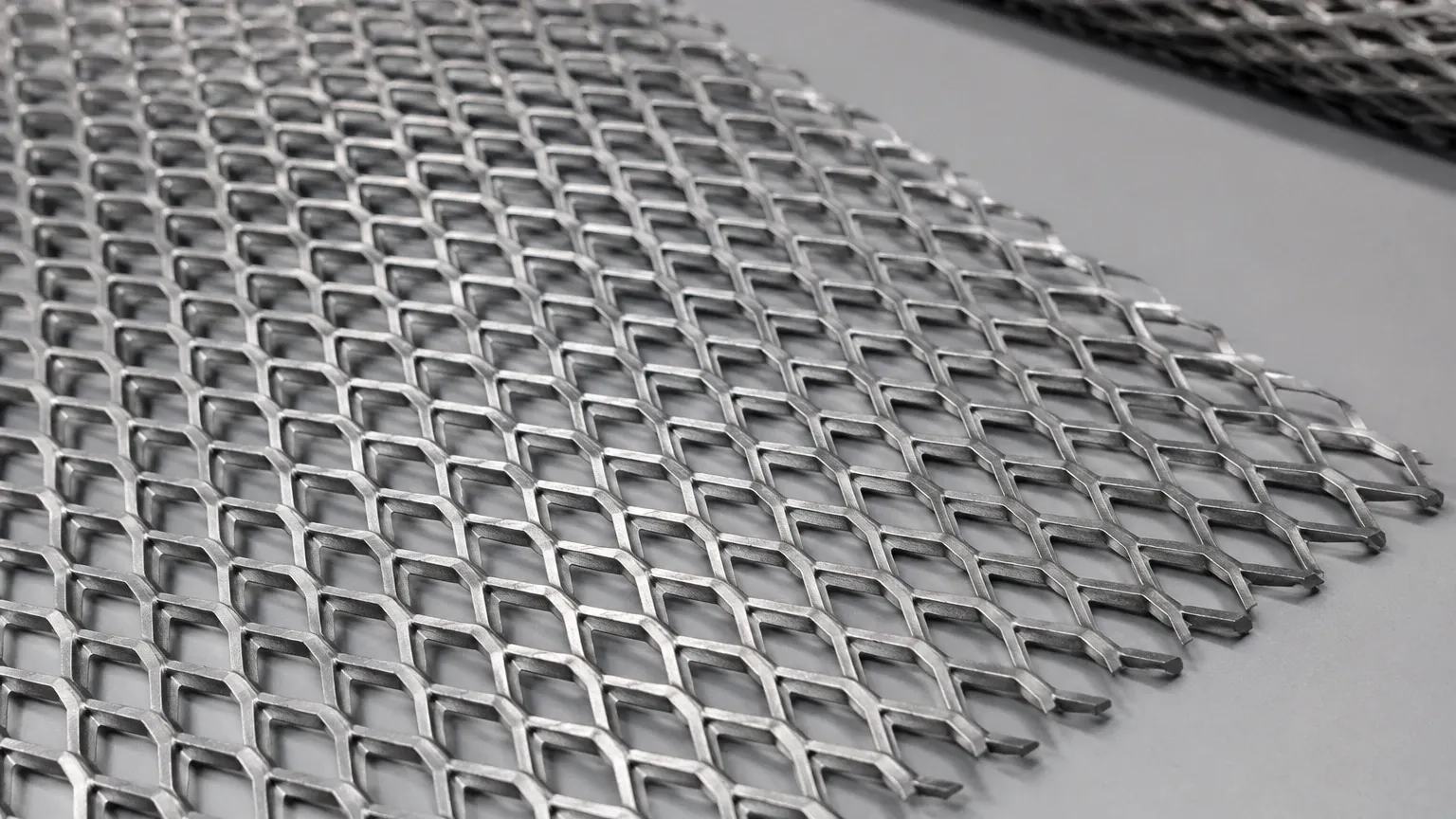
Expanded metal is produced by simultaneously slitting and stretching a solid metal sheet. Unlike perforated metal, which involves punching holes and creating scrap material, the expansion process creates a diamond-shaped pattern without any waste. When specifying an expanded metal 48×48 sheet, several geometric factors must be defined to ensure the component meets the intended performance criteria.
SWD and LWD: The Diamond Geometry
The performance of expanded metal is primarily defined by the dimensions of its diamond openings. These are measured as the Short Way of Design (SWD) and the Long Way of Design (LWD).
* SWD (Short Way of Design): The distance from the center of a bond to the center of the next bond across the short axis of the diamond.
* LWD (Long Way of Design): The distance across the long axis of the diamond.
For a 48×48 panel, the orientation of these diamonds is critical. Depending on how the sheet is cut from the master coil, the LWD may run parallel to one 48-inch side or the other. Engineers must specify the orientation if the sheet is intended to provide structural support in a specific direction, as the material is significantly more rigid along the LWD.
Strand Thickness and Width
The "strand" is the metal strip that forms the sides of the diamond. The thickness of the strand corresponds to the original thickness of the base metal sheet, while the strand width is the amount of metal fed into the expanding machine between slits. By adjusting these two variables, manufacturers can create expanded metal 48×48 sheets that range from lightweight, high-transparency screens to heavy-duty, load-bearing gratings.
The Role of Perforated & Expanded Metal in Industrial Filtration
In many industrial applications, the choice between Perforated & Expanded Metal depends on the specific requirements for fluid dynamics and mechanical support. While perforated metal offers precise hole sizes and shapes, expanded metal provides a unique three-dimensional structure that can be advantageous in filtration.
Support Grids for Filter Media
One of the most common uses for expanded metal 48×48 panels is as a support structure for finer filter media. In large-scale air or liquid filtration systems, the primary filter membrane (such as a fine wire mesh or synthetic fabric) often lacks the structural integrity to withstand high differential pressures. By laminating or placing the media against a rigid expanded metal panel, the system can maintain its shape and prevent the media from collapsing or rupturing.
Turbulence and Flow Distribution
The angular nature of the strands in expanded metal can be used to manipulate fluid flow. In some chemical processing applications, expanded metal is used to create controlled turbulence, which helps in the even distribution of fluids across a catalyst bed or a secondary filtration stage. The 48×48 format is particularly useful here, as it can be easily integrated into modular housing units.
Material Selection for Demanding Environments
The utility of an expanded metal 48×48 sheet is largely determined by its material composition. Because Kaifil focuses on high-performance industrial filtration, we emphasize the use of alloys that can withstand corrosive environments and extreme temperatures.
Stainless Steel 304 and 316L
Stainless steel is the industry standard for most filtration applications.
* Grade 304: Offers excellent strength and good corrosion resistance for general industrial use. It is widely used in food processing and HVAC filtration.
* Grade 316L: Contains molybdenum, which provides superior resistance to chlorides and pitting. This is the preferred choice for marine environments, pharmaceutical manufacturing, and aggressive chemical processing.
Specialized Alloys
For applications involving high-temperature oxidation or highly acidic/alkaline solutions, expanded metal can be manufactured from nickel alloys, titanium, or duplex stainless steels. When selecting the material for a 48×48 panel, engineers must consider the "Total Cost of Ownership," where a higher initial investment in a corrosion-resistant alloy significantly reduces the frequency of replacement and system downtime.
Structural Integrity and Performance Metrics
When integrating expanded metal 48×48 into a project, engineers must calculate several performance metrics to ensure the material will function correctly under operational loads.
Open Area Percentage
The open area determines the flow rate and pressure drop across the filter or screen. Unlike perforated metal, where the open area is a simple ratio of hole area to total area, expanded metal's open area can be more complex to calculate due to the angle of the strands. Flattened expanded metal (where the sheet is passed through a cold-rolling mill after expansion) offers a more predictable two-dimensional open area, whereas "raised" or "standard" expanded metal provides a three-dimensional profile that affects flow differently.
Load-Bearing Capacity
If the 48×48 panel is used as a platform, walkway, or heavy-duty guard, its load-bearing capacity is paramount. This is influenced by the strand thickness, the material grade, and the bond strength. Engineers should consult load tables provided by manufacturers to determine the maximum deflection allowed for a given span. In filtration, this translates to the "burst pressure"—the point at which the support grid fails under the pressure of accumulated debris on the filter media.
Customization and Secondary Processing for Filter Components
While a standard expanded metal 48×48 sheet is a common starting point, most industrial applications require secondary processing to transform the raw material into a functional component. Kaifil provides extensive OEM capabilities to meet these specific engineering needs.
Flattened vs. Standard (Raised)
* Standard Expanded Metal: The strands are set at an angle to the plane of the sheet. This creates a textured surface that is excellent for grip or for creating a tortuous path for fluid flow.
* Flattened Expanded Metal: The sheet is cold-rolled to create a smooth, flat surface. This is often preferred when the expanded metal must be bonded to a fine mesh, as it prevents the strands from cutting into the delicate filter media.
Precision Cutting and Framing
A 48×48 sheet may need to be cut into specific circular discs for filter housings or framed with U-edging to create a safe, handleable panel. Precision laser or waterjet cutting ensures that the edges of the expanded metal remain consistent, which is vital for maintaining a proper seal in pressurized filtration systems.
Surface Treatments
To further enhance the performance of stainless steel expanded metal, various surface treatments can be applied:
* Electropolishing: Removes surface impurities and creates a microscopically smooth finish, which is essential for sanitary applications in the food and pharmaceutical industries.
* Passivation: Enhances the natural chromium oxide layer of stainless steel to maximize corrosion resistance.
* Coating: For non-filtration applications, powder coating or galvanizing can provide additional protection and aesthetic appeal.
Procurement Checklist: What Engineers Should Confirm
Before finalizing a purchase order for expanded metal 48×48, procurement teams and engineers should confirm the following technical details with their supplier to avoid integration issues:
1. Material Grade: Is the alloy (e.g., SS316L) appropriate for the chemical exposure of the application?
2. Style Designation: Are you ordering by weight (e.g., 1/2" #13) or by specific dimensions (SWD, LWD, strand width, and thickness)?
3. Flattened or Raised: Does the application require a smooth surface or a three-dimensional profile?
4. Diamond Orientation: Should the LWD run parallel to the 48-inch length or width?
5. Tolerances: What are the allowable variances in sheet size and diamond consistency? Standard industrial tolerances may not be sufficient for high-precision filtration components.
6. Edge Requirements: Does the sheet need to be "random sheared" (edges may have open diamonds) or "bond sheared" (edges are cut through the center of the bonds for a cleaner finish)?
Conclusion
The expanded metal 48×48 panel is more than just a piece of hardware; it is a precision-engineered component that plays a vital role in the efficiency of industrial systems. Whether it is providing the backbone for a high-pressure filter cartridge or acting as a durable screen in a harsh chemical environment, the choice of material, diamond geometry, and secondary processing will dictate the success of the installation.
Kaifil remains committed to providing high-quality, customized filtration solutions that meet the rigorous demands of global industry. By focusing on technical accuracy and material integrity, we help our partners achieve optimized filtration performance and long-term operational reliability. When your project requires the durability of stainless steel and the versatility of expanded metal, selecting the right specifications is the first step toward engineering excellence.
