


Expanded Metal 4×8 Sheet Near Me
In industrial procurement and engineering, the search for an "expanded metal 4×8 sheet near me" often marks the beginning of a critical selection process for structural or filtration components. While the 4×8 foot (1220mm x 2440mm) dimension is the industry standard for metal sheeting, the technical requirements of industrial applications—ranging from chemical processing to high-pressure hydraulic systems—demand a deeper understanding of material properties, manufacturing methods, and performance variables beyond mere local availability.
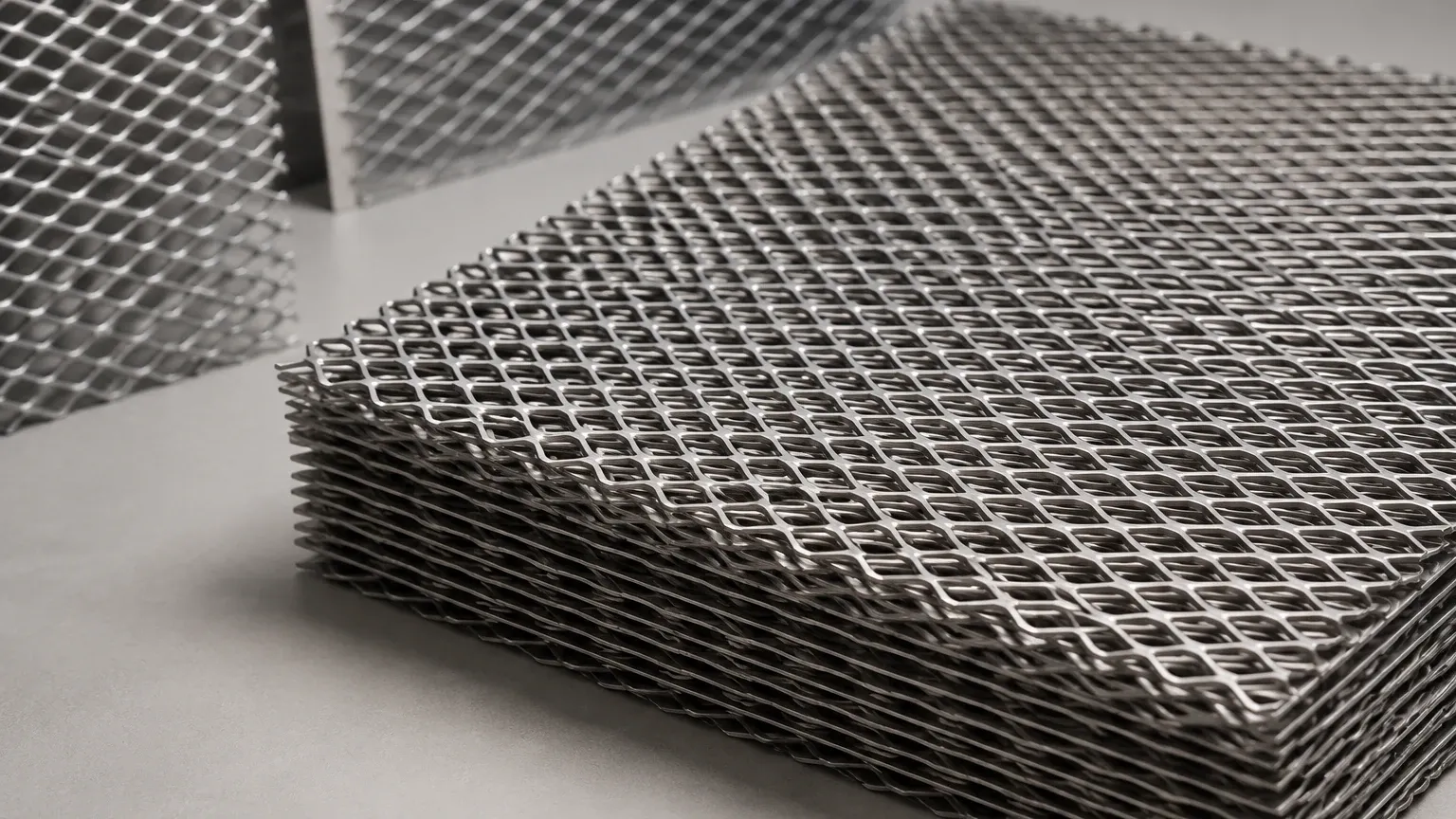
Expanded metal is a unique material produced by simultaneously slitting and stretching a solid metal sheet. Unlike perforated metal, which involves punching holes and generating scrap, the expansion process creates a diamond-shaped pattern without any material loss. This results in a high strength-to-weight ratio and a structural integrity that is inherent to the single-piece construction. For engineers and purchasing teams, choosing the right expanded metal involves evaluating the specific mechanical and chemical demands of the environment where the sheet will be deployed.
Technical Specifications of Expanded Metal
When sourcing expanded metal, particularly for B2B applications in filtration or industrial guarding, understanding the nomenclature is essential for ensuring the component meets engineering tolerances. The geometry of the expanded metal is defined by several key parameters:
* SWD (Short Way of Diamond): The distance from the center of one bond to the center of the next bond across the short axis of the diamond.
* LWD (Long Way of Diamond): The distance across the long axis of the diamond.
* Strand Width: The amount of metal fed into the expanding machine for each stroke.
* Strand Thickness: The thickness of the original base metal sheet.
* Percent Open Area: A critical calculation for filtration and ventilation, determining how much fluid or air can pass through the mesh without excessive pressure drop.
Raised vs. Flattened Expanded Metal
Industrial users must distinguish between "raised" and "flattened" expanded metal.
1. Raised Expanded Metal: This is the product as it comes directly from the expanding machine. The strands and bonds are set at a uniform angle to the plane of the sheet. This provides maximum strength and rigidity, making it ideal for walkways or heavy-duty filtration supports where mechanical grip or turbulence is desired.
2. Flattened Expanded Metal: This is produced by passing the raised expanded metal through a cold-roll reducing mill. The process flattens the strands and bonds into a single plane, resulting in a smooth, level surface. Flattened sheets are often preferred when the metal must be bonded to other layers of fine wire mesh or when a low-profile component is required for tight tolerances in hydraulic assemblies.
Comparing Perforated & Expanded Metal for Filtration
In the context of industrial filtration, the choice between Perforated & Expanded Metal often depends on the required structural support and the flow dynamics of the system. Both materials serve as excellent support structures for finer filter media, such as stainless steel wire cloth or non-woven fabrics.
Perforated metal offers high precision in hole size and placement, which is beneficial for exact flow control. However, expanded metal is often more cost-effective because the manufacturing process does not produce waste. Furthermore, the three-dimensional nature of raised expanded metal can act as a pre-filter, trapping larger debris and preventing it from reaching the primary filter layer, thereby extending the service life of the entire cartridge.
From an engineering perspective, expanded metal provides a better weight-to-strength ratio than perforated metal of the same thickness. This is particularly relevant in aerospace or mobile hydraulic applications where reducing the weight of the filtration unit is a priority without compromising its ability to withstand high differential pressures.
Material Selection: Why Stainless Steel Dominates
While expanded metal can be produced from carbon steel, aluminum, or copper, stainless steel remains the authoritative choice for B2B industrial applications. At Kaifil, the focus on stainless steel filtration solutions stems from the material's superior resistance to corrosion, heat, and mechanical wear.
Grade 304 vs. Grade 316L
* Type 304 Stainless Steel: The most common grade, offering excellent corrosion resistance in most atmospheric and freshwater environments. It is widely used in food and beverage processing where hygiene and durability are paramount.
* Type 316L Stainless Steel: Contains molybdenum, which provides significantly higher resistance to pitting and crevice corrosion in chloride-rich environments. This is the standard for marine applications, chemical processing, and pharmaceutical filtration where the media may be aggressive or acidic.
For specialized high-temperature applications, such as exhaust gas filtration or heat treatment furnace components, grades like 310S or 321 may be utilized to maintain structural integrity at temperatures exceeding 800°C.
Sourcing Strategies: Local Availability vs. Custom Manufacturing
Searching for an "expanded metal 4×8 sheet near me" often leads to local metal service centers or hardware distributors. While these sources are excellent for immediate, low-volume needs or general construction, they frequently fall short for specialized industrial requirements.
The Limitations of Local Stock
Local distributors typically stock standard carbon steel or aluminum expanded metal with generic diamond patterns. For an engineer requiring a specific 316L stainless steel expanded metal with a precise open area percentage for a chemical reactor, local stock is rarely sufficient.
The Benefits of Direct Manufacturer Engagement
Working directly with a manufacturer like Kaifil offers several advantages for B2B procurement:
1. Material Certification: Industrial projects often require Mill Test Reports (MTRs) to verify the chemical composition and physical properties of the steel. Manufacturers provide full traceability that local retailers cannot always guarantee.
2. Custom Dimensions: While 4×8 is standard, many industrial filtration housings require circular, conical, or custom-sized panels. Manufacturers can produce expanded metal to exact net shapes, reducing material waste and secondary cutting costs for the buyer.
3. Precision Finishing: Industrial expanded metal often requires specialized finishing, such as ultrasonic cleaning for oxygen service, passivation for enhanced corrosion resistance, or electropolishing to ensure a burr-free surface in pharmaceutical applications.
Engineering Checklist Before Purchase
Before finalizing a purchase order for expanded metal sheets, engineering and purchasing teams should confirm the following technical details to ensure the product is fit for purpose:
* Load Requirements: Will the sheet be a self-supporting structure or a reinforcement layer? Calculate the maximum expected load and the allowable deflection.
* Flow Characteristics: For filtration or ventilation, specify the required open area. Remember that the orientation of the diamonds (LWD vs. SWD) can affect the flow direction and turbulence.
* Environmental Compatibility: Identify all chemicals, cleaning agents, and temperature fluctuations the material will encounter. This dictates the choice between 304, 316L, or more exotic alloys.
* Forming and Welding: If the 4×8 sheet will be rolled into a cylinder for a filter cartridge, specify the direction of the expansion to ensure the material can be formed without cracking or losing its geometric integrity.
* Tolerance Levels: Standard commercial tolerances for expanded metal can be relatively broad. If the application requires high precision, these tolerances must be negotiated and confirmed with the manufacturer.
Total Cost of Ownership in Filtration Solutions
In the B2B sector, the initial price of a 4×8 sheet of expanded metal is only one component of the total cost of ownership (TCO). For filtration systems, the durability of the material directly impacts the replacement cycle and system downtime. A lower-grade carbon steel sheet might save costs upfront but could lead to catastrophic system failure if it corrodes and releases metal fragments into a high-speed turbine or a sensitive chemical process.
By selecting high-quality stainless steel expanded metal, facilities can achieve longer service intervals and more reliable performance. Furthermore, the cleanability of stainless steel allows many expanded metal components to be reused after ultrasonic or chemical cleaning, providing significant long-term savings compared to disposable filtration elements.
Conclusion
While the convenience of finding an "expanded metal 4×8 sheet near me" is a valid consideration for rapid prototyping, the complexities of industrial filtration and structural engineering necessitate a more rigorous approach to sourcing. Understanding the nuances of diamond geometry, material science, and the specific advantages of expanded metal over other media allows engineers to optimize their systems for efficiency and longevity. Whether used as a robust support for a stainless steel filter cartridge or as a standalone screen in a harsh chemical environment, the right expanded metal sheet is a foundational component of modern industrial infrastructure.
