


Expanded Metal 4mm
In industrial filtration and structural engineering, the specification "expanded metal 4mm" often serves as a critical junction between mechanical durability and functional performance. Whether the 4mm refers to the material thickness or the diamond aperture size, selecting the correct configuration requires a deep understanding of metallurgy, fluid dynamics, and manufacturing tolerances. For engineers and procurement specialists, navigating these specifications is essential to ensuring the longevity of filtration systems, particularly in demanding environments like chemical processing, water treatment, and hydraulic systems.
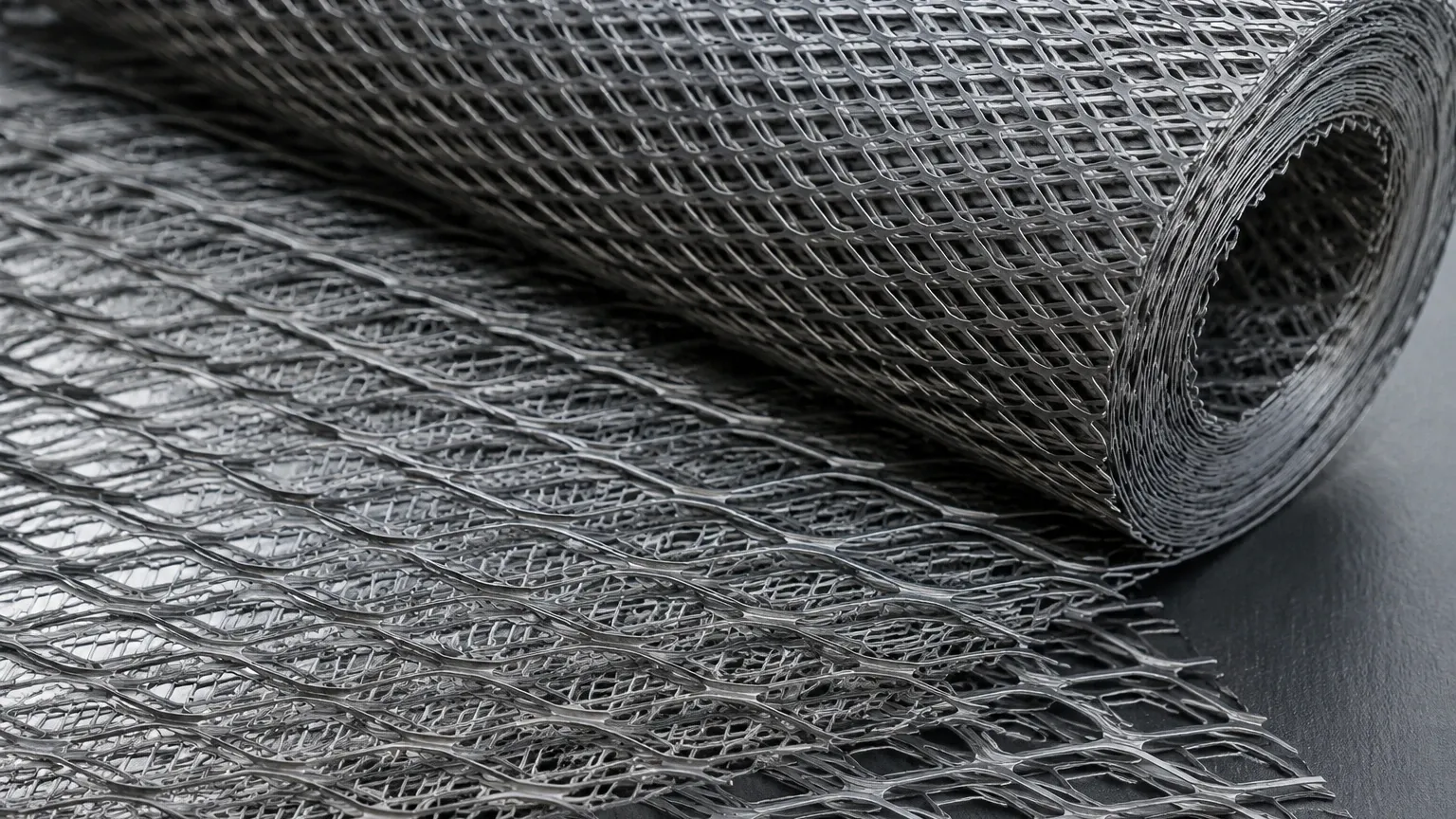
Expanded metal is produced by simultaneously slitting and stretching a solid metal sheet, creating a continuous mesh without welds or joins. This process results in a material that is structurally superior to woven wire in terms of rigidity and more cost-effective than perforated plate due to the lack of material waste. When dealing with Perforated & Expanded Metal solutions, understanding how a 4mm dimension integrates into the overall filter design is the first step toward optimized performance.
Technical Specifications and Geometric Definitions
When specifying expanded metal 4mm, it is vital to clarify which dimension is being referenced. In the industry, four primary measurements define the geometry of the mesh: the Long Way of the Diamond (LWD), the Short Way of the Diamond (SWD), the Strand Width, and the Strand Thickness.
LWD and SWD Measurements
If "4mm" refers to the aperture, it typically denotes either the SWD or the LWD. A 4mm SWD creates a relatively tight mesh suitable for medium-coarse filtration or as a protective screen against larger particulate matter. The LWD is the distance from the center of a bond to the center of the next bond across the long axis. In filtration, the ratio between LWD and SWD determines the "openness" of the mesh, which directly impacts the flow rate and the pressure drop across the filter element.
Strand Thickness and Width
Alternatively, expanded metal 4mm may refer to the thickness of the base plate. A 4mm thick expanded metal is a heavy-duty product used primarily for structural support cores in high-pressure hydraulic filters or large-scale industrial strainers. At this thickness, the material provides exceptional resistance to collapsing under differential pressure. The strand width—the amount of metal between the slits—further dictates the mechanical strength and the percentage of open area.
Material Selection: Stainless Steel for Industrial Longevity
For B2B applications, material selection is as critical as geometric precision. Kaifil specializes in stainless steel solutions because of the material's inherent resistance to corrosion, oxidation, and thermal stress. When ordering expanded metal 4mm, the choice of alloy determines the filter's compatibility with the process fluid.
Grade 304 Stainless Steel
Grade 304 is the standard for many food and beverage or general industrial applications. It offers excellent formability and weldability, making it ideal for custom-shaped filter cartridges. However, in environments with high chloride concentrations, 304 may be susceptible to pitting corrosion.
Grade 316 and 316L Stainless Steel
For chemical processing and marine applications, Grade 316 (containing molybdenum) is the preferred choice. 316L, the low-carbon version, is specifically used when the expanded metal must be welded into a housing or onto a flange. The low carbon content prevents carbide precipitation during welding, ensuring the heat-affected zones remain as corrosion-resistant as the rest of the mesh. In filtration, where integrity is paramount, 316L expanded metal 4mm provides the highest level of reliability.
Manufacturing Variations: Standard vs. Flattened
The manufacturing process of expanded metal results in two distinct finishes: standard (raised) and flattened. Each has specific implications for industrial filtration.
Standard (Raised) Expanded Metal
Standard expanded metal leaves the strands at an angle to the plane of the sheet. This creates a three-dimensional surface that can be advantageous in certain filtration scenarios. The angled strands can help break up laminar flow, inducing a degree of turbulence that may prevent the rapid buildup of a filter cake on the surface. However, the raised edges also increase the overall thickness of the component, which must be accounted for in the housing design.
Flattened Expanded Metal
Flattened expanded metal is produced by passing the standard expanded sheet through a cold-rolling reducing mill. This process flattens the strands and bonds into a single plane, resulting in a smooth, level surface. For engineers designing multi-layer filter elements, flattened expanded metal 4mm is often preferred as a support layer. Its smooth surface prevents the abrasion or puncturing of finer inner mesh layers (such as wire cloth) during pressure pulses or cleaning cycles.
Calculating Performance: Open Area and Flow Dynamics
In any filtration application, the primary goal is to achieve the required particle retention while minimizing the energy cost associated with pressure drop. The "Open Area" percentage of expanded metal 4mm is the most critical metric for this calculation.
The Open Area Formula
Unlike perforated metal, where the open area is a simple ratio of hole area to total area, expanded metal's open area is influenced by the strand width and the degree of stretching. A 4mm aperture with a narrow strand width will have a high open area (often exceeding 60-70%), allowing for high flow volumes. Conversely, a 4mm plate thickness with a wide strand width will have a much lower open area, prioritizing structural rigidity over flow efficiency.
Pressure Drop Considerations
Engineers must calculate the Expected Pressure Drop (ΔP) across the expanded metal. Because the strands in expanded metal are angled (even slightly in flattened versions), the flow path is more complex than a straight hole in a perforated plate. This complexity can lead to a slightly higher initial pressure drop, but it also provides a larger surface area for the distribution of mechanical stress, reducing the risk of fatigue failure in high-cycle systems.
Industrial Applications of 4mm Expanded Metal
The versatility of expanded metal 4mm allows it to serve multiple roles within an industrial filtration assembly. Its application is usually determined by whether it is the primary filtration media or a secondary support structure.
Support Cores for Filter Cartridges
In high-viscosity or high-pressure applications, fine wire mesh lacks the structural integrity to withstand the force of the fluid. A 4mm thick expanded metal cylinder often serves as the internal core of a filter cartridge. It provides the "skeleton" that prevents the fine mesh from collapsing inward. Because expanded metal is a single piece of material, there are no wires to fray or welds to break under vibration.
Protective Outer Sleeves
Conversely, expanded metal can be used as an outer sleeve to protect delicate filter media from mechanical damage during installation or from large debris in the influent stream. A 4mm diamond opening is effective at stopping large scale, stones, or metal fragments from reaching and damaging the precision filtration layers.
Coarse Strainers and Intake Screens
In water treatment and raw water intake systems, expanded metal 4mm (aperture size) acts as a primary strainer. It is robust enough to handle the weight of collected debris and can be easily cleaned via backwashing or mechanical scraping. The lack of joints means there are no crevices where bacteria or biofilm can easily take root, a critical factor in pharmaceutical and food-grade applications.
Engineering Considerations for Customization
When sourcing expanded metal 4mm for OEM projects, off-the-shelf solutions rarely meet the exacting standards of specialized industrial equipment. Customization is often necessary to balance weight, strength, and filtration efficiency.
Edge Treatment and Safety
One of the primary concerns with expanded metal is the "sharp" edge created by the shearing process. For filters that require frequent manual handling or cleaning, specify "bond sheared" edges or the addition of a U-edging frame. This not only improves safety but also provides a better sealing surface for gaskets and O-rings.
Tolerance and Flatness
Industrial filtration housings often have tight tolerances. If the expanded metal 4mm is used as a flat screen, its flatness must be controlled to prevent bypass. Standard expanded metal can have a slight "camber" or bow due to the stretching process. Precision leveling is a necessary post-production step for high-quality filtration components.
Cleaning and Passivation
For stainless steel expanded metal, the manufacturing process can introduce surface contaminants or deplete the chromium layer. To ensure maximum corrosion resistance, the finished component should undergo ultrasonic cleaning and chemical passivation. This is especially important in the pharmaceutical and food industries, where any surface impurity can lead to batch contamination.
Why Quality Matters in Procurement
Choosing a supplier for expanded metal 4mm involves more than comparing price per square meter. For B2B buyers, the total cost of ownership (TCO) is the more relevant metric. A lower-quality expanded metal may suffer from inconsistent strand widths, leading to uneven flow distribution and premature clogging. Furthermore, poor material certification can lead to catastrophic failure in corrosive environments.
Working with a manufacturer like Kaifil ensures that the technical nuances of the application are considered. From selecting the right LWD/SWD ratio to ensuring the 4mm thickness meets structural requirements, professional engineering support reduces the risk of system downtime. For those looking to optimize their filtration hardware, it is advisable to Review product options and application support to find the exact configuration that matches the operational stresses of the environment.
In conclusion, expanded metal 4mm is a versatile and robust material that, when correctly specified, enhances the efficiency and durability of industrial filtration systems. By focusing on material grade, geometric precision, and the specific needs of the application, engineers can leverage this material to achieve superior filtration performance and long-term cost savings.
