


Expanded Metal 6×2
In the field of industrial filtration and structural support, the specification of mesh components requires a precise balance between mechanical strength and fluid dynamics. Among the various configurations used by engineers, expanded metal 6×2 stands out as a specialized geometry frequently utilized for its unique aspect ratio and structural rigidity. This technical guide examines the engineering characteristics, material considerations, and application-specific advantages of the 6×2 expanded metal pattern, particularly within the context of high-performance filtration systems.
Technical Anatomy: Understanding the 6×2 Geometry
To properly evaluate expanded metal 6×2, it is essential to understand the nomenclature used in its manufacturing. Unlike woven wire mesh, which is defined by wire diameter and mesh count, expanded metal is defined by the dimensions of the diamond-shaped openings created during the slitting and stretching process.
SWD and LWD Specifications
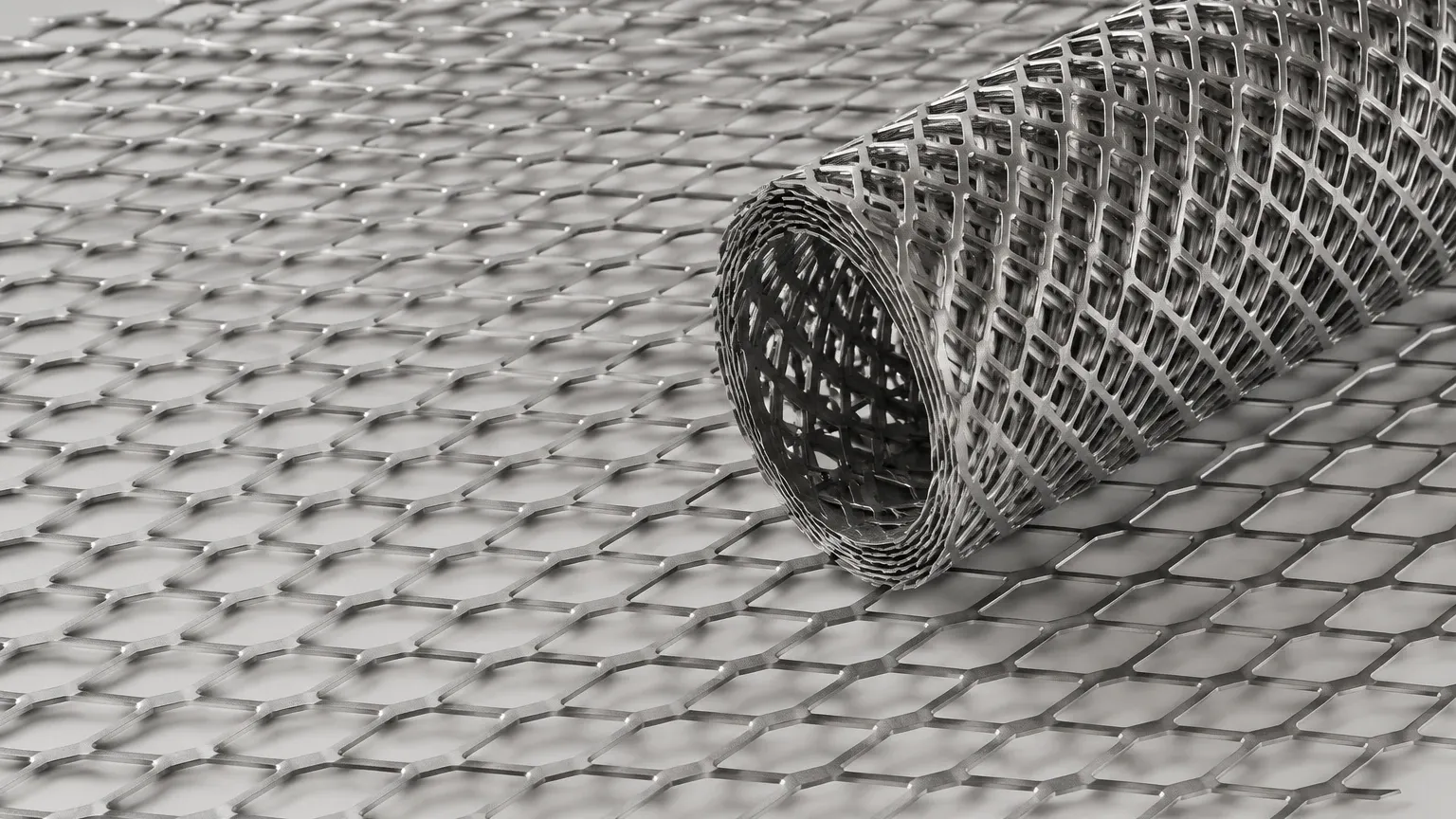
In a 6×2 configuration, the numbers typically refer to the Long Way of the Diamond (LWD) and the Short Way of the Diamond (SWD). For a 6×2 specification, the LWD is 6mm and the SWD is 2mm. This creates a narrow, elongated diamond pattern. The orientation of these openings is critical for engineers to consider, as the direction of the mesh affects both the flow of media and the structural load-bearing capacity of the sheet.
Strand Width and Thickness
The performance of the 6×2 mesh is further determined by the strand width (the amount of metal between the openings) and the material thickness. In industrial filtration, a thinner strand might be preferred to maximize the open area and reduce pressure drop, whereas a thicker strand is necessary when the mesh serves as a primary support cage for pleated filter media. The relationship between the 6×2 opening and the strand dimensions determines the "percent open area," a vital metric for calculating flow rates in hydraulic and chemical processing applications.
Material Selection for Industrial Environments
For B2B applications, particularly in the chemical, pharmaceutical, and food and beverage industries, material selection is as important as the mesh geometry. Kaifil specializes in manufacturing these components from high-grade alloys to ensure longevity and compliance with industry standards.
1. Stainless Steel 304: The standard choice for general industrial use, providing excellent strength and basic corrosion resistance. It is commonly used in water treatment and general machinery guards.
2. Stainless Steel 316L: For more demanding environments, such as chemical processing or marine applications, 316L is preferred due to its molybdenum content, which enhances resistance to pitting and crevice corrosion in chloride-rich environments.
3. Specialty Alloys: In high-temperature or highly acidic environments, materials like Monel or Inconel may be specified, though stainless steel remains the primary material for the majority of Perforated & Expanded Metal applications.
Structural Integrity: The Role of Expanded Metal 6×2 in Filtration
In industrial filtration, expanded metal 6×2 is rarely used as a standalone filter medium for fine particles. Instead, it serves as a critical structural component. Its primary roles include:
Support for Fine Filter Media
Fine wire mesh or non-woven filter fabrics lack the inherent stiffness to withstand high differential pressures. By using an expanded metal 6×2 layer as a backing, the fine media is supported across the narrow 2mm span of the SWD. This prevents the media from sagging or rupturing under the force of the fluid flow, ensuring the integrity of the filtration process.
Outer Protection Cages
Filter cartridges used in heavy-duty hydraulic or industrial water systems are often subject to mechanical impact during installation or operation. A 6×2 expanded metal outer wrap provides a robust protective barrier that shields the internal filter elements from debris and physical damage without significantly obstructing the flow.
Flow Distribution
The elongated 6mm LWD helps in distributing the fluid flow more evenly across the surface of the filter. By breaking up laminar flow and inducing a slight amount of controlled turbulence, the expanded metal can help prevent localized clogging of the primary filter layer, thereby extending the service life of the cartridge.
Comparing Flattened and Raised 6×2 Mesh
When specifying expanded metal 6×2, engineers must choose between "raised" (standard) and "flattened" finishes. This choice significantly impacts the final product's performance.
* Raised Expanded Metal: This is the product as it comes off the expanding machine. The strands are set at an angle to the plane of the sheet. For 6×2 patterns, this creates a three-dimensional surface that offers excellent grip and high rigidity. However, the angled strands can create "shadows" in the flow path, which might increase pressure drop in high-velocity systems.
* Flattened Expanded Metal: After the expansion process, the sheet is passed through a cold-rolling reducing mill. This flattens the strands and bonds back into the same plane. Flattened expanded metal 6×2 is thinner and has a smooth surface. In filtration, this is often the preferred choice for supporting delicate membranes or fine meshes, as the smooth surface eliminates sharp edges that could puncture the primary filter media.
Engineering Evaluation: Open Area and Pressure Drop
One of the most common questions engineers face is how the 6×2 pattern affects the total cost of ownership through energy consumption. The "open area" of expanded metal 6×2 is a calculation of the total area of the openings divided by the total area of the sheet.
Because the 6×2 pattern is relatively dense compared to larger patterns (like 10×5 or 20×10), it offers a higher degree of support but a lower percentage of open area. If the strand width is too large, the pressure drop (ΔP) across the filter assembly will increase, requiring pumps to work harder and increasing operational costs. Conversely, if the strand is too thin, the mesh may fail under hydraulic surge conditions. Precision manufacturing is required to ensure that the tolerances of the 6×2 mesh remain consistent across the entire production run, preventing weak spots in the filter assembly.
Customization and OEM Considerations
As a professional manufacturer, Kaifil understands that standard off-the-shelf specifications often do not meet the rigorous requirements of specialized industrial equipment. When ordering expanded metal 6×2 for OEM projects, several customization factors should be confirmed:
* Sheet Dimensions and Tolerances: Precision cutting is required to ensure the mesh fits perfectly into filter housings or frames. This includes considerations for the "camber" or flatness of the sheet.
* Edge Treatments: For many filtration applications, the edges of the expanded metal must be deburred or even hemmed to prevent injury during maintenance and to ensure a tight seal within the filter housing.
* Surface Finishes: Depending on the industry (e.g., pharmaceutical or food processing), the mesh may require electropolishing to remove surface impurities and improve corrosion resistance, or ultrasonic cleaning to ensure it is free of manufacturing oils and particulates.
Procurement Checklist: Confirming Specifications
Before moving forward with a bulk order or a custom prototype, purchasing teams and engineers should confirm the following technical details with their supplier:
1. Exact Dimensions: Confirm LWD (6mm) and SWD (2mm) and whether these are measured from the center of the bond or the inside of the opening.
2. Strand Profile: Specify both the strand thickness and the strand width.
3. Material Grade: Ensure the alloy (e.g., SS316L) is certified and that material test reports (MTRs) can be provided.
4. Finish Type: Clearly state if the application requires flattened or raised mesh.
5. Quantity and Form: Determine if the material should be delivered in flat sheets, slit-to-width coils, or pre-formed cylinders for filter cartridges.
By addressing these technical variables early in the design phase, engineers can optimize the performance of their filtration systems while minimizing the risk of premature component failure. For more detailed specifications on available patterns and custom fabrication, you can Review product options and application support through our technical resource center.
Conclusion
The expanded metal 6×2 configuration is a vital component in the toolkit of industrial engineers. Its ability to provide high-strength support within a compact, elongated diamond geometry makes it ideal for the demanding environments found in chemical processing, hydraulic systems, and pharmaceutical manufacturing. By selecting the correct material, finish, and strand dimensions, and by working with an experienced manufacturer like Kaifil, organizations can ensure their filtration solutions are both durable and efficient.
