


Expanded Metal #9 Thickness
In industrial engineering and heavy-duty manufacturing, the specification of materials is a critical factor in determining the longevity, safety, and efficiency of a system. Among the various materials used for structural support, security, and filtration, expanded metal remains a versatile choice. Specifically, the designation of #9 expanded metal is one of the most common specifications for applications requiring a balance of strength and permeability. Understanding the nuances of expanded metal #9 thickness is essential for engineers and procurement teams who must ensure that the material meets specific load-bearing and environmental requirements.
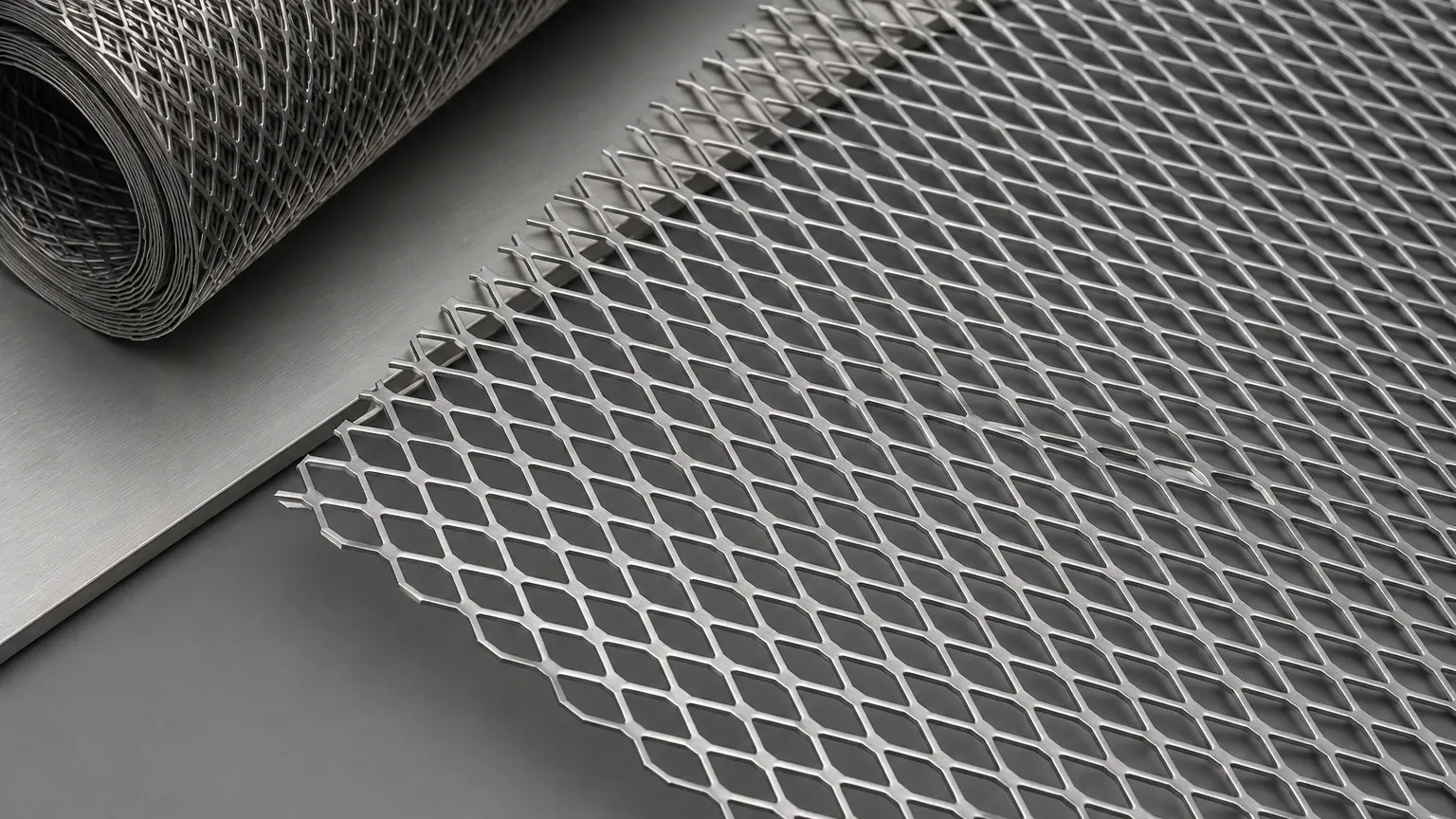
Expanded metal is produced by shearing and stretching a solid metal sheet to create a diamond-shaped pattern. Unlike perforated metal, which involves punching holes and creating scrap, expanded metal is manufactured through a process that expands the material, resulting in no waste and a unique structural profile. The "#9" designation refers to the original gauge of the steel sheet used before the expansion process, but the final physical dimensions—including the strand thickness and the overall depth of the sheet—depend heavily on whether the material is left in its standard (raised) state or subjected to flattening.
The Technical Definition of #9 Thickness
To accurately specify expanded metal #9 thickness, it is necessary to distinguish between the nominal gauge of the raw material and the actual measured thickness of the finished product. In the United States, the standard for expanded metal follows the Manufacturers' Standard Gauge for Steel Sheets.
For carbon steel, a #9 gauge sheet has a nominal thickness of approximately 0.1345 inches (3.42 mm). However, when this sheet is converted into expanded metal, the resulting "style" is referred to as #9. It is important to note that the actual thickness of the strands in the expanded state may vary slightly from the original gauge due to the mechanical stretching involved in the manufacturing process.
In the context of Perforated & Expanded Metal, engineers must look at two primary thickness measurements:
1. Strand Thickness: This is the thickness of the original base metal. For a #9 style, this typically aligns with the 0.134-inch specification.
2. Strand Width: This is the amount of metal fed into the machine between the shears. The combination of strand thickness and strand width determines the cross-sectional area of the strand, which directly impacts the material's mechanical strength.
Standard vs. Flattened Expanded Metal Profiles
The final thickness of the material is also determined by the finishing process. This is a critical distinction for B2B buyers and engineers designing filtration housings or structural walkways.
Standard (Raised) Expanded Metal
In its standard or "raised" form, expanded metal exits the machine with the strands and bonds set at a uniform angle to the plane of the sheet. This creates a three-dimensional surface that provides excellent grip and high rigidity. In this state, the "overall thickness" of the sheet is significantly greater than the expanded metal #9 thickness of an individual strand. The raised profile is often used in applications where airflow or liquid turbulence is desired, or where a non-slip surface is required for industrial flooring.
Flattened Expanded Metal
Flattened expanded metal is produced by passing the standard expanded sheet through a cold-roll reducing mill. This process flattens the strands and bonds into a single plane, resulting in a smooth, flat surface. The flattening process reduces the overall thickness of the sheet to approximately the same dimension as the original strand thickness, though it often becomes slightly thinner due to the pressure of the rollers. For #9 flattened expanded metal, the final thickness typically ranges between 0.110 inches and 0.120 inches. Flattened metal is preferred when a smooth surface is necessary to prevent snagging or when the material must be layered with other filtration media.
Material Considerations: Stainless Steel vs. Carbon Steel
While the #9 designation originated with carbon steel gauges, it is frequently applied to stainless steel filtration components. Kaifil specializes in stainless steel solutions, where material selection is driven by corrosion resistance and thermal stability.
When specifying expanded metal #9 thickness in stainless steel (such as Grade 304 or 316), the mechanical properties differ from carbon steel. Stainless steel has a higher work-hardening rate, meaning the expansion process increases the material's hardness and tensile strength. For pharmaceutical and chemical processing applications, the thickness of the #9 strand must be consistent to ensure that the structural support provided to finer filter meshes does not fail under high-pressure differentials.
In many filtration environments, #9 stainless steel expanded metal serves as the "heavy-duty" skeleton. Because stainless steel is denser and more resistant to oxidation than carbon steel, a #9 thickness in 316L stainless steel can often provide a longer service life in acidic or high-salinity environments, even if the physical dimensions are identical to a carbon steel counterpart.
Engineering Calculations and Load-Bearing Capacity
The thickness of the material is the primary determinant of its load-bearing capacity. For engineers, calculating the deflection of a panel under a specific load is a prerequisite for safety.
Expanded metal #9 thickness provides a robust profile capable of supporting significant weight over short spans. When used as a grating or a walkway, the orientation of the diamonds (Long Way of Diamond vs. Short Way of Diamond) in relation to the support beams is just as important as the thickness itself. However, the thickness of the #9 strand ensures that the material resists shearing and permanent deformation when subjected to point loads.
In filtration systems, the thickness of the expanded metal determines the "collapse pressure" of a filter cartridge. If the expanded metal is used as an internal support core, it must withstand the external pressure of the fluid being filtered. A #9 thickness is often selected for high-viscosity fluids or high-flow systems where thinner gauges, such as #13 or #18, would buckle under the pressure.
The Role of Expanded Metal in Industrial Filtration
In the realm of industrial filtration, expanded metal is rarely used as the primary filtering medium for fine particulates. Instead, it serves as a critical structural component. The relationship between the expanded metal #9 thickness and the overall design of the filter is vital for several reasons:
1. Pleat Support
In pleated filter cartridges, the expanded metal acts as a support layer that keeps the pleats open and prevents them from bunching together under flow. The #9 thickness provides the necessary rigidity to maintain pleat geometry even in turbulent flow conditions.
2. Protective Outer Cages
For large industrial filters, an outer cage made of expanded metal protects the delicate inner media from mechanical damage during installation and operation. The #9 gauge is thick enough to resist impacts while maintaining a high percentage of open area (typically between 40% and 60% for standard #9 styles), ensuring that the flow rate is not significantly restricted.
3. Pre-Filtration and Trash Racks
In water treatment and intake systems, #9 expanded metal is used as a coarse screen to remove large debris before the water reaches finer filtration stages. The thickness of the material is essential here to resist the force of moving water and the impact of heavy debris.
Quality Control and Manufacturing Tolerances
When procuring expanded metal, B2B buyers must be aware of industry-standard tolerances. According to the National Association of Architectural Metal Manufacturers (NAAMM), expanded metal dimensions are subject to specific variations.
For expanded metal #9 thickness, the tolerance on the strand thickness is typically plus or minus 10% of the nominal gauge. However, in precision applications—such as those handled by Kaifil—tighter tolerances may be required to ensure compatibility with CNC machining or automated welding processes.
Engineers should confirm the following data points with their manufacturer:
* SWD (Short Way of Diamond): The distance from the center of one bond to the center of the next bond across the short axis.
* LWD (Long Way of Diamond): The distance across the long axis.
* Strand Width: Often specified around 0.144 inches for #9 style.
* Overall Thickness: The total depth of the sheet (for raised metal).
Procurement Guide: What to Confirm Before Ordering
To ensure the success of a project involving expanded metal, the purchasing team and the engineering department must align on several technical specifications. Choosing the right expanded metal #9 thickness is only the first step.
1. Application Environment: Will the metal be exposed to corrosive chemicals? If so, stainless steel is mandatory. If the application is a dry, indoor machinery guard, carbon steel may suffice.
2. Surface Finish: Does the project require a flattened surface for aesthetic reasons or to prevent the buildup of materials? Or is a raised surface preferred for its superior strength-to-weight ratio?
3. Open Area Requirements: The percentage of open area affects both the flow rate in filtration and the visibility/ventilation in architectural applications. While #9 thickness provides strength, the strand width and diamond size will dictate how much air or liquid can pass through.
4. Customization and OEM Needs: Many industrial applications require non-standard diamond sizes or specific sheet dimensions to minimize waste. Working with a manufacturer that offers custom fabrication ensures that the expanded metal integrates seamlessly into the final product.
Conclusion
The specification of expanded metal #9 thickness is a foundational decision in industrial design. Whether it is used as a structural reinforcement, a protective barrier, or a support core in a complex filtration system, the #9 gauge offers a proven balance of durability and versatility. By understanding the differences between standard and flattened profiles, and by selecting the appropriate material grade, engineers can optimize their systems for performance and cost-effectiveness.
For those seeking precision-engineered components, exploring the options available for Perforated & Expanded Metal is the best way to ensure that the material meets the rigorous demands of modern industrial environments. From material selection to final production, focusing on technical accuracy in thickness and dimensions is the key to long-term operational success.
