


Expanded Metal #9 3 4
In the landscape of industrial materials, few configurations offer the balance of structural rigidity and open-area efficiency found in expanded metal #9 3/4. This specific designation is a cornerstone in heavy-duty filtration, safety partitioning, and architectural support. For engineers and procurement professionals, understanding the technical nuances of this material is essential for ensuring performance in demanding environments, particularly when integrated into complex filtration systems.
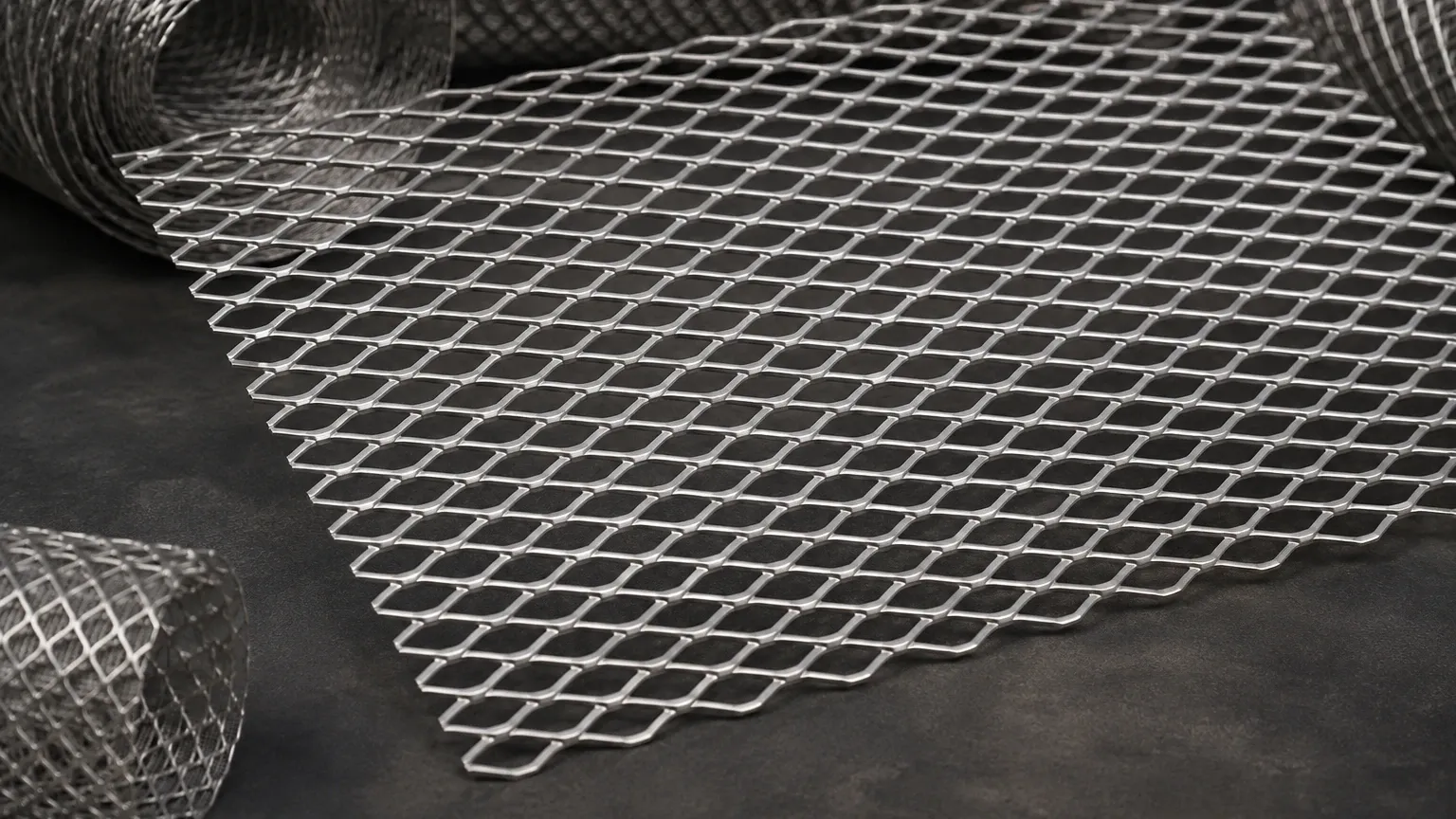
Expanded metal is manufactured through a process of simultaneous slitting and stretching. Unlike perforated metal, which involves punching holes and generating scrap, the expansion process produces no waste. The "#9 3/4" nomenclature identifies two critical physical properties: the gauge of the material (9-gauge) and the nominal width of the diamond opening (3/4 inch). When sourcing Perforated & Expanded Metal, selecting the correct style requires a deep dive into dimensional tolerances, material yield, and mechanical behavior under load.
Technical Specifications of Expanded Metal #9 3/4
To accurately specify expanded metal #9 3/4 for an industrial project, one must look beyond the nominal labels. The industry standardizes these dimensions to ensure consistency across different manufacturing batches.
Dimensional Terminology
1. SWD (Short Way of Diamond): This is the distance from the center of a bond to the center of the next bond across the short axis. For a standard 3/4" #9 style, the SWD is typically approximately 0.923 inches.
2. LWD (Long Way of Diamond): This is the distance across the long axis of the diamond. In this configuration, it usually measures around 2.00 inches.
3. SWO (Short Way of Opening): This refers to the actual clear opening width. For #9 3/4, the SWO is roughly 0.688 inches.
4. LWO (Long Way of Opening): The clear opening length, typically measuring 1.562 inches.
5. Strand Thickness: Since this is a 9-gauge product, the thickness is approximately 0.134 inches (for carbon steel) or slightly varied depending on the specific alloy used.
6. Strand Width: The width of the metal strand itself is usually around 0.150 inches.
Weight and Open Area
The #9 3/4 configuration is favored for its high strength-to-weight ratio. In carbon steel, it weighs approximately 1.80 pounds per square foot. Crucially for filtration and ventilation applications, it provides an open area of approximately 68%. This high percentage allows for significant fluid or airflow while maintaining enough structural integrity to act as a primary barrier or support mesh.
Standard vs. Flattened Expanded Metal
When evaluating expanded metal #9 3/4, engineers must decide between "Standard" (raised) and "Flattened" varieties. This choice significantly impacts both the mechanical performance and the suitability for specific filtration tasks.
Standard (Raised) Expanded Metal
Standard expanded metal comes directly from the expanding machine. The strands and bonds are set at a uniform angle to the plane of the sheet. This creates a three-dimensional surface that offers several advantages:
* Enhanced Rigidity: The angled strands act like structural trusses, providing greater resistance to bending than a flat sheet of the same weight.
* Directional Flow Control: The raised profile can be used to deflect light, air, or liquid in a specific direction.
* Superior Grip: In non-filtration contexts, such as walkways or stair treads, the raised surface provides excellent slip resistance.
Flattened Expanded Metal
Flattened expanded metal is produced by passing the standard expanded sheet through a cold-roll reducing mill. This process levels the strands and bonds, resulting in a smooth, flat surface. For industrial filtration components, flattened metal is often preferred because:
* Uniform Thickness: It provides a consistent thickness across the entire sheet, which is vital for fitting into tight tolerances within filter housings.
* Reduced Media Wear: When used as a support layer for fine wire mesh or filter paper, the smooth surface prevents the delicate media from being abraded or punctured by raised edges.
* Ease of Cleaning: The absence of crevices at the bond points makes it easier to sanitize, a critical requirement in food and beverage or pharmaceutical processing.
Engineering Considerations for Material Selection
While expanded metal #9 3/4 is available in various materials, the choice of substrate is dictated by the chemical and thermal environment of the application. As a specialist in stainless steel filtration, Kaifil emphasizes the importance of matching the alloy to the operational stresses.
Stainless Steel (304 and 316L)
Stainless steel is the gold standard for expanded metal in filtration.
* Type 304: Offers excellent corrosion resistance for most general industrial applications. It is widely used in water treatment and general machinery guards.
* Type 316L: Contains molybdenum, providing superior resistance to chlorides and pitting. This is the preferred choice for marine environments, chemical processing, and pharmaceutical applications where aggressive cleaning agents are used.
Carbon Steel
Carbon steel expanded metal is a cost-effective solution for structural applications where corrosion is not a primary concern or where the material will be subsequently galvanized or powder-coated. However, for long-term filtration performance, the risk of oxidation usually makes stainless steel the more economical choice over the total lifecycle of the equipment.
Aluminum
Aluminum expanded metal offers a lightweight alternative with natural corrosion resistance. It is frequently used in HVAC systems and architectural applications where weight reduction is a priority, though it lacks the tensile strength of steel or stainless steel #9 gauge variants.
Applications in Industrial Filtration and Protection
Expanded metal #9 3/4 is a versatile component that serves multiple roles within an industrial facility. Its primary utility lies in its ability to provide a rigid skeletal structure for more delicate components.
Support for Filter Media
In high-pressure filtration systems, fine wire mesh or synthetic membranes lack the inherent strength to withstand the differential pressure across the filter element. Expanded metal #9 3/4 is often used as a "backup" or support tube. Its 68% open area ensures that it does not significantly contribute to pressure drop, while its 9-gauge thickness provides the necessary hoop strength to prevent the collapse of the filter cartridge.
Coarse Strainers and Pre-filters
In water intake systems or heavy industrial runoff, expanded metal #9 3/4 acts as a primary strainer. It effectively captures large debris—such as stones, wood, or large plastic waste—before the fluid reaches more sensitive downstream equipment like pumps or fine-mesh filters.
Machine Guarding and Safety
Beyond filtration, this material is extensively used for machine guards. The 3/4" opening allows for visual inspection of the machinery and adequate ventilation while preventing personnel from coming into contact with moving parts. The 9-gauge thickness ensures that the guard can withstand accidental impacts without deforming into the danger zone.
Customization and Manufacturing Precision
For B2B procurement, off-the-shelf solutions rarely meet the exact requirements of specialized filtration systems. Customization is where the value of a professional manufacturer becomes apparent. When sourcing Perforated & Expanded Metal, several customization factors must be addressed:
1. Sheet Sizing and Shearing: While standard sheets are often 4'x8' or 4'x10', industrial filters often require precise circular blanks or specific rectangular strips. Precision shearing ensures that the diamonds are cut consistently, which is vital for welding the metal into cylinders.
2. Edge Conditions: Engineers must specify whether they require "bonded" edges (where the cut happens through the center of the bond, leaving no sharp prongs) or "random" edges. For filter cartridges, bonded edges are generally required to ensure a clean weld and to prevent bypass of the fluid.
3. Forming and Welding: Expanded metal #9 3/4 is thick enough to require specialized equipment for rolling into small-diameter cylinders. Professional manufacturers like Kaifil use heavy-duty rollers and TIG or plasma welding to ensure the seam is as strong as the base material.
4. Surface Treatments: Depending on the application, the metal may undergo electropolishing (to improve corrosion resistance and cleanability) or pickling and passivation to remove surface contaminants introduced during the manufacturing process.
Total Cost of Ownership and Evaluation Criteria
When selecting a supplier for expanded metal #9 3/4, purchasing teams should look beyond the initial price per square foot. The total cost of ownership is influenced by the material's durability, the precision of its dimensions, and its impact on the efficiency of the larger system.
Quality Evaluation Checklist
* Material Certification: Does the supplier provide Mill Test Reports (MTRs) to verify the chemical composition of the stainless steel? This is critical for compliance in regulated industries like food and pharma.
* Flatness Tolerances: For flattened expanded metal, what is the maximum allowable out-of-flatness? Excessive bowing can lead to assembly failures in filter housings.
* Consistency of Expansion: Are the diamond openings uniform across the entire sheet? Variations in expansion can indicate poor calibration of the machinery, leading to weak spots in the mesh.
* Burr Removal: Does the manufacturing process leave excessive burrs? In filtration, burrs can break off and contaminate the filtrate or damage the secondary filter media.
Conclusion
Expanded metal #9 3/4 is a high-performance material that bridges the gap between light-duty meshes and heavy structural plates. Its unique geometry and the 9-gauge thickness of the strands make it an ideal candidate for the most demanding industrial filtration and support applications. By understanding the technical specifications—from SWD/LWD dimensions to the benefits of flattened versus raised profiles—engineers can optimize their designs for maximum durability and flow efficiency.
As industrial processes become more complex, the reliance on precision-manufactured components like Perforated & Expanded Metal continues to grow. Choosing a partner that understands the engineering rigors of filtration ensures that these components perform reliably under pressure, protecting both downstream equipment and the integrity of the final product.
