


Expanded Metal at Menards
For maintenance managers, engineers, and procurement specialists, sourcing materials often begins with a search for local availability. Finding expanded metal at Menards or similar big-box home improvement retailers is a common starting point for small-scale repairs, prototyping, or general facility maintenance. However, as projects scale in complexity or move into specialized industrial environments—such as chemical processing, food production, or high-pressure hydraulic systems—the limitations of retail-grade materials become a critical engineering consideration.
Understanding the distinction between consumer-grade expanded metal and industrial-grade Perforated & Expanded Metal is essential for ensuring the longevity, safety, and efficiency of industrial filtration and structural components. This guide examines the technical specifications of expanded metal, the variables that define its performance, and how to determine when a professional manufacturing partner is required over a retail supplier.
Understanding Expanded Metal Specifications
Expanded metal is a unique material produced by simultaneously slitting and stretching a solid sheet of metal. This process creates a diamond-shaped pattern of openings, which provides a high strength-to-weight ratio and excellent structural integrity. Unlike woven wire mesh, expanded metal is a single piece of material with no joins or welds that can unravel.
When evaluating expanded metal at Menards or industrial suppliers, several key geometric variables must be understood:
1. LWD (Long Way of Design): The distance from a point on one diamond to the same point on the next diamond across the long axis.
2. SWD (Short Way of Design): The distance across the short axis of the diamond.
3. Strand Width: The amount of metal between the diamonds.
4. Strand Thickness: The thickness of the original base metal.
5. Bond: The intersection where two strands meet.
Raised vs. Flattened Expanded Metal
Retail outlets typically stock "raised" expanded metal, where the strands are turned at an angle to the plane of the sheet. While this provides excellent grip for walkways or architectural accents, it may not be suitable for precision filtration. Industrial applications often require "flattened" expanded metal, which has been passed through a cold-roll reducing mill to create a smooth, level surface. Flattened metal is easier to clean and provides a more consistent interface when used as a support structure for fine wire mesh filters.
Retail vs. Industrial: When to Choose Professional Manufacturing
Sourcing expanded metal at Menards is often a matter of convenience. For a local facility manager needing a small piece of carbon steel to patch a security fence or a vent cover, retail stock is sufficient. However, industrial engineering requirements often exceed what is available on a retail shelf.
Material Availability
Menards and similar retailers primarily stock carbon steel and occasionally aluminum. In industrial filtration, material compatibility is non-negotiable. Applications involving corrosive chemicals, high temperatures, or strict hygiene standards (such as in the pharmaceutical or food and beverage industries) require 304 or 316L stainless steel. Professional manufacturers like Kaifil specialize in these high-performance alloys, providing the corrosion resistance necessary for demanding environments.
Precision and Tolerances
Retail expanded metal is manufactured to general commercial tolerances. For an engineer designing a custom filter cartridge or a precision screen for a hydraulic system, these tolerances are often too broad. Industrial-grade manufacturing ensures that the LWD, SWD, and open area percentages are consistent across the entire sheet, which is vital for calculating flow rates and pressure drops accurately.
Customization and OEM Support
When you purchase expanded metal at Menards, you are limited to standard sheet sizes (typically 2'x4' or 4'x8'). Industrial projects often require custom dimensions, specific border configurations (solid margins), or specialized diamond sizes that are not part of a standard retail catalog. A professional manufacturer can provide OEM solutions, including custom-cut shapes, specialized forming, and integrated components that reduce assembly time on the factory floor.
Engineering Considerations for Industrial Filtration
In the context of industrial filtration, expanded metal serves two primary roles: as a primary coarse filter or as a structural support for finer filter media. Selecting the right specification requires a deep dive into engineering physics.
Open Area and Flow Dynamics
The "open area" of expanded metal refers to the percentage of the sheet that is comprised of holes. This figure directly impacts the flow rate of the fluid or gas being filtered. If the open area is too low, the system will experience a significant pressure drop, forcing pumps to work harder and increasing energy consumption. Conversely, if the open area is too high, the structural integrity of the filter may be compromised under high-pressure conditions.
Mechanical Strength and Pressure Resistance
In hydraulic and high-pressure water treatment applications, the filter element must withstand significant differential pressure. Expanded metal provides superior rigidity compared to woven mesh. Engineers must calculate the yield strength of the material based on the strand thickness and the alloy type. Stainless steel expanded metal, for instance, offers a higher strength-to-weight ratio than many other perforated materials, making it ideal for supporting delicate filter membranes in high-stress environments.
Cleaning and Maintenance
For industries like food processing or pharmaceuticals, the ability to sanitize equipment is paramount. Raised expanded metal can trap particles in the bonds of the diamonds, making it difficult to clean. Industrial-grade flattened stainless steel expanded metal provides a smooth surface that facilitates Clean-in-Place (CIP) procedures, reducing the risk of cross-contamination and extending the service life of the filtration component.
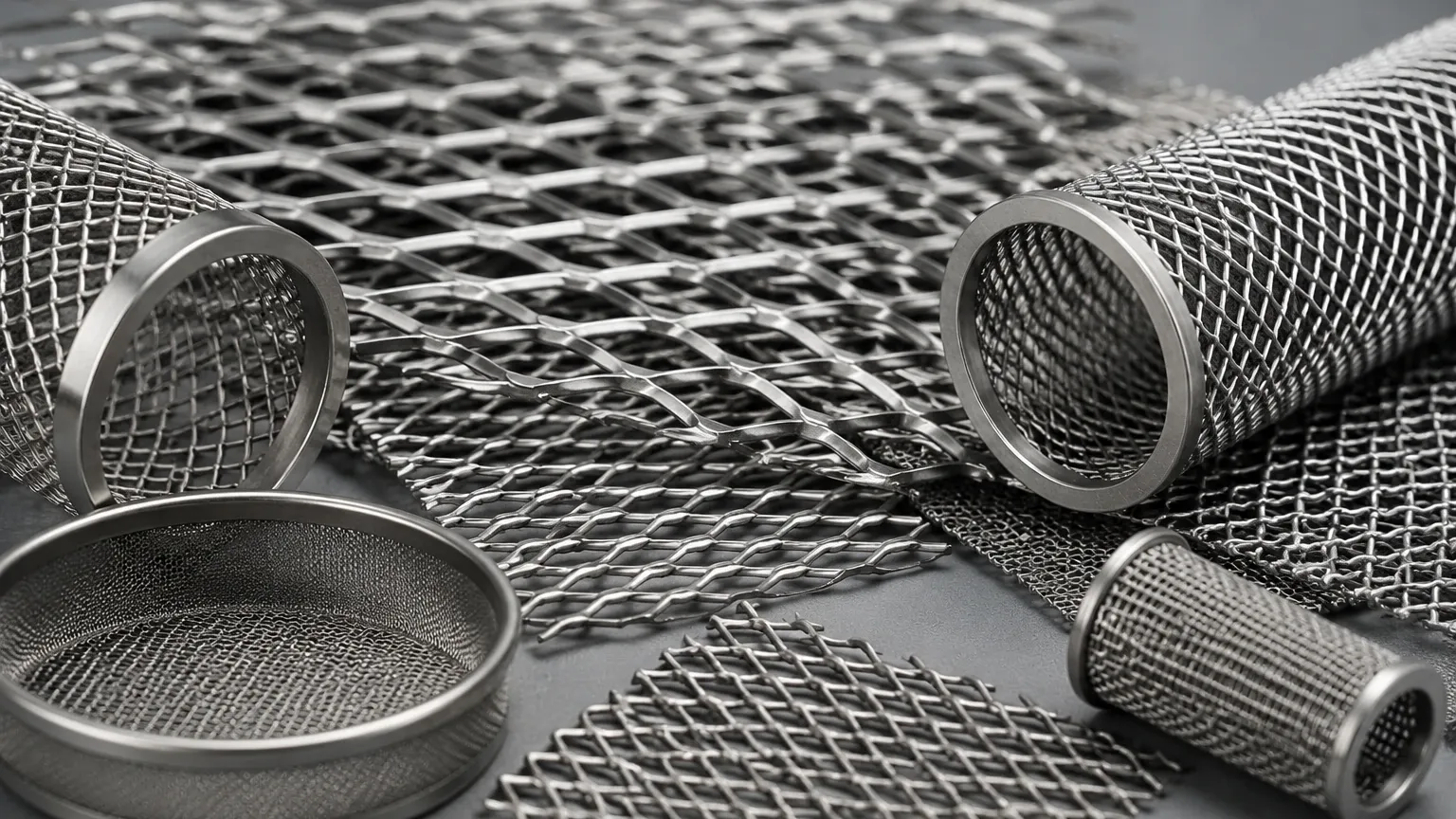
Applications of Perforated & Expanded Metal in Industry
While expanded metal at Menards might be used for a home garden trellis or a simple radiator cover, industrial-grade Perforated & Expanded Metal is a staple in several high-stakes sectors:
* Chemical Processing: Used as catalyst support grids and intake screens where resistance to aggressive solvents and acids is required.
* Food and Beverage: Employed in drying trays, smoking racks, and coarse filtration for juice or beverage processing, where 316L stainless steel is the standard for food safety.
* Hydraulic Systems: Acts as a protective outer wrap or inner core for hydraulic filter cartridges, protecting the pleated media from mechanical damage and collapse.
* Water Treatment: Used in large-scale intake screens to prevent debris from entering sensitive filtration systems, often requiring custom-sized panels for municipal or industrial plants.
* Aerospace and Automotive: Utilized for heat shields and acoustic damping components where weight reduction and heat dissipation are critical.
Evaluating Total Cost of Ownership (TCO)
For purchasing teams, the initial price of expanded metal at Menards may seem attractive compared to a custom industrial order. However, the Total Cost of Ownership (TCO) often tells a different story.
1. Durability: Retail-grade carbon steel will rust quickly in industrial or outdoor environments, requiring frequent replacement. Investing in industrial-grade stainless steel significantly extends the replacement cycle.
2. Labor Costs: If a maintenance team has to spend hours cutting and bending retail sheets to fit a specific machine, the labor costs quickly outweigh the savings of the raw material. Custom-fabricated components arrive ready for installation.
3. System Efficiency: Using a material with an unoptimized open area can lead to higher energy costs and premature pump failure. Precision-engineered expanded metal ensures the system operates at peak efficiency.
4. Risk Mitigation: In regulated industries, using non-certified materials can lead to compliance issues or catastrophic system failures. Industrial suppliers provide material certifications (MTRs) that guarantee the chemical and physical properties of the metal.
Selecting the Right Supplier for Custom Projects
If your project requires more than a standard sheet of carbon steel, the transition from a retail search to a professional partnership is necessary. When evaluating a manufacturer for your filtration or structural needs, consider the following criteria:
* Material Expertise: Does the supplier work with a variety of alloys, including different grades of stainless steel, aluminum, and specialty metals?
* Customization Capabilities: Can they provide custom diamond patterns, specific open areas, and precision-cut shapes?
* Quality Standards: Do they have a robust quality management system in place? For filtration, consistency is key to performance.
* Engineering Support: Will the supplier work with your engineering team to determine the best material and pattern for your specific application?
Conclusion
While searching for expanded metal at Menards is a practical step for simple, non-critical tasks, industrial applications demand a higher level of precision, material integrity, and technical support. For engineers and procurement professionals, the focus should remain on the specific requirements of the application—be it chemical compatibility, pressure resistance, or filtration accuracy.
By choosing professional-grade Perforated & Expanded Metal, companies can ensure that their systems are built for long-term reliability and efficiency. Whether you are designing a new filtration system or upgrading an existing industrial process, understanding the technical boundaries of your materials is the first step toward engineering success. Manufacturers like Kaifil provide the specialized knowledge and custom capabilities that go far beyond the retail shelf, delivering dependable solutions for the world’s most demanding industrial environments.
