


Expanded Metal at Lowes
For maintenance managers, facility engineers, and procurement specialists, sourcing materials quickly is often a priority. When a machine guard fails or a small-scale drainage grate needs immediate replacement, looking for expanded metal at Lowes or other big-box hardware retailers is a common first step. These retail outlets provide immediate accessibility for general-purpose applications. However, in industrial filtration, chemical processing, and high-precision engineering, the requirements for material integrity, chemical compatibility, and dimensional tolerances often exceed what is available on a retail shelf.
Understanding the distinction between consumer-grade materials and industrial-grade Perforated & Expanded Metal is essential for ensuring the longevity and safety of industrial systems. This guide examines the technical specifications of expanded metal, the limitations of retail sourcing for B2B applications, and the engineering criteria that should dictate procurement decisions.
Understanding Expanded Metal Specifications
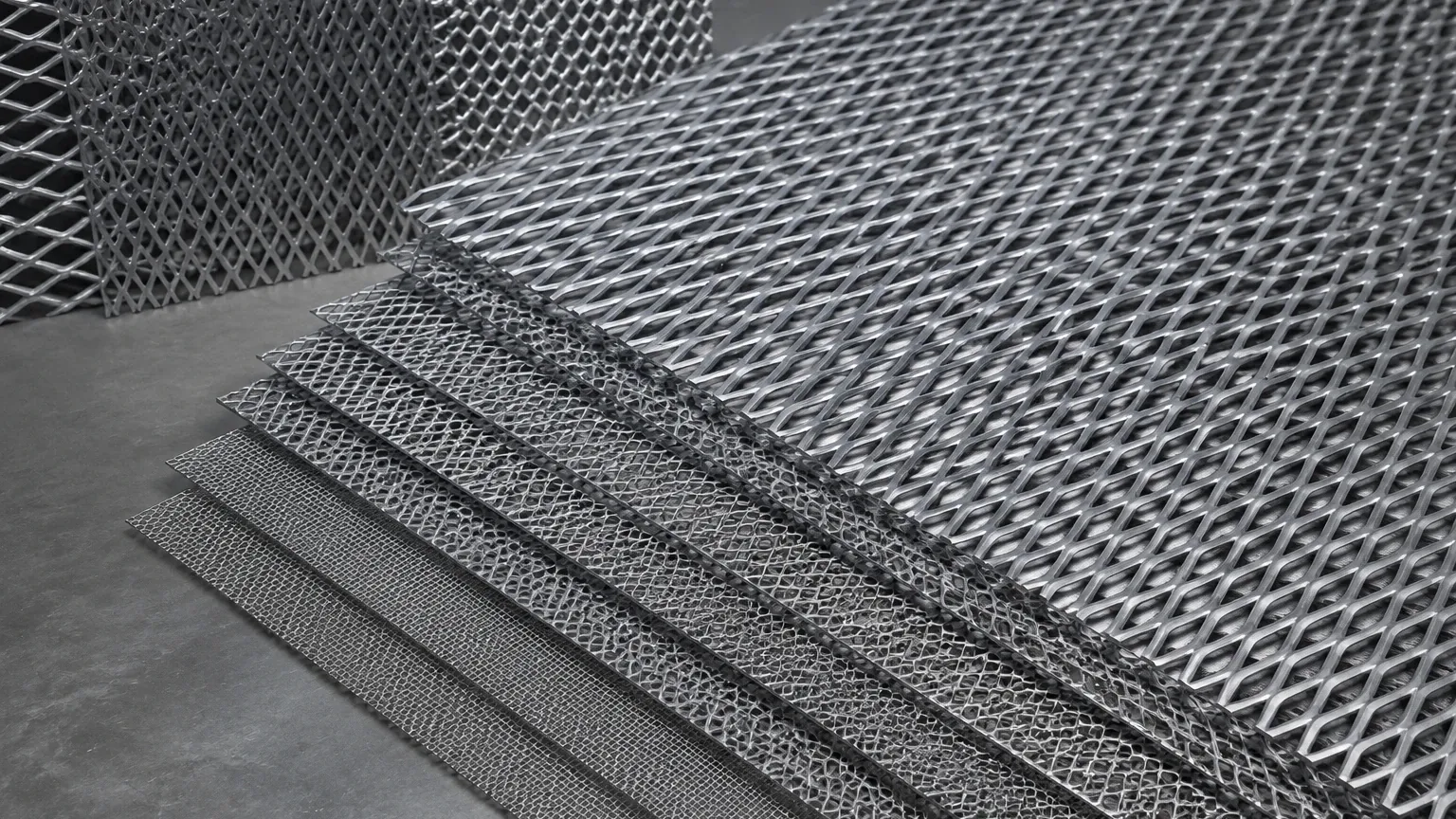
Expanded metal is manufactured by simultaneously slitting and stretching a solid sheet of metal. This process creates a diamond-shaped pattern of openings, supported by interconnected strands of metal. Unlike perforated metal, which involves punching holes and creating scrap (slugs), expanded metal is produced with virtually no waste, making it a highly resource-efficient material.
When evaluating expanded metal, engineers must consider several key technical parameters:
* SWD (Short Way of Design): The distance from the center of one bond to the center of the next bond across the short axis of the diamond.
* LWD (Long Way of Design): The distance across the long axis of the diamond.
* Strand Width: The amount of metal fed into the expanding machine between each stroke.
* Strand Thickness: The thickness of the original base metal.
* Open Area: The percentage of the sheet that is open space, which is critical for determining flow rates in filtration and ventilation applications.
Retail stock, such as expanded metal at Lowes, typically focuses on standard "raised" expanded metal. In industrial settings, "flattened" expanded metal—which is passed through a cold-rolling mill to create a smooth, level surface—is often preferred for filter support and safety flooring to prevent snagging and improve structural consistency.
Retail vs. Industrial Grade: The Engineering Gap
While sourcing expanded metal at Lowes is convenient for a one-off repair or a residential project, industrial environments demand a higher level of material certification and precision. There are several critical areas where retail-grade products may fall short of industrial requirements.
1. Material Selection and Traceability
Retail outlets generally stock a limited range of materials, most commonly carbon steel (often galvanized) or basic aluminum. In industrial filtration and chemical processing, these materials may lack the necessary corrosion resistance. For example, applications involving acidic solutions or high-temperature steam require specific grades of stainless steel, such as 304, 316, or 316L. Industrial manufacturers like Kaifil provide full material traceability and Mill Test Reports (MTRs), ensuring that the alloy composition meets the exact specifications required for the environment.
2. Dimensional Tolerances
In a retail setting, expanded metal sheets are often sold in pre-cut sizes like 12"x24" or 24"x36". These sheets are frequently cut with "random edges," meaning the diamonds are not symmetrical at the borders. For an engineer designing a custom filter cartridge or a precision machine guard, random edges can complicate welding and assembly. Industrial-grade production allows for "bonded edges," where the sheet is cut precisely through the center of the bonds, providing a clean, weldable perimeter.
3. Consistency Across Batches
For OEM (Original Equipment Manufacturer) applications, consistency is paramount. If a manufacturer is producing 1,000 filtration units, every piece of expanded metal must have the exact same open area and strand thickness to ensure uniform performance. Retail inventory is sourced from various suppliers, leading to significant variations in diamond geometry and material hardness between batches.
Applications in Industrial Filtration
Expanded metal serves a vital role in filtration systems, often acting as the structural backbone for finer filter media. Because of its high strength-to-weight ratio, it can withstand significant pressure differentials without deforming.
Filter Support Tubes
In hydraulic and liquid filtration, expanded metal is often rolled into cylinders to support wire mesh or pleated paper elements. The diamond pattern provides a high percentage of open area, minimizing pressure drop while preventing the primary filter media from collapsing under the force of the fluid flow.
Pre-Filtration and Strainers
For larger particulate removal, expanded metal can act as a standalone strainer. In water treatment or food processing, stainless steel expanded metal is used to capture large debris before the fluid reaches more sensitive downstream components. The choice of SWD and LWD is critical here; an incorrect specification can lead to premature clogging or the passage of harmful contaminants.
Air and Gas Filtration
In HVAC and industrial air intake systems, expanded metal is used to secure filter pads and provide a rigid frame. The aerodynamic properties of the expanded strands can also help in diffusing airflow, ensuring that the air passes evenly through the entire surface of the filter media.
Key Evaluation Criteria for Procurement
Before deciding to use retail-sourced expanded metal at Lowes for a professional project, engineers and purchasing teams should confirm the following details:
* Chemical Compatibility: Will the material be exposed to caustic cleaning agents, salt spray, or extreme pH levels? If so, standard galvanized steel will likely fail prematurely.
* Load-Bearing Requirements: Is the metal being used as a walkway, a heavy-duty grate, or a structural support? Retail-grade mesh is often too thin for significant load-bearing applications.
* Environmental Exposure: Will the component be used outdoors? UV resistance and oxidation rates must be accounted for in the material selection process.
* Regulatory Compliance: Does the application require FDA-compliant materials for food contact, or 3A sanitary standards for pharmaceutical use? Retail products rarely carry these certifications.
* Total Cost of Ownership (TCO): While the initial price of a single sheet at a retail store might seem low, the cost of frequent replacements due to corrosion or structural failure—plus the labor costs of re-fabrication—often makes custom industrial solutions more cost-effective over the long term.
The Role of Customization in Industrial Success
One of the primary advantages of working with an industrial manufacturer like Kaifil is the ability to customize the filtration component to the specific needs of the application. Unlike the fixed inventory found when looking for expanded metal at Lowes, industrial production offers a wide array of variables:
* Custom Mesh Sizes: Tailoring the diamond dimensions to optimize the balance between structural strength and flow rate.
* Specialized Coatings: Options for powder coating, PVC coating, or electro-polishing to enhance durability and cleanliness.
* Precision Secondary Operations: Industrial suppliers can provide expanded metal that is already sheared to size, notched, rolled, or welded into finished components, reducing the workload for the client’s internal production team.
* Material Variety: Access to exotic alloys, high-grade stainless steels, and various aluminum tempers that are not available in the consumer market.
Conclusion
For small-scale, non-critical repairs, the expanded metal at Lowes serves as a convenient and accessible resource. However, for industrial professionals tasked with maintaining high-performance filtration systems or building durable industrial equipment, the limitations of retail-grade materials are significant.
When precision, material traceability, and long-term reliability are required, partnering with a specialized manufacturer is the most prudent path. By understanding the technical nuances of SWD, LWD, and material grades, engineers can ensure that their choice of expanded metal contributes to the efficiency and safety of their operations. For those seeking high-performance solutions, exploring professional options in Perforated & Expanded Metal ensures that the final product meets the rigorous demands of the modern industrial landscape.
