


Expanded Metal Construction
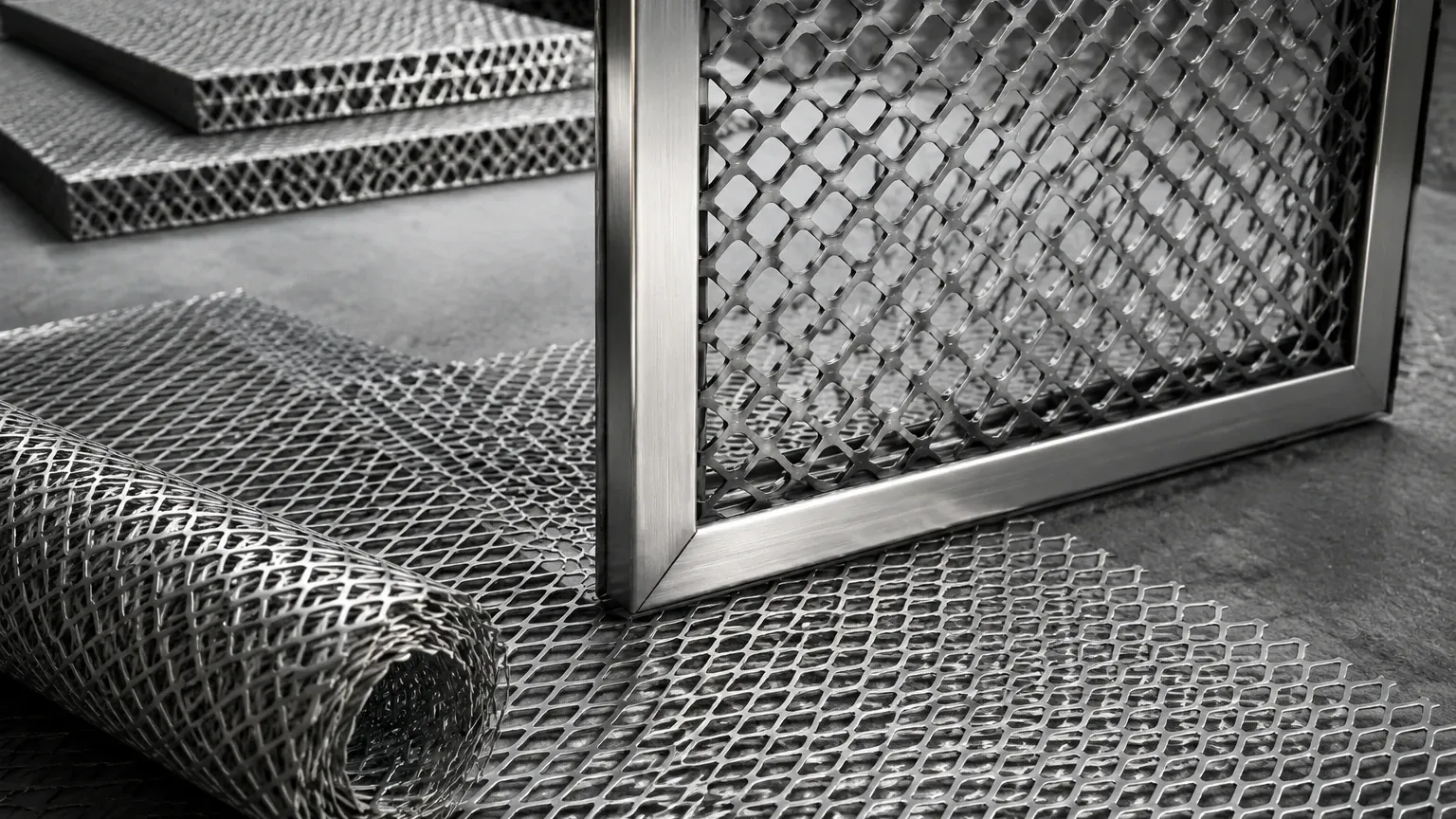
In industrial engineering and manufacturing, the choice of structural and filtration materials often dictates the efficiency, longevity, and safety of a system. One of the most versatile methods for creating rigid yet permeable metal sheets is through expanded metal construction. Unlike perforated metal, which involves punching holes and removing material, expanded metal is produced through a process of simultaneous slitting and stretching. This results in a unique diamond-patterned mesh that offers high structural integrity with minimal material waste.
For engineers and procurement specialists in sectors such as chemical processing, pharmaceuticals, and hydraulic systems, understanding the nuances of expanded metal construction is essential. This guide examines the technical parameters, material considerations, and application-specific advantages of expanded metal, providing the factual foundation necessary for informed selection in demanding industrial environments.
The Technical Process of Expanded Metal Construction
The fundamental principle behind expanded metal construction is the cold-forming process. A solid sheet or coil of metal is fed through an expanding machine equipped with a specialized knife. As the knife descends, it slits the metal while simultaneously stretching it forward. This mechanical action creates a series of diamond-shaped openings, where the "strands" are the metal strips and the "bonds" are the intersections where the strands meet.
Because the metal is stretched rather than cut out, the process is highly resource-efficient. There is virtually no scrap generated during the expansion itself, making it a cost-effective alternative to other mesh types. Furthermore, the cold-working involved in the expansion process typically increases the mechanical strength and hardness of the material, providing a rigid structure that can withstand significant pressure without deforming.
Standard vs. Flattened Expanded Metal
There are two primary forms of expanded metal construction used in industrial filtration and structural support:
1. Standard (Raised) Expanded Metal: In this form, the strands and bonds are set at a uniform angle to the plane of the sheet. This creates a three-dimensional surface that provides excellent grip and high rigidity. In filtration, the raised profile can help create turbulence in fluid flow, which may be desirable in certain mixing or heat-exchange applications.
2. Flattened Expanded Metal: To produce this, standard expanded metal is passed through a cold-roll reducing mill. This process flattens the strands and bonds back into a single plane, resulting in a smooth, flat surface. Flattened expanded metal is often preferred when the mesh serves as a support for fine wire mesh filters or when a precise thickness is required for integration into tight mechanical assemblies.
Material Selection and Industrial Compatibility
The performance of expanded metal depends heavily on the base material. While carbon steel and aluminum are common in architectural and general industrial use, high-performance applications—particularly those involving filtration—require materials that can withstand corrosive environments and extreme temperatures.
Stainless Steel Solutions
Stainless steel is the industry standard for expanded metal construction in the chemical, food and beverage, and pharmaceutical sectors. Kaifil specializes in utilizing grades such as 304, 316, and 316L to ensure long-term durability.
* Grade 304: Offers excellent corrosion resistance and is suitable for most general industrial applications.
* Grade 316/316L: Contains molybdenum, providing superior resistance to chlorides and pitting. This is critical for marine environments, chemical processing plants, and pharmaceutical manufacturing where aggressive cleaning agents are used.
Specialized Alloys
For environments involving high-temperature oxidation or specific chemical catalysts, expanded metal can be constructed from nickel alloys, titanium, or Monel. The choice of material must align with the pH levels, temperature fluctuations, and pressure requirements of the specific industrial process.
Key Engineering Parameters for Specification
When specifying expanded metal for a project, engineers must define several critical dimensions to ensure the component meets performance expectations. These parameters determine the open area, flow rate, and structural load capacity.
* Long Way of Design (LWD): The distance from the center of one bond to the center of the next bond across the long axis of the diamond.
* Short Way of Design (SWD): The distance from the center of one bond to the center of the next bond across the short axis of the diamond.
* Strand Width: The amount of metal fed into the machine between the slits, which determines the thickness of the individual "wires" in the mesh.
* Strand Thickness: The original thickness of the base metal sheet.
* Open Area Percentage: This is a vital calculation for filtration. It is the ratio of the area of the openings to the total area of the sheet. A higher open area reduces pressure drop but may compromise structural rigidity.
By manipulating these variables during the Perforated & Expanded Metal manufacturing process, Kaifil can customize the mesh to provide the exact balance of permeability and strength required for a specific application.
Expanded Metal in Industrial Filtration Systems
In the context of industrial filtration, expanded metal construction serves two primary roles: as a primary filter medium and as a structural support component.
Support Cores and Outer Guards
In many stainless steel filter cartridges, expanded metal is used to create the internal support core or the outer protective guard. The diamond structure provides exceptional hoop strength, allowing the cartridge to resist collapsing under high differential pressure. Because the bonds are integral to the sheet (not welded or woven), there is no risk of the mesh unraveling or individual wires shifting, which is a common failure point in woven wire cloth under high-vibration conditions.
Pre-Filtration and Debris Removal
Larger-gauge expanded metal is often employed in water treatment and intake systems as a pre-filter. It effectively captures large debris, protecting more sensitive downstream components like fine membranes or high-precision pumps. The angular nature of the strands in raised expanded metal can also assist in breaking up large particulate matter in slurry processing.
Comparing Expanded Metal to Perforated Metal
While both Perforated & Expanded Metal are used for similar industrial purposes, their construction methods lead to different performance profiles.
* Weight-to-Strength Ratio: Expanded metal generally offers a higher strength-to-weight ratio. Because the material is stretched, a single pound of raw metal can produce several square feet of expanded mesh without losing structural integrity.
* Waste and Sustainability: Perforated metal construction results in "slugs"—the circular or square pieces of metal punched out of the sheet. While these are recyclable, the process is inherently more wasteful than expansion.
* Flow Dynamics: Perforated metal provides a more predictable and uniform flow path, which is often required for high-precision gas filtration. Expanded metal, with its angled strands, creates more turbulence, which can be an advantage in applications requiring thorough mixing or heat dissipation.
Quality Assurance and Procurement Considerations
For B2B buyers, the total cost of ownership for expanded metal components is influenced by the quality of the manufacturing process. Poorly executed expanded metal construction can result in uneven diamond sizes, jagged edges (burrs), or material fatigue at the bonds.
When evaluating a supplier like Kaifil, engineers should confirm the following:
1. Dimensional Tolerances: Ensure the LWD and SWD variations are within the acceptable range for the housing or assembly.
2. Surface Finish: In food and pharmaceutical applications, the metal must be free of burrs and oil residues. Electropolishing or passivation may be required to ensure the surface meets hygiene standards.
3. Flatness Requirements: If the mesh is being used as a substrate for thin-film media, the flatness of the sheet is critical to prevent punctures or uneven sealing.
4. Edge Configuration: Buyers should specify whether they require "random sheared" edges (where diamonds are cut through) or "bond sheared" edges (where the cut follows the bond for a smoother finish).
Maintenance and Replacement Cycles
One of the primary benefits of stainless steel expanded metal construction is its longevity. In many hydraulic and chemical systems, these components are designed to be permanent or semi-permanent. Unlike disposable synthetic filters, stainless steel expanded metal can often be cleaned via backwashing, ultrasonic cleaning, or chemical baths, significantly reducing the long-term operational cost.
However, in high-velocity systems or those handling abrasive slurries, erosion of the strands can occur over time. Regular inspection of the bond integrity and strand thickness is recommended to prevent structural failure that could lead to downstream contamination.
Conclusion
Expanded metal construction represents a pinnacle of efficient engineering, offering a unique combination of strength, permeability, and cost-effectiveness. Whether used as a rigid core for a high-pressure filter cartridge or as a protective screen in a chemical reactor, the performance of expanded metal is a direct result of precise manufacturing and material selection. By understanding the technical parameters of LWD, SWD, and strand geometry, and by selecting the appropriate stainless steel grade, industrial professionals can ensure their systems operate with maximum reliability. For those seeking specialized solutions, reviewing Perforated & Expanded Metal options is the first step toward optimizing industrial filtration and structural support.
