


Expanded Metal Cost
In industrial filtration and structural engineering, selecting the right material involves a complex balance between performance specifications and budgetary constraints. Expanded metal is frequently chosen for its unique structural integrity and material efficiency. However, for procurement teams and design engineers, understanding the nuances of expanded metal cost is essential for optimizing project outcomes. Unlike traditional perforated sheets, expanded metal is produced through a process of slitting and stretching, which eliminates material waste and significantly alters the economic profile of the component.
This guide examines the technical factors influencing the pricing of expanded metal, the engineering trade-offs involved in material selection, and the total cost considerations for high-performance applications in chemical processing, filtration, and industrial manufacturing.
The Economics of the Expansion Process
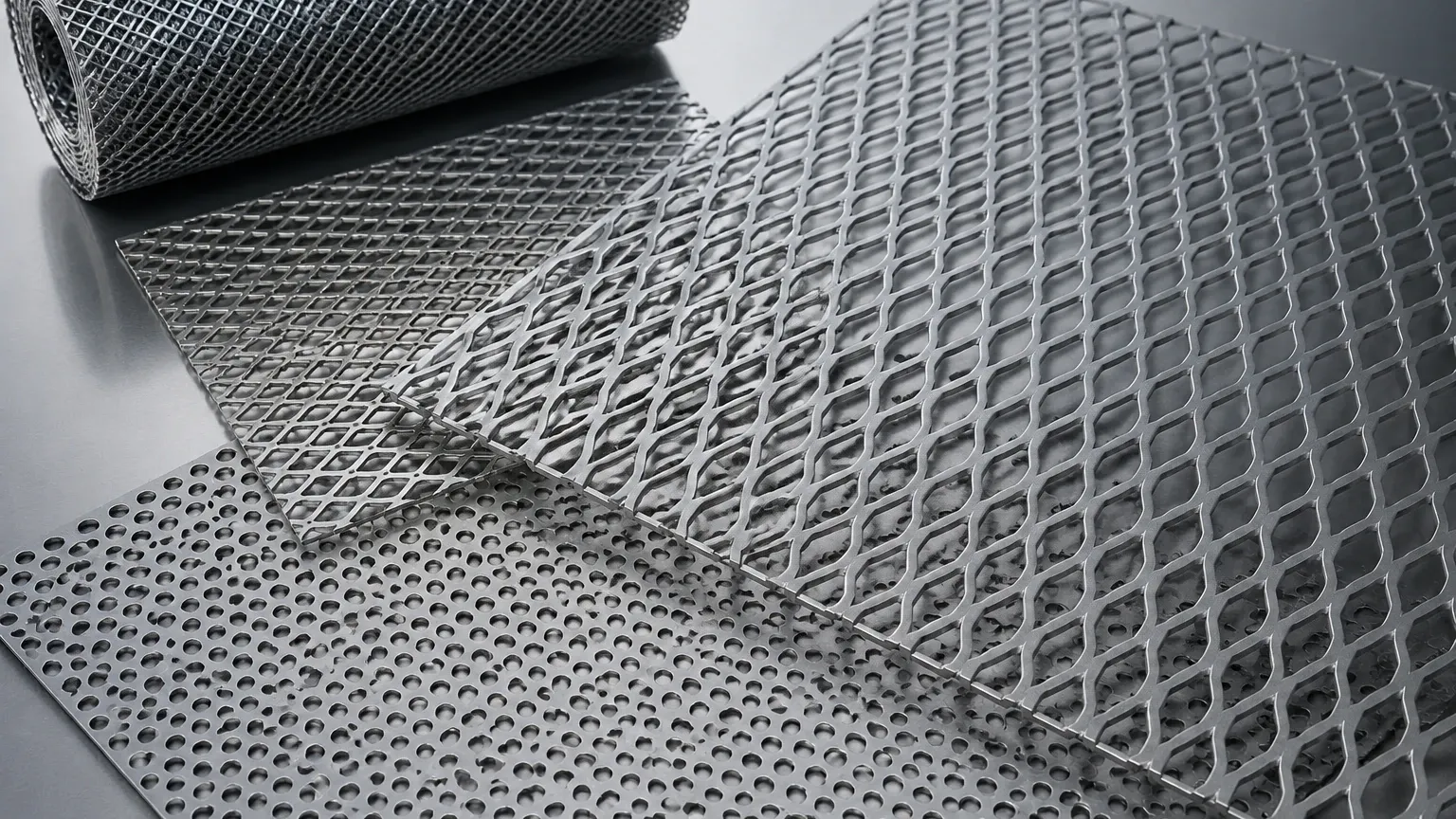
The primary driver behind the cost-effectiveness of expanded metal is the manufacturing method itself. Traditional Perforated & Expanded Metal products differ fundamentally in how they are formed. Perforation involves punching holes into a solid sheet, which generates a significant amount of scrap material—often between 10% and 50% depending on the open area requirements. This scrap metal, while recyclable, represents a loss in the initial material investment.
In contrast, expanded metal is manufactured by simultaneously slitting and stretching a solid metal sheet or coil. There is zero material waste in this process. One ton of raw material produces one ton of finished expanded mesh. Furthermore, the expansion process increases the overall area of the material; a single square foot of raw sheet can be expanded into several square feet of mesh, depending on the strand width and the size of the diamond openings. This high yield is the foundational reason why expanded metal often presents a lower price point per square foot compared to perforated alternatives of the same material grade and thickness.
Key Technical Drivers of Expanded Metal Cost
While the lack of waste provides a baseline for affordability, several technical specifications dictate the final quote for industrial-grade expanded metal. Engineers must evaluate these variables to ensure the specified product meets performance requirements without unnecessary expenditure.
1. Material Grade and Alloy Selection
In industrial filtration, material selection is the most significant contributor to the total expanded metal cost.
- Carbon Steel: The most economical option, suitable for applications where corrosion is not a primary concern or where the mesh will be coated.
- Stainless Steel (304/304L): Offers excellent corrosion resistance and is the standard for many industrial environments. It carries a higher price than carbon steel due to the cost of chromium and nickel.
- Stainless Steel (316/316L): The preferred choice for marine, chemical, and pharmaceutical applications. The addition of molybdenum increases the cost but is necessary for resistance to pitting and chloride-rich environments.
- Specialty Alloys: Materials like Monel, Inconel, or Titanium are used in extreme environments. These materials significantly increase the cost due to both raw material pricing and the specialized tooling required to process them.
2. Mesh Geometry: LWD and SWD
The dimensions of the diamond-shaped openings—Long Way of Diamond (LWD) and Short Way of Diamond (SWD)—impact both the structural properties and the production speed. Smaller openings require more "strokes" of the expansion machine per linear foot of material. This increases machine time and labor costs. Conversely, larger openings use less machine time but may sacrifice the filtration precision or structural rigidity required for the application.
3. Strand Width and Thickness
The thickness of the original sheet and the width of the resulting strands determine the weight of the finished product. Heavier gauges require more robust machinery and consume more raw material per square foot of finished mesh. For engineers, the goal is to specify the minimum thickness and strand width that can safely handle the mechanical loads or pressure differentials of the system to avoid over-engineering the cost.
Standard vs. Flattened Expanded Metal
Another critical decision that affects the expanded metal cost is whether to use the material in its "raised" or "flattened" state.
- Raised (Standard) Expanded Metal: This is the material as it comes off the expansion press. The strands are set at an angle to the plane of the sheet, creating a three-dimensional surface. This is the most cost-effective form as it requires no secondary processing. It is ideal for applications requiring maximum grip, high rigidity, or specific airflow turbulence.
- Flattened Expanded Metal: To produce flattened mesh, the raised expanded metal is passed through a cold-rolling reducing mill. This process flattens the strands and bonds back into a single plane. While this adds a secondary labor and equipment cost, it is often necessary for filtration support layers where a smooth surface is required to prevent damage to delicate filter media or to facilitate easier cleaning.
Secondary Operations and Customization
For B2B procurement, the "off-the-shelf" price is rarely the final cost. Customization is often required to integrate the mesh into complex industrial systems. These secondary operations include:
- Cutting and Shearing: Precision cutting to specific tolerances ensures the mesh fits perfectly into filter housings or frames. While standard tolerances are wider, tight-tolerance shearing adds to the labor cost.
- Degreasing and Cleaning: In pharmaceutical and food-grade applications, the lubricants used during the expansion process must be completely removed. Ultrasonic cleaning or chemical degreasing adds a layer of cost but is non-negotiable for high-purity environments.
- Surface Finishing: Options such as electropolishing, powder coating, or galvanizing provide additional corrosion resistance or aesthetic properties. Electropolishing, in particular, is common for stainless steel filtration components to improve cleanability and reduce the risk of bacterial growth.
- Forming and Welding: Many expanded metal products are integrated into cartridges or cylinders. The cost of rolling, seam welding, and end-cap attachment must be factored into the total component price.
Evaluating Total Cost of Ownership (TCO)
In an industrial context, the purchase price is only one part of the expanded metal cost equation. Engineers and purchasing teams must look at the Total Cost of Ownership (TCO) to determine the true value of the component. A lower-cost material that requires frequent replacement due to corrosion or mechanical failure will eventually exceed the cost of a more expensive, high-quality alloy.
Durability and Maintenance
High-quality stainless steel expanded metal provides a long service life in harsh environments. Its one-piece construction (no joins or welds within the mesh itself) means there are no points of weakness that can unravel or vibrate loose. This structural integrity reduces the frequency of maintenance shutdowns, which are often more expensive than the filtration components themselves.
Filtration Efficiency
The open area of the mesh directly impacts pressure drop. By selecting a precision-engineered expanded metal with an optimized open area, facilities can reduce the energy consumption of pumps and compressors. This operational saving is a critical factor in the long-term cost analysis of the filtration system.
Procurement Guidance: What to Confirm with Manufacturers
To obtain an accurate and competitive quote for Perforated & Expanded Metal, technical professionals should provide a comprehensive set of specifications. Ambiguity in the RFQ (Request for Quote) process often leads to over-quoting by manufacturers to cover potential risks. Before finalizing a purchase, confirm the following:
1. Exact Material Grade: Specify 304, 316L, or other alloys clearly.
2. Dimensional Requirements: Provide LWD, SWD, strand width, and thickness.
3. State of Finish: Indicate if the mesh should be raised or flattened.
4. Tolerances: Define the acceptable margin of error for dimensions and flatness.
5. Quantity and Lead Time: Volume discounts are significant in expanded metal production due to the machine setup time. Understanding the relationship between order volume and unit cost can lead to substantial savings.
6. Compliance Standards: Ensure the manufacturer can provide material certifications (MTRs) and meet industry-specific standards (e.g., FDA for food contact or ISO for quality management).
Conclusion
Understanding expanded metal cost requires looking beyond the initial price per square foot. By analyzing the manufacturing process, material yields, and the impact of geometric specifications, engineers can make informed decisions that balance performance with economic reality. Whether for high-precision filtration cartridges or heavy-duty industrial guards, the inherent efficiency of expanded metal makes it a superior choice when specified correctly. Partnering with a manufacturer like Kaifil, who understands the technical demands of industrial applications, ensures that the final product delivers both the required filtration accuracy and the long-term durability necessary to minimize total operational costs.
