


Expanded Metal Chart
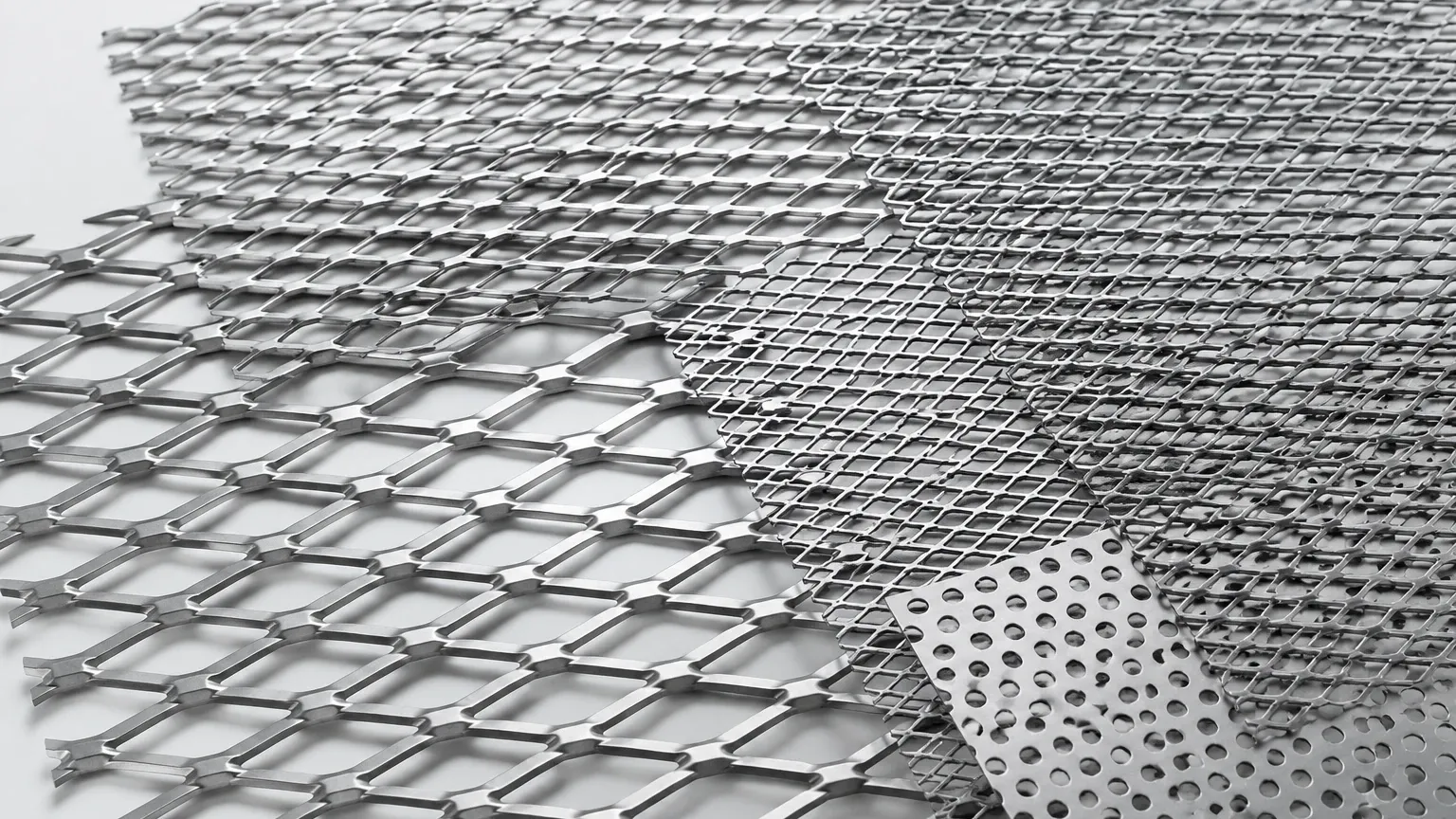
In the realm of industrial filtration and structural engineering, precision is the primary driver of performance. For engineers and procurement specialists, the expanded metal chart serves as the foundational technical reference for selecting materials that meet specific mechanical and filtration requirements. Expanded metal is a unique material produced by simultaneously slitting and stretching a metal sheet, creating a diamond-shaped pattern of openings without any waste of material.
When integrated into filtration systems, such as those manufactured by Kaifil, expanded metal provides essential structural support or acts as a primary coarse filter. Understanding how to interpret an expanded metal chart is critical for ensuring that the selected mesh aligns with flow rate requirements, pressure drop tolerances, and the physical constraints of the filtration housing.
The Role of Expanded Metal in Industrial Filtration
Expanded metal is frequently utilized as a support structure for finer filter media, such as wire mesh or non-woven fabrics. In high-pressure hydraulic or chemical processing environments, the filter media alone may lack the rigidity to withstand the force of the fluid. By incorporating Perforated & Expanded Metal as a support cage or inner core, the integrity of the filter cartridge is maintained under demanding conditions.
Beyond structural support, expanded metal functions as a pre-filtration layer. Its diamond-shaped apertures are effective at capturing larger particulates before they reach the secondary, finer filtration stages. This staged approach extends the service life of expensive precision filter elements and reduces the total cost of ownership by decreasing the frequency of replacement cycles. For engineers, the expanded metal chart provides the data necessary to balance the need for structural strength with the requirement for high permeability.
Key Parameters Found in an Expanded Metal Chart
To effectively use an expanded metal chart, one must understand the specific nomenclature used to describe the geometry of the mesh. Unlike woven wire mesh, which is defined by mesh count per inch, expanded metal is defined by the dimensions of the diamond opening and the characteristics of the strands.
SWD and LWD (Short Way of Design and Long Way of Design)
These are the two most critical dimensions found on any expanded metal chart.
- SWD (Short Way of Design): The distance from a point on a diamond to the corresponding point on the next diamond, measured across the short axis. It is usually measured from the center of one bond to the center of the next.
- LWD (Long Way of Design): The distance measured across the long axis of the diamond, from the center of one bond to the center of the next.
SWO and LWO (Short Way of Opening and Long Way of Opening)
While SWD and LWD measure from the centers of the bonds, SWO and LWO measure the actual clear space of the opening. For filtration applications, the SWO is often the limiting factor for particle passage. An expanded metal chart will typically list these dimensions to help engineers determine the maximum particle size that can pass through the mesh.
Strand Width and Thickness
The strand width refers to the amount of metal between the openings, while the thickness refers to the gauge of the original base metal. These two factors combined determine the mechanical strength, weight, and percentage of open area. In an expanded metal chart, you will see these variables adjusted to create different "styles" of mesh from the same base material.
Evaluating Filtration Efficiency via Open Area
The percentage of open area is perhaps the most vital statistic on an expanded metal chart for filtration engineers. It directly correlates to the flow capacity and the potential for pressure drop across the filter element. A higher percentage of open area allows for greater flow rates and lower resistance, which is essential in gravity-fed systems or low-pressure chemical processing.
Calculating the open area involves analyzing the relationship between the strand width and the SWD. In a standard expanded metal chart, this value is pre-calculated for each style. For example, a mesh with a large SWD and narrow strands will have a high open area percentage, making it ideal for high-flow applications. Conversely, a "heavy" expanded metal style with wide strands and small openings provides superior structural reinforcement but creates higher resistance to flow.
When selecting a mesh from the chart, engineers must confirm that the open area is sufficient to prevent cavitation in pump-fed systems and to ensure that the velocity of the fluid through the mesh does not exceed the mechanical limits of the downstream filter media.
Material Selection: Stainless Steel vs. Carbon Steel
While an expanded metal chart provides the geometric specifications, the choice of material is what determines the component's longevity in industrial environments. Kaifil specializes in stainless steel filtration solutions, emphasizing the use of high-grade alloys to withstand corrosive fluids and extreme temperatures.
Stainless Steel 304 and 316L
In the food and beverage and pharmaceutical industries, 304 and 316L stainless steel are the industry standards. 316L, in particular, contains molybdenum, which provides enhanced resistance to pitting and crevice corrosion in chloride-rich environments. When viewing an expanded metal chart, it is important to note that the physical dimensions remain the same across different materials, but the weight and chemical compatibility will vary.
Corrosion and Temperature Considerations
For chemical processing and water treatment applications, the material must resist oxidation and chemical degradation. Stainless steel expanded metal maintains its structural integrity at temperatures where carbon steel or plastic supports would fail. When consulting an expanded metal chart for a custom project, engineers should verify that the selected gauge and alloy can withstand the specific pH levels and thermal cycles of the application.
Standard vs. Flattened Expanded Metal
An expanded metal chart will often distinguish between "Standard" (or Raised) and "Flattened" expanded metal. This distinction is critical for the assembly and housing of filtration components.
Standard (Raised) Expanded Metal
Standard expanded metal is the product as it comes off the expanding machine. The strands and bonds are set at a uniform angle to the plane of the sheet. This creates a three-dimensional surface that provides excellent grip and strength. In filtration, the raised profile can create turbulence, which may be desirable in certain mixing applications but can also increase pressure drop.
Flattened Expanded Metal
Flattened expanded metal is produced by passing the standard expanded sheet through a cold-roll reducing mill. This process flattens the strands and bonds into a single plane, resulting in a smooth, flat surface. Flattening reduces the overall thickness of the sheet and slightly increases the dimensions of the diamond. Engineers often prefer flattened expanded metal for filter outer cages because the smooth surface prevents damage to delicate inner filter layers and allows for a tighter fit within cylindrical filter housings.
Customization Beyond the Standard Expanded Metal Chart
While standard charts cover a wide range of industrial needs, many specialized filtration applications require bespoke specifications. Kaifil’s manufacturing capabilities allow for customization that goes beyond the standard expanded metal chart. This includes adjustments to strand width, opening sizes, and the use of exotic alloys for highly specialized chemical environments.
Customization is particularly important when designing OEM filtration components. If a standard diamond size does not provide the exact balance of flow and support required for a new filter design, the tooling can be adjusted to produce a unique mesh pattern. Furthermore, custom expanded metal can be produced in specific sheet sizes or cylindrical forms to minimize waste and simplify the final assembly process for the customer.
Technical Checklist for Procurement
Before finalizing an order based on an expanded metal chart, purchasing teams and engineers should confirm several technical details to ensure the product meets the application’s demands:
1. Dimensional Tolerances: Confirm the allowable variance in SWD, LWD, and thickness. Precision filtration requires tight tolerances to ensure consistent performance.
2. Flattening Quality: If choosing flattened metal, ensure the surface is free of burrs or sharp edges that could compromise the filter media.
3. Edge Conditions: Specify whether the mesh should have "random sheared" edges or "bond sheared" edges. Bond shearing provides a closed-diamond edge, which is safer to handle and easier to weld into filter frames.
4. Material Certification: For pharmaceutical and food-grade applications, request material test reports (MTRs) to verify the alloy composition.
5. Surface Treatment: Determine if the expanded metal requires additional treatments such as passivating, electropolishing, or degreasing to meet cleanliness standards.
By utilizing the expanded metal chart as a technical guide and partnering with an experienced manufacturer like Kaifil, engineers can optimize their filtration systems for durability, efficiency, and cost-effectiveness. Whether the requirement is for a heavy-duty support cage or a precision pre-filter, the data provided in these charts is the first step toward a successful engineering solution.
