


Expanded Metal Decorative
In industrial and architectural engineering, the selection of materials often requires a balance between structural integrity and aesthetic versatility. Expanded metal decorative solutions represent a specialized category of processed metal that fulfills both functional and visual requirements. Unlike standard industrial mesh, decorative variants focus on unique pattern geometries and surface finishes while maintaining the inherent strength of the expanded metal manufacturing process. For engineers and procurement specialists, understanding the technical nuances of these materials is essential for ensuring long-term performance in demanding environments.
As a professional manufacturer focusing on precision filtration and metal components, Kaifil provides high-performance Perforated & Expanded Metal solutions tailored to specific industrial needs. This guide explores the technical specifications, application logic, and selection criteria for expanded metal decorative products.
Understanding the Manufacturing Process and Structural Integrity
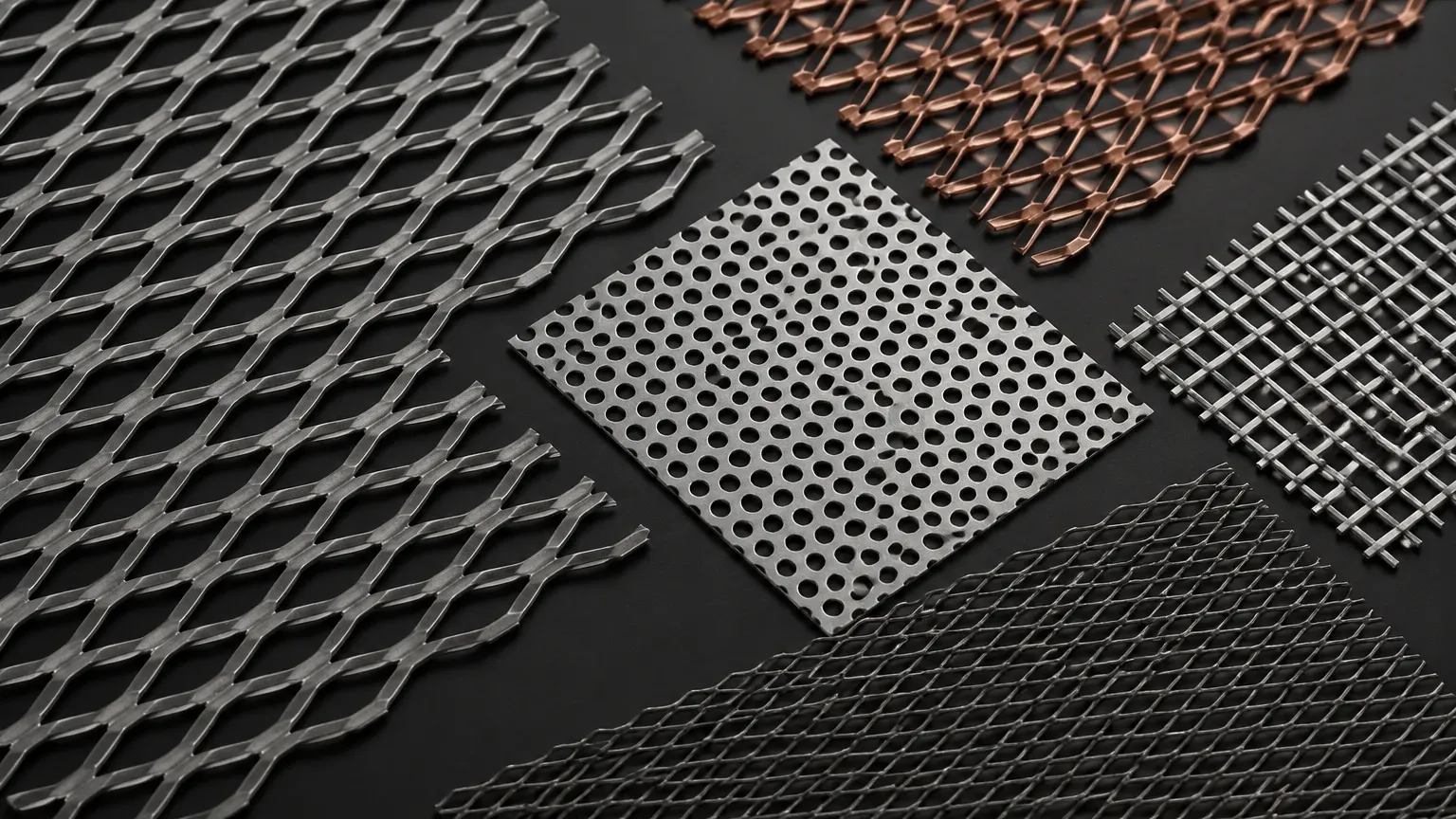
The production of expanded metal decorative panels involves a precise slitting and stretching process. A solid sheet or coil of metal—typically stainless steel, aluminum, or carbon steel—is fed through a machine where it is simultaneously slit and cold-stretched. This process creates a diamond-shaped or custom-patterned mesh without any material waste, as no metal is punched out during the expansion.
From an engineering perspective, this manufacturing method offers several advantages:
1. Structural Continuity: Because the mesh is formed from a single piece of metal, there are no welds or joints that can fail under stress. The "bonds" where the strands intersect are part of the original metal sheet, providing superior strength-to-weight ratios.
2. Material Efficiency: Since no scrap is produced (unlike perforated metal where circles or shapes are removed), expanded metal is often a more cost-effective solution for large-scale projects.
3. Anti-Unraveling Properties: If a single strand is cut, the rest of the sheet remains intact. This is a critical safety feature in security and structural applications.
In decorative applications, the expansion ratio and the shape of the tooling are modified to create varied patterns, ranging from traditional diamonds to hexagonal or custom architectural shapes. These variations are collectively referred to as expanded metal decorative styles.
Material Selection for Durability and Performance
Choosing the right alloy is the first step in specifying expanded metal decorative components. The choice depends heavily on the installation environment and the required mechanical properties.
Stainless Steel (Grades 304 and 316)
Stainless steel is the gold standard for industrial and high-end architectural use. Grade 304 offers excellent corrosion resistance for most indoor and mild outdoor applications. For environments exposed to salt spray, chemical processing, or high humidity, Grade 316 is recommended due to its molybdenum content, which provides superior pitting resistance. Stainless steel expanded metal decorative panels are often used in food processing facilities and pharmaceutical cleanrooms where hygiene and durability are paramount.
Aluminum Alloys
Aluminum is favored for its lightweight properties and natural resistance to atmospheric corrosion. It is significantly easier to form and install than stainless steel. In decorative contexts, aluminum is frequently anodized or powder-coated to achieve specific colors or to enhance its protective oxide layer. It is a common choice for HVAC grilles, ceiling panels, and facade cladding.
Carbon Steel and Galvanized Options
For cost-sensitive industrial projects where high corrosion resistance is not the primary concern, carbon steel is used. To prevent oxidation, these panels are typically hot-dip galvanized or painted. Galvanized expanded metal is frequently found in industrial walkways, safety partitions, and machine guards.
Key Technical Parameters for Specification
When ordering or specifying expanded metal decorative products, engineers must use standardized terminology to ensure the final product meets the design intent. The following parameters define the geometry of the mesh:
* SWD (Short Way of Diamond): The distance from the center of one bond to the center of the next bond measured across the short diamond diagonal.
* LWD (Long Way of Diamond): The distance from the center of one bond to the center of the next bond measured across the long diamond diagonal.
* Strand Width: The amount of metal fed into the machine between the slits, which determines the thickness of the individual mesh strands.
* Strand Thickness: The original thickness of the base metal sheet.
* Open Area Percentage: This is perhaps the most critical calculation for engineers. It determines the amount of light, air, or liquid that can pass through the mesh. For filtration and ventilation applications, the open area must be precisely calculated to avoid excessive pressure drops or insufficient airflow.
Functional Benefits of Expanded Metal Decorative Patterns
While the term "decorative" implies an emphasis on appearance, these patterns serve vital functional roles in industrial systems.
Ventilation and Heat Dissipation
The open structure of expanded metal decorative panels allows for high-volume airflow while providing a physical barrier. This makes them ideal for equipment enclosures, server room partitions, and protective covers for heat-generating machinery. The angled orientation of the strands can also provide directional airflow or shading, depending on how the panels are mounted.
Acoustic Dampening
When used as a facing material for acoustic insulation, expanded metal helps break up sound waves and allows sound-absorbing materials behind the mesh to function effectively. This is a common application in industrial workshops and public infrastructure projects where noise control is required.
Security and Screening
Decorative patterns can be designed to provide one-way visibility or to obscure sensitive equipment from public view without completely blocking light. The physical strength of the expanded metal makes it difficult to cut or penetrate, providing an integrated security solution that does not look overly industrial.
Evaluating Quality and Managing Risks
In the procurement of expanded metal decorative components, several risks can impact the success of a project. Engineers should evaluate suppliers based on their ability to manage the following factors:
1. Edge Quality and Burrs: The slitting process can leave sharp edges or burrs. For applications where personnel may come into contact with the mesh, secondary deburring or edge-trimming is necessary. High-quality manufacturers like Kaifil ensure that precision metal components are finished to meet safety standards.
2. Flatness and Camber: During the expansion process, internal stresses can cause the metal to curl or bow (camber). If a perfectly flat panel is required, the material must undergo a "flattening" process through heavy rollers. Engineers must specify whether they require "Standard" (raised) or "Flattened" expanded metal.
3. Dimensional Tolerances: Variation in LWD or SWD can lead to misalignment when multiple panels are installed side-by-side. Confirming tight manufacturing tolerances is essential for architectural consistency.
4. Material Traceability: For industries like pharmaceutical or chemical processing, material certifications (MTRs) are required to verify the alloy composition and ensure it meets regulatory standards.
Customization Options and Finishing
Customization is where expanded metal decorative solutions truly excel. Beyond the basic diamond pattern, manufacturers can adjust the tooling to create various geometric shapes.
Flattened vs. Raised
* Raised (Standard): The strands are set at an angle to the plane of the sheet. This provides maximum rigidity and a slip-resistant surface.
* Flattened: The raised mesh is passed through a cold-rolling reducing mill. This results in a smooth, flat surface that is thinner than the original sheet but easier to clean and safer to handle.
Surface Treatments
To enhance both the aesthetic and the lifespan of the material, various finishes can be applied:
* Electropolishing: Common for stainless steel, this process removes surface impurities and creates a high-luster finish, improving corrosion resistance.
* Powder Coating: Provides a durable, thick protective layer in a wide range of colors.
* Anodizing: Specifically for aluminum, this creates an integrated oxide layer that is extremely hard and resistant to scratching.
Pre-Purchase Confirmation: A Checklist for Engineers
Before finalizing an order for expanded metal decorative panels, the following technical details should be confirmed with the manufacturer:
* Load-Bearing Requirements: Will the mesh be subject to physical impact or weight? This determines the required strand thickness and material grade.
* Environmental Exposure: Is the installation near a coast, in a high-heat zone, or exposed to corrosive chemicals?
* Orientation of the Pattern: The LWD can run either parallel or perpendicular to the length of the sheet. This affects both the visual appearance and the structural behavior of the panel.
* Installation Method: How will the panels be secured? Common methods include welding into a frame, using U-edging, or mechanical fastening. The choice of material must be compatible with the intended welding or fastening process.
* Filtration/Airflow Specs: If the mesh is part of a filtration or HVAC system, have the SWD and strand width been optimized for the required flow rate?
Conclusion
Expanded metal decorative products offer a versatile and robust solution for modern industrial and architectural challenges. By understanding the mechanical properties of different alloys and the geometric variables of the expansion process, engineers can specify components that provide long-term reliability and functional efficiency. Whether used for precision filtration, protective screening, or architectural facades, the inherent strength and material efficiency of Perforated & Expanded Metal make it a superior choice for demanding applications.
As a specialist in custom stainless steel filtration and metal components, Kaifil supports global customers with technical expertise and precision manufacturing. By focusing on quality control and customized designs, we help engineering teams achieve optimal performance in their filtration and structural projects.
