


Expanded Metal Door
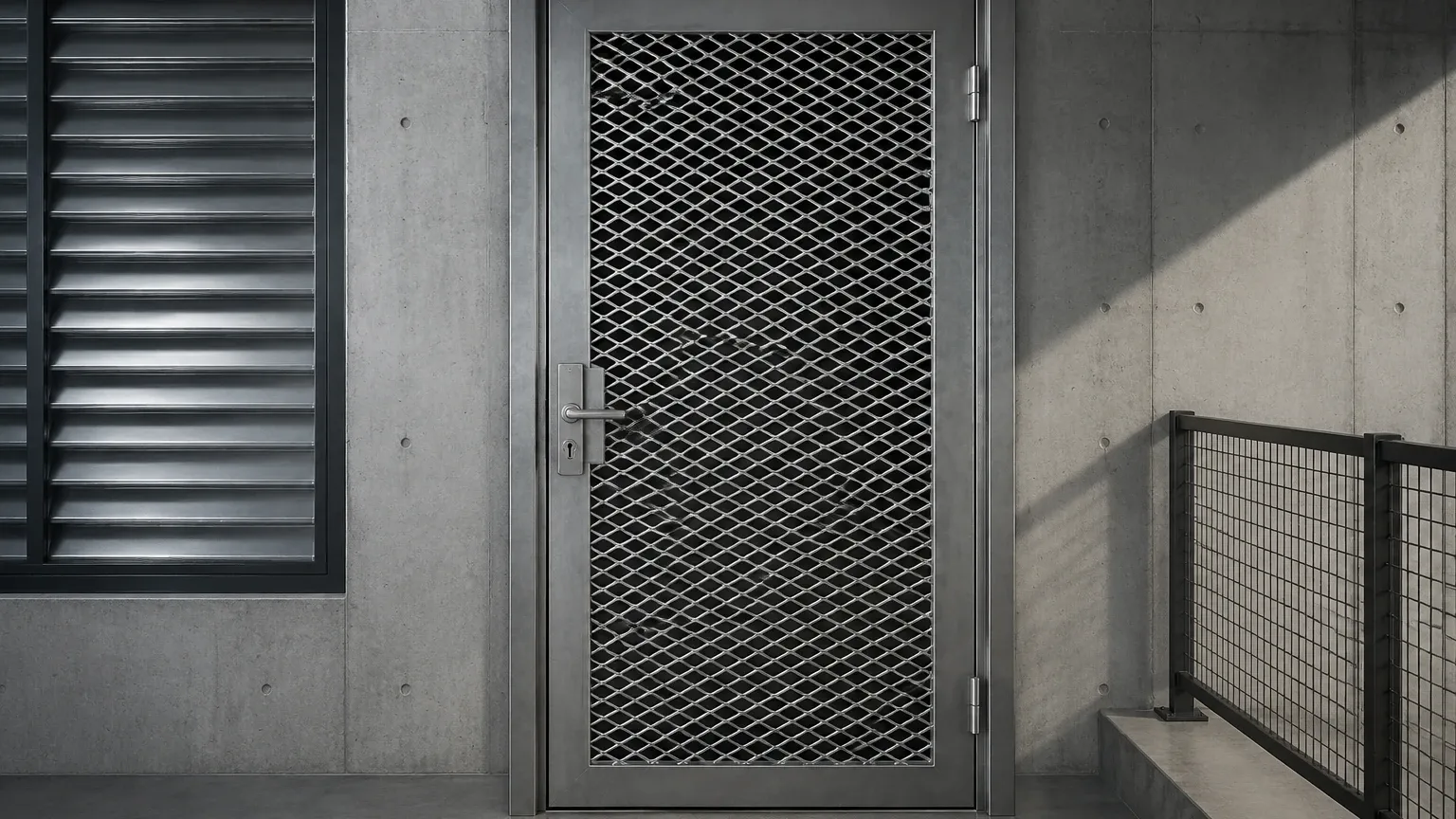
In industrial and commercial architecture, the selection of door infill materials requires a precise balance between security, ventilation, and structural longevity. An expanded metal door represents a specialized engineering solution that addresses these requirements more effectively than traditional solid panels or standard wire mesh. By utilizing a single sheet of metal that has been simultaneously slit and stretched, manufacturers create a continuous, weld-free mesh structure that offers high strength-to-weight ratios and unique functional properties.
For engineers and facility managers, understanding the technical specifications of Perforated & Expanded Metal is essential for specifying doors that can withstand demanding environments, ranging from chemical processing plants to high-security equipment enclosures. This guide examines the engineering considerations, material selection, and performance criteria necessary for integrating expanded metal into industrial door systems.
Understanding the Expanded Metal Manufacturing Process
Unlike woven wire mesh, which consists of individual wires interlaced together, expanded metal is produced from a single solid sheet of material. The manufacturing process involves an expanding machine that slits and stretches the metal in one motion. This results in a diamond-shaped pattern where the "strands" and "bonds" (the intersections of the strands) are part of a continuous piece of metal.
For an expanded metal door, this structural continuity is a significant advantage. Because there are no welds to break or wires to unravel, the panel maintains its integrity even if a single strand is cut. This makes it an ideal choice for security applications where anti-climb and anti-cut properties are prioritized.
Key Terminology for Specifications
When specifying expanded metal for doors, engineers must use standardized industry terminology to ensure the correct performance characteristics:
* SWD (Short Way of Design): The distance from the center of one bond to the center of the next bond across the short diamond diagonal.
* LWD (Long Way of Design): The distance across the long diamond diagonal.
* Strand Width: The amount of metal fed into the machine for each slit.
* Strand Thickness: The thickness of the original base metal.
* Percent Open Area: A critical calculation for doors requiring airflow or visibility, determined by the relationship between the strand width and the diamond size.
Material Selection for Industrial Environments
The performance of an expanded metal door is heavily dependent on the alloy selected. While carbon steel is common for general-purpose applications, industrial environments often demand higher resistance to corrosion and mechanical wear.
Stainless Steel Solutions
At Kaifil, the focus is often on stainless steel expanded metal due to its superior durability in harsh conditions. Stainless steel 304 and 316 are the primary choices for industrial doors:
* Type 304: Offers excellent corrosion resistance for most indoor and outdoor industrial applications. It is widely used in food processing and general manufacturing.
* Type 316: Contains molybdenum, providing enhanced resistance to chlorides and marine environments. This is the preferred specification for doors in chemical processing plants, pharmaceutical facilities, and coastal installations.
Aluminum and Specialized Alloys
Aluminum expanded metal is selected when weight reduction is a priority without sacrificing significant strength. It is naturally corrosion-resistant and suitable for architectural doors or lightweight equipment guards. For specialized high-temperature or highly acidic environments, nickel alloys or titanium may be considered, though these are typically reserved for specific filtration or chemical containment doors.
Engineering Considerations: Security vs. Airflow
One of the primary reasons engineers specify an expanded metal door is the need for "breathability" combined with physical protection. This is particularly relevant in server rooms, electrical substations, and chemical storage areas where heat dissipation and gas venting are critical safety requirements.
Calculating Open Area
The percentage of open area dictates both visibility and airflow. A larger diamond pattern with thinner strands provides higher transparency and air movement but may offer less resistance to focused mechanical force. Conversely, a micro-mesh expanded metal provides high security and can even act as a primary filter for large debris, but it restricts airflow significantly.
Raised vs. Flattened Expanded Metal
There are two primary finishes for expanded metal panels used in doors:
1. Raised (Standard) Expanded Metal: The strands are turned at an angle to the plane of the sheet. This creates a textured surface that provides excellent grip (if used for flooring) and unique directional screening. In door applications, raised metal can provide privacy by obscuring the view from certain angles while still allowing light and air to pass.
2. Flattened Expanded Metal: The raised sheet is passed through a cold rolling mill, flattening the strands and bonds into the same plane. Flattened metal is often preferred for doors because it is smoother to the touch, easier to paint or coat, and fits more easily into standard door frames and channels.
Performance Criteria and Selection Methods
When evaluating an expanded metal door for a project, several performance metrics should be analyzed to ensure the component meets the intended application's demands.
Impact Resistance and Rigidity
Expanded metal is inherently rigid due to its truss-like structure. When integrated into a door frame, the panel contributes to the overall shear strength of the door. Engineers should confirm the gauge of the metal based on the expected level of physical impact. For heavy-duty industrial security, 9-gauge or 13-gauge stainless steel is often specified.
Compatibility with Hardware
Unlike solid doors, expanded metal doors require specific considerations for mounting hardware. Locks, hinges, and closers must be compatible with the mesh structure. Often, a solid mounting plate is welded to the expanded metal to provide a secure attachment point for high-security locks or panic bars.
Maintenance and Replacement Cycles
In B2B environments, the total cost of ownership (TCO) is a vital metric. Stainless steel expanded metal doors require minimal maintenance compared to painted carbon steel, which may require frequent repainting to prevent rust. In food-grade or pharmaceutical environments, the ability to perform high-pressure washdowns without damaging the door material is a key selection factor. The lack of crevices in flattened expanded metal also reduces the risk of bacterial growth or particulate accumulation.
Customization and OEM Capabilities
Standard off-the-shelf doors rarely meet the precise needs of complex industrial systems. Kaifil specializes in providing customized filtration and metal components, which extends to the fabrication of expanded metal panels tailored to specific door dimensions and performance requirements.
Custom Mesh Geometry
For OEM applications, such as machine guard doors or specialized filtration enclosures, the diamond size and strand width can be adjusted to meet specific filtration or screening standards. This ensures that the door not only provides access and security but also functions as a part of the facility's environmental control system.
Frame Integration
A critical step in the procurement process is confirming how the expanded metal will be secured to the door frame. Options include:
* U-Edging: A metal channel that fits over the edge of the expanded metal, providing a clean finish and structural support.
* Welding: Direct tack welding or fillet welding to a tube or angle iron frame.
* Bolting: Using specialized clips or flat bars to sandwich the mesh against the frame for easy replacement.
Common Risks and Mitigation in Specification
Specifying the wrong type of expanded metal can lead to premature failure or safety hazards. Engineers should be aware of the following risks:
* Edge Sharpness: Raised expanded metal has sharp edges where the strands are cut. For doors that will be handled frequently by personnel, these edges must be properly framed or the metal must be flattened and deburred.
* Vibration and Noise: In environments with high-velocity airflow or heavy machinery, poorly secured expanded metal panels can vibrate, leading to acoustic issues or fatigue at the weld points. Proper tensioning and secure fastening are required.
* Galvanic Corrosion: If an aluminum expanded metal panel is fixed to a stainless steel frame in a moist environment, galvanic corrosion can occur. Specifying compatible materials or using insulating gaskets is essential.
Conclusion: Confirming Project Requirements
Before finalizing a purchase or design for an expanded metal door, technical professionals should confirm several variables with their manufacturer. These include the precise alloy grade, the required percentage of open area for ventilation, the orientation of the diamonds (vertical vs. horizontal LWD), and the finishing requirements (flattened vs. raised).
By focusing on the technical merits of the material—such as its one-piece construction and high strength-to-weight ratio—engineers can implement door solutions that provide long-term reliability in the most demanding industrial settings. For those seeking high-performance components, reviewing the available options for Perforated & Expanded Metal ensures that the selected material aligns with the specific filtration, security, and durability needs of the project.
