


Expanded Metal for Grill
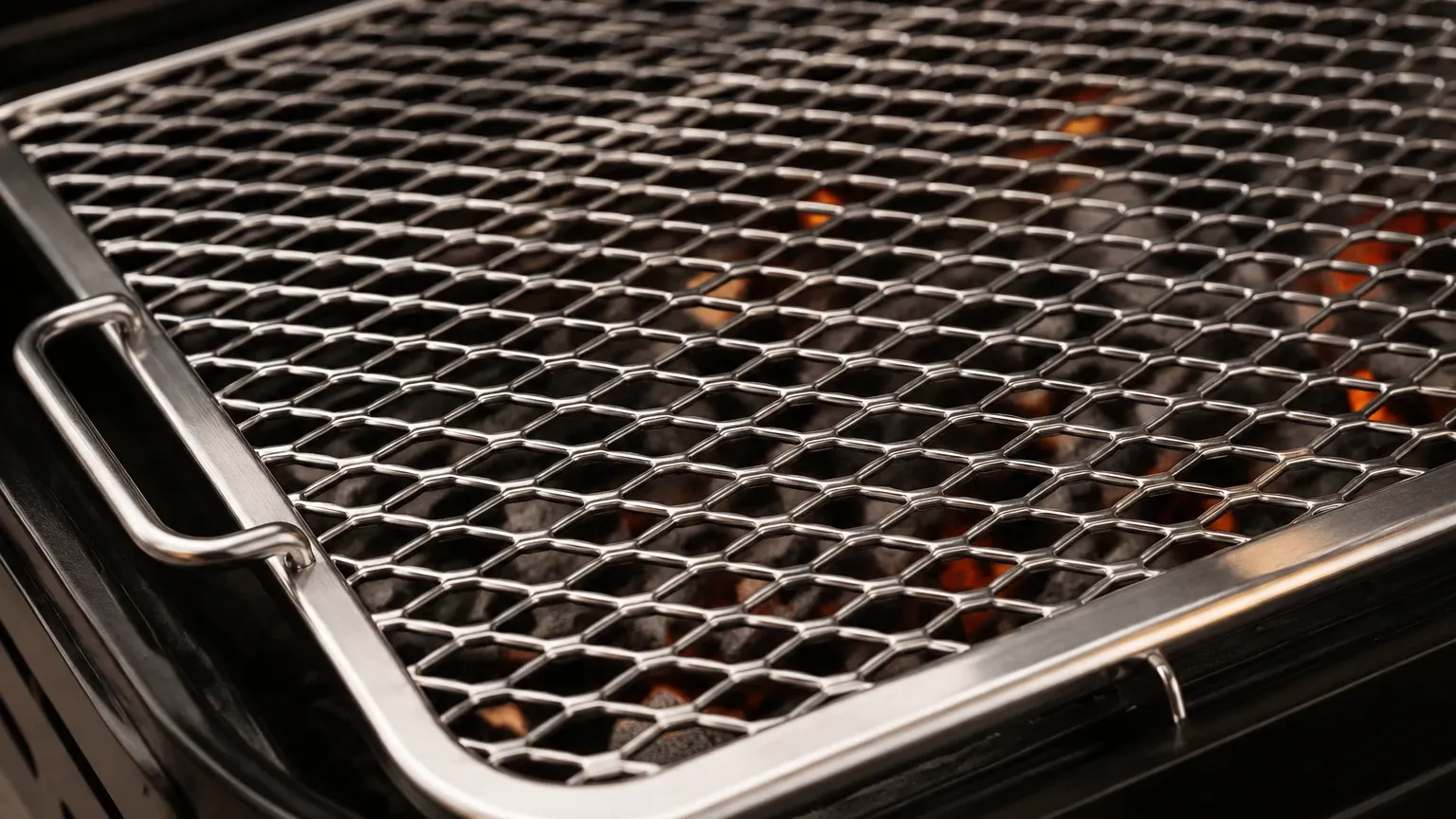
In industrial manufacturing and food processing, the selection of structural components for high-heat environments requires a rigorous evaluation of material science and mechanical engineering. Expanded metal for grill applications serves as a primary solution for heat exchange, product support, and filtration. Unlike traditional woven wire or welded mesh, expanded metal is produced through a unique process of slitting and stretching a single solid sheet of metal, resulting in a continuous, jointless structure that offers superior integrity under thermal stress.
For engineers and procurement specialists, understanding the technical nuances of Perforated & Expanded Metal is essential for ensuring the longevity of equipment used in industrial ovens, commercial smokers, and heavy-duty drying systems. This guide examines the engineering specifications, material selections, and performance criteria necessary to optimize industrial grilling and filtration processes.
Understanding Expanded Metal for Grill Construction
The manufacturing of expanded metal is a precision process that involves a reciprocating knife that slits the metal sheet while simultaneously stretching it. This creates a diamond-shaped pattern that is integral to the sheet itself. Because there are no welds or joins, the material maintains its structural strength even when subjected to the rapid heating and cooling cycles typical of industrial grilling and drying applications.
When specifying expanded metal for grill use, engineers must distinguish between standard (raised) and flattened expanded metal. Standard expanded metal features strands that are set at an angle to the plane of the sheet, providing a three-dimensional surface that can enhance grip or facilitate specific airflow patterns. Flattened expanded metal undergoes an additional cold-rolling process, resulting in a smooth, level surface that is often preferred for food-contact surfaces where ease of cleaning and uniform product support are paramount.
Material Science: Selecting Alloys for High-Temperature Environments
The performance of expanded metal in industrial grills is largely dictated by the alloy selected. While carbon steel is an option for certain low-moisture applications, stainless steel is the industry standard for high-performance filtration and grilling components due to its corrosion resistance and mechanical stability at elevated temperatures.
304 Stainless Steel
Grade 304 is the most common choice for industrial expanded metal for grill components. It offers excellent resistance to atmospheric corrosion and is highly weldable. In food processing environments, its ability to withstand standard cleaning chemicals makes it a cost-effective solution for most drying and grilling racks.
316 Stainless Steel
For environments involving high salt concentrations, acidic marinades, or chemical cleaning agents that would pit 304 steel, Grade 316 is required. The addition of molybdenum enhances its resistance to chloride-induced stress corrosion cracking. This is particularly critical in large-scale commercial food production where hygiene and material integrity cannot be compromised.
High-Nickel Alloys
In extreme industrial applications where temperatures exceed the standard operating range of 300-series stainless steels, specialized alloys may be used to prevent scaling and maintain tensile strength. These materials ensure that the expanded metal does not sag or deform under the weight of the processed goods at peak temperatures.
Geometric Specifications: LWD, SWD, and Open Area Calculations
To ensure optimal performance, engineers must specify the exact geometry of the expanded metal. The dimensions of the diamond pattern are defined by two primary measurements:
1. LWD (Long Way of Design): The distance from the center of a bond to the center of the next bond across the long axis of the diamond.
2. SWD (Short Way of Design): The distance from the center of a bond to the center of the next bond across the short axis of the diamond.
These dimensions, combined with the Strand Width and Strand Thickness, determine the "Percentage of Open Area." In industrial grilling, the open area percentage is a critical variable that influences airflow and heat distribution. A higher open area allows for faster cooking or drying times but may reduce the structural load-bearing capacity of the grill. Conversely, a smaller open area provides more support for smaller products but may lead to uneven heat zones if the airflow is restricted.
Flattened vs. Standard Expanded Metal for Industrial Use
The choice between raised and flattened expanded metal for grill applications depends on the specific mechanical requirements of the project.
* Standard (Raised) Expanded Metal: The angled strands provide inherent rigidity and a high strength-to-weight ratio. In industrial filtration and safety guarding, the raised edges can also serve to deflect debris or provide non-slip surfaces. However, in a grilling context, the raised edges can make manual cleaning more difficult as particles can become trapped in the intersections of the bonds.
* Flattened Expanded Metal: By passing the raised sheet through a heavy-duty leveling mill, the strands are flattened into the same plane. This creates a smooth surface that is ideal for conveyorized grilling systems or manual racks where frequent scraping or cleaning is required. Flattened metal is slightly thinner than the original sheet but offers a more uniform contact surface for the product being processed.
Advantages of Expanded Metal Over Woven Mesh and Perforated Sheets
When evaluating Perforated & Expanded Metal for industrial use, it is important to compare expanded metal against alternative materials like woven wire mesh or perforated plate.
Structural Integrity
Woven mesh relies on the interlocking of wires, which can shift or fray over time, especially under heavy loads or vibration. Perforated metal is created by punching holes in a sheet, which can result in significant material waste. Expanded metal, however, is a single piece of material. The "bonds" where the strands intersect are part of the original metal, providing a rigid structure that does not unravel.
Cost-Efficiency
Because the expansion process involves stretching the metal rather than punching out holes, there is zero material waste. This makes expanded metal a more sustainable and often more economical choice than perforated metal, particularly when using expensive alloys like 316L stainless steel.
Thermal Conductivity
The continuous nature of expanded metal allows for efficient heat transfer across the entire surface. In grilling applications, this helps eliminate cold spots and ensures that the heat is distributed evenly to the product, whether the heat source is infrared, gas-fired, or electric.
Engineering Considerations for Load and Span
One of the most common mistakes in specifying expanded metal for grill components is failing to account for the orientation of the diamonds relative to the support structure. Expanded metal has significantly higher structural strength when the LWD is oriented across the span (perpendicular to the supports). If the LWD is oriented parallel to the supports, the material is much more prone to sagging under load.
Engineers should also consider the "bond" size. Larger bonds provide more surface area for welding the expanded metal to a frame, which is essential for heavy-duty industrial racks that must withstand mechanical loading and unloading. For custom filtration solutions, the precision of these bonds ensures that the mesh remains dimensionally stable even under high pressure.
Customization and Quality Control in Manufacturing
Industrial applications often require bespoke solutions that standard off-the-shelf expanded metal cannot provide. Customization options include:
* Custom Mesh Sizes: Tailoring the LWD and SWD to match the specific dimensions of the product being grilled or filtered.
* Edge Finishing: Providing U-edging or frame welding to eliminate sharp edges and improve safety during handling.
* Surface Treatments: Electropolishing is a common post-production treatment for stainless steel expanded metal. This process removes surface impurities and creates a microscopically smooth finish that significantly improves corrosion resistance and cleanability, meeting stringent food safety standards.
Quality control is paramount. Manufacturers must ensure that the slitting and stretching process does not introduce micro-fractures in the strands, which could lead to premature failure in high-vibration or high-thermal-stress environments. Rigorous testing of tensile strength and dimensional accuracy is a hallmark of professional-grade expanded metal production.
Procurement Checklist: What to Confirm Before Ordering
To ensure the successful integration of expanded metal into an industrial system, purchasing teams and engineers should confirm the following details with their manufacturer:
1. Material Grade: Is 304 sufficient, or does the environment require 316 or a high-nickel alloy?
2. Style: Is standard (raised) or flattened metal required for the specific application?
3. Dimensions: Specify the exact LWD, SWD, strand width, and strand thickness.
4. Orientation: Ensure the diamond direction (LWD) is aligned correctly for the intended load-bearing span.
5. Finish: Does the application require electropolishing, pickling, or a specific coating?
6. Tolerances: What are the allowable deviations in sheet size and mesh consistency?
By focusing on these technical parameters, industrial operators can secure expanded metal solutions that provide the durability and performance required for demanding grilling and filtration tasks. The inherent strength and efficiency of expanded metal make it a foundational component in modern industrial engineering, offering a balance of structural integrity and thermal performance that is difficult to match with other materials.
