


Expanded Metal for Sale Near Me
When engineers and procurement professionals search for "expanded metal for sale near me," the immediate goal is often to minimize lead times and shipping costs for urgent industrial projects. However, in the context of high-performance filtration, chemical processing, and structural engineering, the proximity of a supplier is only one variable in a complex selection process. Choosing the right expanded metal requires a deep understanding of material properties, manufacturing tolerances, and the specific demands of the application environment.
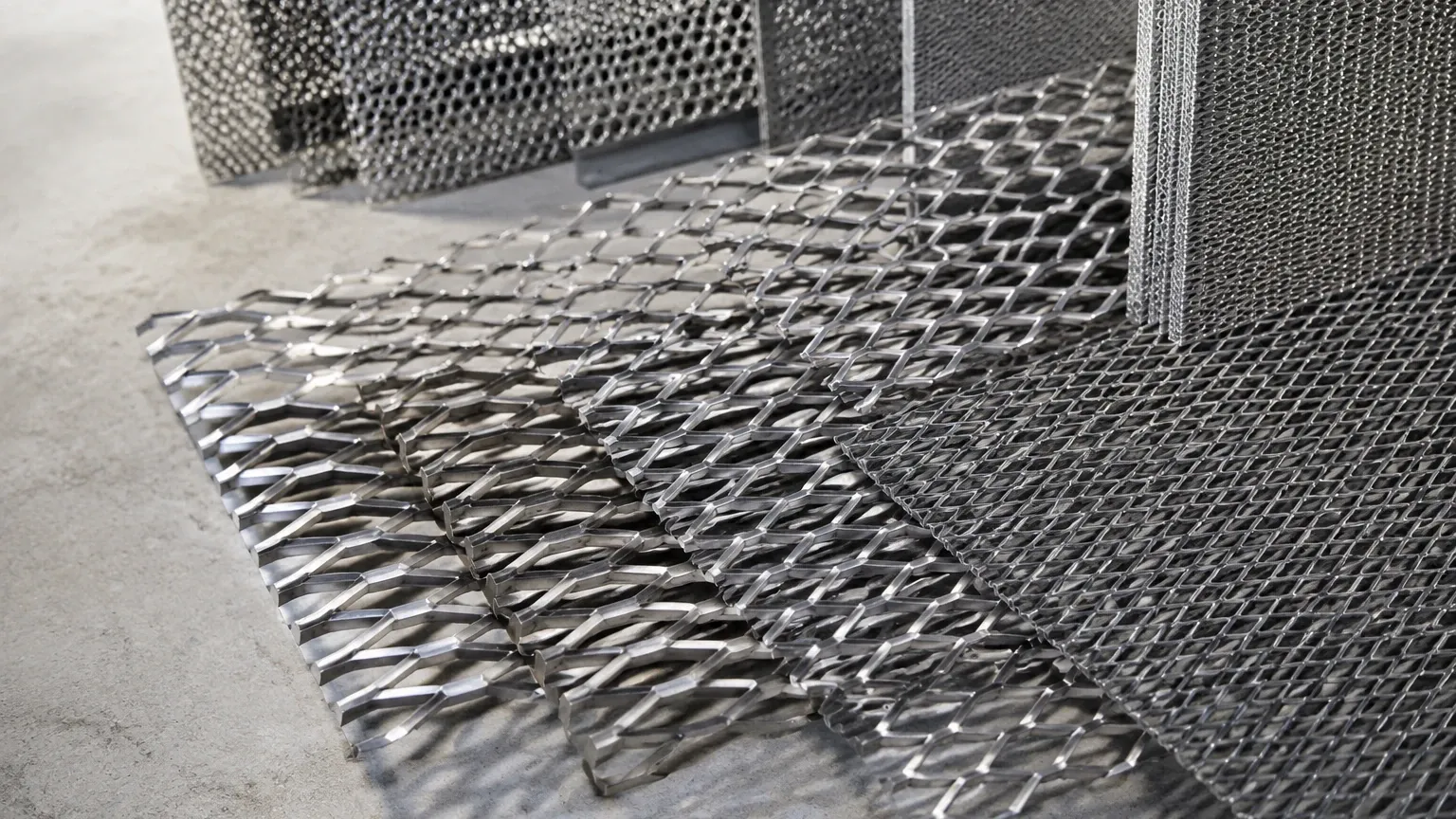
Expanded metal is a versatile material produced by simultaneously shearing and stretching a solid sheet of metal. This process creates a diamond-shaped pattern of openings, resulting in a product that is lightweight yet structurally rigid. Unlike perforated metal, which involves punching holes and generating scrap material, the expansion process is virtually waste-free, making it a cost-effective solution for many industrial needs. For those seeking specialized Perforated & Expanded Metal solutions, the focus must shift from simple geographic proximity to technical capability and material integrity.
The Logistics of Sourcing Expanded Metal for Industrial Use
The search for "expanded metal for sale near me" typically yields results ranging from local hardware distributors to specialized metal service centers. For a B2B buyer, the distinction between these sources is critical. Local generalist stockists often carry standard sizes in mild steel or aluminum, which may suffice for architectural fencing or basic walkways. However, industrial applications—particularly those involving filtration, hydraulic systems, or corrosive chemicals—require high-grade alloys and precision specifications that local retailers rarely stock.
When evaluating a local source, engineers should consider the following:
* Material Grade Availability: Does the supplier offer 304, 316, or 316L stainless steel, or only carbon steel?
* Processing Capabilities: Can the local vendor provide precision shearing, flattening, or degreasing, or do they only sell full sheets?
* Traceability: For industries like pharmaceuticals or food processing, material test reports (MTRs) are mandatory. Local retail-level suppliers often lack the documentation required for industrial compliance.
For critical components, the "near me" factor should be weighed against the technical expertise of a manufacturer who understands the nuances of filtration and structural support.
Key Technical Specifications for Engineering Selection
To ensure the performance of expanded metal in an industrial setting, engineers must define several geometric and structural parameters. These specifications dictate how the material will behave under load and how effectively it will function in a filtration assembly.
SWD and LWD (Short Way of Design and Long Way of Design)
These terms refer to the dimensions of the diamond opening. The SWD is the distance from the center of a bond to the center of the next bond across the short axis of the diamond. The LWD is the corresponding distance across the long axis. These dimensions are critical for determining the open area percentage and the size of particles that can pass through the mesh.
Strand Width and Thickness
The strand width is the amount of metal fed into the machine to produce one diamond. The thickness refers to the original thickness of the base metal sheet. Together, these factors determine the strength and weight of the final product. In high-pressure hydraulic applications, a thicker strand is often necessary to prevent deformation.
Standard (Raised) vs. Flattened Expanded Metal
Standard expanded metal has strands that are set at an angle to the plane of the sheet, creating a three-dimensional surface that provides excellent grip and high rigidity. Flattened expanded metal is passed through a cold-rolling mill after the expansion process, resulting in a smooth, flat surface. Flattened metal is often preferred when the mesh serves as a support layer for fine wire mesh filters, as it prevents the delicate mesh from being punctured by raised edges.
Comparing Perforated & Expanded Metal for Filtration Support
In the design of industrial filter cartridges and strainers, engineers often choose between Perforated & Expanded Metal for the outer cage or inner core support. While both materials provide structural integrity, they offer different performance characteristics.
Perforated metal provides a high degree of precision in hole size and placement, which is essential for certain types of coarse filtration. However, it is generally heavier and more expensive due to the material waste generated during the punching process. Expanded metal, on the other hand, offers a superior strength-to-weight ratio. The interconnected strands of expanded metal distribute loads more efficiently than the solid bars between perforated holes.
In multi-layer filtration systems, expanded metal is frequently used as a drainage layer or a protective outer guard. Its diamond pattern allows for high flow rates with minimal pressure drop, a key consideration for hydraulic and water treatment systems. When searching for "expanded metal for sale near me," it is vital to confirm whether the application requires the precision of perforation or the efficiency of expansion.
Material Selection: Why Stainless Steel Dominates Industrial Applications
While expanded metal can be manufactured from various materials, stainless steel is the gold standard for industrial filtration and chemical processing. The choice of material is often the deciding factor in the longevity and total cost of ownership of a filtration component.
1. Corrosion Resistance: In chemical processing and marine environments, carbon steel expanded metal will fail rapidly. Stainless steel (304 or 316L) provides the necessary resistance to oxidation and chemical attack.
2. Temperature Stability: Industrial processes often operate at elevated temperatures. Stainless steel maintains its structural integrity and creep resistance far better than aluminum or galvanized steel.
3. Hygiene and Cleanability: For food and beverage or pharmaceutical applications, the smooth, non-porous surface of stainless steel is essential for maintaining sanitary conditions and facilitating Clean-in-Place (CIP) procedures.
4. Durability: Stainless steel expanded metal can withstand high-pressure backwashing and mechanical stresses, reducing the frequency of replacement cycles.
When sourcing "expanded metal for sale near me," buyers must verify that the "stainless steel" offered is of the correct grade. 316L, for instance, is preferred for welded assemblies because its lower carbon content prevents carbide precipitation during welding, which could otherwise lead to localized corrosion.
Sourcing Strategies: Local Stockists vs. Custom Manufacturers
The decision to buy locally or from a specialized manufacturer like Kaifil depends on the project's complexity. A local stockist is ideal for small quantities of standard 4'x8' sheets for general maintenance. However, for OEM production or specialized filtration components, a manufacturer-direct relationship offers several advantages.
Customization and Precision
Specialized manufacturers can produce expanded metal with non-standard diamond sizes, specific open areas, or custom sheet dimensions that minimize waste during final assembly. They can also provide secondary operations such as precision shearing, forming into cylinders for filter cores, and specialized cleaning to remove manufacturing oils.
Engineering Support
When you move beyond searching for "expanded metal for sale near me" and engage with a manufacturer, you gain access to engineering expertise. A manufacturer can help calculate the required collapse strength for a filter core or recommend the optimal strand width to balance flow rate and structural support.
Consistency in Large Batches
For OEM applications, consistency is paramount. Factory-direct sourcing ensures that every batch of expanded metal meets the same tolerances, material specifications, and finish quality, which is often difficult to guarantee when buying from various local distributors' fluctuating inventories.
Quality Assessment and Procurement Checklists
Before finalizing a purchase from any supplier, whether local or international, B2B buyers should utilize a technical checklist to ensure the material meets industrial standards. Relying solely on the proximity suggested by an "expanded metal for sale near me" search can lead to costly errors if quality is overlooked.
* Dimensional Accuracy: Verify SWD, LWD, and strand dimensions against the technical drawing. Even minor deviations can affect the fit of a filter cartridge.
* Surface Finish: Check for burrs, sharp edges, or oil residue. In filtration, burrs can snag fine mesh layers, and oil can contaminate the process fluid.
* Flatness: For flattened expanded metal, ensure there is no "bow" or "camber" in the sheet, which can complicate automated welding or assembly processes.
* Material Certification: Request a mill test report to confirm the chemical composition and mechanical properties of the alloy.
* Packaging: Expanded metal is susceptible to deformation during transport. Ensure the supplier uses adequate crating, especially for thin-gauge or high-open-area sheets.
Conclusion
While the search for "expanded metal for sale near me" is a logical starting point for many procurement tasks, the complexities of industrial filtration and engineering demand a more rigorous evaluation of suppliers. Proximity offers convenience, but technical expertise, material quality, and customization capabilities offer long-term value. By focusing on the specific requirements of the application—whether it involves the high strength-to-weight ratio of expanded metal or the precision of perforated components—engineers can ensure they select a solution that optimizes performance and durability.
For those requiring high-performance Perforated & Expanded Metal tailored to demanding industrial environments, partnering with a manufacturer that understands the intersection of metallurgy and filtration technology is the most reliable path to project success.
