


Expanded Metal Galvanized
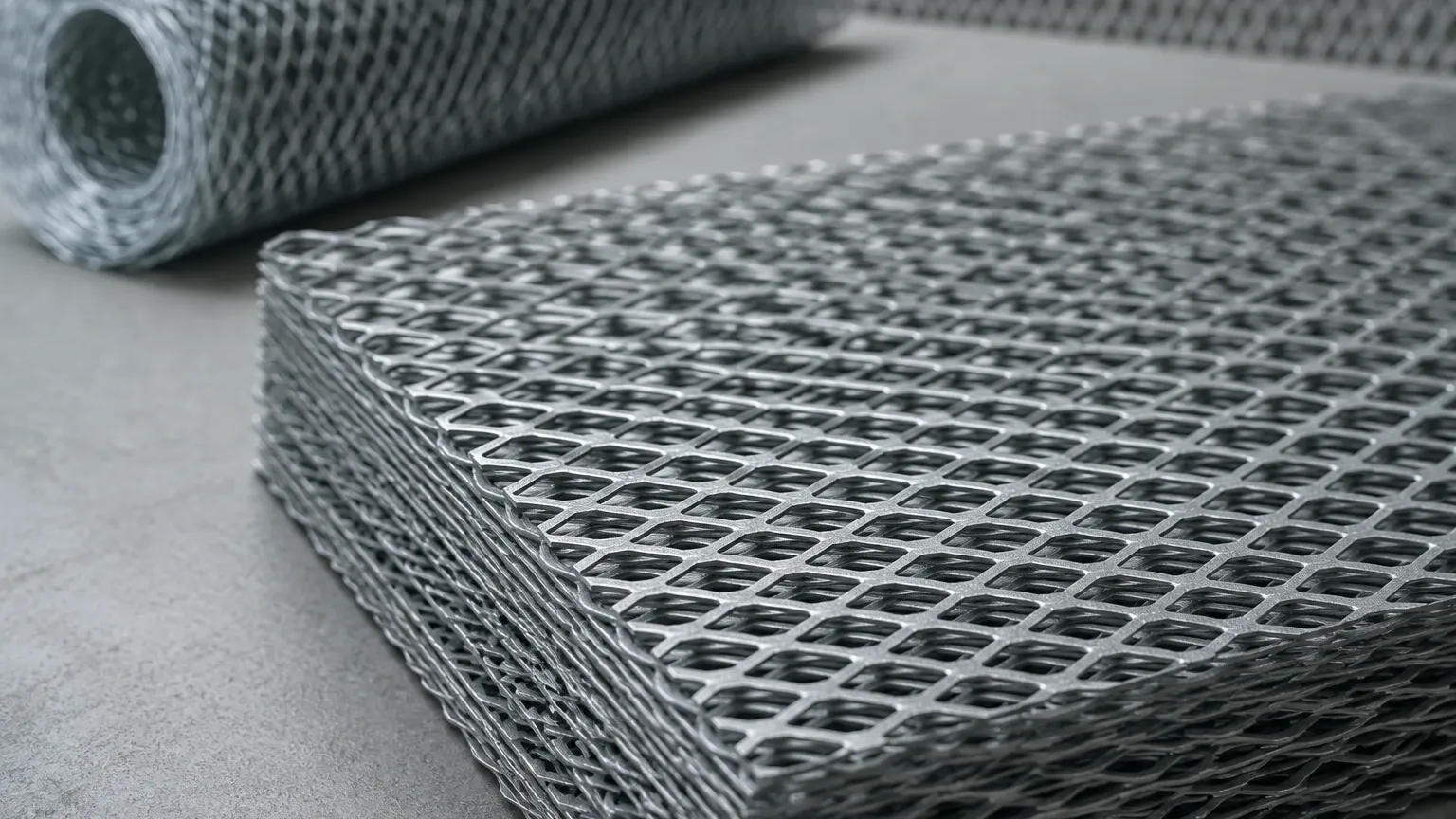
In industrial engineering and filtration design, the selection of structural support materials is as critical as the selection of the primary filtration media itself. Expanded metal galvanized stands out as a versatile, cost-effective, and highly durable solution for applications requiring high strength-to-weight ratios and superior corrosion resistance. Unlike traditional woven wire mesh or perforated sheets, expanded metal is produced through a unique slitting and stretching process that creates a continuous, jointless mesh from a single sheet of metal.
For engineers and procurement professionals, understanding the technical nuances of expanded metal—specifically when treated with a galvanized coating—is essential for optimizing the performance and longevity of industrial equipment. This guide examines the manufacturing principles, engineering specifications, and strategic advantages of utilizing galvanized expanded metal in demanding environments.
The Manufacturing Process: Slitting and Stretching
The production of expanded metal is a precision process that distinguishes it from other metal mesh products. It begins with a solid metal sheet, typically carbon steel, which is fed through an expanding machine. This machine uses a set of knives to simultaneously slit and stretch the metal in a predetermined pattern.
Because the metal is stretched rather than punched, there is zero material waste. This "no-scrap" manufacturing process makes expanded metal more resource-efficient and often more economical than perforated metal, where the "slugs" (the holes punched out) represent lost material costs. The resulting mesh consists of strands and bonds that are set at a uniform angle to the plane of the sheet, providing inherent structural rigidity.
When the application requires expanded metal galvanized, the expanded sheet undergoes a secondary process to apply a protective zinc coating. This is most commonly achieved through hot-dip galvanizing, where the steel is submerged in a bath of molten zinc. The metallurgical reaction creates a series of zinc-iron alloy layers that are bonded to the steel, providing a robust barrier against oxidation and mechanical wear.
Engineering Specifications: SWD, LWD, and Strand Geometry
To specify the correct Perforated & Expanded Metal for a project, engineers must use standardized terminology to define the mesh geometry. The performance of the filter or support structure depends entirely on these dimensions:
* SWD (Short Way of Diamond): The distance from the center of one bond to the center of the next bond measured across the short diamond diagonal.
* LWD (Long Way of Diamond): The distance from the center of one bond to the center of the next bond measured across the long diamond diagonal.
* Strand Width: The amount of metal fed into the machine between the knives to create one strand.
* Strand Thickness: The original thickness of the base metal sheet.
* Opening Size: The clear area between the strands, which dictates the flow rate and particle retention capabilities when used as a coarse filter.
Furthermore, engineers must choose between Standard (Raised) and Flattened expanded metal. Standard expanded metal has strands that are turned at an angle, creating a three-dimensional surface that offers high slip resistance and structural stiffness. Flattened expanded metal is produced by passing the standard sheet through a cold-roll reducing mill, resulting in a smooth, flat surface. In filtration applications, flattened expanded metal is often preferred for supporting delicate filter media, as it minimizes the risk of puncturing the finer mesh layers.
The Role of Galvanization in Industrial Environments
The primary reason for specifying expanded metal galvanized is to prevent corrosion. In industrial settings such as chemical processing plants, wastewater treatment facilities, or offshore platforms, carbon steel is susceptible to rapid oxidation. Galvanizing provides two forms of protection:
1. Barrier Protection: The zinc coating acts as a physical shield, preventing oxygen and moisture from reaching the underlying steel.
2. Cathodic (Sacrificial) Protection: Zinc is more chemically active than steel. If the coating is scratched or damaged, the surrounding zinc will corrode first, sacrificing itself to protect the exposed steel. This "self-healing" property is vital for components that may experience abrasion during installation or operation.
For B2B buyers, it is important to distinguish between Hot-Dip Galvanized (HDG) and Electro-galvanized products. HDG typically results in a much thicker coating (often exceeding 50-80 microns), making it suitable for harsh outdoor or industrial environments. Electro-galvanized coatings are thinner and provide a smoother finish, but they offer significantly less corrosion resistance and are generally reserved for indoor or light-duty applications.
Expanded Metal Galvanized in Filtration Systems
While Kaifil specializes in high-precision stainless steel filtration, expanded metal galvanized plays a crucial role as a secondary component in many industrial filtration assemblies. Its primary function is often as a support pleat or a protective outer cage for finer filter elements.
Structural Support for Fine Media
In high-pressure hydraulic or gas filtration, fine wire cloth or synthetic media lack the mechanical strength to withstand the differential pressure across the filter. A layer of expanded metal provides the necessary "skeleton," ensuring the media remains in place and does not collapse or deform under load. The diamond pattern of the expanded metal is particularly effective at distributing mechanical stress evenly across the surface.
Pre-Filtration and Debris Guarding
In water treatment and HVAC systems, expanded metal galvanized serves as a coarse pre-filter. It captures large debris—such as leaves, plastic waste, or large scale—before it can reach and clog the more expensive primary filter cartridges. The open area percentage of the expanded metal must be carefully calculated to ensure it provides sufficient protection without creating an excessive pressure drop.
Customization for OEM Applications
As a manufacturer focused on customized solutions, Kaifil understands that standard off-the-shelf mesh rarely meets the exact requirements of specialized industrial housings. Custom expanded metal can be produced with specific SWD/LWD ratios to match the flow characteristics of a particular system. Furthermore, custom-sized sheets or cylinders can be fabricated to reduce assembly time for OEM manufacturers.
Selection Criteria: Strength, Flow, and Cost
When evaluating expanded metal galvanized for a new project, engineers should prioritize the following criteria to ensure the most cost-effective and high-performing outcome:
1. Strength-to-Weight Ratio: Expanded metal is lighter than solid plate of the same thickness but retains a high percentage of its structural integrity. This is critical for large-scale filtration units where weight reduction can lower shipping and installation costs.
2. Open Area Percentage: This is the ratio of the openings to the total area of the sheet. For filtration, a higher open area reduces resistance to flow (pressure drop), but may compromise the strength of the support. Engineers must find the balance that satisfies both hydraulic and mechanical requirements.
3. Chemical Compatibility: While galvanized steel is excellent for many environments, it is not suitable for highly acidic or highly alkaline fluids. In such cases, stainless steel expanded metal (304 or 316 grade) is the necessary alternative. However, for neutral pH water, oils, and many gases, galvanized steel offers a much lower total cost of ownership.
4. Edge Treatment: Expanded metal can have "open" or "closed" edges. Open edges have sharp, cut strands, while closed edges are framed or bonded. For safety and to prevent damage to internal filter components, deburring or framing the edges is a common requirement in professional assemblies.
Common Risks and Quality Assurance
Procuring expanded metal galvanized from unreliable sources can lead to several common failures in the field. One major risk is uneven coating thickness. If the zinc layer is too thin in certain areas, localized corrosion (pitting) can occur, leading to structural failure. Conversely, if the coating is too thick or "clumpy," it can reduce the effective opening size of the mesh, altering the filtration performance.
Another concern is material fatigue. If the expanding process is not controlled precisely, the bonds between the diamonds can develop micro-cracks. Under the cyclic pressure loads common in hydraulic systems, these cracks can propagate, leading to the eventual disintegration of the mesh.
To mitigate these risks, it is essential to confirm that the manufacturer adheres to international standards such as ASTM A123 (for hot-dip galvanizing) and ASTM F1267 (for expanded metal). Buyers should request material test reports (MTRs) and coating thickness certifications to ensure the product meets the specified engineering tolerances.
Conclusion: Strategic Integration in Industrial Design
Expanded metal galvanized remains a staple of industrial design because it provides a unique combination of structural rigidity, environmental resistance, and economic efficiency. Whether it is used as a protective guard for industrial machinery or as a critical support layer in a multi-stage filtration system, its performance is a direct result of precise manufacturing and appropriate material selection.
For engineers looking to optimize their filtration solutions, the choice of support media is just as important as the primary filter mesh. By selecting the correct grade, geometry, and coating for expanded metal, technical teams can significantly extend the replacement cycles of their equipment and reduce maintenance overhead.
For those requiring specialized designs or high-performance components, exploring the full range of Perforated & Expanded Metal options is the first step toward achieving a reliable and durable industrial filtration system. By focusing on technical accuracy and application-specific requirements, Kaifil continues to support global industries with dependable metal filtration components.
