


Expanded Metal Jilumesh
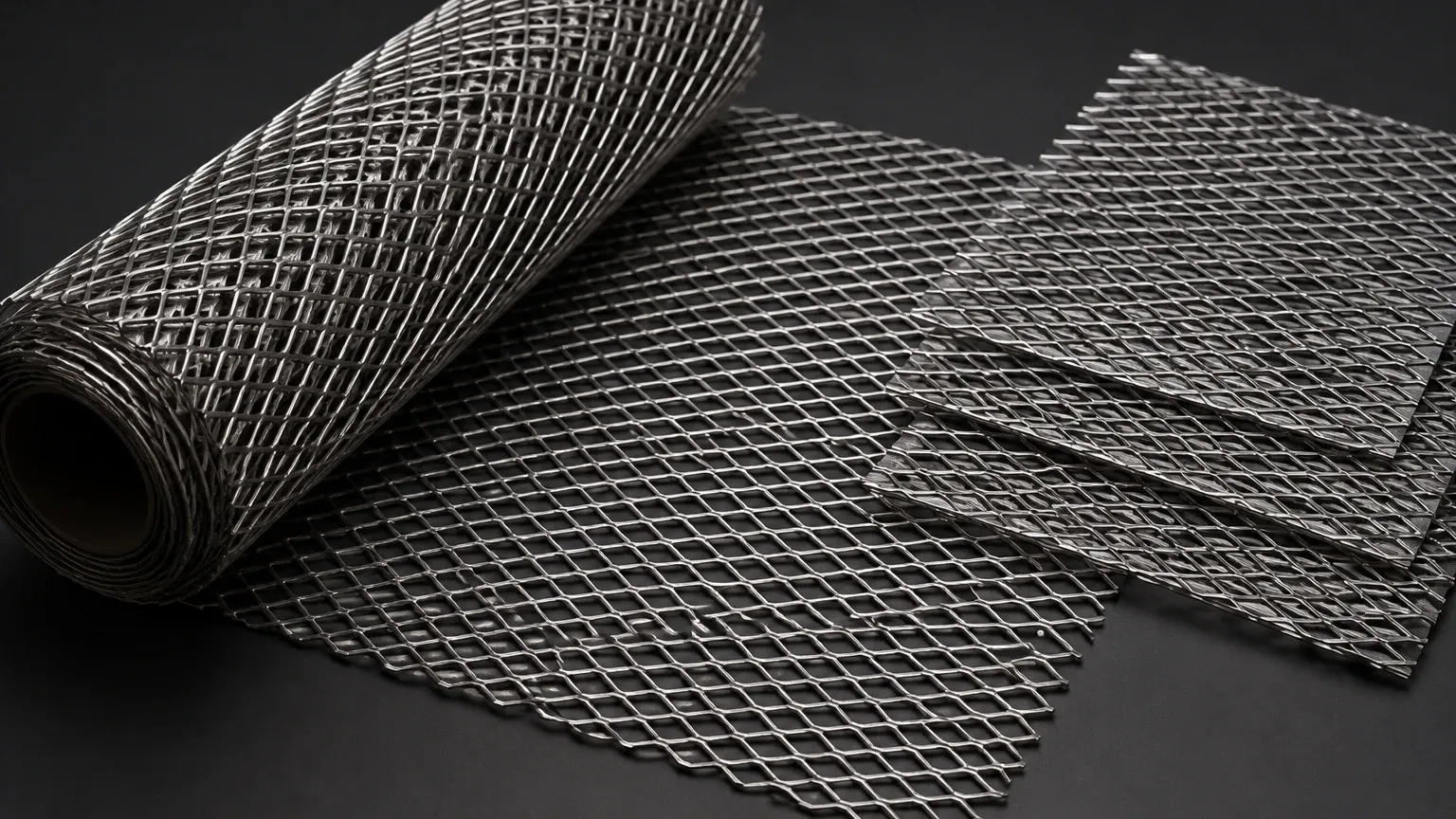
In the landscape of industrial filtration and structural support, expanded metal jilumesh represents a critical category of versatile, high-strength materials. Unlike traditional woven wire or welded mesh, expanded metal is manufactured through a process of simultaneous slitting and stretching. This results in a continuous piece of metal with diamond-shaped openings, characterized by its lack of welds or joints. For engineers and procurement specialists in sectors such as chemical processing, water treatment, and industrial manufacturing, understanding the technical nuances of Perforated & Expanded Metal is essential for optimizing system performance and longevity.
Expanded metal jilumesh is often selected for applications where structural integrity, weight-to-strength ratios, and open-area precision are paramount. At Kaifil, we specialize in providing customized stainless steel filtration solutions that leverage the unique properties of expanded metal to meet the rigorous demands of industrial environments.
Understanding the Geometry and Manufacturing of Expanded Metal Jilumesh
The manufacturing of expanded metal jilumesh is an efficient, "no-waste" process. A solid sheet or coil of metal is fed through an expanding machine, where a set of knives slits and stretches the material in a single motion. This process creates the characteristic diamond pattern while increasing the overall surface area of the original sheet.
Key Geometric Parameters
To specify expanded metal correctly for an industrial application, several technical dimensions must be defined:
1. LWD (Long Way of Design): The distance from the center of one bond to the center of the next bond across the long axis of the diamond.
2. SWD (Short Way of Design): The distance from the center of one bond to the center of the next bond across the short axis of the diamond.
3. LWO (Long Way of Opening): The internal width of the diamond opening.
4. SWO (Short Way of Opening): The internal height of the diamond opening.
5. Strand Width: The amount of metal between the openings.
6. Strand Thickness: The gauge of the original base material.
Raised vs. Flattened Mesh
Expanded metal jilumesh is available in two primary forms: raised (standard) and flattened.
* Raised Expanded Metal: In its standard form, the strands and bonds are set at a uniform angle to the plane of the sheet. This creates a three-dimensional surface that provides excellent grip, directional flow control, and maximum structural rigidity. In filtration, raised mesh is often used as a protective outer cage for filter elements.
* Flattened Expanded Metal: This is produced by passing the standard expanded metal through a cold-rolling reducing mill. The process flattens the strands and bonds into a single plane, resulting in a smooth, flat surface. Flattened mesh is ideal when the material needs to be bonded to other layers, such as in multi-layer sintered filter media, or when a smooth finish is required to prevent abrasion of adjacent components.
Material Selection for Industrial Environments
The performance of expanded metal jilumesh is heavily dependent on the alloy selected. While expanded metal can be produced from carbon steel or aluminum, industrial filtration and high-temperature processing usually require the corrosion resistance of stainless steel.
Stainless Steel 304/304L
Grade 304 is the most common stainless steel used for expanded metal. It offers good corrosion resistance to a wide range of atmospheric and chemical exposures. It is frequently used in food processing, pharmaceutical applications, and general industrial filtration where extreme chemical resistance is not required.
Stainless Steel 316/316L
For more demanding environments, such as marine applications, chemical processing plants, or high-salinity water treatment, Grade 316 is the preferred choice. The addition of molybdenum provides superior resistance to pitting and crevice corrosion, particularly in chloride-rich environments. 316L (low carbon) is used when welding is required to ensure the integrity of the mesh structure after fabrication.
Specialized Alloys
In specific high-temperature or highly corrosive scenarios, Kaifil can work with specialized alloys like Duplex stainless steel or nickel-based alloys. These materials ensure that the expanded metal jilumesh maintains its mechanical properties and filtration accuracy under extreme stress.
The Role of Jilumesh in Filtration and Support Systems
Expanded metal jilumesh serves several critical functions within industrial filtration systems. Its primary advantage is its ability to provide high structural strength without significantly obstructing fluid or gas flow.
Structural Support for Fine Mesh
In many filtration applications, the primary filter media (such as fine woven wire mesh or non-woven fiber felt) lacks the mechanical strength to withstand high differential pressures. Expanded metal jilumesh is often used as a support tube or outer guard. Because the mesh is made from a single piece of metal, it does not have the weak points associated with welded joints, allowing it to distribute pressure loads evenly across the filter element.
Pre-Filtration and Coarse Separation
In systems dealing with large particulate matter, expanded metal can serve as a primary or pre-filtration stage. The diamond openings are effective at capturing large debris while allowing high flow rates. This protects downstream fine filters from premature clogging and mechanical damage.
Flow Diffusion and Turbulence Control
The angled strands of raised expanded metal can be used to influence fluid dynamics. By orienting the mesh specifically, engineers can create controlled turbulence or diffuse flow across a wider surface area, which is particularly useful in chemical reactors and heat exchangers.
Comparison: Expanded Metal vs. Perforated Metal
When designing a filtration or separation system, engineers often choose between expanded metal and perforated metal. Both fall under the broader category of Perforated & Expanded Metal, but they offer different performance characteristics.
| Feature | Expanded Metal Jilumesh | Perforated Metal |
| :— | :— | :— |
| Manufacturing | Slit and stretched (no waste) | Punched (creates scrap) |
| Structural Integrity | High (single piece, no welds) | Moderate (holes can create stress points) |
| Weight | Lighter per square meter | Heavier for the same thickness |
| Surface Profile | 3D (Raised) or 2D (Flattened) | 2D (Flat) |
| Cost-Efficiency | High (utilizes 100% of material) | Lower (material is lost as punchings) |
| Open Area | Highly variable, up to 90% | Limited by hole spacing and strength |
Expanded metal is generally the more cost-effective choice for large-scale support structures, while perforated metal is often preferred when extremely precise, circular hole geometries are required for specific particle size exclusion.
Engineering Considerations for Custom Fabrication
Specifying expanded metal jilumesh for an OEM project requires careful attention to fabrication tolerances and application-specific requirements. At Kaifil, we work closely with engineering teams to ensure the final product meets the necessary technical benchmarks.
Open Area Calculations
The open area percentage determines the flow capacity and pressure drop across the mesh. For expanded metal, this is calculated based on the strand width and the SWD. It is vital to confirm that the open area provides a balance between structural support and the required flow rate of the medium (liquid or gas).
Edge Finishing and Safety
One characteristic of expanded metal is the "sharp" edge created by the slitting process. For components that will be handled frequently or integrated into sensitive assemblies, edges must be finished. Options include:
* Bond Shearing: Cutting through the bonds to provide a relatively smooth edge.
* Random Shearing: Cutting through the diamonds, which may leave sharp points (teeth).
* Framing: Enclosing the expanded metal in a U-profile or angle frame for safety and ease of installation.
Tolerances and Flatness
Industrial filters often require tight tolerances to fit into housings. Standard expanded metal may have slight camber or bow due to the stretching process. If the application requires high precision, specify "leveled" or "flattened" material to ensure the mesh meets the required flatness specifications for downstream welding or assembly.
Maintenance and Longevity in Demanding Applications
The durability of expanded metal jilumesh makes it a low-maintenance component, but its lifespan is influenced by the operating environment. In filtration systems, the primary maintenance concern is fouling.
Cleaning Protocols
Stainless steel expanded metal can be cleaned using various methods depending on the contaminant:
* Backwashing: Effective for removing surface-loaded particles in liquid systems.
* Ultrasonic Cleaning: Ideal for removing fine particles trapped in the bonds of the mesh.
* Chemical Cleaning: Using acids or alkalis to dissolve scale or organic buildup, provided the chemical is compatible with the stainless steel grade (e.g., 316L for acidic environments).
Inspection Points
Regular inspections should focus on:
* Erosion: High-velocity fluids containing abrasive particles can wear down the strands over time.
* Corrosion: Check for signs of pitting, especially in stagnant areas of the system.
* Mechanical Deformation: Ensure the mesh has not buckled under unexpected pressure surges.
Conclusion
Expanded metal jilumesh is a versatile and robust solution for industrial filtration and structural support. By selecting the appropriate material grade, diamond geometry, and finishing options, engineers can significantly improve the efficiency and durability of their filtration systems. Whether used as a support cage for high-pressure filter cartridges or as a primary separation screen, the unique properties of expanded metal provide a reliable foundation for demanding industrial processes.
For technical teams looking to integrate high-quality metal components into their designs, Kaifil offers extensive expertise in the manufacture and customization of Perforated & Expanded Metal. By focusing on precision engineering and material integrity, we help our global partners achieve optimized filtration performance and reduced total cost of ownership.
