


Expanded Metal Jogja
In the industrial landscape of Yogyakarta and the surrounding Central Java region, the demand for versatile, high-strength materials has led to a significant focus on expanded metal solutions. Often searched for as expanded metal jogja, this material serves as a cornerstone for diverse applications ranging from architectural facades and security fencing to sophisticated industrial filtration systems. For engineers and procurement specialists, understanding the technical nuances of expanded metal is essential to ensuring project longevity, safety, and cost-efficiency.
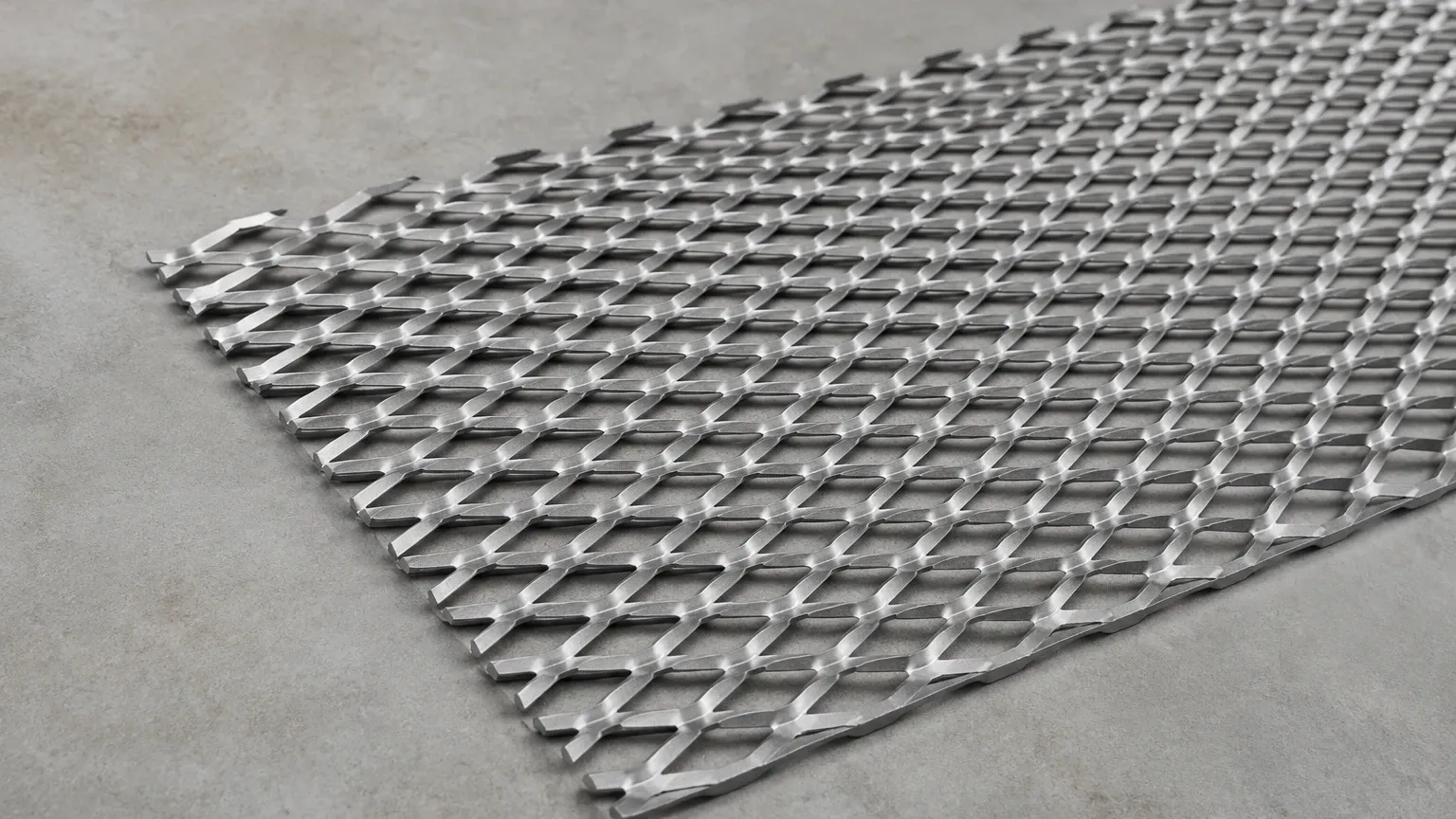
Expanded metal is a unique material produced by simultaneously slitting and stretching a solid sheet of metal. Unlike perforated metal, which involves punching out holes and creating scrap material, the expansion process is a non-waste manufacturing method. This process creates a diamond-shaped pattern that provides an exceptional strength-to-weight ratio, making it an ideal choice for both structural and functional components in the Yogyakarta industrial sector.
The Manufacturing Process and Structural Integrity
The production of expanded metal begins with a metal plate or coil—typically stainless steel, carbon steel, or aluminum. A machine equipped with specialized knives slits the metal at regular intervals while stretching it. This mechanical deformation creates the characteristic diamond openings.
One of the primary engineering advantages of Perforated & Expanded Metal is that the strands and bonds are set at a uniform angle to the plane of the sheet. This configuration adds structural rigidity and allows the material to distribute loads more effectively than flat sheets. Because the mesh is made from a single piece of metal, there are no welds or joints that can break or unravel, which is a critical consideration for high-stress industrial environments.
Standard vs. Flattened Expanded Metal
When sourcing expanded metal jogja, buyers must distinguish between two primary forms:
1. Standard (Raised) Expanded Metal: This is the material as it comes off the expanding machine. The strands and bonds are set at a sharp angle, providing a slip-resistant surface and maximum rigidity. It is frequently used for walkways, ramps, and filtration supports where mechanical grip or airflow turbulence is desired.
2. Flattened Expanded Metal: This involves passing the standard expanded metal through a cold-rolling reducing mill. The process flattens the strands and bonds into the same plane as the sheet, resulting in a smooth, flat surface. Flattened expanded metal is often preferred for architectural applications, machine guards, and fine filtration layers where a consistent thickness is required.
Technical Specifications for Industrial Procurement
For technical professionals in Yogyakarta, specifying expanded metal requires more than just selecting a mesh size. Several key parameters define the performance and suitability of the material for a given application.
Dimensional Terminology
* SWD (Short Way of Design): The distance from the center of one bond to the center of the next bond measured across the short diamond diagonal.
* LWD (Long Way of Design): The distance from the center of one bond to the center of the next bond measured across the long diamond diagonal.
* SWO (Short Way of Opening): The actual width of the opening measured from the inside of the bonds.
* LWO (Long Way of Opening): The actual length of the opening measured from the inside of the bonds.
* Strand Width: The amount of metal fed into the machine for each slit.
* Strand Thickness: The thickness of the original base metal.
Calculating Open Area
In filtration and ventilation applications, the "open area" percentage is the most critical metric. It determines the flow rate, pressure drop, and particle retention capabilities of the mesh. Engineers must calculate this carefully to ensure that the expanded metal does not become a bottleneck in a hydraulic or pneumatic system. Unlike perforated metal, where the open area is straightforward, the open area in expanded metal can vary significantly depending on the angle of the strands, especially in the "standard" raised format.
Material Selection: Durability in Tropical Climates
The environmental conditions in Yogyakarta—characterized by high humidity and, in some areas, volcanic or coastal air—necessitate careful material selection. While carbon steel is often used for internal structural components due to its lower cost, stainless steel is the gold standard for industrial durability.
Stainless Steel Grades
* Grade 304: The most common stainless steel used in expanded metal. It offers excellent corrosion resistance and is suitable for most food processing and general industrial applications in the region.
* Grade 316: Contains molybdenum, which provides superior resistance to chlorides and pitting. This is the recommended choice for chemical processing plants, pharmaceutical cleanrooms, and any application exposed to harsh cleaning agents or saline environments.
* Aluminum: Lightweight and naturally corrosion-resistant, aluminum expanded metal is frequently used in architectural cladding and HVAC systems where weight reduction is a priority.
Industrial Applications in the Yogyakarta Region
The versatility of expanded metal jogja allows it to be integrated into various sectors that drive the local economy.
1. Industrial Filtration and Separation
As a manufacturer specializing in filtration, Kaifil recognizes expanded metal as a vital component in multi-stage filtration systems. It often serves as the rigid support structure (the "pleat support") for finer wire mesh filters. Its ability to withstand high pressure without deforming makes it essential in hydraulic oil filtration and large-scale water treatment facilities.
2. Food and Beverage Processing
Yogyakarta’s robust food processing industry requires materials that are easy to sanitize and resistant to organic acids. Stainless steel expanded metal is used for drying trays, sorting screens, and protective barriers on conveyor systems. The lack of joints prevents the accumulation of bacteria, supporting stringent food safety standards.
3. Construction and Infrastructure
From a structural standpoint, expanded metal is used as reinforcement in concrete (rib lath) and as high-security fencing. Its design makes it nearly impossible to cut with standard tools, and the diamond pattern provides visibility for security personnel while maintaining a physical barrier.
4. Architectural Design
The aesthetic appeal of the diamond mesh has made expanded metal a favorite for modern architectural projects in Jogja. It is used for sunshades, ceiling panels, and building envelopes, providing a balance between natural light penetration and thermal insulation.
Evaluating Quality and Avoiding Common Risks
When procuring expanded metal, especially when dealing with local stockists or international suppliers, engineers must conduct rigorous quality evaluations. Substandard material can lead to premature failure, safety hazards, and increased maintenance costs.
Key Evaluation Criteria:
* Edge Uniformity: Check for burrs or sharp edges that could damage other components in a filtration assembly or injure workers during installation.
* Flatness Tolerances: For flattened expanded metal, ensure the sheet is truly flat without "bowing" or "camber," which can complicate welding and framing.
* Material Certification: Always request Mill Test Reports (MTRs) to verify that the chemical composition of the steel matches the required grade (e.g., ensuring SS316 is not substituted with SS201).
* Mesh Consistency: Inspect for uniformity in the SWD and LWD. Inconsistent stretching can lead to weak spots in the mesh and uneven flow distribution in filtration applications.
Common Risks in Procurement
One of the most significant risks in sourcing expanded metal jogja is the use of "under-gauge" material. Some suppliers may provide sheets that are slightly thinner than specified to reduce costs. In structural or high-pressure filtration applications, even a 0.1mm difference in strand thickness can significantly reduce the load-bearing capacity and fatigue life of the component.
The Role of Customization and OEM Solutions
While standard sizes are available through many distributors, specialized industrial projects often require custom-engineered expanded metal. This is where the expertise of a professional manufacturer becomes invaluable. Customization options include:
* Bespoke Mesh Sizes: Tailoring the SWD and LWD to achieve a specific filtration micron rating or airflow velocity.
* Specialized Coatings: Applying powder coating, galvanization, or electropolishing to enhance corrosion resistance or aesthetic finish.
* Secondary Fabrication: Providing the expanded metal in pre-cut circles, cylinders, or framed panels ready for immediate integration into industrial machinery.
For companies in Yogyakarta looking to optimize their filtration processes or structural designs, moving beyond off-the-shelf products to OEM-specified Perforated & Expanded Metal can result in significant long-term savings. By working directly with a manufacturer, engineers can ensure that the material is optimized for the specific chemical, thermal, and mechanical stresses of their application.
Conclusion: Making Informed Purchasing Decisions
Sourcing expanded metal jogja requires a technical approach that prioritizes material integrity and application-specific requirements. Whether the goal is to support a delicate filter element in a chemical plant or to provide a durable walkway in a manufacturing facility, the quality of the expanded metal is paramount.
By focusing on precise specifications—such as material grade, SWD/LWD dimensions, and the choice between standard and flattened formats—procurement teams can avoid the pitfalls of low-quality alternatives. As industrial requirements in the region continue to evolve, the partnership between local engineering expertise and global manufacturing quality will remain the key to successful project execution. For those seeking high-performance filtration and metal components, verifying technical data and seeking customized solutions is the most reliable path to operational excellence.
