


Expanded Metal Joint
In industrial fabrication and filtration engineering, the integrity of an expanded metal joint is a critical factor that determines the structural stability, lifespan, and performance of the final component. Expanded metal is produced by simultaneously slitting and stretching a solid metal sheet, creating a diamond-shaped pattern of openings. Unlike woven wire mesh, which consists of interlaced wires, expanded metal is a single-piece structure. However, when these sheets are integrated into larger assemblies—such as filter cartridges, support baskets, or architectural panels—the method used to join the edges or secure the mesh to a frame becomes the primary point of engineering focus.
Understanding the mechanics of an expanded metal joint requires a deep dive into the material's geometry, the metallurgy of the chosen alloy, and the specific requirements of the application, whether it involves high-pressure hydraulic filtration or heavy-duty structural reinforcement.
Understanding the Geometry of Expanded Metal Joints
To properly engineer an expanded metal joint, one must first understand the terminology of the material's structure. Expanded metal consists of "strands" and "bonds." The strands are the individual metal strips that form the sides of the diamond openings, while the bonds are the solid intersections where the strands meet.
In the context of a joint, there are two distinct types to consider:
1. The Internal Bond (The Natural Joint): This is the point where the metal was not slit during the expansion process. It is a continuous part of the original sheet. The strength of this "natural joint" is what gives expanded metal its superior strength-to-weight ratio compared to perforated metal. Because the metal is not punched out but stretched, the grain structure remains intact, providing excellent torsional rigidity.
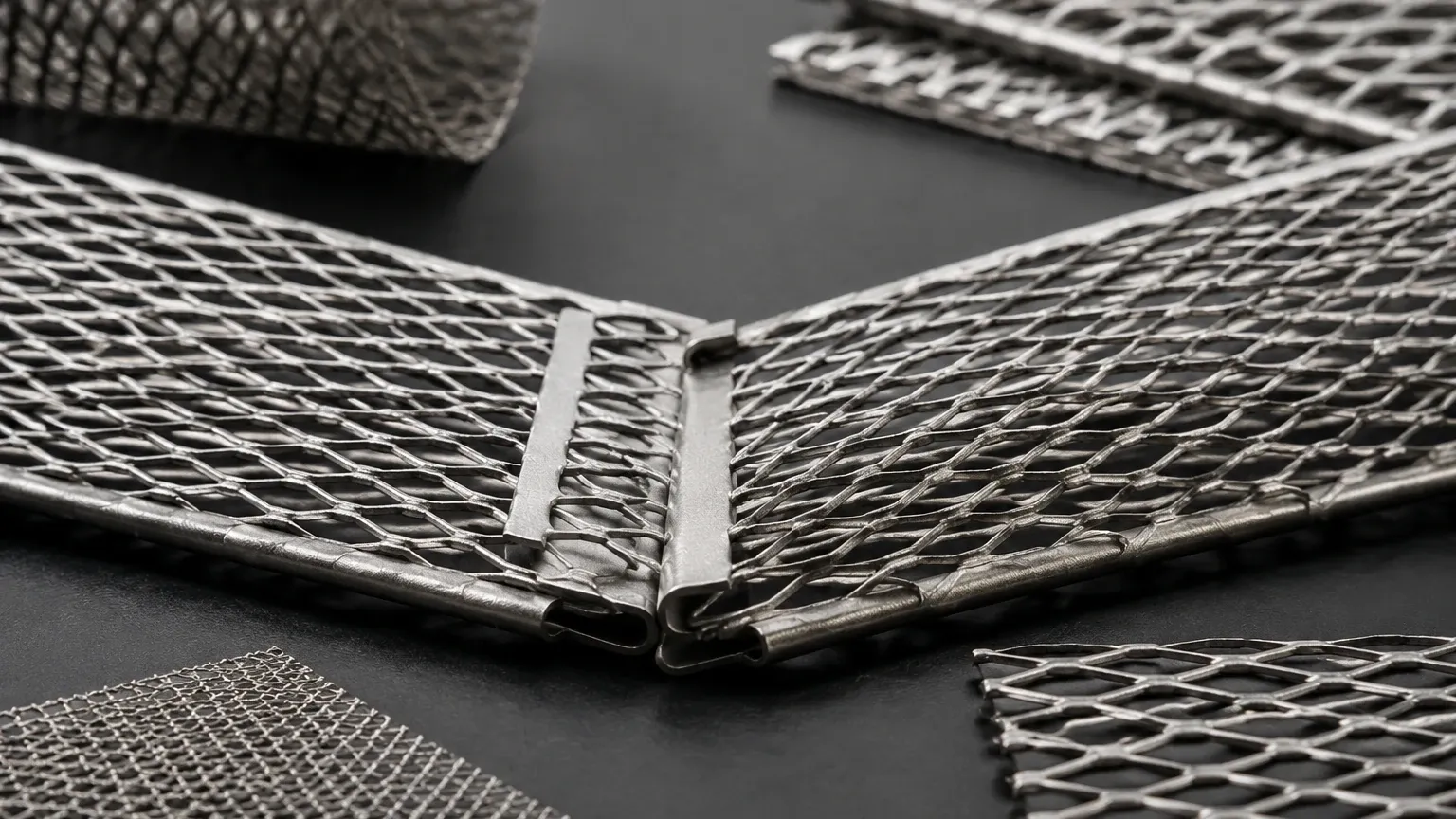
2. The Assembly Joint (The Fabricated Seam): This refers to the connection made between two separate edges of expanded metal or between the mesh and another component. This is where engineering precision is most required. Whether creating a longitudinal seam for a cylindrical filter core or attaching a panel to a support angle, the assembly joint must often withstand significant mechanical stress or fluid pressure.
When specifying Perforated & Expanded Metal for industrial use, the orientation of the diamond—Long Way of Design (LWD) versus Short Way of Design (SWD)—drastically impacts how the joint should be configured. A joint running parallel to the LWD will behave differently under tension than one running parallel to the SWD.
Common Methods for Creating an Expanded Metal Joint
Selecting the appropriate joining method depends on the material thickness, the alloy (typically stainless steel 304 or 316L in filtration), and the required cleanliness of the joint.
Welding Techniques
Welding is the most common method for creating a permanent expanded metal joint in industrial environments. However, the open area of the mesh presents challenges for heat management.
* Tungsten Inert Gas (TIG) Welding: TIG welding is preferred for stainless steel filtration components. It provides a high level of control, allowing the welder to join the thin strands of the mesh to a solid end cap or flange without burning through the material. A TIG-welded expanded metal joint is clean, precise, and highly resistant to corrosion.
* Metal Inert Gas (MIG) Welding: MIG welding is faster and often used for thicker gauges of expanded metal in structural applications. While efficient, it may require more post-weld cleaning to remove spatter, which is undesirable in food-grade or pharmaceutical filtration.
* Resistance Spot Welding: This is highly effective for lap joints where two layers of expanded metal overlap. The electrical resistance at the contact points generates heat, fusing the bonds together. This is a common method for securing the seam of a cylindrical support core.
Mechanical Fastening
In applications where welding is not feasible due to material coatings or the need for disassembly, mechanical joints are used. This includes the use of rivets, bolts, or specialized clamping profiles. When using mechanical fasteners, it is essential to use washers or backing strips to distribute the load across multiple bonds of the expanded metal, preventing the strands from tearing under stress.
Technical Considerations for Stainless Steel Joint Fabrication
For manufacturers like Kaifil, which specializes in stainless steel filtration solutions, the metallurgy of the expanded metal joint is paramount. Stainless steel is chosen for its corrosion resistance, but the process of creating a joint can compromise this property if not handled correctly.
The Heat-Affected Zone (HAZ)
During welding, the area surrounding the joint—the Heat-Affected Zone—undergoes thermal cycling that can lead to "sensitization." In stainless steel, this involves the precipitation of chromium carbides at the grain boundaries, which reduces the material's ability to form a protective oxide layer. To mitigate this in an expanded metal joint, engineers often specify low-carbon grades like 304L or 316L and employ precise heat control to minimize the HAZ.
Flattened vs. Raised Expanded Metal
An expanded metal joint is also influenced by whether the material is "raised" (standard) or "flattened."
* Raised Expanded Metal: The strands and bonds are set at a uniform angle to the plane of the sheet. Joining these requires careful alignment to ensure the diamonds match up, and welding can be more complex due to the varying heights of the contact points.
* Flattened Expanded Metal: The sheet is passed through a cold-rolling reducing mill, which flattens the strands and bonds into the same plane. This creates a smooth surface that is much easier to weld or join mechanically, as it provides a consistent contact area for lap joints or butt joints.
The Role of Joints in Filtration Support Structures
In many industrial filtration applications, expanded metal serves as the high-strength support layer for a finer wire mesh media. The expanded metal joint in these structures must be engineered to prevent "bypass" and ensure the structural integrity of the filter element under differential pressure.
In a cylindrical filter cartridge, the longitudinal joint of the expanded metal core must be perfectly flush. If there is a significant "step-down" or overlap at the joint, it can create a localized stress point for the fine filter mesh wrapped around it. Over time, the vibration and pressure fluctuations inherent in hydraulic or chemical processing systems can cause the fine mesh to fatigue and fail at this joint location.
Furthermore, the joint must be free of burrs or sharp edges. In the manufacturing of custom stainless steel cartridges, the edges of the expanded metal are often deburred or encapsulated within the end caps to ensure that the joint does not damage the primary filtration media during assembly or operation.
Evaluating Joint Strength and Load Distribution
Engineers must calculate the required strength of an expanded metal joint based on the anticipated load. Unlike a solid plate, where the joint strength is a direct function of the weld length and throat thickness, an expanded metal joint's strength is a function of the number of effective bonds joined.
Tensile Strength at the Seam
When an expanded metal sheet is pulled in tension, the stress is concentrated at the bonds. If a joint is made by welding only every third or fourth bond, the remaining bonds will bear a disproportionate amount of the load, leading to premature failure. For high-performance applications, a continuous weld or a high-density spot weld pattern is required to ensure that the joint strength matches the parent material's capabilities.
Pressure Drop and Flow Dynamics
The joint configuration also affects the fluid dynamics within a filtration system. A bulky lap joint can create turbulence or a stagnant zone where debris can accumulate. In high-precision chemical processing, a butt joint (where the two edges meet end-to-end without overlapping) is often preferred to maintain a uniform profile and consistent flow characteristics across the entire circumference of the filter.
Common Failure Modes and Mitigation Strategies
Despite its inherent strength, an expanded metal joint can fail if not properly specified. Common failure modes include:
* Stress Cracking: Often occurring in the HAZ of a weld, stress cracking is caused by excessive heat input or rapid cooling. This is mitigated by using appropriate filler metals and controlled welding parameters.
* Galvanic Corrosion: If a joint is made between expanded metal and a frame of a different alloy (e.g., joining 316L mesh to a carbon steel frame), galvanic corrosion will occur in the presence of an electrolyte. Engineers should always ensure material compatibility at the joint.
* Vibration Fatigue: In hydraulic systems with high-frequency pressure pulses, a poorly secured joint can vibrate, leading to work-hardening and eventual snapping of the strands. Ensuring a rigid, high-quality weld is the primary defense against fatigue failure.
Customization and Engineering Support
Every industrial application has unique requirements for filtration accuracy, pressure ratings, and chemical compatibility. When designing a system that utilizes expanded metal, it is not enough to simply select a mesh size; the method of joining that mesh into the final assembly is equally vital.
At Kaifil, the focus is on providing engineered solutions where the expanded metal joint is designed to meet the specific rigors of the environment. This includes selecting the right thickness, diamond size, and welding technique to ensure that the joint is never the weak link in the filtration process. Whether the requirement is for a heavy-duty support cage or a precision-engineered filter housing component, the technical details of the joint are integrated into the initial design phase to optimize performance and total cost of ownership.
Conclusion
The expanded metal joint is a fundamental element of industrial design that requires careful technical evaluation. By understanding the relationship between the material's geometry, the chosen fabrication method, and the operational stresses of the application, engineers can ensure reliable and durable performance. From the selection of stainless steel grades to the precision of TIG welding, every aspect of the joint contributes to the overall efficiency of the filtration or structural system. When sourcing components, confirming the manufacturer's capabilities in joint fabrication is a critical step in ensuring the long-term success of the project.
