


Expanded Metal Lath Ceiling
In modern industrial and commercial architecture, the selection of ceiling materials extends beyond simple aesthetics. Engineers and specifiers often require solutions that balance structural integrity, airflow management, acoustic performance, and long-term durability. The expanded metal lath ceiling has emerged as a versatile technical solution, bridging the gap between traditional plaster reinforcement and contemporary open-cell suspended systems. As a specialized component within the broader category of Perforated & Expanded Metal, metal lath provides a unique combination of lightweight properties and high mechanical strength.
For procurement teams and facility engineers, understanding the technical nuances of expanded metal—from material grades to strand geometry—is essential for ensuring that the chosen system meets the specific demands of the environment, whether it is a chemical processing plant, a pharmaceutical laboratory, or a high-traffic commercial facility.
The Engineering Principles of Expanded Metal Lath
Unlike perforated metal, which is created by punching holes into a solid sheet and resulting in material waste, expanded metal is manufactured through a process of simultaneous slitting and stretching. This precision engineering method transforms a solid metal sheet into a continuous mesh without any joins or welds. When applied to an expanded metal lath ceiling, this structure offers several mechanical advantages.
The expansion process creates "strands" and "bonds" set at a specific angle to the plane of the sheet. This angular geometry provides inherent rigidity. In a ceiling application, this means the material can support its own weight over longer spans with minimal deflection compared to traditional woven wire or thin-gauge solid panels. Furthermore, because the mesh is formed from a single piece of metal, there are no loose strands or vibrating joints, which is a critical consideration in environments subject to mechanical vibration or high-velocity airflow.
Key Technical Specifications for Ceiling Applications
When specifying an expanded metal lath ceiling, technical professionals must evaluate several key metrics to ensure the material is fit for purpose. These specifications dictate the performance of the ceiling in terms of visibility, weight, and structural capacity.
1. Mesh Geometry (LWD and SWD)
Mesh size is defined by the Long Way of the Diamond (LWD) and the Short Way of the Diamond (SWD). For ceiling applications, a larger LWD often provides a more open area, which is beneficial for integrating HVAC systems and fire suppression sprinklers. Conversely, a smaller SWD offers higher rigidity and better concealment of plenum-mounted equipment.
2. Strand Width and Thickness
The cross-sectional area of the strand determines the overall strength of the lath. In industrial environments where the ceiling may need to support insulation or acoustic baffles, increasing the strand thickness is a more effective way to add strength than simply reducing the mesh size.
3. Open Area Percentage
The open area is a critical calculation for engineers managing airflow and lighting. Expanded metal typically offers an open area ranging from 30% to 80%. This transparency allows for the seamless integration of smoke detection and ventilation systems without requiring additional penetrations through the ceiling panels.
Material Selection: Stainless Steel vs. Alternative Alloys
Material selection is perhaps the most significant factor in determining the lifecycle cost and performance of an expanded metal lath ceiling. While carbon steel and aluminum are common in light commercial use, industrial applications often demand the superior properties of stainless steel.
* Stainless Steel (304 and 316 Grades): For facilities involved in chemical processing, food and beverage production, or pharmaceutical manufacturing, stainless steel is the standard. Grade 304 provides excellent corrosion resistance for most indoor environments, while Grade 316 is required for high-moisture areas or facilities where corrosive cleaning agents are frequently used. Stainless steel also offers superior fire resistance and maintains its structural integrity at higher temperatures than aluminum.
* Aluminum: Chosen primarily for its lightweight properties, aluminum is suitable for large-span decorative ceilings where corrosion is not a primary concern. However, it lacks the tensile strength and impact resistance of stainless steel.
* Galvanized Steel: Often used as a cost-effective solution for plaster lath, galvanized steel provides basic rust protection but may not be suitable for exposed architectural ceilings where aesthetic consistency and long-term chemical resistance are required.
Structural and Functional Advantages of Expanded Metal Lath Ceilings
The adoption of expanded metal lath in ceiling systems is driven by several functional benefits that traditional solid or acoustic tile ceilings cannot provide.
Acoustic Management
While metal itself is reflective, the geometry of expanded metal lath is highly effective at diffusing sound waves. When paired with acoustic backing materials or mineral wool, an expanded metal lath ceiling can achieve high Noise Reduction Coefficient (NRC) ratings. The mesh acts as a protective face that allows sound to pass through to the absorbent material while maintaining a durable, impact-resistant surface.
Ventilation and Thermal Regulation
In industrial settings, heat buildup in the upper portions of a room can affect both equipment performance and worker comfort. The open structure of expanded metal facilitates natural convection, allowing hot air to rise into the plenum and be exhausted efficiently. This transparency also ensures that lighting fixtures mounted above the ceiling can illuminate the workspace with a diffused, glare-reducing effect.
Security and Durability
In high-security or high-traffic areas, expanded metal lath provides a physical barrier that is difficult to penetrate. Unlike standard drop-ceiling tiles, metal lath panels are robust and resistant to impact, making them ideal for transit hubs, correctional facilities, and industrial warehouses where durability is a priority.
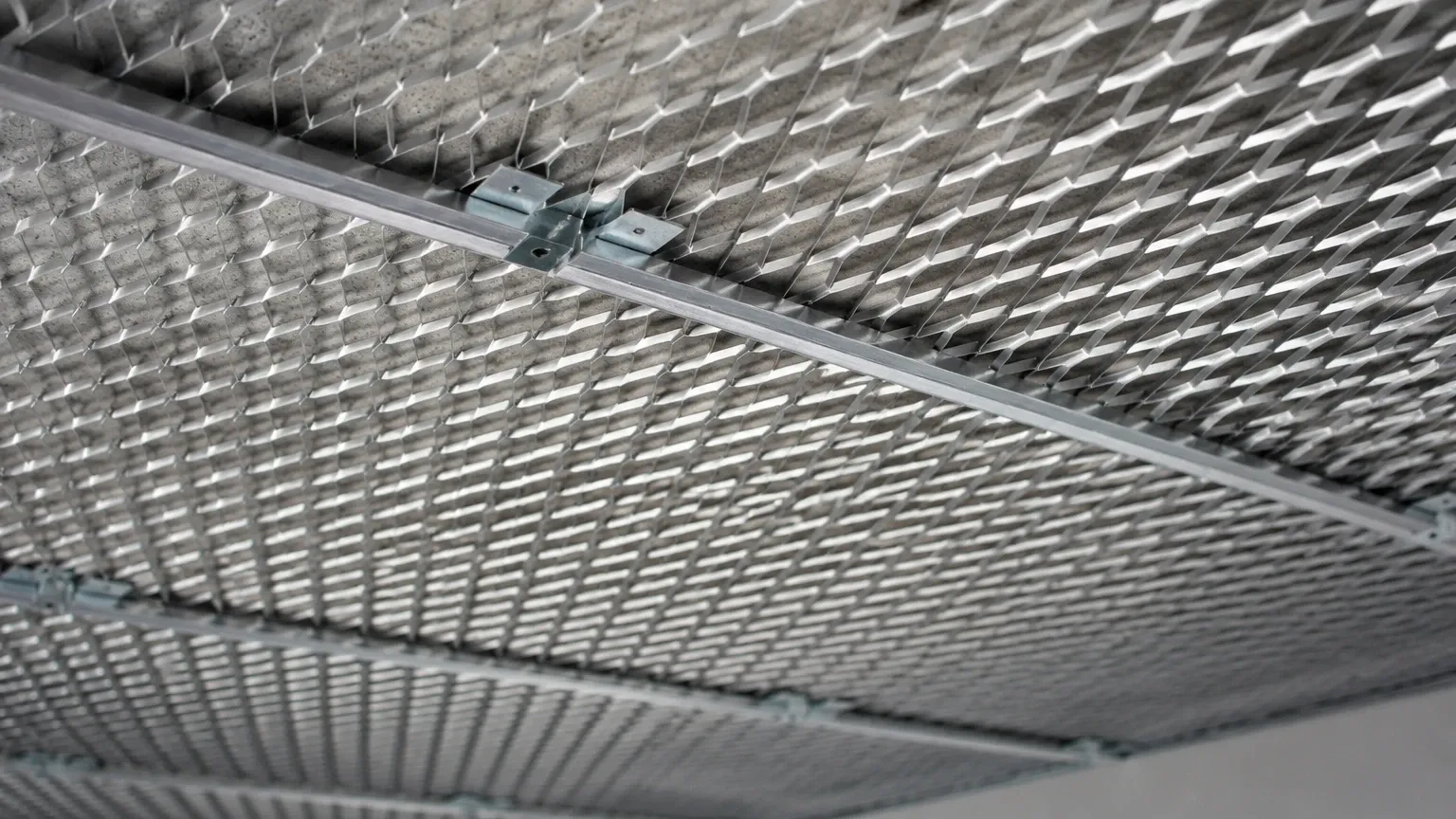
Installation Considerations and Engineering Integration
Successful implementation of an expanded metal lath ceiling requires careful planning regarding the suspension system and the interface with other building services. There are two primary installation methods:
1. Lay-in Systems: The expanded metal panels are cut to standard sizes (e.g., 2'x2' or 2'x4') and placed into a standard T-grid suspension system. This allows for easy access to the plenum for maintenance of electrical and mechanical systems.
2. Hook-on or Bolted Systems: For large-scale industrial projects, panels may be custom-engineered to hook onto a heavy-duty sub-structure or be bolted directly to steel framing. This is common in environments where the ceiling must withstand significant wind loads or seismic activity.
Engineers must also consider the "directionality" of the expanded metal. Because the strands are angled, the appearance and transparency of the ceiling change depending on the viewing angle. Specifying the orientation of the LWD relative to the primary light source or entry point is a critical detail in the design phase.
Maintenance, Durability, and Total Cost of Ownership
From a B2B perspective, the total cost of ownership (TCO) is a more relevant metric than the initial purchase price. Expanded metal lath ceilings, particularly those manufactured from high-grade stainless steel, offer an exceptionally long service life with minimal maintenance requirements.
Unlike acoustic tiles, which are prone to sagging, staining, and moisture damage, metal lath remains dimensionally stable over decades. Cleaning is typically limited to occasional vacuuming or pressurized air to remove dust from the mesh. In sterile environments, stainless steel lath can be steam-cleaned or treated with sanitizing chemicals without risk of degradation. This durability reduces the frequency of replacement cycles, providing significant long-term savings for facility managers.
Procurement Checklist: What Technical Teams Must Confirm
Before finalizing a purchase order for expanded metal components, purchasing teams and engineers should confirm the following technical details with the manufacturer:
* Flattened vs. Raised: "Raised" expanded metal provides more texture and better sound diffusion, while "flattened" expanded metal is passed through a cold-rolling mill to create a smooth, level surface. Flattened lath is often easier to handle and provides a different aesthetic profile.
* Edge Configuration: Will the panels be supplied with a "bonded" edge (where the diamonds are closed) or a "random" sheared edge? Bonded edges are safer for handling and provide a cleaner look in exposed grid systems.
* Load Requirements: If the ceiling is expected to support additional weight, such as signage or specialized lighting, the gauge and strand width must be calculated to meet these specific load-bearing requirements.
* Finish and Coating: While stainless steel is often left in its natural mill finish, expanded metal can also be powder-coated or PVDF-coated to match specific architectural color schemes or to provide an additional layer of chemical protection.
By focusing on these technical parameters, engineers can ensure that the expanded metal lath ceiling provides the necessary performance characteristics for their specific industrial or commercial application. Whether the goal is to improve airflow, enhance acoustics, or provide a durable structural finish, the inherent properties of Perforated & Expanded Metal make it a superior choice for demanding environments.
