


Expanded Metal Lath for Rendering
In industrial and commercial construction, the longevity of a rendered finish is not merely a result of the plaster quality but is fundamentally dependent on the internal reinforcement structure. Expanded metal lath serves as a critical substrate, providing a mechanical key that secures render to various surfaces, including masonry, steelwork, and timber. For engineers and procurement professionals, understanding the technical nuances of Perforated & Expanded Metal is essential for ensuring structural integrity, particularly in environments subject to high vibration, thermal fluctuations, or corrosive elements.
Expanded metal lath is manufactured by slitting and stretching a single sheet of metal—typically stainless steel or galvanized steel—to create a continuous mesh of diamond-shaped openings. Unlike woven or welded wire mesh, the expanded process ensures there are no joints or welds that can fail under stress. This monolithic structure is what makes expanded metal lath for rendering a preferred choice for heavy-duty industrial applications where crack prevention and bond strength are paramount.
The Role of Expanded Metal Lath in Industrial Rendering
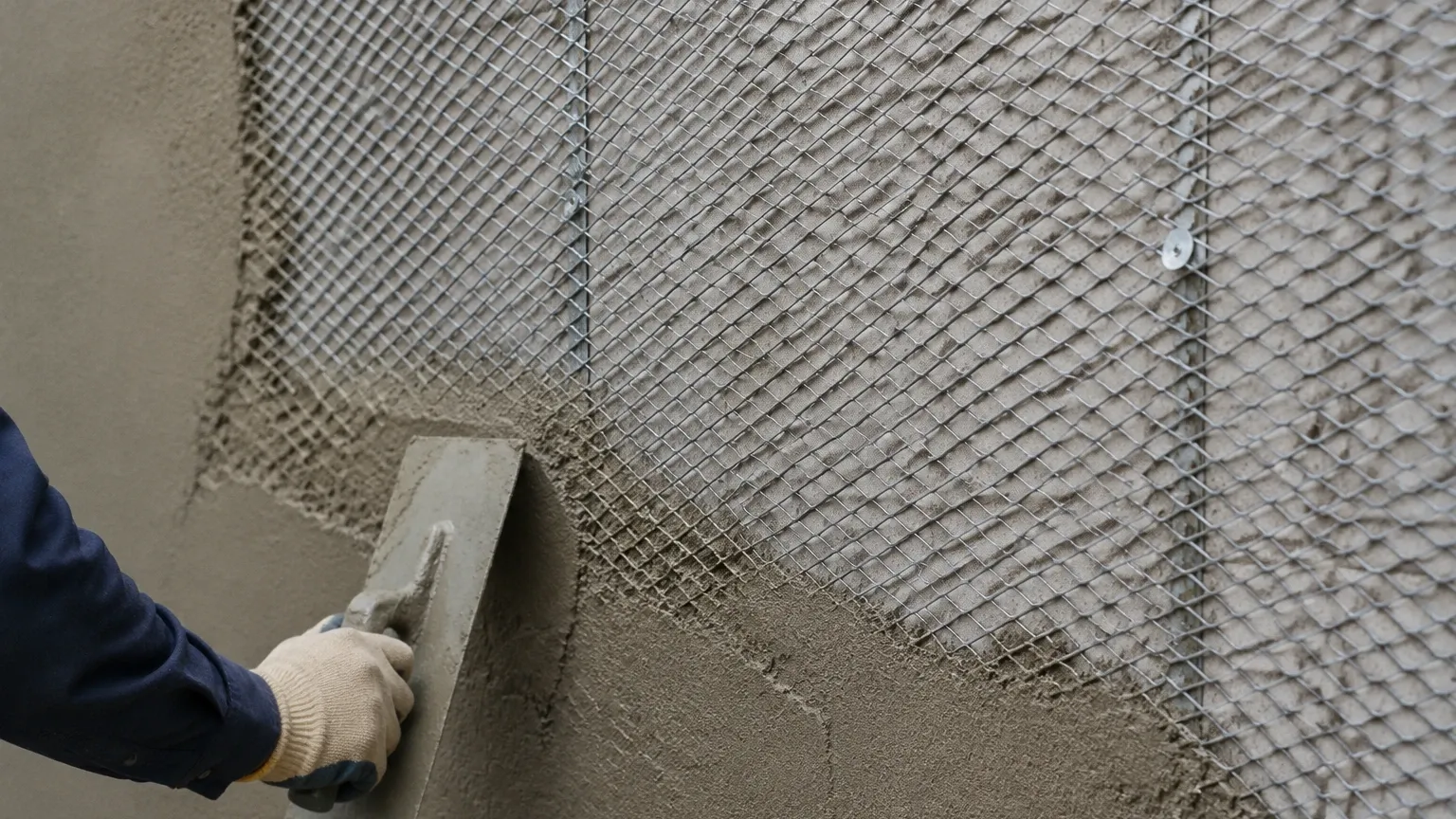
The primary function of expanded metal lath is to provide a "keying" surface. In many industrial settings, the base substrate (such as smooth concrete or steel beams) does not offer sufficient natural adhesion for thick render applications. The raised edges and angled strands of the expanded mesh allow the render to wrap around the metal, creating a mechanical bond that is far superior to simple surface adhesion.
Beyond adhesion, the lath acts as a reinforcement layer that distributes localized stresses across a wider area. In large-scale industrial facilities, buildings are often subject to structural movement. Without the tensile strength provided by the metal lath, the render would likely develop hairline cracks, which can eventually lead to spalling and the ingress of moisture. By integrating a high-quality metal substrate, engineers can significantly extend the maintenance intervals of the facility’s exterior and interior finishes.
Material Engineering: Selecting the Right Alloy for Durability
When specifying expanded metal lath for rendering, material selection is the most critical factor in determining the system's lifespan. The choice usually falls between galvanized steel and various grades of stainless steel, each suited for different environmental exposure levels.
Galvanized Steel Lath
Galvanized lath is typically coated with a layer of zinc to protect against oxidation. While cost-effective for internal dry environments, it is often unsuitable for external rendering or high-moisture industrial zones. The alkaline nature of most cement-based renders can gradually degrade the zinc coating, potentially leading to corrosion if moisture penetrates the render layer.
Stainless Steel Lath (Grade 304 and 316)
For industrial applications, stainless steel is the professional standard. Grade 304 provides excellent corrosion resistance for most standard environments. However, for facilities located near coastal regions or those involved in chemical processing, Grade 316 stainless steel is recommended. Grade 316 contains molybdenum, which offers superior resistance to chlorides and acidic environments. Using stainless steel prevents "rust bursting," a failure mode where corroding metal expands within the render, causing large sections of the finish to detach from the wall.
At Kaifil, the focus on precision manufacturing ensures that the chemical composition of the alloys used in our metal components meets rigorous industrial standards, providing a reliable foundation for demanding filtration and construction projects alike.
Technical Specifications and Mesh Geometry
The performance of expanded metal lath is governed by its geometric properties, which include the Long Way of Mesh (LWM), Short Way of Mesh (SWM), strand width, and sheet thickness. These dimensions dictate the "open area" and the overall weight of the lath, which in turn influences the amount of render required and the final strength of the bond.
1. Diamond Size: Smaller diamond patterns generally provide more contact points for the render, which is beneficial for thinner coats. Larger diamonds are often used for heavy-duty, multi-coat rendering systems where a deeper mechanical key is necessary.
2. Strand Angle: The angle at which the strands are set during the expansion process creates the "depth" of the lath. A more pronounced angle increases the rigidity of the sheet, allowing it to bridge gaps or cover uneven substrates without flexing.
3. Weight per Square Meter: This is a key metric for procurement. A heavier lath typically indicates thicker strands and higher structural capacity. For industrial rendering, weights often range from 1.2 kg/m² to over 2.5 kg/m², depending on the required thickness of the render and the span between fixings.
Structural Benefits: Crack Mitigation and Load Distribution
One of the most significant challenges in industrial rendering is managing the coefficient of thermal expansion. Metal and cementitious renders expand and contract at different rates when exposed to temperature changes. Expanded metal lath for rendering is designed to accommodate these micro-movements. The diamond-shaped apertures can slightly deform under stress, acting as a buffer that prevents the render from cracking.
Furthermore, in applications where render is applied over insulation boards or dissimilar materials (such as a junction between brick and concrete), the lath acts as a bridge. It ensures that any movement at the joint is distributed across the mesh rather than being concentrated at a single point, which would otherwise result in a visible vertical crack. This load distribution capability is essential for maintaining the airtightness and weatherproofing of industrial envelopes.
Installation Best Practices for Engineering Teams
To achieve the performance specifications intended by the design, the installation of expanded metal lath must follow strict engineering guidelines. Improperly fixed lath can lead to "drumminess" (hollow spots) or eventual failure of the render system.
Orientation and Overlapping
Lath should always be installed with the strands sloping downwards and away from the wall. This orientation helps to direct the render into the keying space during application. Sheets should be overlapped by a minimum of 25mm to 50mm at the sides and ends to ensure continuity of reinforcement. These overlaps should be securely wired together using stainless steel tying wire to prevent the sheets from separating during the rendering process.
Fixing Methods
The choice of fixings depends on the substrate. For masonry, stainless steel screws with wide washers (or "plugs and screws") are standard. For steel frameworks, self-tapping screws or welds may be used. The spacing of fixings is critical; typically, fixings should be placed at 300mm centers horizontally and vertically. In high-wind areas or for overhead applications, this spacing may need to be reduced to ensure the lath can support the weight of the wet render, which can be considerable before it cures.
Managing the Render Layers
Rendering over expanded metal is usually a three-coat process. The first coat, or "scratch coat," is forced through the mesh to create the mechanical key. It is essential that this coat is thick enough to fully encapsulate the metal. Once the scratch coat has partially cured, it is scored to provide a key for the subsequent "brown coat" and the final "finish coat."
Procurement Considerations: Quality Assurance and Customization
When sourcing expanded metal lath for rendering, procurement teams must look beyond the initial price point and consider the total cost of ownership. Low-quality lath with inconsistent strand thickness or poor-grade alloys can lead to premature failure, necessitating expensive stripping and re-rendering of the facility.
Key information to confirm before purchasing includes:
* Alloy Certification: Ensure the material meets the specified ASTM or EN standards for stainless or galvanized steel.
* Dimensional Tolerances: Inconsistent sheet sizes can lead to excessive waste and difficulties during installation.
* Edge Finishing: For safety and ease of handling, industrial-grade lath should have clean-cut edges that minimize the risk of injury to installers.
* Customization Options: In many industrial projects, standard sheet sizes may not be efficient. Working with a manufacturer like Kaifil allows for customized dimensions and mesh patterns tailored to specific structural requirements, reducing on-site labor and material waste.
As a specialist in custom stainless steel solutions, Kaifil understands the importance of precision in metal components. Whether the application is a complex filtration system or a robust structural reinforcement, the quality of the metal substrate determines the success of the entire assembly. By selecting the appropriate expanded metal lath, engineers can ensure that their rendering projects withstand the rigors of industrial use for decades to come.
