


Expanded Metal Lath Home Depot
Expanded metal lath is a fundamental material in the construction and industrial sectors, primarily used as a backing for plaster, stucco, and various reinforcement applications. While many procurement professionals and contractors begin their search with terms like "expanded metal lath home depot" to gauge immediate availability for small-scale projects, industrial-grade requirements often necessitate a more technical approach to material selection. For large-scale filtration, chemical processing, and structural engineering, understanding the nuances between retail-grade lath and precision-engineered Perforated & Expanded Metal is essential for ensuring long-term performance and compliance with industrial standards.
Understanding Expanded Metal Lath Specifications
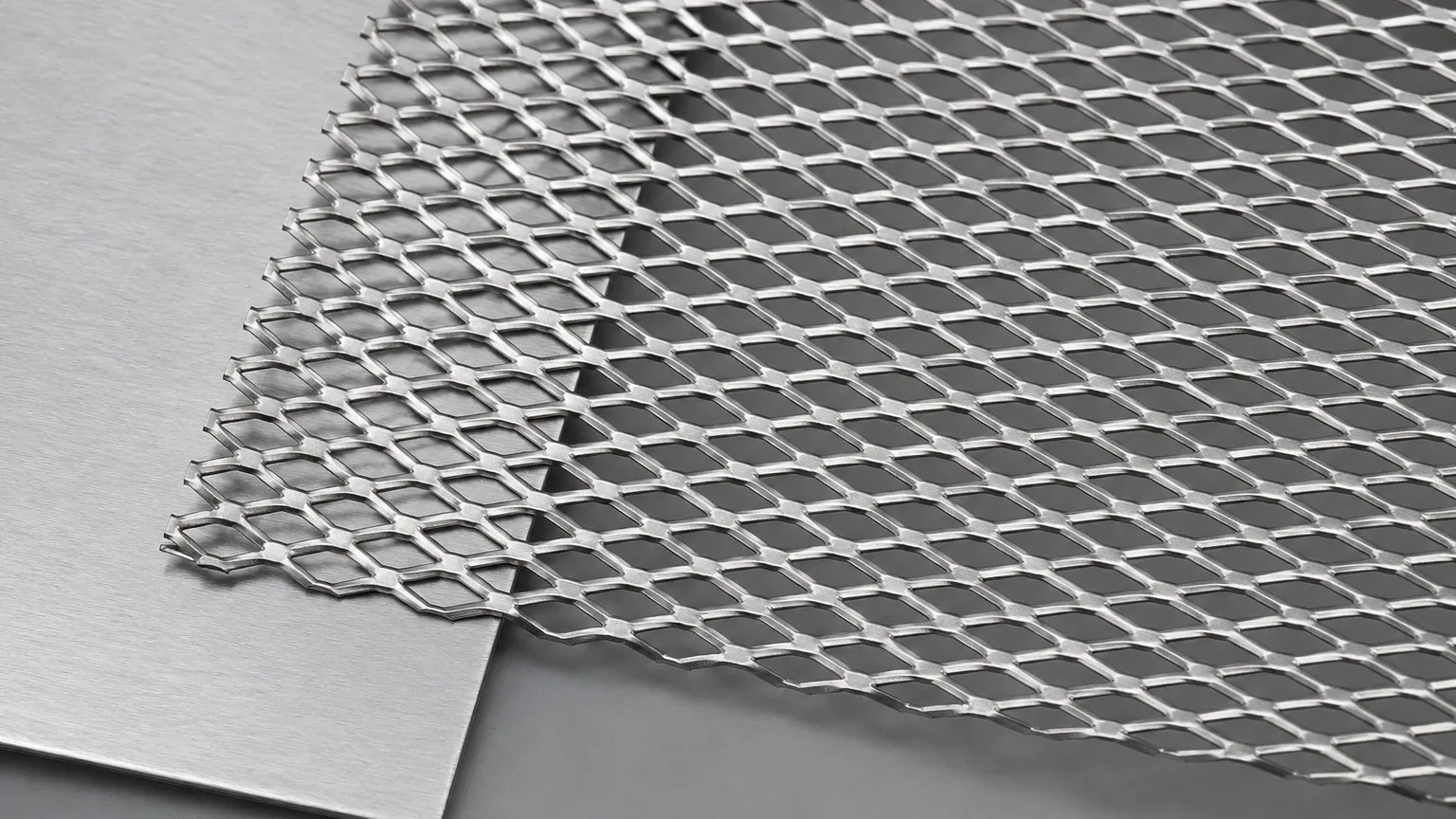
Expanded metal lath is produced by simultaneously slitting and stretching a metal sheet, creating a diamond-shaped pattern of openings. This process increases the surface area of the original sheet while maintaining structural integrity. In a retail context, such as when looking for expanded metal lath at Home Depot, products are typically categorized by weight per square yard, such as 2.5 lb/yd² or 3.4 lb/yd².
From an engineering perspective, the specifications go far beyond weight. Key technical parameters include:
* SWD (Short Way of Design): The distance from the center of one bond to the center of the next bond across the short diamond diagonal.
* LWD (Long Way of Design): The distance from the center of one bond to the center of the next bond across the long diamond diagonal.
* Strand Width and Thickness: These dimensions determine the overall rigidity and weight-bearing capacity of the mesh.
* Open Area Percentage: Critical for applications involving airflow, light transmission, or filtration efficiency.
While retail options are often limited to galvanized steel for general construction, industrial applications frequently require specialized alloys. Kaifil specializes in stainless steel variants, which offer superior corrosion resistance in demanding environments like chemical processing plants or food production facilities.
Industrial vs. Residential Applications: Why Procurement Strategy Matters
The search for "expanded metal lath home depot" often yields products designed for residential plastering or small-scale masonry. These products are manufactured to meet building codes for lath-and-plaster systems but may lack the precision required for high-performance industrial equipment.
Residential and Light Commercial Use
In residential settings, expanded metal lath serves as a "key" for mortar. The diamond openings allow the plaster to squeeze through and grip the mesh, creating a mechanical bond. For these applications, off-the-shelf galvanized lath is usually sufficient. It is cost-effective and readily available for immediate pickup.
Industrial and OEM Applications
In contrast, industrial engineers require Perforated & Expanded Metal for more complex functions. These include:
* Filtration Support: Serving as a rigid outer cage or inner core for filter cartridges to prevent the collapse of finer mesh media.
* Machine Guarding: Providing safety barriers that allow for ventilation and visibility while protecting personnel from moving parts.
* Acoustic Damping: Used in sound-deadening panels where specific open areas are required to tune frequency response.
* Chemical Processing: Utilizing 304 or 316L stainless steel to withstand acidic or alkaline environments where standard galvanized lath would fail prematurely.
For these use cases, the "home depot" model of standardized, light-gauge inventory is rarely adequate. Customization in terms of sheet size, mesh density, and material grade becomes the primary driver of procurement.
Key Evaluation Criteria for Industrial Expanded Metal
When transitioning from retail-grade lath to industrial-grade components, engineers must evaluate several performance factors to ensure the material is fit for purpose.
Material Composition and Corrosion Resistance
Galvanization provides basic protection against moisture, but in industrial settings, chemical exposure and high temperatures are common. Stainless steel expanded metal is the preferred choice for pharmaceutical and food-grade applications due to its non-reactive nature and ease of sterilization. If a project involves marine environments or brine processing, higher-molybdenum alloys like 316L are necessary to prevent pitting corrosion.
Structural Rigidity vs. Flexibility
Expanded metal can be supplied in two forms: raised (standard) or flattened. Raised expanded metal has the strands at an angle to the plane of the sheet, providing maximum strength and a slip-resistant surface. Flattened expanded metal is cold-rolled to create a smooth, flat surface. For filtration cores, flattened mesh is often preferred as it provides a uniform surface that won't puncture delicate filter membranes.
Dimensional Tolerances
Retail-grade lath often has generous tolerances, as it is hidden behind layers of plaster. However, for OEM components integrated into precision machinery, tight tolerances on sheet thickness and diamond dimensions are critical. Industrial manufacturers like Kaifil use advanced manufacturing capabilities to ensure that every batch meets the exact specifications required for seamless integration into the final product.
Common Risks with Off-the-Shelf Lath in Industrial Settings
Choosing a retail product like "expanded metal lath home depot" for an industrial application introduces several risks that can impact the total cost of ownership and operational safety.
1. Inconsistent Material Quality: Retail products may be sourced from various mills, leading to inconsistencies in tensile strength and coating thickness. This can result in unpredictable performance under mechanical stress.
2. Limited Material Options: Most retail outlets only stock carbon steel or galvanized options. For industries requiring high-purity or high-temperature resistance, these materials are unsuitable.
3. Lack of Technical Documentation: Industrial projects often require Mill Test Reports (MTRs) and certificates of compliance. Retailers generally do not provide the level of traceability required for aerospace, pharmaceutical, or nuclear applications.
4. Inefficient Sizing: Standard retail sheets (typically 27" x 96") often result in significant material waste when used for custom-sized industrial components. Custom-manufactured sheets can be produced to the exact dimensions needed, reducing scrap and labor costs.
Customization and OEM Capabilities at Kaifil
For engineers and purchasing teams, the value of a professional manufacturer lies in the ability to customize Perforated & Expanded Metal to the specific needs of the application. Kaifil works closely with global customers to develop filtration solutions that standard retail products cannot match.
Tailored Filtration Solutions
In the hydraulic and water treatment industries, expanded metal is often used as a support structure for pleated filter media. Kaifil can adjust the diamond size and strand width to optimize the balance between structural support and flow resistance. This ensures that the filter cartridge can withstand high differential pressures without compromising flow rates.
Specialized Material Selection
Beyond standard stainless steel, industrial applications may require exotic alloys or specific surface treatments. Whether it is electropolishing for a burr-free finish in pharmaceutical applications or specific annealing processes for increased ductility, a custom manufacturer provides the technical expertise to navigate these requirements.
Precision Manufacturing
Advanced manufacturing capabilities allow for the production of expanded metal with extremely small diamond openings, often referred to as micro-mesh. These are used in high-precision electronic shielding or fine-particle filtration, applications where standard construction-grade lath would be entirely ineffective.
Installation and Maintenance Considerations
Proper installation is critical to the longevity of expanded metal components. In industrial environments, the method of attachment—whether welding, bolting, or clamping—must be chosen based on the base material and the environmental stressors present.
* Welding: When working with stainless steel expanded metal, it is essential to use the correct filler metal and welding technique to maintain the corrosion resistance of the heat-affected zone.
* Cleaning: In food and beverage applications, the "pockets" created by the diamond mesh can trap debris. Specifying a flattened mesh or a specific strand angle can facilitate easier Clean-in-Place (CIP) procedures.
* Replacement Cycles: Unlike residential lath, which is intended to last the life of the building, industrial filter components are often consumables. Engineers should establish clear replacement cycles based on pressure drop monitoring and material wear patterns.
Procurement Strategy: Beyond the Retail Shelf
While "expanded metal lath home depot" is a valid search for a contractor needing five sheets of galvanized mesh for a small stucco repair, it is not a viable procurement strategy for industrial OEMs. The total cost of ownership in an industrial setting includes not just the purchase price, but also the costs associated with downtime, premature failure, and material waste.
By partnering with a professional manufacturer like Kaifil, purchasing teams gain access to:
* Technical Consultation: Expert advice on material selection and mesh design to optimize performance.
* Quality Assurance: Rigorous testing and documentation to ensure compliance with industry standards.
* Supply Chain Reliability: Consistent lead times and the ability to scale production for large OEM contracts.
In conclusion, while retail outlets serve a vital role in the general construction market, the demanding requirements of industrial filtration and metal component manufacturing require a specialized approach. Understanding the technical boundaries of Perforated & Expanded Metal allows engineers to specify the right material, ensuring that their systems operate efficiently, durably, and safely in any environment.
