


Expanded Metal Menards
When sourcing materials for industrial filtration, architectural accents, or structural support, procurement teams and engineers often begin their search with familiar retail names. Searching for "expanded metal menards" typically indicates a need for immediate, off-the-shelf availability for general-purpose projects. However, in the context of high-precision industrial applications—such as chemical processing, food and beverage production, or hydraulic filtration—there is a significant distinction between retail-grade hardware and engineered Perforated & Expanded Metal solutions.
This article explores the technical nuances of expanded metal, evaluating when retail options like those found at Menards are appropriate and when industrial-grade, custom-manufactured components from a specialist like Kaifil are required to ensure system integrity and performance.
Understanding the Technical Specifications of Expanded Metal
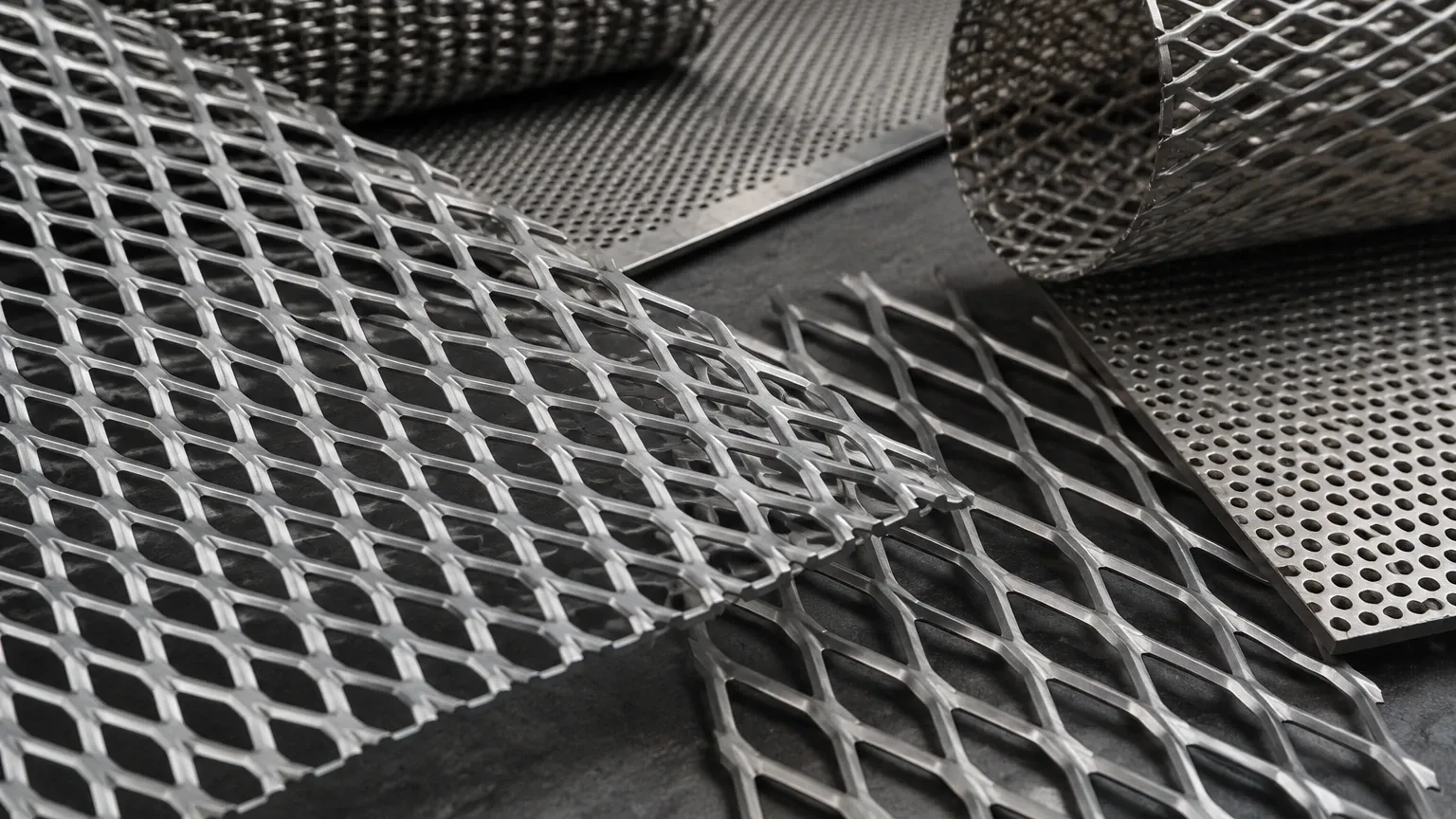
Expanded metal is a versatile material produced by simultaneously slitting and stretching a solid sheet of metal. This process creates a diamond-shaped pattern of openings, which can be customized based on the intended application. Unlike perforated metal, which involves punching holes and generating scrap, expanded metal is produced with virtually no waste, making it a cost-effective choice for many structural and filtration roles.
To specify the right material, engineers must look beyond basic dimensions and understand several key technical parameters:
* SWD (Short Way of Diamond): The distance from the center of one bond to the center of the next bond across the short axis of the diamond.
* LWD (Long Way of Diamond): The distance across the long axis of the diamond.
* Strand Thickness and Width: These dimensions determine the overall strength and weight of the mesh. In industrial filtration, even minor variations in strand width can impact the flow rate and pressure drop across the filter.
* Raised vs. Flattened: "Raised" expanded metal (also known as standard) has strands that are turned at an angle to the plane of the sheet. "Flattened" expanded metal is cold-rolled after the expansion process to create a smooth, flat surface. Flattened mesh is often preferred for filtration support to prevent damage to finer mesh layers.
Retail vs. Industrial Grade: When to Move Beyond Expanded Metal Menards
For general utility tasks—such as residential fencing, gutter guards, or simple machine guards—retail outlets like Menards provide a convenient solution. These products are typically available in standard sizes and common materials like carbon steel or aluminum. However, industrial environments present challenges that retail-grade products are not designed to meet.
Material Purity and Certification
In industries like pharmaceuticals or food processing, material traceability is non-negotiable. Industrial-grade expanded metal from specialized manufacturers comes with material test reports (MTRs) confirming the exact alloy composition (e.g., SS316L or SS304). Retail products often lack this level of certification, which can lead to premature corrosion or contamination in sensitive processes.
Dimensional Tolerances
Retail-grade expanded metal is manufactured to wider tolerances. For an engineer designing a high-pressure hydraulic filter cartridge, a variance of even a few millimeters in the LWD or SWD can compromise the fit of the component or lead to bypass issues. Industrial manufacturing ensures tight tolerances that allow for seamless integration into complex assemblies.
Custom Configurations
While "expanded metal menards" searches might yield standard 2'x4' or 4'x8' sheets, industrial projects rarely fit these molds. Custom manufacturing allows for specific sheet sizes, unique diamond patterns, and specialized edge treatments (such as solid borders) that simplify the final assembly process and reduce labor costs.
Engineering Considerations for Filtration Applications
In the world of industrial filtration, expanded metal serves two primary roles: as a coarse primary filter or as a rigid support structure for finer wire mesh or filter media. Selecting the right Perforated & Expanded Metal requires a deep dive into fluid dynamics and mechanical stress.
Open Area and Flow Rates
The "open area" percentage of expanded metal determines how much fluid or air can pass through the medium. A higher open area reduces pressure drop but may sacrifice structural rigidity. Engineers must balance these factors based on the viscosity of the fluid and the expected flow velocity. Custom expansion ratios allow manufacturers to hit precise open area targets that standard retail products cannot match.
Structural Integrity Under Pressure
In high-pressure filtration systems, the filter media is subjected to significant mechanical stress. Expanded metal provides the necessary "skeleton" to prevent the finer mesh from collapsing or deforming. The orientation of the diamonds (LWD vs. SWD) relative to the flow direction can also influence how the structure handles stress loads.
Cleaning and Maintenance
For reusable industrial filters, the ease of cleaning is paramount. Flattened expanded metal is often easier to backwash or ultrasonically clean because it lacks the crevices found in raised mesh where particles can become trapped. This longevity is a key factor in calculating the total cost of ownership (TCO) for industrial filtration systems.
Material Selection: Stainless Steel vs. Carbon Steel
One of the most critical decisions in specifying expanded metal is the choice of material. While carbon steel is economical and widely available in retail settings, it is often unsuitable for industrial filtration due to its susceptibility to oxidation.
* Stainless Steel (304/316L): The gold standard for industrial filtration. It offers excellent corrosion resistance, can withstand high temperatures, and is compatible with most chemical cleaning agents. 316L, with its added molybdenum, is particularly effective in marine or high-chloride environments.
* Aluminum: Lightweight and corrosion-resistant, aluminum is often used in HVAC filtration or aerospace applications where weight is a primary concern.
* Specialty Alloys: For extreme environments involving high heat or highly corrosive acids, materials like Monel, Inconel, or Titanium may be required. These are almost never found in retail inventory and require specialized manufacturing capabilities.
Customization and OEM Solutions for Precision Filtration
For Original Equipment Manufacturers (OEMs), the ability to source components that are "ready to install" is a major operational advantage. Unlike the DIY-focused inventory associated with expanded metal at Menards, industrial suppliers like Kaifil offer value-added services that streamline production.
Precision Cutting and Forming
Industrial expanded metal can be supplied in custom-cut circles, rectangles, or complex geometric shapes. Furthermore, it can be pre-rolled into cylinders or cones to serve as the core or outer cage of a filter cartridge. This eliminates the need for the customer to perform secondary fabrication, reducing waste and labor costs.
Surface Treatments
Depending on the application, expanded metal may require specialized surface treatments. This includes electropolishing for pharmaceutical applications to ensure a burr-free, ultra-clean surface, or powder coating for architectural and protective applications where aesthetics and weather resistance are important.
Engineering Collaboration
Working with a manufacturer allows for a collaborative design process. If a standard diamond pattern doesn't meet the specific filtration requirements of a project, engineers can work together to develop a custom toolset that produces the exact aperture size and strand geometry needed for optimal performance.
Procurement and Total Cost of Ownership
When evaluating the cost of expanded metal, it is tempting to look only at the price per sheet. However, for industrial buyers, the total cost of ownership involves much more than the initial purchase price.
1. Durability: An industrial-grade stainless steel mesh may have a higher upfront cost than a retail carbon steel product, but its resistance to corrosion and mechanical failure means it will last significantly longer, reducing replacement costs and downtime.
2. Installation Efficiency: Custom-sized components that arrive ready for assembly save hours of shop time compared to cutting down large retail sheets and dealing with sharp, unfinished edges.
3. Risk Mitigation: Using certified materials with guaranteed tolerances reduces the risk of system failure, which can be catastrophic in industries like chemical processing or power generation.
4. Supply Chain Reliability: For ongoing production needs, an OEM partnership ensures a steady supply of consistent material, whereas retail inventory can be unpredictable and vary between locations.
Conclusion: Selecting the Right Path
While a search for "expanded metal menards" is a logical starting point for small-scale or non-critical projects, industrial applications demand a higher level of precision, material integrity, and engineering support. For those in the chemical, food and beverage, or hydraulic sectors, the transition from retail-grade mesh to professional Perforated & Expanded Metal is essential for maintaining system efficiency and safety.
By focusing on technical specifications—such as alloy grade, LWD/SWD accuracy, and open area percentages—purchasing teams can move beyond simple hardware solutions and invest in components that are engineered for long-term performance in demanding environments. Whether you are designing a new filtration system or optimizing an existing process, the right material choice is a fundamental pillar of engineering success.
