


Expanded Metal Mesh Near Me
For engineers and procurement specialists in the industrial sector, searching for "expanded metal mesh near me" is often the first step in addressing an immediate maintenance need or a new project requirement. However, in the context of high-precision industrial filtration and structural support, proximity is only one factor in a complex selection process. Finding a reliable source for Perforated & Expanded Metal requires a deep understanding of material science, manufacturing tolerances, and the specific demands of the application environment.
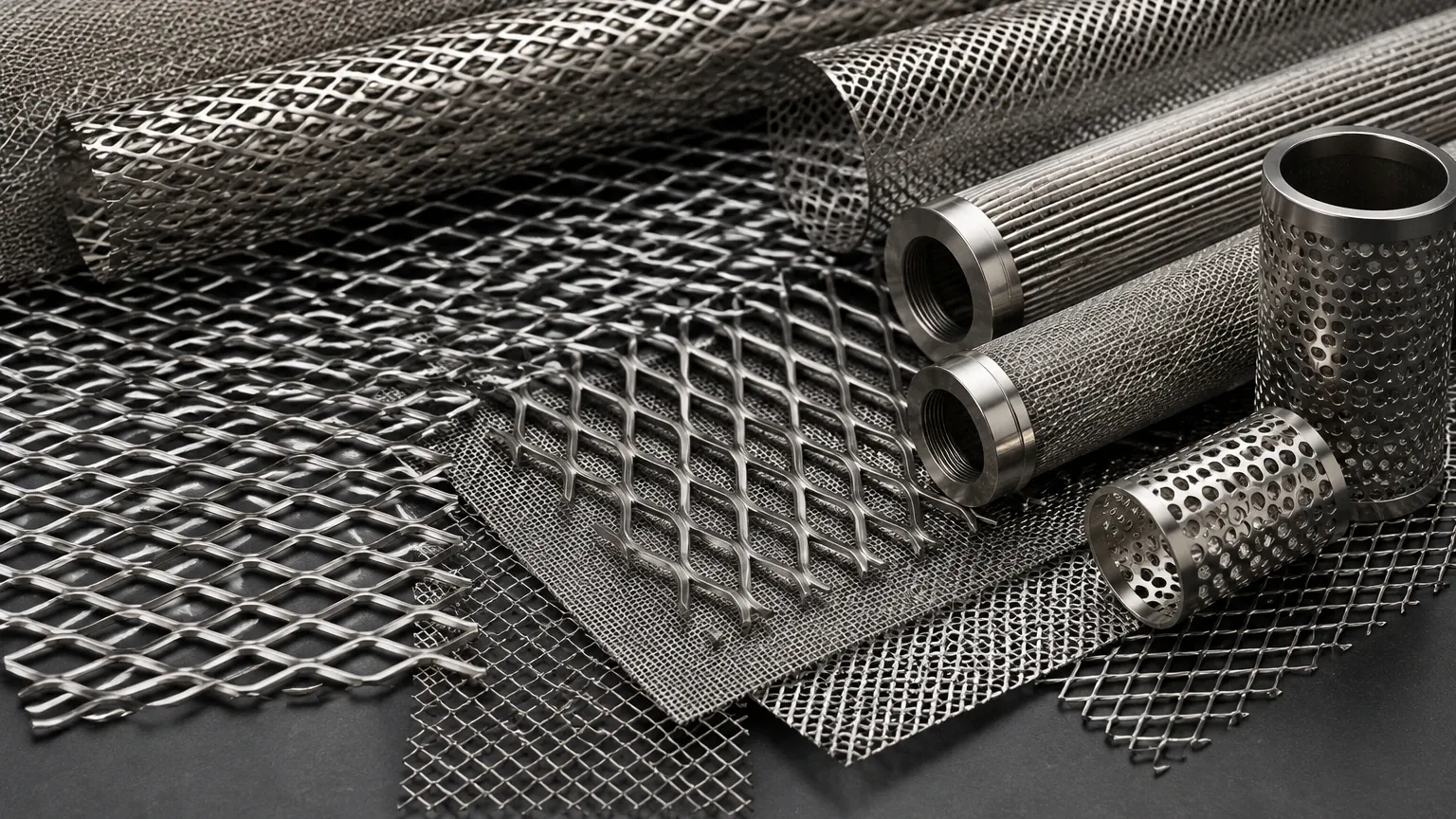
Expanded metal is a versatile material created by simultaneously slitting and stretching a solid sheet of metal. This process creates a diamond-shaped pattern of openings, resulting in a product that is stronger, lighter, and more rigid than the original sheet. Unlike perforated metal, which involves punching holes and generating scrap, expanded metal is produced with virtually no waste, making it a cost-effective solution for many industrial applications.
The Role of Expanded Metal in Industrial Filtration Systems
In industrial filtration, expanded metal serves two primary functions: as a standalone coarse filter or as a support structure for finer filtration media like woven wire mesh. When used as a support core or outer cage in a filter cartridge, the expanded metal provides the necessary mechanical strength to withstand high differential pressures without collapsing.
For engineers, the choice of expanded metal is critical to the integrity of the entire filtration system. If the support structure fails, the fine mesh can tear, leading to bypass and downstream contamination. Therefore, when evaluating "expanded metal mesh near me," it is essential to look beyond simple availability and assess whether the supplier understands the hydraulic loads and chemical exposures the component will face.
Structural Integrity and Open Area
The efficiency of a filter is often a balance between flow rate and structural stability. Expanded metal offers a high percentage of open area, which minimizes pressure drop across the filter. However, the strand width and thickness must be carefully calculated to ensure the component can handle the physical stresses of the process, such as pressure surges or mechanical vibrations in hydraulic systems.
Key Technical Specifications: SWD, LWD, and Strand Geometry
When sourcing expanded metal, technical terminology is used to define the dimensions of the diamond openings. Understanding these terms is vital for ensuring that the product meets the engineering specifications of your project.
1. SWD (Short Way of Design): This is the distance from the center of a bond to the center of the next bond across the short axis of the diamond.
2. LWD (Long Way of Design): This is the distance across the long axis of the diamond, measured from center to center.
3. Strand Width: The amount of metal fed into the expanding machine between the slits.
4. Strand Thickness: The original thickness of the metal sheet.
5. Bond: The intersection where two strands meet.
The relationship between these dimensions determines the weight per square foot and the percentage of open area. For filtration applications, precision in these measurements is non-negotiable. A slight deviation in the SWD can alter the flow characteristics or the level of support provided to a secondary mesh layer.
Sourcing Expanded Metal Mesh Near Me: Local vs. Direct Manufacturer
The search for "expanded metal mesh near me" often leads to local industrial distributors or hardware suppliers. While these sources are convenient for small quantities of standard sizes, they often lack the technical expertise and customization capabilities required for specialized industrial applications.
The Limitations of Local Stock
Local suppliers typically carry carbon steel or aluminum expanded metal in standard gauges. For industries such as chemical processing, pharmaceuticals, or food and beverage, these materials are often insufficient. Stainless steel—specifically grades 304 and 316L—is required for its corrosion resistance and ability to withstand high-temperature sterilization processes. Local distributors rarely stock a wide variety of stainless steel expanded metal in the specific SWD/LWD configurations needed for custom filter cartridges.
The Advantages of Direct Manufacturing
Working directly with a manufacturer like Kaifil provides several advantages that a local distributor cannot match:
* Material Traceability: Manufacturers provide mill test reports (MTRs) to verify the chemical composition of the metal, which is a requirement in many regulated industries.
* Custom Tooling: If a project requires a non-standard diamond size to optimize filtration performance, a manufacturer can often adjust their tooling to meet those needs.
* Integrated Solutions: Manufacturers who specialize in filtration can provide expanded metal that is already rolled, welded, or integrated into a complete filter assembly, reducing the complexity of the supply chain.
Material Considerations: Why Stainless Steel is the Industrial Standard
While expanded metal can be made from various materials, stainless steel remains the gold standard for industrial filtration and demanding structural applications. When searching for "expanded metal mesh near me," it is important to confirm that the supplier can provide the specific grade of stainless steel required for your environment.
Grade 304 Stainless Steel
Grade 304 is the most common stainless steel used in industrial applications. It offers excellent corrosion resistance in most atmospheric conditions and is suitable for many food-grade applications. It is often used for the outer guards of air filters or as support structures in water treatment systems where the chemical exposure is relatively mild.
Grade 316L Stainless Steel
For more aggressive environments, such as those found in chemical processing or marine applications, Grade 316L is preferred. The addition of molybdenum provides superior resistance to pitting and crevice corrosion in chloride-rich environments. Furthermore, the "L" (low carbon) designation ensures that the material maintains its corrosion resistance after welding, which is a critical consideration for cylindrical filter components.
Specialized Alloys
In extreme cases involving high temperatures or highly acidic/alkaline solutions, specialized alloys like Monel, Inconel, or Hastelloy may be required. A specialized manufacturer will have the expertise to expand these tougher materials while maintaining precise tolerances.
Customization Options for Precision Engineering
A common challenge for engineers is finding expanded metal that fits a specific footprint or performance profile. Standard off-the-shelf products often require significant secondary processing, such as cutting or flattening, which can introduce defects or increase costs.
Flattened vs. Raised Expanded Metal
Expanded metal is naturally "raised," meaning the strands are at an angle to the plane of the sheet. This creates a three-dimensional texture that can be useful for certain types of coarse filtration or for providing grip. However, for many filtration applications, the mesh is "flattened" by passing it through a cold-rolling mill. This results in a smooth, flat surface that is easier to clean and provides a more uniform interface for supporting fine wire mesh.
Precision Cutting and Forming
When sourcing expanded metal for OEM applications, look for a partner that can provide precision-cut pieces. Using advanced CNC cutting or shearing, a manufacturer can provide components that are ready for immediate installation into your assembly. This eliminates the need for on-site fabrication and reduces the risk of sharp edges or burrs that could compromise the safety or performance of the filter.
Total Cost of Ownership and Maintenance Cycles
When evaluating "expanded metal mesh near me," it is easy to focus on the initial purchase price. However, for industrial operations, the total cost of ownership (TCO) is a much more important metric. TCO includes the purchase price, installation costs, maintenance requirements, and the cost of downtime when a component fails.
Durability and Replacement Frequency
High-quality stainless steel expanded metal may have a higher upfront cost than carbon steel or lower-grade imports. However, its durability in harsh environments means it will need to be replaced far less frequently. In a chemical plant, for example, the cost of shutting down a process to replace a corroded filter support can be thousands of times higher than the cost of the part itself.
Cleanability
In the food and pharmaceutical industries, the ability to clean and sterilize equipment is paramount. Expanded metal with smooth bonds and high-quality surface finishes prevents the accumulation of bacteria or process residue. This reduces the time required for Clean-in-Place (CIP) cycles and ensures compliance with strict hygiene standards.
Information to Confirm Before Purchasing
Before finalizing a source for expanded metal mesh, technical professionals should confirm several key pieces of information to ensure the product is fit for purpose:
1. Exact Dimensions: Confirm the SWD, LWD, strand width, and thickness. Request a sample if the tolerances are tight.
2. Material Certification: Ensure the supplier can provide documentation for the material grade.
3. Flattening Requirements: Specify whether you need raised or flattened expanded metal.
4. Edge Finish: Determine if the edges should be "random cut" (which leaves sharp points) or "bond cut" (which provides a smoother edge).
5. Lead Times and Logistics: While a local supplier might be faster for a single sheet, a dedicated manufacturer can often provide more reliable long-term supply for production-scale needs.
Conclusion
Searching for "expanded metal mesh near me" is a logical starting point, but for industrial applications, the technical capabilities of the supplier are far more important than their physical location. Whether you are designing a new filtration system or replacing a component in an existing process, selecting the right Perforated & Expanded Metal is essential for operational efficiency and system longevity.
By focusing on material quality, precise geometry, and the specific needs of your application, you can move beyond a simple commodity purchase and find a filtration solution that provides lasting value. For those in demanding industries like chemical processing or pharmaceuticals, partnering with a manufacturer that understands these nuances is the best way to ensure project success.
