


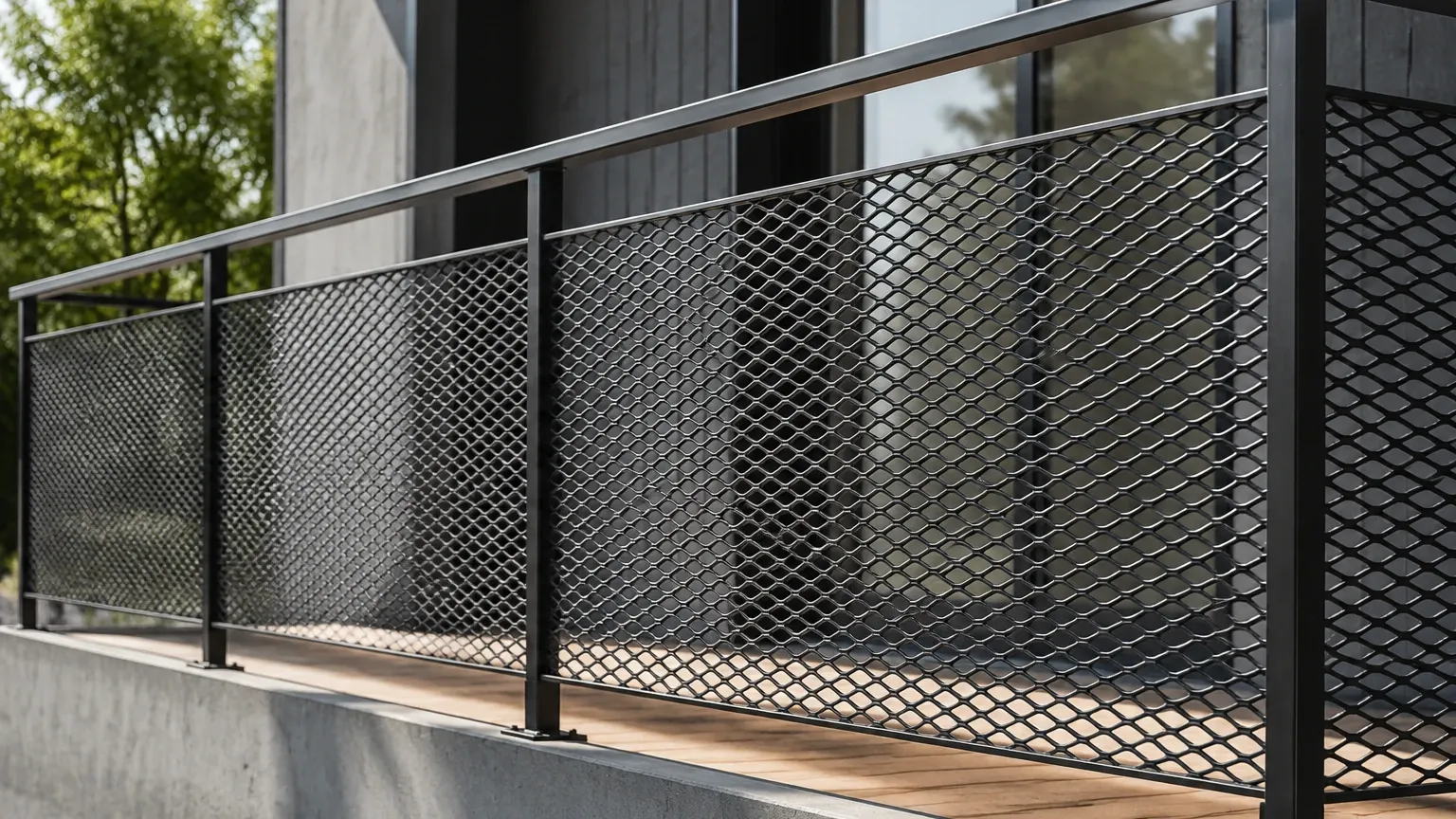
Expanded Metal Railing
In industrial and commercial architecture, the selection of infill materials for safety barriers is a critical engineering decision. Expanded metal railing systems have emerged as a preferred solution for environments requiring a balance of structural integrity, visibility, and cost-effectiveness. Unlike traditional picket railings or solid panels, expanded metal offers a unique combination of lightweight properties and high rigidity, derived from its specific manufacturing process.
For engineers and procurement specialists, understanding the technical nuances of expanded metal—ranging from strand geometry to material grades—is essential for ensuring compliance with safety standards and long-term durability. This guide explores the engineering considerations, material selection, and application-specific benefits of utilizing expanded metal in railing and balustrade systems.
Understanding the Engineering of Expanded Metal for Industrial Railings
Expanded metal is produced through a simultaneous slitting and stretching process. A single sheet of metal, typically stainless steel, carbon steel, or aluminum, is fed through a machine where a reciprocating knife cuts and expands the material into a diamond-shaped pattern. Because the material is stretched rather than punched, there is zero scrap loss during production, making it a highly sustainable and cost-effective alternative to perforated metal in many applications.
In a railing context, the resulting mesh is a continuous piece of metal without joins or welds. This lack of mechanical fasteners within the mesh itself eliminates potential points of failure and prevents the unraveling that can occur with woven wire mesh. The strands and bonds (the intersections of the diamonds) are set at a uniform angle to the plane of the sheet. This geometry provides inherent structural strength, as the angled strands act like a series of interconnected trusses that distribute loads across the entire panel.
When specifying Perforated & Expanded Metal for railings, engineers must choose between "raised" (standard) and "flattened" expanded metal. Raised expanded metal features the strands at an angle, providing a slip-resistant surface and high rigidity. Flattened expanded metal is cold-rolled after expansion to create a smooth, level surface, which is often preferred for handrails or areas where skin contact is likely.
Key Technical Specifications: LWD, SWD, and Strand Geometry
To accurately specify expanded metal railing infills, technical professionals must use standardized terminology to define the mesh dimensions. The performance of the railing depends heavily on these four metrics:
1. LWD (Long Way of Design): The distance from the center of one bond to the center of the next bond across the long axis of the diamond.
2. SWD (Short Way of Design): The distance from the center of one bond to the center of the next bond across the short axis of the diamond.
3. Strand Width: The amount of metal fed into the machine between the slits, which determines the thickness of the individual "ribs" of the mesh.
4. Strand Thickness: The original thickness of the base metal sheet.
For industrial safety railings, a common specification might involve a smaller SWD to prevent climbing or the passage of small objects, while a larger LWD allows for better airflow and visibility. The "Open Area" percentage is another vital calculation; it determines how much light and air can pass through the panel. In facilities with HVAC requirements or where visual monitoring of machinery is necessary, high open-area percentages (typically 60% to 80%) are prioritized without sacrificing the barrier's security.
Material Selection and Durability in Demanding Environments
As a manufacturer specializing in precision metal components, Kaifil emphasizes that material selection is the primary determinant of a railing system's lifecycle. Industrial environments—such as chemical processing plants, offshore platforms, and food production facilities—present unique corrosive challenges.
* Stainless Steel (304 and 316 Grades): Stainless steel is the gold standard for expanded metal railing in corrosive environments. Grade 304 offers excellent resistance to most oxidizing acids and is suitable for general industrial use. Grade 316, containing molybdenum, is required for marine environments or facilities exposed to chlorides and heavy chemicals. Its high strength-to-weight ratio allows for thinner strands that still meet load-bearing requirements.
* Carbon Steel: Frequently used in warehouse and mezzanine railings where cost is a primary factor. To prevent oxidation, carbon steel expanded metal must be hot-dip galvanized or powder-coated. Galvanizing provides a thick layer of zinc that offers sacrificial protection, which is ideal for outdoor industrial walkways.
* Aluminum: Chosen for its lightweight properties and natural resistance to atmospheric corrosion. While not as strong as steel, aluminum expanded metal is easier to fabricate and install in weight-sensitive applications, such as pedestrian bridges or architectural facades.
Comparing Expanded Metal with Perforated Metal Infill Panels
While both expanded and perforated metals are used for railing infills, they serve different engineering goals. Choosing between them requires an analysis of the project's specific mechanical and aesthetic requirements.
Perforated metal is created by punching holes into a solid sheet. This allows for highly customizable hole shapes (round, square, slotted) and precise margins around the edges of the panel. However, the punching process creates significant material waste (the "slugs"), which increases the cost per square foot. Furthermore, perforated metal panels are generally heavier than expanded metal panels of the same thickness because more of the original sheet remains.
Expanded metal railing panels offer a higher strength-to-weight ratio. The stretching process increases the overall depth of the material (in the case of raised expanded metal), which provides greater resistance to deflection under lateral loads. For large-scale industrial projects, expanded metal is often the more economical choice due to the zero-waste manufacturing process. When evaluating Perforated & Expanded Metal options, engineers should consider whether the priority is aesthetic precision (perforated) or structural efficiency and cost (expanded).
Safety Standards and Load-Bearing Performance
Industrial railings must comply with stringent safety regulations, such as OSHA (Occupational Safety and Health Administration) standards in the United States or equivalent ISO standards internationally. These regulations typically specify the minimum height of the railing and the maximum allowable opening size to prevent falls or unauthorized access.
For expanded metal railing, the "infill" must be able to withstand a concentrated load (often around 200 pounds) applied in any direction at any point along the top rail, and the infill itself must resist specific lateral pressures. Engineers must ensure that the expanded metal is securely fastened to the structural frame—usually via welding or heavy-duty clips—to prevent the panel from popping out under impact.
In security-sensitive areas, expanded metal is particularly effective because it is difficult to cut with standard hand tools and provides no easy footholds for climbing. The sharp edges of raised expanded metal can also act as a deterrent, although in public-facing areas, these edges are typically framed or the material is flattened to ensure user safety.
Installation Best Practices and Integration with Structural Framing
Successful installation of expanded metal railing begins with proper framing. Because expanded metal is flexible before it is mounted, it requires a rigid perimeter frame, typically constructed from angle iron, U-edging, or square tubing.
Welding and Attachment
Welding is the most common method for securing expanded metal to a frame. Plug welding or tack welding at regular intervals (usually every 6 to 10 inches) ensures the panel remains taut and vibration-resistant. It is crucial to use compatible filler metals—for instance, using 316L stainless steel welding rods for 316 stainless steel mesh—to prevent galvanic corrosion at the weld points.
Orientation of the Mesh
The orientation of the diamonds (LWD vs. SWD) can affect both the strength and the visual transparency of the railing. Generally, the LWD is oriented horizontally to maximize the structural span of the panel. However, in some architectural applications, the mesh may be rotated to achieve a specific visual effect or to optimize the "shading" provided by the angled strands.
Edge Treatment
Raw expanded metal has sharp "teeth" where the diamonds are cut. For safety, these edges must be encapsulated within a U-profile or welded into the recess of an angle iron frame. This not only protects personnel but also adds significant stiffness to the overall assembly.
Maintenance and Longevity in Industrial Settings
One of the primary advantages of expanded metal railing is its low maintenance requirement, particularly when fabricated from stainless steel. However, regular inspections are necessary to ensure the continued safety of the system.
1. Inspection of Attachment Points: In high-vibration environments (such as near heavy machinery), welds and fasteners should be checked annually for fatigue or stress cracking.
2. Corrosion Monitoring: In outdoor or chemical environments, even galvanized or stainless steel components should be inspected for signs of "tea staining" or pitting. Early detection of corrosion allows for localized cleaning and passivation, extending the life of the railing significantly.
3. Cleaning: Expanded metal can accumulate dust or industrial debris within the diamond interstices. Pressure washing or compressed air is usually sufficient to clear these obstructions, ensuring that the open area remains clear for airflow and visibility.
Conclusion: Selecting the Right Solution for Your Project
Expanded metal railing represents a sophisticated intersection of material efficiency and structural performance. For engineers and purchasing teams, the decision to use expanded metal involves balancing the specific dimensions of the mesh with the environmental demands of the site. By specifying the correct material grade and strand geometry, facilities can achieve a safety barrier that is both durable and cost-effective.
When sourcing components, working with a manufacturer that understands the technical complexities of Perforated & Expanded Metal ensures that the final product meets all safety and performance criteria. Whether the application is a simple mezzanine guardrail or a complex security enclosure in a chemical plant, expanded metal provides a versatile, high-strength solution that stands up to the rigors of industrial use.
