


Expanded Metal Round Holes
In the landscape of industrial filtration and structural components, the selection of the correct mesh geometry is a critical engineering decision. While the term "expanded metal round holes" may seem like a contradiction to those familiar with the standard diamond-shaped apertures of expanded metal, it represents a specific intersection of design requirements and manufacturing processes. In many industrial contexts, engineers seeking the structural benefits of expanded metal—such as high strength-to-weight ratios and material efficiency—often compare these products directly with perforated metal patterns. Understanding the technical nuances between Perforated & Expanded Metal is essential for optimizing filtration performance and ensuring long-term durability in demanding environments.
The Technical Distinction: Expansion vs. Perforation
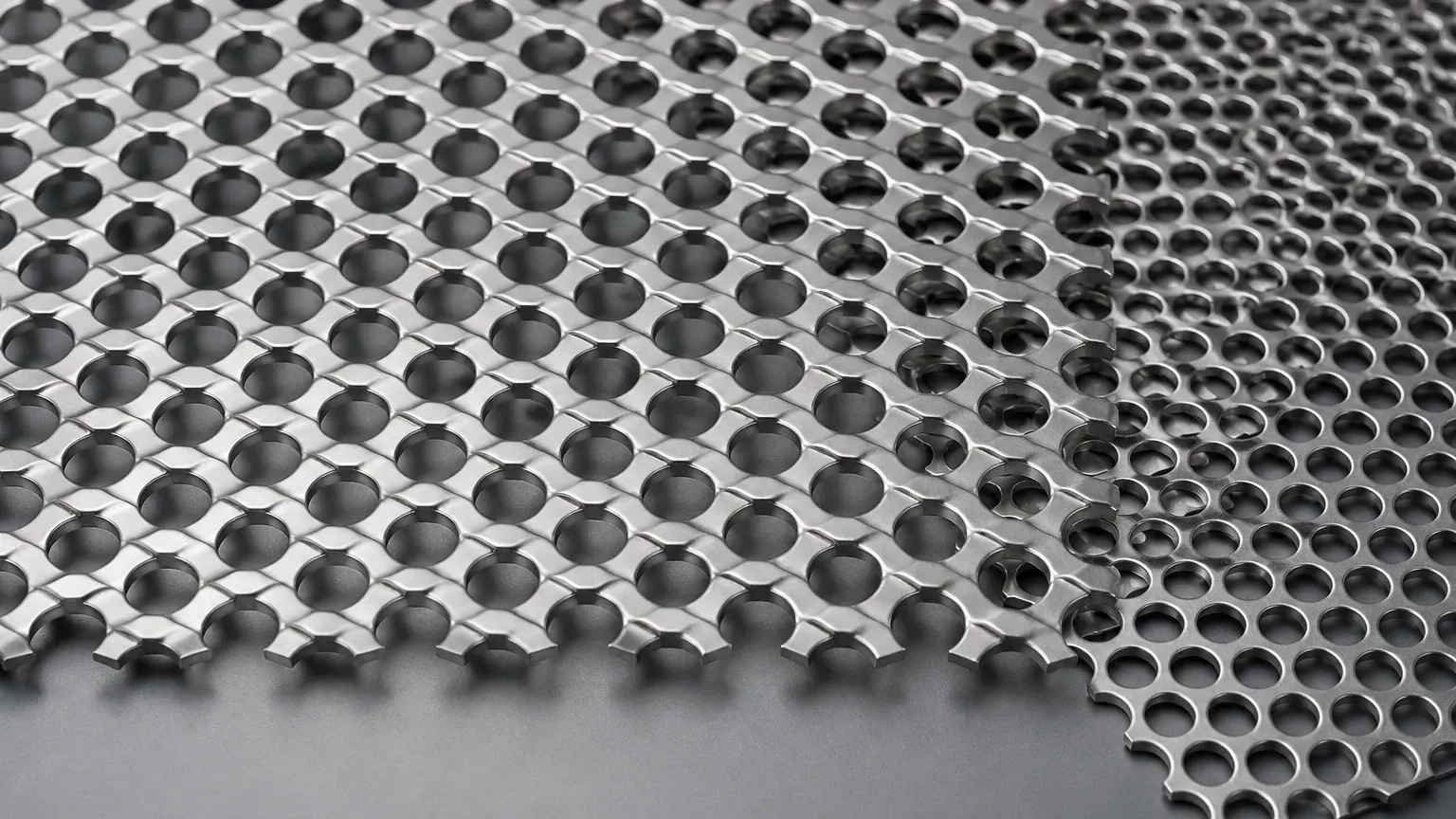
To accurately specify expanded metal round holes, one must first distinguish between the two primary methods of creating metal apertures. Perforated metal is produced by punching holes into a solid sheet, which results in a significant amount of scrap material (the "slugs"). This process allows for precise circular holes with varying pitch and staggered patterns.
In contrast, expanded metal is manufactured by simultaneously slitting and stretching a metal sheet. This process creates a continuous, jointless mesh without any material waste. While the standard result of this process is a diamond or hexagonal opening, the term "expanded metal round holes" often refers to specialized micro-meshes or flattened expanded metal that approximates a circular profile for specific screening and filtration tasks. For engineers, the choice between these two often comes down to a balance between the exactness of the aperture shape and the structural integrity of the finished component.
Structural Integrity and Material Efficiency
Expanded metal is inherently stronger than an equivalent weight of perforated metal. Because the strands and bonds are part of a single piece of metal, there are no welds or joints to fail. This monolithic structure allows the material to distribute loads more effectively. Furthermore, because no material is lost during the expansion process, it is often a more cost-effective solution for large-scale industrial applications where material costs (especially for high-grade alloys like 316L stainless steel) are a significant factor.
Key Parameters for Specifying Expanded Metal Round Holes
When engineers move from a conceptual design to a procurement specification, several technical parameters must be defined to ensure the mesh performs as expected. Unlike perforated metal, which is defined by hole diameter and center-to-center distance, expanded metal requires a different set of measurements:
1. LWD (Long Way of Design): The distance from the center of one bond to the center of the next bond across the long axis of the diamond.
2. SWD (Short Way of Design): The distance from the center of one bond to the center of the next bond across the short axis.
3. Strand Width: The amount of metal fed into the machine to create the strand.
4. Strand Thickness: The original thickness of the base metal sheet.
5. Flattened vs. Raised: In its "raised" state, the strands are angled, providing a three-dimensional surface that can enhance grip or turbulence in a fluid stream. "Flattened" expanded metal is passed through a cold-rolling mill, resulting in a smooth, two-dimensional surface similar to perforated metal.
For applications requiring expanded metal round holes, flattening is often a prerequisite. This process reduces the thickness of the mesh and creates a profile that is easier to integrate into filter cartridges and housings without compromising the flow characteristics of the system.
Material Science: Why Stainless Steel is the Standard
In industrial filtration, the choice of material is as important as the geometry of the holes. Kaifil specializes in stainless steel solutions because of the material's superior performance in harsh environments. When specifying expanded or perforated metal, the following grades are typically considered:
* Grade 304 Stainless Steel: The most common grade, offering excellent corrosion resistance and formability. It is suitable for most food and beverage applications and general industrial use.
* Grade 316/316L Stainless Steel: Contains molybdenum, which provides significantly higher resistance to chlorides and pitting. This is the preferred choice for chemical processing, pharmaceutical manufacturing, and marine environments.
* Specialty Alloys: For extreme temperatures or highly aggressive chemical environments, alloys like Monel or Inconel may be used, though these are typically reserved for specialized OEM projects.
Stainless steel’s ability to withstand high-pressure differentials and frequent cleaning cycles (including backwashing and chemical CIP processes) makes it the definitive material for high-performance filtration components.
Performance Metrics: Open Area and Filtration Efficiency
One of the most critical factors for any engineer is the "Open Area" percentage. This metric determines the flow rate, pressure drop, and the capacity of the filter to hold contaminants.
Calculating Open Area
For perforated metal with round holes, the calculation is straightforward. For expanded metal, the calculation is more complex because it involves the relationship between the strand width and the SWD. A higher open area percentage reduces the initial pressure drop across the filter but may decrease the structural rigidity of the mesh.
In filtration systems, the primary role of the expanded metal is often to act as a support structure for finer wire mesh layers. In these "pleated" or "multi-layer" configurations, the expanded metal provides the necessary mechanical strength to prevent the fine mesh from collapsing under high pressure, while its own open area ensures that fluid flow remains unobstructed.
Application-Specific Selection: Industrial Use Cases
Expanded metal round holes and their perforated counterparts are utilized across a wide spectrum of industries, each with unique performance requirements.
Chemical and Petrochemical Processing
In these environments, filters must resist aggressive solvents and high temperatures. Expanded metal is frequently used as a support core for filter cartridges. Its jointless construction ensures that no particles are introduced into the process stream through weld failure or mechanical fatigue.
Food and Beverage Production
Hygiene is the priority here. Flattened expanded metal or perforated stainless steel is used for grading, sorting, and filtration. The smooth surface of flattened mesh prevents food particles from becoming trapped, facilitating easier cleaning and compliance with food safety standards.
Hydraulic and Water Treatment
In hydraulic systems, expanded metal serves as a robust outer guard or inner core for high-pressure filters. In water treatment, it is used in pre-filtration stages to remove large debris before the water reaches more sensitive membrane filters.
Evaluating Suppliers and Quality Standards
When sourcing industrial filtration components, the technical capability of the manufacturer is paramount. A reliable partner should provide more than just a product; they should offer engineering support to help refine specifications. Key considerations when evaluating a supplier include:
* Tolerances: Precise control over LWD, SWD, and strand dimensions is necessary for the mesh to fit correctly into housings.
* Finishing Capabilities: Does the supplier offer degreasing, pickling, or passivating? For stainless steel, proper passivation is essential to restore the protective oxide layer after manufacturing.
* Customization: Can the manufacturer provide custom sheet sizes, or integrated components like cylinders and cones?
* Quality Certification: Verification of material grades through Mill Test Reports (MTRs) ensures that the stainless steel meets the required chemical composition for the application.
Conclusion: Making an Informed Decision
Whether your project requires the precision of perforated metal or the efficiency and strength of expanded metal, understanding the underlying mechanics of these materials is the first step toward a successful design. For engineers looking for "expanded metal round holes," the focus should be on the desired outcome: Is the goal a specific aesthetic, a particular flow rate, or a structural support that can withstand high pressure?
By focusing on the technical parameters—material grade, open area, and mechanical finish—purchasing teams can ensure they select a solution that balances cost-effectiveness with long-term reliability. For those in the process of specifying filtration components, reviewing Perforated & Expanded Metal options with a technical manufacturer like Kaifil can provide the necessary clarity to move from design to production with confidence.
