


Expanded Metal Sheet 4×8
In the landscape of industrial materials, the expanded metal sheet 4×8 stands as a fundamental standard. Measuring 4 feet by 8 feet (approximately 1220mm x 2440mm), this dimension is the industry-standard footprint for metal panels used across filtration, architectural, and structural engineering sectors. For technical professionals and procurement teams, understanding the nuances of this material—from its geometric properties to its performance in high-pressure filtration environments—is essential for optimizing system efficiency and ensuring long-term durability.
Expanded metal is produced through a process of simultaneous slitting and stretching. Unlike perforated metal, which involves punching holes and generating scrap material, expanded metal is created without any waste. This manufacturing efficiency makes it a cost-effective choice for large-scale industrial applications. When specified as a 4×8 sheet, it provides a manageable yet substantial surface area that can be further fabricated into filter cartridges, support cages, or protective screens.
Understanding the Geometry of Expanded Metal
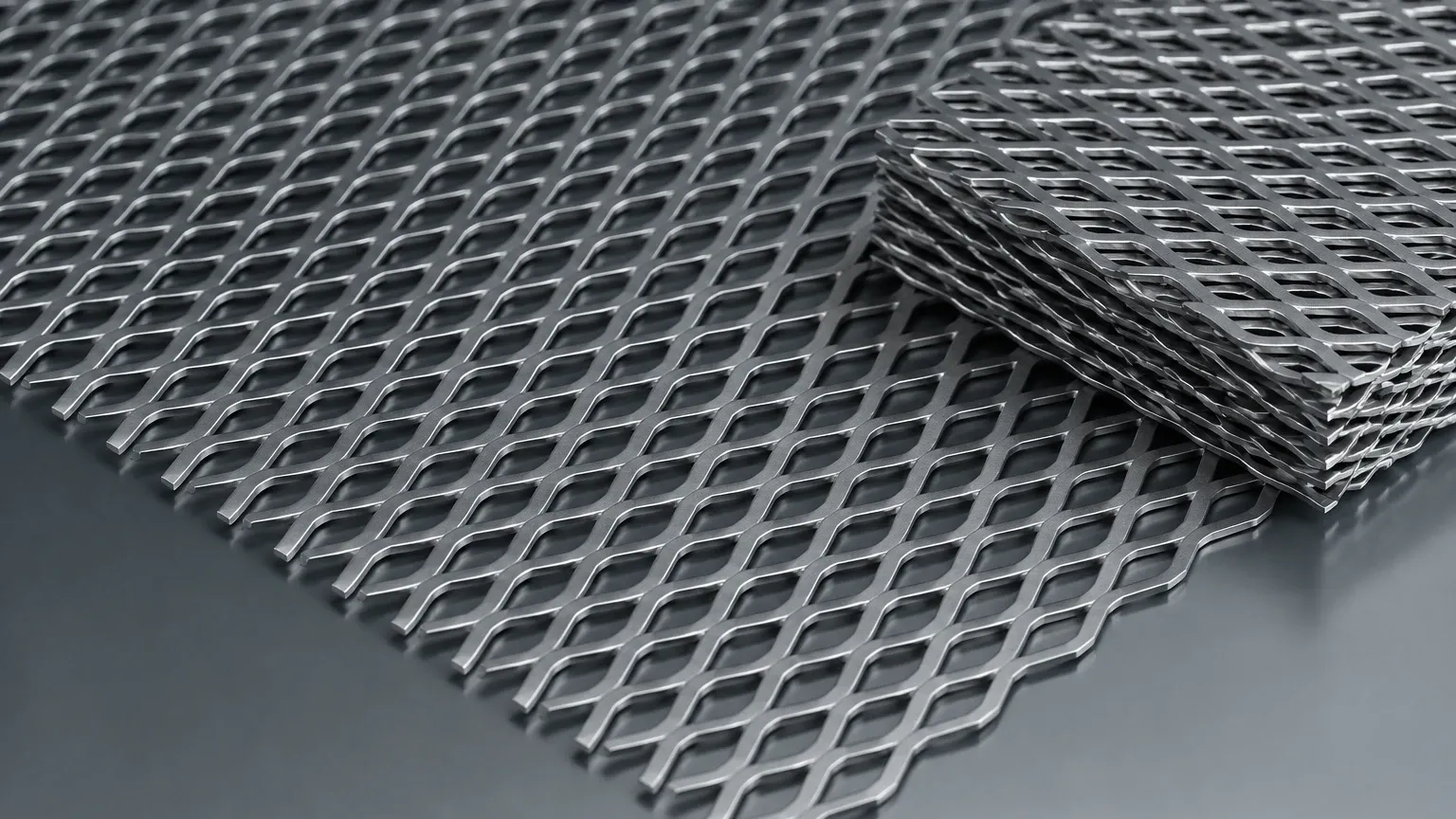
The performance of an expanded metal sheet 4×8 is defined by its diamond-shaped openings. To specify these sheets accurately, engineers must use standardized terminology that describes the orientation and size of these diamonds.
SWD and LWD
* Short Way of Diamond (SWD): This is the distance from the center of a bond to the center of the next bond across the short axis of the diamond.
* Long Way of Diamond (LWD): This is the distance across the long axis of the diamond.
In a standard expanded metal sheet 4×8, the orientation of the diamonds relative to the 4-foot or 8-foot side is critical. Usually, the LWD runs parallel to the length of the sheet (the 8-foot side), but this can be customized based on structural requirements. The orientation affects the sheet's rigidity; the material is significantly stiffer along the LWD than the SWD.
Raised vs. Flattened Expanded Metal
There are two primary forms of expanded metal used in industrial contexts:
1. Standard (Raised) Expanded Metal: This is the product as it comes off the expanding machine. The strands and bonds are set at a uniform angle to the plane of the sheet. This creates a 3D texture that provides excellent mechanical grip and high strength-to-weight ratios. In filtration, raised expanded metal is often used as a pre-filter or a protective outer guard to deflect large debris.
2. Flattened Expanded Metal: This is produced by passing the standard expanded metal through a cold-roll reducing mill. The process flattens the strands and bonds into the same plane, resulting in a smooth, level surface. Flattened sheets are preferred when the material must be bonded to delicate filter media or when a flush surface is required to prevent turbulence in fluid flow.
Material Selection for Industrial Filtration
While expanded metal can be manufactured from carbon steel or aluminum, Perforated & Expanded Metal solutions for the chemical, pharmaceutical, and food processing industries almost exclusively utilize stainless steel. The choice of alloy determines the sheet's resistance to corrosion, temperature, and chemical degradation.
Stainless Steel 304
This is the most common grade for general industrial use. It offers good corrosion resistance and excellent formability. In 4×8 sheets, 304 stainless steel is frequently used for structural supports in water treatment and general machinery guards where exposure to harsh chemicals is limited.
Stainless Steel 316L
For more demanding environments, such as marine applications or chemical processing, 316L stainless steel is the preferred choice. The addition of molybdenum provides superior resistance to pitting and crevice corrosion in chloride-rich environments. The "L" denotes low carbon content, which minimizes carbide precipitation during welding, ensuring the integrity of the expanded metal sheet 4×8 when it is rolled and welded into filter cartridges.
Role in Industrial Filtration Systems
In the context of high-performance filtration, an expanded metal sheet 4×8 is rarely a standalone component. Instead, it serves as a critical structural element within a multi-layered filtration assembly.
Support for Fine Wire Mesh
Fine stainless steel wire mesh lacks the structural rigidity to withstand high differential pressures. Engineers use expanded metal as a support layer (or "drainage layer") to prevent the mesh from collapsing or pleating unevenly under flow. The diamond pattern of the expanded metal provides multiple contact points for the mesh, distributing the load across a wider surface area.
Flow Distribution and Turbulence Control
The geometry of the expanded metal influences the fluid dynamics within a filter housing. By selecting a specific strand width and opening size, engineers can influence the flow velocity and distribution. In some cases, the angled strands of raised expanded metal are used to induce controlled turbulence, which can help prevent the rapid buildup of a filter cake on the primary media surface.
Protective Outer Guards
In heavy-duty hydraulic or industrial water systems, filters are often subject to mechanical impact or large-particle abrasion. A 4×8 sheet of expanded metal can be fabricated into a robust outer sleeve that protects the inner, more expensive filtration layers from physical damage during installation or operation.
Key Engineering Specifications for an Expanded Metal Sheet 4×8
When purchasing or specifying an expanded metal sheet 4×8, technical teams must confirm several physical parameters to ensure the material meets the application's performance expectations.
Open Area Percentage
The open area is perhaps the most critical metric for filtration. It is the ratio of the area of the openings to the total area of the sheet. A higher open area results in a lower pressure drop across the filter but may reduce the structural strength of the sheet. For an expanded metal sheet 4×8, the open area is calculated based on the strand width and the SWD/LWD dimensions. Typical industrial sheets range from 40% to 70% open area.
Strand Width and Thickness
* Strand Thickness: This is the thickness of the base metal used to produce the sheet.
* Strand Width: This is the amount of metal fed into the machine between each slit.
Together, these dimensions determine the cross-sectional area of each strand, which directly correlates to the tensile strength and weight of the panel. For a 4×8 sheet, the weight per square foot is a vital consideration for logistics and the structural design of the filter housing.
Tolerance and Edge Conditions
In precision engineering, the edge of the sheet matters. A "random shear" edge may leave open diamonds or sharp prongs, whereas a "bond shear" edge cuts through the center of the bonds, providing a more stable and safer perimeter. When ordering an expanded metal sheet 4×8, specifying the required edge condition is necessary to avoid post-processing complications during the fabrication of filter components.
Comparison: Perforated Metal vs. Expanded Metal
Engineers often weigh the pros and cons of perforated metal versus expanded metal for support structures. While both provide open area and structural integrity, expanded metal offers several distinct advantages in specific B2B contexts:
1. Material Efficiency: Expanded metal is produced by stretching, meaning a 4-foot long piece of raw material can produce an 8-foot or longer expanded sheet. This results in no material waste, making it more sustainable and often more affordable than perforated metal of the same thickness.
2. Strength-to-Weight Ratio: The interconnected strands of expanded metal act like a truss system. This allows an expanded metal sheet 4×8 to support heavier loads than a perforated sheet of the same weight.
3. Grip and Surface Area: The 3D nature of raised expanded metal provides a larger surface area for bonding or for capturing large particulates, which is advantageous in certain pre-filtration stages.
However, perforated metal may be preferred when extremely precise hole sizes (micronic levels) or specific hole shapes (round, square, slotted) are required that cannot be achieved through the expansion process.
Critical Considerations for Purchasing and Customization
For purchasing departments, procuring an expanded metal sheet 4×8 involves more than just selecting a part number. To ensure the component integrates seamlessly into the final product, the following factors should be confirmed with the manufacturer:
* Surface Finish: For pharmaceutical or food-grade applications, the stainless steel must be free of oils, burrs, and scale. Options include pickling (to remove oxidation), electropolishing (for a mirror-like, ultra-clean surface), or ultrasonic cleaning.
* Custom Dimensions: While 4×8 is the standard, many filtration applications require non-standard sizes to minimize scrap during the rolling of cylindrical filters. Inquiring about OEM capabilities for custom shearing or slitting can reduce total cost of ownership.
* Flattening Precision: If the sheet is to be used as a support for a very fine mesh (e.g., 5-micron mesh), the flatness of the expanded metal is paramount. Any protrusion or unevenness in the flattened strands could puncture the mesh under pressure.
Maintenance and Longevity in Filtration
The lifespan of an expanded metal sheet 4×8 in an industrial system depends heavily on the cleaning protocol and the nature of the processed fluid. Stainless steel expanded metal is highly durable, but it can still suffer from fouling.
* Cleaning Methods: Because of the diamond geometry, expanded metal can trap particles at the intersections of the strands (the bonds). Backwashing is effective for many applications, but for stubborn contaminants, ultrasonic cleaning or chemical soaking may be required to restore the full open area.
* Replacement Cycles: In non-corrosive environments, the expanded metal support structure may last for years, outliving the primary filter media multiple times. However, in high-vibration environments, engineers should inspect the bonds for fatigue cracking, which can lead to structural failure and potential downstream contamination.
Conclusion
The expanded metal sheet 4×8 is a versatile and indispensable component in the world of industrial filtration and metal fabrication. By understanding the geometric variables—such as SWD, LWD, and strand dimensions—and selecting the appropriate stainless steel alloy, engineers can design systems that balance high flow rates with robust structural support. Whether used as a protective guard, a drainage layer for fine mesh, or a structural core for a filter cartridge, the expanded metal sheet 4×8 provides a reliable, cost-effective solution for demanding industrial environments. When specifying these materials, collaborating with a manufacturer that understands the technical rigors of filtration ensures that the final product meets the necessary standards for accuracy and durability.
