


Expanded Metal Near Me
For engineers, procurement specialists, and project managers in industrial sectors, the search for "expanded metal near me" is often driven by the need for immediate technical support, reduced lead times, and manageable shipping costs. However, in the context of high-precision industrial filtration and structural engineering, proximity is only one factor in a complex selection process. Selecting the right supplier for Perforated & Expanded Metal requires a deep understanding of material properties, manufacturing tolerances, and application-specific requirements.
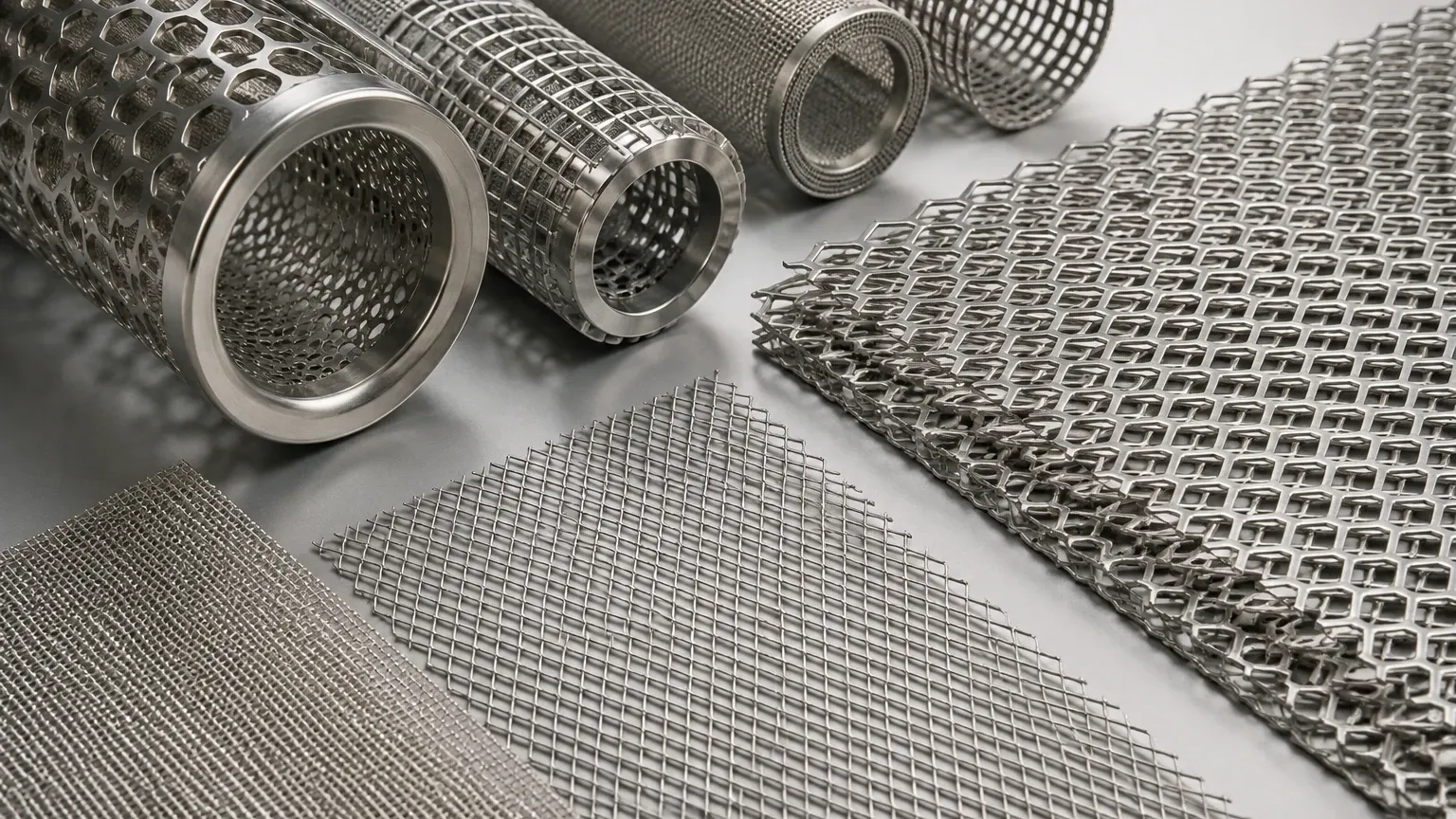
Expanded metal is a versatile material produced by simultaneously slitting and stretching a solid sheet of metal. This process creates a diamond-shaped pattern of openings, resulting in a product that is stronger, lighter, and more rigid than the original sheet. Unlike perforated metal, which involves punching holes and generating scrap, expanded metal is produced with virtually no waste, making it a cost-effective solution for various industrial applications ranging from filter support cores to safety walkways.
Understanding the Technical Specifications of Expanded Metal
When evaluating expanded metal for industrial use, technical professionals must look beyond local availability and focus on the specific geometric and mechanical properties required for their application. The performance of the material is dictated by several key measurements:
SWD and LWD (Short and Long Way of Design)
These terms refer to the dimensions of the diamond-shaped opening. The Short Way of Design (SWD) is the distance from the center of one bond to the center of the next bond measured across the short diamond axis. The Long Way of Design (LWD) is the corresponding measurement across the long axis. These dimensions determine the overall density and aesthetic of the mesh.
Strand Width and Thickness
The strand width refers to the amount of metal between the openings, while the thickness is the gauge of the original base metal. In the case of "standard" expanded metal, the strands are set at a sharp angle to the plane of the sheet, providing a three-dimensional texture that offers excellent grip and structural rigidity. In "flattened" expanded metal, the sheet is passed through a cold-roll reducing mill, which flattens the strands into a single plane, creating a smooth surface ideal for filtration support and decorative panels.
Open Area Percentage
For engineers focused on fluid dynamics and filtration, the open area percentage is a critical metric. It determines the flow rate and pressure drop across the mesh. Calculating the open area requires precise knowledge of the SWD, LWD, and strand width. A supplier capable of providing custom expanded metal can adjust these parameters to meet specific flow requirements without compromising structural integrity.
Why Material Selection Defines Performance
Searching for "expanded metal near me" often leads to general metal service centers that stock standard carbon steel or aluminum products. However, for industries such as chemical processing, pharmaceuticals, and food and beverage, material compatibility is non-negotiable.
Stainless steel is the gold standard for these demanding environments. At Kaifil, we emphasize the use of high-grade stainless steel (such as Grade 304 and 316L) for expanded metal production. The benefits include:
* Corrosion Resistance: Stainless steel expanded metal can withstand exposure to harsh chemicals, saline environments, and extreme temperatures without degrading.
* Durability: The mechanical strength of stainless steel ensures that the mesh maintains its shape and aperture size under high-pressure conditions, which is essential for hydraulic and water treatment filters.
* Hygienic Properties: In food and pharmaceutical applications, the smooth finish of stainless steel prevents bacterial buildup and allows for rigorous cleaning protocols, including CIP (Clean-In-Place) systems.
While local hardware suppliers may offer galvanized steel, these materials often fail in industrial filtration settings due to zinc leaching or premature oxidation. Sourcing from a specialist manufacturer ensures that the material certifications (MTRs) match the project specifications exactly.
The Role of Expanded Metal in Industrial Filtration
In the realm of industrial filtration, expanded metal serves several vital functions. It is rarely the primary filter medium for fine particles; instead, it acts as a robust support structure or a pre-filter.
Filter Element Support Cores
In pleated filter cartridges or large industrial bags, expanded metal provides the internal or external cage that prevents the filter media from collapsing under the pressure of the fluid flow. The high strength-to-weight ratio of expanded metal allows for thin-walled cores that do not significantly impede flow but offer immense crush resistance.
Coarse Filtration and Strainers
For applications requiring the removal of large debris—such as in wastewater intake or raw chemical processing—expanded metal acts as a durable strainer. Its rigid structure resists impact from heavy solids, protecting downstream pumps and sensitive fine-filtration components.
Media Protection
In multi-layer filtration systems, expanded metal can be used as a protective outer wrap. This prevents mechanical damage to delicate wire mesh or synthetic membranes during installation, maintenance, and high-velocity backwashing cycles.
Evaluating a Supplier: Beyond "Expanded Metal Near Me"
When a project requires specialized components, the geographic location of the vendor should be secondary to their technical capability and quality assurance processes. Engineers should evaluate potential partners based on the following criteria:
Customization and OEM Capabilities
Standard off-the-shelf sizes rarely meet the exacting needs of custom industrial equipment. A reliable manufacturer should offer customization in terms of sheet size, diamond dimensions, and material thickness. This includes the ability to produce "blank" areas or solid borders within an expanded sheet to facilitate welding and assembly into larger housings.
Precision Manufacturing
Industrial filters require tight tolerances. Inconsistencies in the expansion process can lead to uneven flow distribution or structural weak points. Inquire about the manufacturer’s quality control steps, such as aperture measurement and flatness testing. For flattened expanded metal, ensuring a uniform thickness across the entire sheet is vital for automated assembly processes.
Technical Consulting
Rather than just taking an order, a high-quality supplier functions as an engineering partner. They should be able to provide advice on the best material for a specific chemical environment or help calculate the necessary strand width to support a specific pressure load. This level of expertise is rarely found at local general-purpose metal distributors.
Total Cost of Ownership (TCO)
While a local supplier might offer lower shipping costs, a specialized manufacturer like Kaifil provides value through product longevity and reduced failure rates. When expanded metal is used as a core component in a hydraulic system or a chemical reactor, the cost of a single failure far outweighs the initial savings of a cheaper, locally sourced part. High-quality stainless steel expanded metal reduces the frequency of replacement and maintenance, lowering the TCO over the life of the equipment.
Logistics and Global Supply Chains
In the modern B2B landscape, the definition of "near me" has shifted. Advanced logistics and streamlined export processes mean that a specialized manufacturer can often deliver custom-engineered expanded metal faster than a local distributor can source and modify a standard product.
For international projects, it is important to confirm that the supplier has experience with global shipping standards, protective packaging (to prevent deformation of the mesh during transit), and the necessary documentation for customs clearance. At Kaifil, we work closely with global customers to ensure that our stainless steel filtration solutions arrive on site ready for integration, regardless of the physical distance.
Final Considerations for Procurement and Engineering
Before finalizing a purchase for expanded metal, the following checklist should be confirmed by the engineering team:
1. Aperture Accuracy: Are the SWD and LWD dimensions appropriate for the particle size or support requirements?
2. Material Grade: Is the stainless steel grade (e.g., 304 vs 316L) compatible with the process fluid?
3. Surface Finish: Does the application require standard (raised) or flattened expanded metal? Is a specific surface treatment (like passivating or electropolishing) required for corrosion resistance?
4. Structural Load: Will the strand thickness and width support the expected pressure drop without deformation?
5. Compliance: Does the material meet industry-specific standards such as FDA requirements for food contact or ISO standards for industrial manufacturing?
By focusing on these technical parameters, procurement teams can move beyond the limitations of searching for "expanded metal near me" and instead secure a partnership with a manufacturer that delivers performance, reliability, and long-term value. Whether you are designing a new filtration system or replacing components in an existing industrial process, the quality of the expanded metal is a fundamental pillar of system efficiency.
