


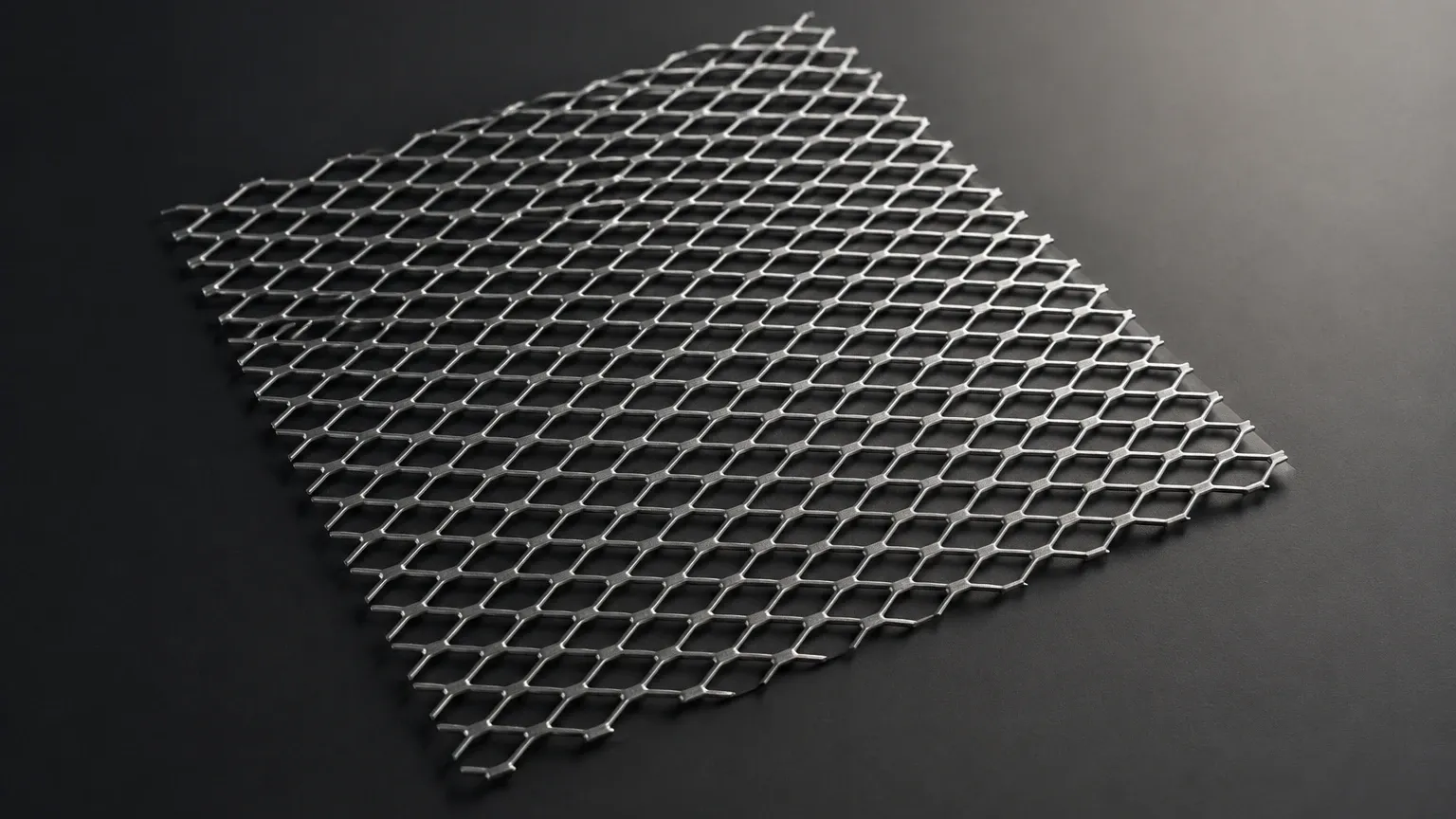
Expanded Metal Sheet 6×8
In industrial manufacturing and filtration engineering, selecting the correct substrate is as critical as the primary filter medium itself. The expanded metal sheet 6×8 is a specific configuration frequently utilized across various sectors, from chemical processing to heavy machinery protection. Unlike perforated metal, which is created by punching holes and generating scrap, expanded metal is produced through a process of simultaneous slitting and stretching. This results in a diamond-shaped pattern that offers an exceptional strength-to-weight ratio and structural integrity without material waste.
For engineers and procurement professionals, understanding the technical nuances of the 6×8 specification—typically referring to the dimensions of the diamond opening in millimeters—is essential for ensuring compatibility with industrial systems and long-term performance in demanding environments.
Understanding the Specifications of Expanded Metal Sheet 6×8
When discussing an expanded metal sheet 6×8, the numerical designation usually refers to the Short Way of Design (SWD) and the Long Way of Design (LWD). In this context, 6mm represents the SWD (the distance from the center of one bond to the center of the next bond across the short axis), and 8mm represents the LWD (the distance across the long axis).
Key Dimensional Terminology
To accurately specify this material for a project, several other parameters must be defined beyond the opening size:
1. Strand Width: The amount of metal fed into the precision dies to create the mesh. This determines the "thickness" of the diamond's borders.
2. Strand Thickness: The original thickness of the base metal sheet.
3. Open Area: This is a critical calculation for filtration and ventilation. It represents the percentage of the sheet that is open space. For a 6×8 configuration, the open area is determined by the relationship between the strand width and the diamond dimensions.
4. Overall Thickness: In raised (standard) expanded metal, the overall thickness is significantly greater than the strand thickness because the strands are turned at an angle to the plane of the sheet.
Raised vs. Flattened Expanded Metal
One of the most important decisions an engineer must make when selecting an expanded metal sheet 6×8 is whether to use the "Raised" or "Flattened" variety. Each has distinct mechanical properties and application advantages.
Raised Expanded Metal
Raised expanded metal is the product as it comes off the machine. The strands and bonds are set at a uniform angle to the plane of the sheet. This creates a three-dimensional surface that provides excellent grip, directional airflow, and maximum structural rigidity. In filtration, raised expanded metal is often used as a coarse pre-filter or a protective cage where turbulence or specific flow patterns are desired.
Flattened Expanded Metal
Flattened expanded metal is manufactured by passing the standard raised sheet through a cold-roll reducing mill. This process flattens the strands and bonds into a single plane, reducing the overall thickness and creating a smooth, level surface. For the filtration industry, flattened expanded metal is the preferred choice when the sheet serves as a support layer for fine wire mesh. The smooth surface prevents the delicate wires of the primary filter from being abraded or punctured under high-pressure conditions.
Industrial Applications and Filtration Support
The expanded metal sheet 6×8 serves a dual purpose in many industrial settings. While it is robust enough for structural use, its primary value in high-performance environments lies in its role as a component of complex filtration systems.
Support for Filter Cartridges
In the production of stainless steel filter cartridges, the 6×8 mesh acts as an internal core or an outer protective wrap. It provides the necessary mechanical strength to prevent the collapse of the pleats or the fine mesh layers when subjected to high differential pressures. Because it is a single piece of metal without joins or welds (except where the sheet is formed into a cylinder), it offers superior integrity compared to woven supports.
Pre-Filtration and Coarse Screening
In water treatment and chemical processing, the 6×8 opening is ideal for capturing large particulates before they reach more sensitive downstream components. It is commonly used in intake screens, basket strainers, and as a primary barrier in hydraulic systems where debris must be managed without significantly impeding flow rates.
Machinery Guards and Safety
Beyond filtration, the structural rigidity of Perforated & Expanded Metal makes it an excellent choice for safety guards. The 6×8 pattern allows for high visibility and ventilation while preventing contact with moving parts or hot surfaces. Its lightweight nature makes it easy to install and replace during maintenance cycles.
Material Selection and Corrosion Resistance
The performance of an expanded metal sheet 6×8 is heavily dependent on the alloy from which it is fabricated. Since these components are often exposed to aggressive chemicals, high temperatures, or moisture, material selection is a primary engineering consideration.
* Stainless Steel (304 and 316L): This is the standard for the pharmaceutical, food and beverage, and chemical industries. Grade 316L, in particular, offers superior resistance to pitting and crevice corrosion in chloride-rich environments.
* Aluminum: Used primarily where weight reduction is critical and where the environment is not highly corrosive. It is common in HVAC and aerospace applications.
* Carbon Steel: Often used for structural applications where the metal will be galvanized or powder-coated to prevent oxidation. It is a cost-effective solution for indoor machinery guards.
* Specialty Alloys: For extreme environments, materials like Monel, Inconel, or Titanium can be expanded to meet specific thermal or chemical requirements.
Engineering Considerations: Pressure Drop and Flow Rates
When integrating an expanded metal sheet 6×8 into a fluid or air system, engineers must account for the pressure drop ($ΔP$). The geometry of the expanded metal creates a more complex flow path than a simple perforated hole.
In liquid filtration, the angled strands of a raised 6×8 sheet can induce localized turbulence. While this can be beneficial for certain mixing applications, it may increase the energy required to pump fluid through the system. Conversely, the flattened version provides a more predictable flow profile. Calculating the effective open area is the first step in determining whether the 6×8 mesh will meet the required flow velocity without exceeding the system's pressure limits.
Customization and Manufacturing Precision
While standard sizes are available, industrial applications often require customized expanded metal solutions. As a professional manufacturer, Kaifil specializes in tailoring these components to meet exact engineering specifications. Customization options for the expanded metal sheet 6×8 include:
* Custom Sheet Dimensions: Providing sheets cut to specific widths and lengths to minimize waste during final assembly.
* Variable Strand Widths: Adjusting the strand width to increase the structural strength or modify the open area percentage.
* Edge Configurations: Supplying sheets with "bond edges" (closed diamonds) or "random shears" (open diamonds) depending on how the material will be welded or framed.
* Forming and Fabrication: Rolling the expanded metal into cylinders or cones for direct integration into filter housings.
Evaluating Quality and Supplier Reliability
For procurement teams, sourcing expanded metal involves more than just comparing price points. Low-quality expanded metal can suffer from several defects that compromise industrial systems:
1. Burrs and Sharp Edges: Poorly maintained dies can leave excessive burrs. In filtration, these burrs can break off and contaminate the filtrate or damage secondary filter layers.
2. Inconsistent Openings: Variations in the stretching process can lead to non-uniform diamond sizes, which affects both the aesthetic and the functional flow characteristics.
3. Material Fatigue: If the metal is over-stretched or if the alloy quality is poor, micro-fractures can occur at the bonds, leading to premature failure under vibration or pressure.
When selecting a partner for filtration components, it is vital to confirm their quality control processes and their experience with the specific alloys required for your application. Kaifil’s expertise in custom stainless steel filtration ensures that every expanded metal component is manufactured with the precision required for demanding industrial environments.
Conclusion: Making an Informed Decision
The expanded metal sheet 6×8 is a versatile and robust component that plays a vital role in industrial filtration and structural protection. By understanding the differences between raised and flattened profiles, the importance of material selection, and the impact of strand geometry on flow dynamics, engineers can optimize their systems for both performance and longevity.
Before finalizing a specification, it is recommended to confirm the total cost of ownership, which includes not only the initial purchase price but also the replacement cycle and the impact on system efficiency. Choosing a high-quality, precision-manufactured expanded metal component ensures that your filtration system remains reliable, even in the most challenging processing conditions.
