


Expanded Metal Sheet
In industrial filtration and structural engineering, the selection of support materials is as critical as the selection of the primary filtration media itself. The expanded metal sheet represents a versatile and cost-effective solution for providing structural integrity, protection, and pre-filtration capabilities. Unlike perforated metal, which is created by punching holes and generating scrap, expanded metal is produced through a process of simultaneous slitting and stretching. This manufacturing method results in a continuous, jointless mesh that offers an exceptional strength-to-weight ratio, making it a staple in the production of high-performance Perforated & Expanded Metal components.
For engineers and procurement professionals, understanding the technical nuances of expanded metal is essential for optimizing the performance of filtration systems. Whether used as a support core for a pleated filter cartridge or as a protective outer cage in a hydraulic system, the geometry and material properties of the expanded metal sheet directly influence flow rates, pressure drop, and the overall lifespan of the filtration assembly.
Understanding the Manufacturing Process and Structural Integrity
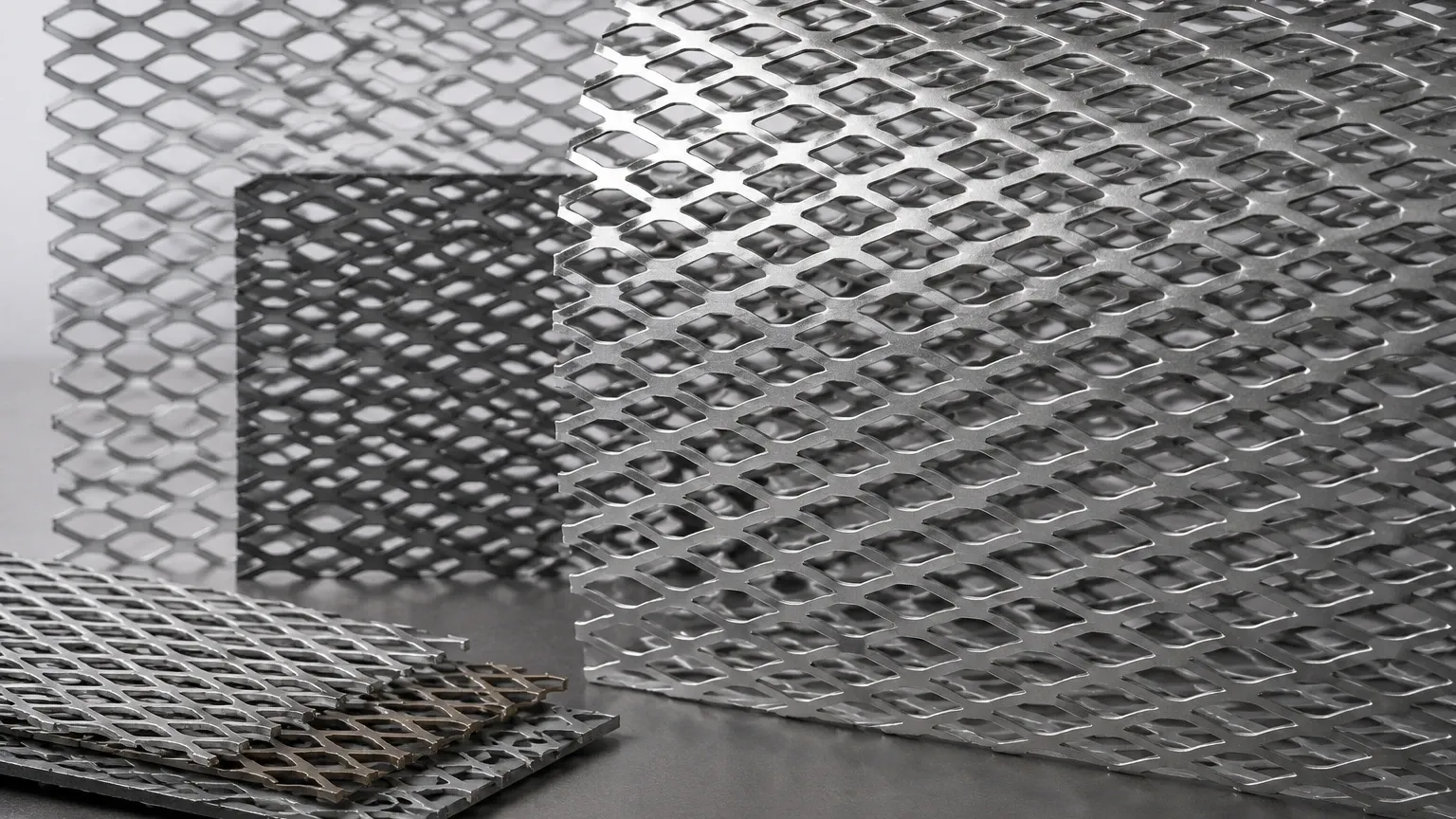
The production of an expanded metal sheet begins with a solid metal plate or coil. A machine equipped with specialized knives slits the metal at regular intervals while simultaneously stretching it. This process expands the slits into diamond-shaped openings. Because the metal is stretched rather than punched, there is zero material waste, which contributes to its status as a cost-effective alternative to other mesh types.
One of the most significant technical advantages of expanded metal is its monolithic structure. Because the strands and bonds (the intersections of the strands) are part of a single piece of metal, the material cannot unravel. This is a critical safety and performance factor in industrial filtration, where loose wires or broken welds from woven or welded meshes could potentially migrate downstream, contaminating the filtered fluid and damaging sensitive equipment.
Standard vs. Flattened Expanded Metal
When specifying an expanded metal sheet, engineers must choose between two primary forms:
1. Standard (Raised) Expanded Metal: In this form, the strands and bonds are set at a uniform angle to the plane of the sheet. This creates a three-dimensional surface that provides excellent grip and structural rigidity. In filtration, the raised profile can be used to create turbulence or to provide a specific standoff distance between layers of media.
2. Flattened Expanded Metal: After the expansion process, the sheet is passed through a cold-roll reducing mill. This flattens the strands and bonds into the same plane, resulting in a smooth, flat surface. Flattened expanded metal is often preferred when the mesh must be in direct contact with delicate filter cloth or membranes, as it eliminates sharp edges that could cause abrasion or puncture the media.
Technical Specifications and Terminology
To accurately specify an expanded metal sheet for a custom filtration project, it is necessary to use standardized industry terminology. These measurements define the geometry of the diamonds and the physical properties of the mesh.
* Long Way of Design (LWD): The distance from a point on one bond to the corresponding point on the next bond measured across the long diamond dimension.
* Short Way of Design (SWD): The distance from a point on one bond to the corresponding point on the next bond measured across the short diamond dimension.
* Long Way of Opening (LWO): The distance measured from the inside of the bond across the long diamond dimension.
* Short Way of Opening (SWO): The distance measured from the inside of the bond across the short diamond dimension.
* Strand Thickness: The thickness of the base metal used to produce the sheet.
* Strand Width: The amount of metal fed into the machine between each slit.
By adjusting these parameters, manufacturers like Kaifil can customize the open area percentage and the mechanical strength of the sheet to meet specific application requirements. For instance, a larger LWD and SWD with thinner strands will increase the open area and reduce hydraulic resistance, while thicker strands will enhance the sheet's ability to withstand high differential pressures.
Material Selection for Industrial Filtration
The choice of material for an expanded metal sheet is dictated by the chemical environment, temperature, and pressure of the application. In the industrial filtration sector, stainless steel is the gold standard due to its corrosion resistance and mechanical durability.
Stainless Steel 304 and 304L
As the most common grade of stainless steel, Type 304 provides excellent resistance to a wide range of atmospheric environments and many corrosive media. It is frequently used in food and beverage processing and general industrial water treatment. The "L" (Low Carbon) version is preferred when the expanded metal must be welded into a filter assembly, as it minimizes carbide precipitation that can lead to intergranular corrosion.
Stainless Steel 316 and 316L
For more demanding environments, such as chemical processing, pharmaceutical manufacturing, or marine applications, Type 316 is the preferred choice. The addition of molybdenum enhances its resistance to pitting and crevice corrosion, particularly in chloride-rich environments. For filtration components that require extensive welding, 316L ensures the long-term integrity of the joints.
Specialty Alloys and Carbon Steel
In specific hydraulic or lubrication systems where corrosion is less of a concern, carbon steel expanded metal may be used for its high strength and lower cost. Conversely, for highly aggressive chemical environments, specialty alloys like Monel, Inconel, or Hastelloy can be expanded to provide the necessary chemical compatibility.
Applications in Filter Cartridge Construction
The expanded metal sheet plays several vital roles in the design of industrial filter cartridges. Its primary function is often as a support structure for the filtration media, which may consist of fine wire mesh, non-woven fabrics, or sintered metal fibers.
Internal Support Cores
High-pressure filtration systems generate significant differential pressure across the filter media. Without a robust internal core, the media would collapse inward. An expanded metal tube provides the necessary radial strength to resist these forces. Because the expanded metal has a high open area, it allows for the efficient flow of the filtrate into the center of the cartridge with minimal pressure drop.
Outer Protective Cages
In many industrial processes, filters are handled frequently or subjected to turbulent flow conditions. An outer cage made from an expanded metal sheet protects the delicate inner filtration layers from mechanical damage during installation, cleaning, and operation. It also helps to distribute the flow of the incoming fluid evenly across the surface of the filter.
Pre-Filtration and Coarse Screening
In some applications, a heavy-duty expanded metal sheet serves as a primary screen to remove large debris before the fluid reaches the finer filtration stages. This protects the more expensive fine media from premature clogging and extends the overall service life of the system.
Engineering Considerations: Flow Efficiency and Pressure Drop
When integrating an expanded metal sheet into a filtration system, engineers must balance mechanical strength with hydraulic performance. The "Open Area" is the most critical metric in this regard. It is calculated as the ratio of the area of the openings to the total area of the sheet.
A high open area is desirable to minimize the pressure drop across the filter. However, as the open area increases, the structural rigidity of the sheet typically decreases. Engineers must perform calculations to ensure that the selected mesh can withstand the maximum expected differential pressure (often referred to as the "collapse pressure") while still maintaining the required flow rate.
Furthermore, the orientation of the diamond openings can affect flow characteristics. In some liquid filtration applications, the angled strands of a standard expanded metal sheet can be used to induce a swirling motion, which can help in keeping particles in suspension and preventing localized blinding of the filter media.
Customization and OEM Capabilities
One of the primary reasons engineers choose Kaifil for their filtration components is the ability to customize the expanded metal sheet to exact specifications. Standard off-the-shelf mesh often fails to meet the precise tolerances required for high-performance industrial filters.
Customization options include:
* Precision Slitting: Cutting the expanded metal into specific widths for seamless integration into automated filter assembly lines.
* Cylindrical Forming: Rolling and welding the sheets into tubes of various diameters and lengths to serve as filter cores or cages.
* Surface Finishes: Providing specialized treatments such as electropolishing, which is essential for pharmaceutical and food-grade applications to ensure a smooth, burr-free surface that resists bacterial growth.
* Variable Mesh Patterns: Developing unique diamond shapes or strand widths to optimize the balance between weight, strength, and open area for specific OEM designs.
Total Cost of Ownership and Maintenance
While the initial purchase price is a factor, the total cost of ownership (TCO) of a filtration system is heavily influenced by the durability and cleanability of its components. An expanded metal sheet made from high-quality stainless steel offers a long service life, even in harsh conditions.
Because the material is a single piece without welds or woven intersections, it is relatively easy to clean. There are no "pockets" where contaminants can become permanently trapped, which is a common issue with woven wire mesh. This makes expanded metal an excellent choice for systems that require regular backwashing or chemical cleaning. By selecting the correct material grade and structural design, facilities can reduce the frequency of filter replacements and minimize downtime.
Conclusion: Selecting the Right Solution
The expanded metal sheet is far more than a simple piece of mesh; it is a precision-engineered component that is fundamental to the success of industrial filtration systems. From providing the structural backbone of a high-pressure cartridge to protecting sensitive media in a chemical reactor, its role is indispensable.
When evaluating Perforated & Expanded Metal for your next project, it is crucial to partner with a manufacturer that understands the technical demands of your specific industry. By confirming material certifications, precise geometric tolerances, and the intended flow dynamics, engineers can ensure they receive a filtration solution that delivers reliable, long-term performance. Kaifil’s expertise in custom stainless steel filtration ensures that every expanded metal component is manufactured to meet the most rigorous industrial standards, providing the durability and precision required for today’s demanding processing environments.
