


Expanded Metal Size
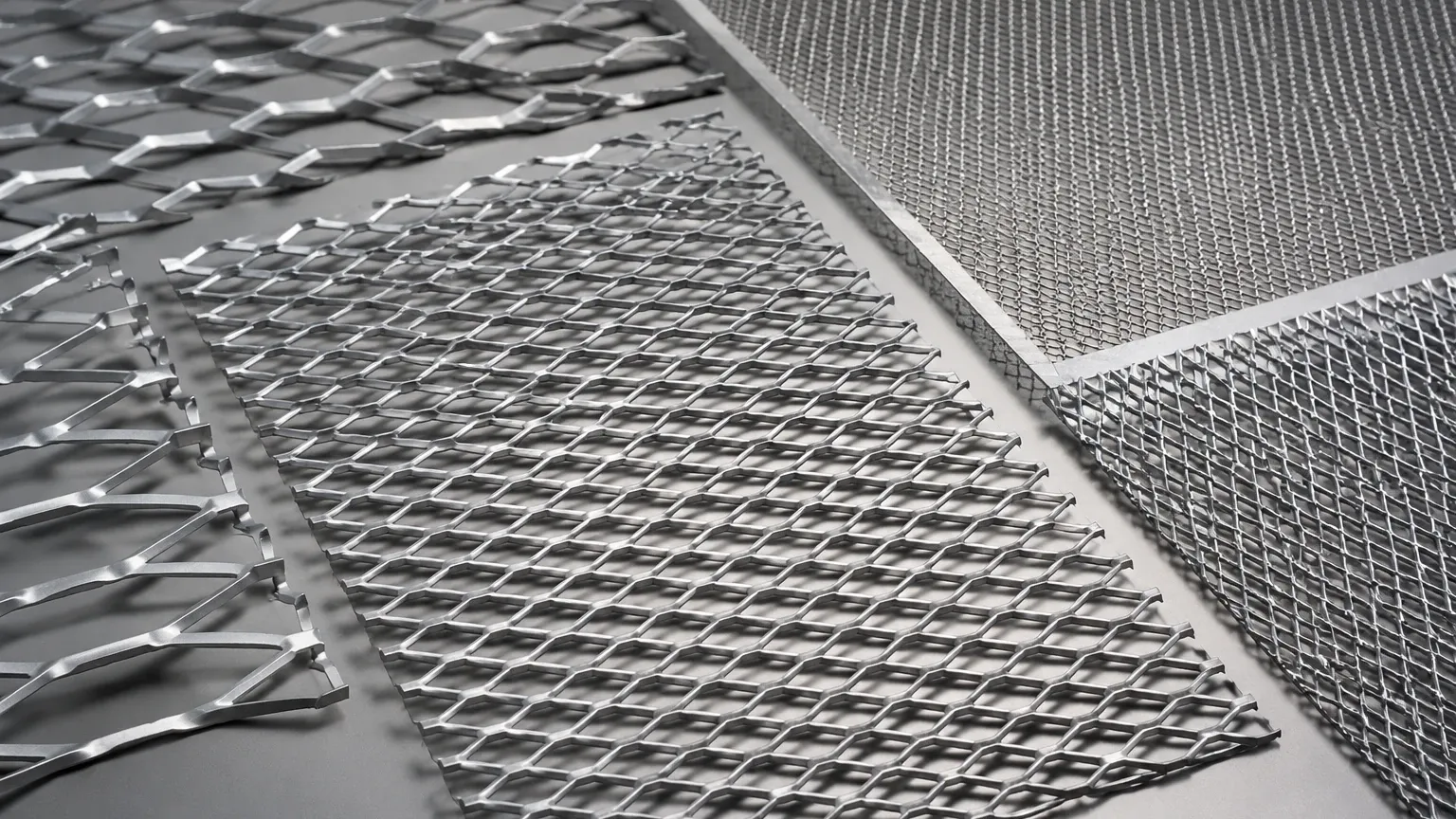
In industrial filtration and structural engineering, the specification of expanded metal size is a critical factor that determines the performance, durability, and efficiency of a component. Unlike perforated metal, which is created by punching holes and removing material, expanded metal is produced by simultaneously slitting and stretching a solid sheet. This process creates a diamond-shaped pattern that offers a high strength-to-weight ratio and unique flow characteristics. For engineers and purchasing teams, understanding how to accurately measure and specify these dimensions is essential for ensuring compatibility with existing systems and meeting precise filtration requirements.
Selecting the correct dimensions for Perforated & Expanded Metal involves more than just choosing a hole size. It requires a comprehensive understanding of the geometric relationships between the openings, the strands, and the overall thickness of the material. This guide provides a technical overview of expanded metal sizing, the terminology used in the industry, and the engineering considerations necessary for optimal selection.
Understanding the Fundamentals of Expanded Metal Dimensions
To communicate effectively with manufacturers and ensure the structural integrity of a filtration system, technical professionals must use standardized terminology. The size of expanded metal is defined by several key measurements that describe the diamond-shaped openings and the metal strands that form them.
SWD and LWD (Short Way and Long Way of Design)
These are the most common measurements used to define the "size" of the diamond pattern.
* SWD (Short Way of Design): This is the distance from a point on one diamond to the corresponding point on the next diamond, measured across the short axis (the width of the diamond). It is measured center-to-center of the bonds.
* LWD (Long Way of Design): This is the distance from a point on one diamond to the corresponding point on the next diamond, measured across the long axis (the length of the diamond).
It is important to note that SWD and LWD refer to the center-to-center distances, not the clear openings. When an engineer specifies an expanded metal size, these dimensions dictate the frequency of the pattern across the sheet.
SWO and LWO (Short Way and Long Way of Opening)
For filtration applications, the clear opening size is often more relevant than the design centers.
* SWO (Short Way of Opening): The actual width of the clear opening, measured from the inside of one bond to the inside of the opposite bond across the short axis.
* LWO (Long Way of Opening): The actual length of the clear opening, measured across the long axis.
These dimensions directly impact the particle retention capabilities of the mesh. In many industrial processes, the SWO is the primary metric for determining whether a specific expanded metal size will provide the necessary support for finer filter media or act as a primary coarse filter.
Strand Width and Thickness
The "strand" is the individual metal strip that makes up the sides of the diamond.
* Strand Width: The amount of metal fed into the expanding machine between slits. This determines how much metal is present in the mesh.
* Strand Thickness: The gauge or thickness of the original base metal sheet.
In "standard" (raised) expanded metal, the strands are set at an angle to the plane of the sheet, which provides additional rigidity and a directional flow characteristic. In "flattened" expanded metal, the sheet is passed through a cold-rolling mill, which levels the strands into the same plane as the sheet, increasing the width of the strands and reducing the overall thickness.
Key Factors Influencing Expanded Metal Size Selection
When specifying an expanded metal size for an industrial application, engineers must balance several competing factors, including mechanical strength, open area, and weight. The intended application—whether it is for hydraulic filtration, chemical processing, or industrial guards—will dictate which of these factors takes priority.
Open Area Percentage
The open area is the ratio of the area of the openings to the total area of the sheet. This is a critical calculation for any application involving fluid or gas flow. A larger expanded metal size typically results in a higher percentage of open area, which minimizes pressure drop across the filter. However, increasing the open area often reduces the structural strength of the mesh. For high-pressure hydraulic systems, a smaller mesh size with thicker strands may be required to prevent deformation under load.
Structural Integrity and Load Bearing
Expanded metal is often used as a support structure for finer filter mesh or as a protective cage for filter cartridges. The size of the diamond and the width of the strands determine the mesh's ability to withstand mechanical stress. In applications where the filter is subjected to high differential pressures, the bond (the intersection of two strands) must be strong enough to resist tearing. Engineers must ensure that the selected expanded metal size provides sufficient rigidity to maintain the shape of the filter element throughout its service life.
Directional Flow and Turbulence
The orientation of the expanded metal (the direction of the LWD relative to the flow) can influence the turbulence of the fluid passing through it. Because the strands in raised expanded metal are angled, they can act as small louvers, directing flow or creating localized turbulence. This can be advantageous in certain chemical mixing processes but may be undesirable in high-velocity gas filtration where laminar flow is preferred. Choosing between standard and flattened expanded metal is a key decision in managing these flow characteristics.
Measuring and Specifying Expanded Metal for Industrial Applications
Accuracy in measurement is paramount when ordering custom filtration components. A common mistake in procurement is failing to distinguish between the nominal size and the actual measured dimensions. Because the expansion process involves stretching the metal, there are inherent tolerances that must be accounted for in the design phase.
Standard vs. Flattened Profiles
When specifying size, it is essential to state whether the material should be standard or flattened.
1. Standard (Raised): The diamonds are at an angle. The overall thickness of the sheet will be significantly greater than the original strand thickness. This profile offers maximum strength and a slip-resistant surface.
2. Flattened: The sheet is rolled flat. This results in a smooth surface and a thickness roughly equal to the original gauge. Flattened expanded metal is often preferred when the component must fit into a tight tolerance housing or when it serves as a substrate for a secondary coating or fine mesh layer.
Tolerance Levels
Industrial manufacturers like Kaifil operate within specific tolerance ranges for SWD, LWD, and strand dimensions. Engineers should consult with the manufacturer to understand the standard deviations expected during production. For precision filtration components, tighter tolerances may be required to ensure that the filter cartridge seats correctly within its housing without bypass leaks.
The Impact of Mesh Size on Filtration and Flow Performance
In the context of industrial filtration, the expanded metal size is a primary driver of the system's performance envelope. The relationship between the mesh geometry and the fluid dynamics of the application cannot be overstated.
Pressure Drop Considerations
Every obstruction in a flow path creates a pressure drop. In systems where energy efficiency is a priority, such as large-scale water treatment or chemical processing, selecting an expanded metal size that maximizes open area while maintaining structural integrity is vital. If the SWO is too small, the restricted flow path will cause the pump to work harder, increasing operational costs and potentially leading to system failure.
Particle Retention and Pre-filtration
While expanded metal is rarely used for fine micron-level filtration on its own, it serves as an excellent pre-filter for removing large debris, such as scale, wood chips, or metal shavings, before they reach more sensitive downstream components. The LWO and SWO must be sized slightly smaller than the smallest particle that needs to be captured during this preliminary stage. If the size is too large, the primary filter media will become blinded by large debris prematurely, shortening the replacement cycle.
Material Selection and Its Effect on Dimensional Stability
The choice of material significantly impacts how an expanded metal size performs under operational conditions. Stainless steel is the industry standard for demanding environments due to its corrosion resistance and mechanical properties.
Stainless Steel (304, 316, 316L)
Stainless steel maintains its dimensional stability even under high temperatures and in corrosive chemical environments. When an expanded metal size is specified in 316L stainless steel, the engineer is ensuring that the openings will not widen or deform due to chemical erosion or thermal expansion. This is particularly important in pharmaceutical and food processing applications where precise filtration and hygiene are mandatory.
Material Gauge and Expansion Ratios
The thickness of the starting material (the gauge) limits the possible expanded metal sizes. A very thin gauge cannot be expanded into a very large diamond without compromising the strand's integrity. Conversely, a very thick plate may be difficult to expand into a very fine mesh. Manufacturers work within these physical limits to provide a range of sizes that meet industrial standards while ensuring the material does not fracture during the expansion process.
Technical Considerations for Custom Expanded Metal Fabrication
For many B2B applications, off-the-shelf expanded metal sizes do not meet the specific requirements of a proprietary filtration system. Customization allows engineers to define the exact SWD, LWD, and strand width needed for their unique application.
OEM Capabilities
Working with a manufacturer like Kaifil provides the opportunity for OEM (Original Equipment Manufacturer) customization. This includes not only the dimensions of the mesh but also the overall dimensions of the sheet or cylinder. Custom expanded metal can be produced in specific widths to minimize waste during the manufacturing of filter cartridges. Furthermore, specialized tooling can be used to create non-standard diamond shapes if a specific flow pattern or aesthetic is required.
Secondary Processing
Beyond the initial expansion, custom components often require secondary processing such as shearing, rolling, or welding. When specifying the expanded metal size, engineers must also consider how these processes will affect the final dimensions. For example, rolling a sheet of expanded metal into a cylinder for a filter support core will slightly distort the diamond shapes. The initial size must be calculated to account for this deformation so that the final product meets the required specifications.
Common Risks in Specifying Expanded Metal Sizes
Failure to properly define expanded metal dimensions can lead to several industrial risks, ranging from minor assembly issues to catastrophic system failures.
1. Incompatibility with Filter Media: If the expanded metal size (specifically the SWO) is too large, it may not provide adequate support for the fine wire mesh or synthetic media layered over it. Under pressure, the fine media can "balloon" into the openings of the expanded metal, leading to fatigue and eventual tearing.
2. Bypass Leaks: In filter cartridge construction, if the expanded metal core is not sized correctly to the end caps, fluid may bypass the filter media entirely. This compromises the purity of the filtrate and can damage downstream equipment.
3. Material Fatigue: Specifying a strand width that is too narrow for the intended pressure load can lead to vibration-induced fatigue. Over time, the bonds of the expanded metal may crack, releasing metal fragments into the process stream—a major risk in food and pharmaceutical production.
4. Inaccurate Flow Calculations: Using nominal sizes instead of actual open area measurements in flow simulations can lead to under-designed systems. Engineers should always request the actual open area percentage from the manufacturer for their specific expanded metal size.
Conclusion: Making Informed Purchasing Decisions
Selecting the right expanded metal size is a technical process that requires a thorough understanding of the application's mechanical and fluid dynamic requirements. By focusing on the precise definitions of SWD, LWD, and strand dimensions, and by considering the impact of material choice and processing methods, engineers can specify components that optimize filtration performance and longevity.
When evaluating suppliers, it is beneficial to partner with a manufacturer that offers both technical expertise and a wide range of customization options. This ensures that the Perforated & Expanded Metal components delivered are not only dimensionally accurate but also engineered to withstand the rigors of industrial use. Whether the goal is to improve the structural support of a hydraulic filter or to optimize the flow in a chemical reactor, the correct specification of expanded metal size is the foundation of a successful filtration solution.
