


Expanded Metal Stair Treads
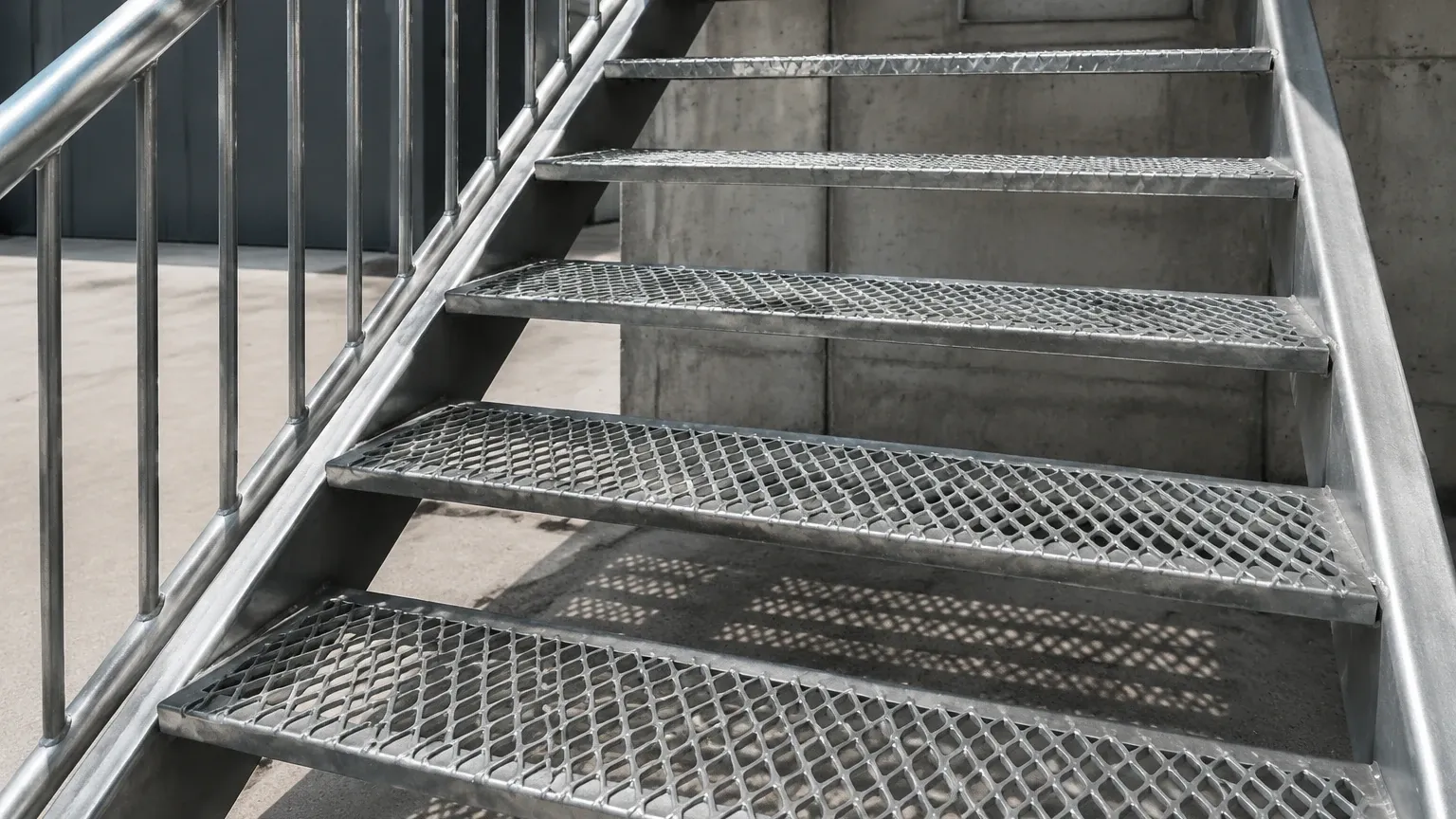
In industrial environments, the selection of flooring and stair components is a critical engineering decision that impacts both personnel safety and structural longevity. Expanded metal stair treads have become a standard specification in sectors ranging from chemical processing and water treatment to offshore oil and gas. Unlike traditional solid plate or bar grating, expanded metal offers a unique combination of high strength-to-weight ratios, exceptional slip resistance, and superior drainage capabilities.
As a specialized manufacturer of Perforated & Expanded Metal solutions, Kaifil provides technical insights into the selection, design, and implementation of these essential industrial components. This guide examines the engineering considerations necessary for optimizing stair tread performance in demanding applications.
Understanding the Engineering Behind Expanded Metal Stair Treads
The manufacturing process of expanded metal distinguishes it from other metal products. It is produced by simultaneously slitting and stretching a solid sheet of metal—typically stainless steel, carbon steel, or aluminum—to create a uniform diamond-shaped pattern. Because the metal is expanded rather than punched or woven, there is zero material waste, and the structural integrity of the original sheet is maintained through interconnected "bonds."
Standard vs. Flattened Expanded Metal
For stair treads, engineers must choose between standard (raised) and flattened expanded metal.
* Standard Expanded Metal: The strands and bonds are set at a uniform angle to the plane of the sheet. This creates a three-dimensional surface that provides maximum traction and grip, making it the preferred choice for stair treads where oil, water, or debris may be present.
* Flattened Expanded Metal: The raised mesh is passed through a cold-roll reducing mill, resulting in a smooth, flat surface. While easier to clean and gentler on footwear, it offers significantly less slip resistance and is generally reserved for architectural applications or light-duty walkways rather than industrial safety stairs.
Material Selection: Stainless Steel vs. Alternative Alloys
The choice of material is the primary factor in determining the service life of expanded metal stair treads, especially in corrosive industrial environments.
Stainless Steel (304 and 316 Grades)
Stainless steel is the gold standard for industrial filtration and structural components due to its inherent corrosion resistance. In chemical processing plants or coastal installations, Grade 316 stainless steel—which contains molybdenum—is recommended to resist pitting and chloride-induced stress corrosion cracking. Grade 304 is suitable for food and beverage applications where hygiene and frequent washdowns are required. Stainless steel treads eliminate the need for protective coatings, reducing long-term maintenance costs.
Carbon Steel
Carbon steel is a cost-effective option for indoor environments or dry climates. However, it requires a secondary finish, such as hot-dip galvanizing or powder coating, to prevent oxidation. In heavy-duty industrial settings, galvanized carbon steel is common, though any damage to the coating during installation or use can lead to localized corrosion.
Aluminum
Aluminum expanded metal is utilized where weight reduction is a priority. While it offers good corrosion resistance, it has a lower load-bearing capacity and a lower melting point than steel, which may be a concern in facilities with high-temperature processes or specific fire safety requirements.
Key Performance Advantages in Industrial Environments
Expanded metal stair treads are engineered to solve specific challenges inherent in industrial facility design. Their performance can be categorized into three main areas: safety, durability, and operational efficiency.
1. Multi-Directional Slip Resistance
The raised diamond pattern of standard expanded metal provides traction from multiple angles. This is a critical safety feature in environments where stairs may be approached from different directions or where workers are carrying heavy equipment. The sharp edges of the strands "bite" into boot soles, providing a level of grip that perforated or solid plate stairs cannot match.
2. Self-Cleaning Properties and Drainage
One of the most significant advantages of expanded metal is its high percentage of open area. This design allows liquids, grease, snow, and small debris to pass through the tread rather than accumulating on the surface. This "self-cleaning" nature prevents the formation of slippery films and reduces the risk of ice buildup in outdoor or cold-storage applications.
3. High Strength-to-Weight Ratio
Because the expanded metal is a single piece of material without welds or joints, it distributes loads efficiently across the mesh. This allows engineers to specify lighter-weight treads that still meet the required structural load capacities, simplifying the supporting stair stringer design and reducing overall material costs.
Technical Specifications and Load-Bearing Considerations
When specifying expanded metal stair treads, engineers must look beyond the basic dimensions. Several technical parameters dictate the performance of the mesh:
* SWD (Short Way of Design): The distance from the center of one bond to the center of the next bond measured across the short diamond diagonal.
* LWD (Long Way of Design): The distance from the center of one bond to the center of the next bond measured across the long diamond diagonal.
* Strand Thickness and Width: These dimensions determine the overall stiffness and load capacity of the tread. For industrial stairs, a heavier gauge (typically 9-gauge to 13-gauge) is required to prevent deflection under foot traffic.
* Open Area Percentage: This influences both drainage and visibility. A higher open area improves drainage but may cause discomfort for individuals with a fear of heights if the stairs are high above the ground.
Load Calculations
It is essential to confirm that the selected mesh can support the concentrated loads required by local building codes (such as OSHA or IBC standards). Most industrial stair treads are designed to support a concentrated load of at least 300 pounds or a uniform live load of 100 pounds per square foot, with minimal deflection. Engineers should consult load tables specific to the material and mesh size to ensure compliance.
Customization and Design Options for Safety Compliance
Standard expanded metal sheets are often fabricated into complete stair tread units. To meet industrial safety standards, several customization options are typically integrated:
Nosing Options
The leading edge of a stair tread, known as the nosing, is the most frequent point of contact and the area most prone to wear. To improve visibility and safety, expanded metal treads are often fitted with a reinforced nosing. This can be a solid metal strip, a checkered plate, or a high-visibility yellow abrasive strip. The nosing provides additional structural rigidity to the front of the tread and helps prevent trips.
End Carrier Plates
For ease of installation, treads are usually supplied with pre-punched end carrier plates (also called side plates). These plates allow the treads to be bolted directly to the stair stringers. Custom hole patterns can be engineered to match existing structures during retrofit projects.
Surface Finishes
Beyond the base material, surface treatments can enhance performance. For stainless steel, passivation is recommended to remove surface contaminants and maximize corrosion resistance. For carbon steel, hot-dip galvanizing provides a thick, sacrificial layer of zinc that protects the steel even if the surface is scratched.
Installation and Long-Term Maintenance Protocols
Proper installation is as critical as material selection. Expanded metal stair treads must be securely fastened to the stringers to prevent vibration and structural fatigue.
* Bolted Connections: The most common method for industrial stairs. It allows for easy replacement of individual treads if they become damaged. High-strength, corrosion-resistant fasteners should be used, particularly in outdoor or chemical environments.
* Welded Connections: Provides a permanent, rigid bond. However, welding can damage protective coatings (like galvanizing) and may require on-site touch-ups to prevent corrosion at the weld points.
Maintenance and Inspection
While expanded metal is low-maintenance, regular inspections are necessary to ensure ongoing safety. Maintenance teams should check for:
1. Structural Integrity: Look for signs of permanent deformation or sagging in the mesh, which indicates overloading.
2. Corrosion: Particularly around the carrier plates and fasteners where moisture can become trapped.
3. Fastener Tightness: Vibration from nearby machinery can loosen bolts over time.
4. Nosing Condition: Ensure that anti-slip nosings remain securely attached and visible.
Comparing Expanded Metal with Other Industrial Grating Solutions
Engineers often weigh expanded metal against bar grating or perforated metal.
* Expanded Metal vs. Bar Grating: Bar grating is typically capable of handling much heavier loads (such as vehicular traffic), but it is significantly heavier and more expensive. Expanded metal is often a more efficient choice for pedestrian-only industrial stairs.
* Expanded Metal vs. Perforated Metal: Perforated metal offers a cleaner, more modern aesthetic and can be engineered with very specific hole patterns. However, standard perforated metal lacks the aggressive, multi-directional slip resistance provided by the raised strands of expanded metal.
Conclusion: Technical Confirmation for Procurement
Before finalizing a purchase order for expanded metal stair treads, purchasing teams and engineers should confirm the following technical details with their manufacturer:
1. Material Grade: Is the alloy appropriate for the chemical exposure of the site?
2. Mesh Orientation: Is the LWD oriented correctly to provide maximum strength across the span?
3. Load Compliance: Does the gauge and strand width meet the required safety factors for the intended span?
4. Nosing and Finish: Are the safety nosings and surface treatments specified to meet local safety regulations?
By focusing on these technical parameters, industrial facilities can ensure they are installing a stair system that prioritizes worker safety while minimizing the total cost of ownership through durability and reduced maintenance. For more information on material specifications and custom configurations, review Perforated & Expanded Metal options and application support.
