


Steel Expanded Metal
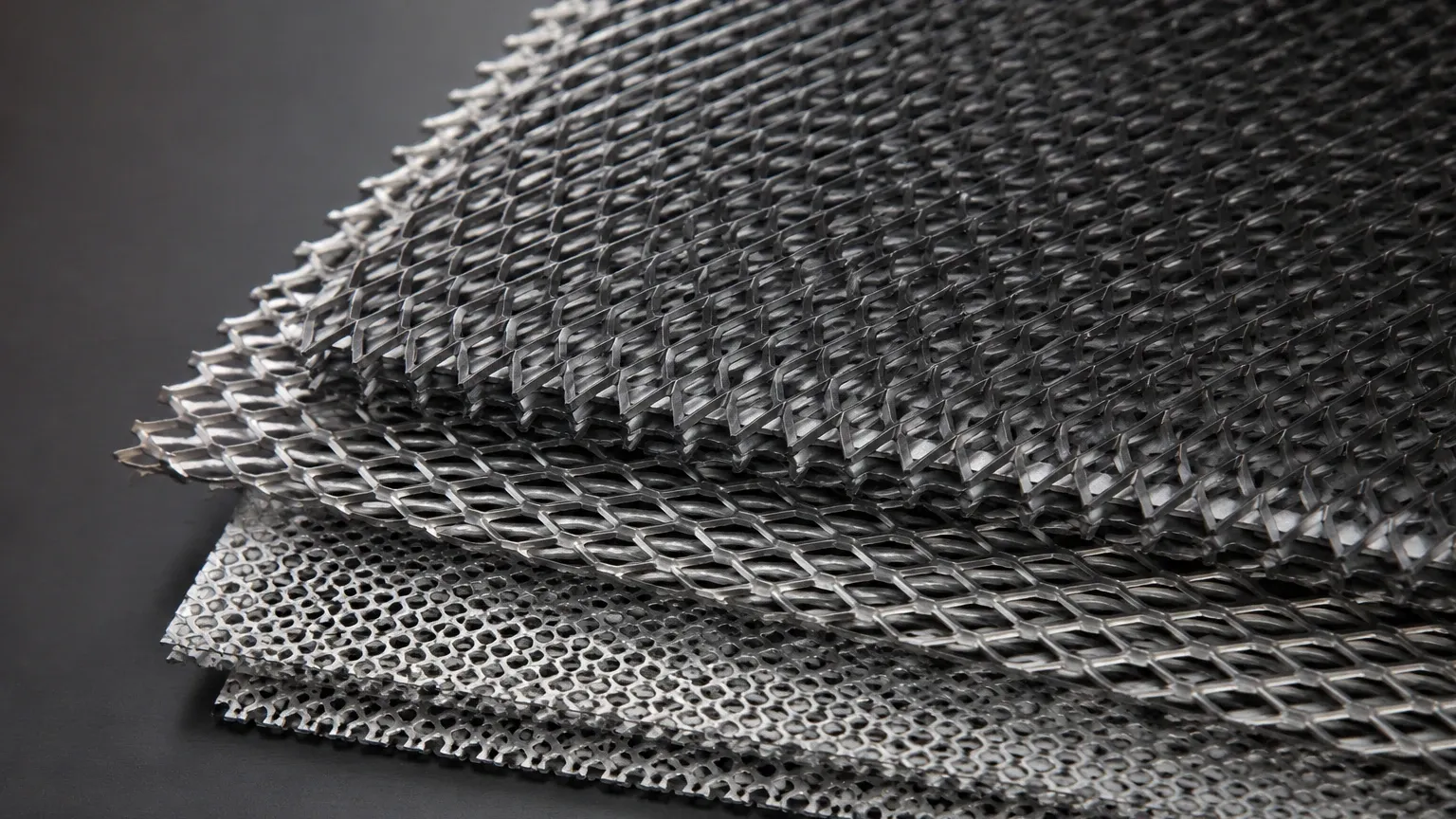
In the landscape of industrial filtration and structural support, steel expanded metal stands as a critical component characterized by its unique manufacturing process and versatile physical properties. Unlike woven wire mesh or perforated sheets, expanded metal is produced through a simultaneous slitting and stretching process. This method transforms a solid sheet of metal into a diamond-patterned mesh without any material waste, resulting in a high strength-to-weight ratio that is essential for demanding B2B applications.
For engineers and procurement specialists, understanding the nuances of steel expanded metal—ranging from material grades to geometric specifications—is vital for optimizing filtration efficiency and ensuring the structural integrity of industrial systems. Whether used as a support medium for fine filter cloth or as a standalone protective screen, the selection of the correct expanded metal configuration directly impacts the performance and longevity of the final product.
Understanding the Manufacturing Process and Structural Integrity
The production of steel expanded metal involves a reciprocating knife that slits the metal sheet while it is simultaneously stretched. This creates a series of diamond-shaped openings. Because the material is expanded rather than punched, the process is inherently more cost-effective as there is no "scrap" or lost material. The resulting strands and bonds (the intersections of the strands) are set at a uniform angle to the plane of the sheet.
This one-piece construction offers significant mechanical advantages. Unlike welded mesh, which can fail at the joints under vibration or thermal stress, expanded metal remains a single, continuous piece of steel. This structural continuity allows for better stress distribution across the panel. In filtration environments where high-pressure differentials are common, this inherent rigidity prevents the media from deforming, which is a primary concern for hydraulic and chemical processing applications.
Key Technical Specifications and Terminology
To accurately specify steel expanded metal for an industrial project, technical professionals must be familiar with the standardized terminology used in the industry. These measurements dictate the flow rate, filtration accuracy, and mechanical strength of the component.
* SWD (Short Way of Design): The distance from the center of one bond to the center of the next bond measured across the short diamond diagonal.
* LWD (Long Way of Design): The distance from the center of one bond to the center of the next bond measured across the long diamond diagonal.
* Strand Width: The amount of metal fed under the knives to produce one strand.
* Strand Thickness: The thickness of the original base metal sheet.
* Opening Size: The clear space between the strands, which determines the size of the particles that can pass through the mesh.
When evaluating Perforated & Expanded Metal for filtration support, the "open area" percentage is perhaps the most critical metric. It defines the ratio of the openings to the total area of the sheet, directly influencing the pressure drop across the filter. A higher open area allows for greater flow rates but may sacrifice the structural support required for finer mesh layers.
Material Selection: Carbon Steel vs. Stainless Steel
The choice of material is the first line of defense against environmental degradation. While carbon steel expanded metal is suitable for many structural and non-corrosive industrial applications, stainless steel is often required in the specialized sectors Kaifil serves, such as pharmaceutical and food processing.
Carbon Steel Expanded Metal
Carbon steel is often selected for its cost-effectiveness and high tensile strength. In filtration, it is frequently used in oil and lubricant systems where the fluid itself provides a level of corrosion protection. However, in most industrial environments, carbon steel must be finished with galvanizing or specialized coatings to prevent oxidation.
Stainless Steel Expanded Metal
For chemical processing, water treatment, and high-temperature applications, stainless steel (typically Grades 304, 304L, 316, or 316L) is the industry standard.
* Grade 304: Offers excellent corrosion resistance and is suitable for most general industrial applications.
* Grade 316: Contains molybdenum, providing superior resistance to chlorides and pitting, making it essential for marine environments or aggressive chemical filtration.
* L-Grades (304L/316L): Preferred when the expanded metal must be welded into a filter housing or cartridge, as the lower carbon content prevents carbide precipitation during the welding process, maintaining corrosion resistance at the joints.
Structural Variations: Standard vs. Flattened Expanded Metal
Steel expanded metal is available in two primary forms: standard (raised) and flattened. Choosing between these depends on the specific mechanical requirements of the filtration system.
Standard (Raised) Expanded Metal
In its standard form, the strands and bonds are set at a sharp angle to the plane of the sheet. This creates a three-dimensional surface that provides excellent grip and can induce turbulence in fluid flow, which is sometimes desirable in specific mixing or heat exchange applications. However, the raised edges can be abrasive, which may not be suitable if the expanded metal is in direct contact with delicate synthetic filter media.
Flattened Expanded Metal
Flattened expanded metal is produced by passing the standard expanded sheet through a cold-roll reducing mill. This process flattens the strands and bonds into a single plane, resulting in a smooth, level surface. For many filtration applications, flattened steel expanded metal is preferred because it provides a consistent support surface for wire mesh or paper media without the risk of puncturing the finer layers. It also reduces the overall thickness of the component, which is critical when designing compact filter cartridges with tight tolerances.
Applications in High-Performance Filtration Systems
Steel expanded metal serves several roles within industrial filtration, acting as both a primary filter and a secondary support structure.
1. Support Grids for Pleated Filters: In pleated filter cartridges, expanded metal is often used as the inner core or outer wrap. It provides the necessary rigidity to withstand high differential pressures that would otherwise collapse the pleated media.
2. Pre-Filtration and Debris Strainers: Larger diamond patterns are effective as pre-filters in water intake systems or heavy industrial machinery, capturing large debris before it reaches more sensitive downstream components.
3. Protective Cages: In harsh environments, expanded metal acts as a protective shield for delicate filter elements, preventing mechanical damage during installation, maintenance, or high-velocity fluid impact.
4. Flame Arrestors: Due to its ability to dissipate heat and its precise opening sizes, stainless steel expanded metal is often utilized in flame arrestor assemblies within chemical processing vents.
Engineering Evaluation Criteria and Common Risks
When sourcing steel expanded metal, engineers must look beyond basic dimensions to ensure the material meets the rigorous demands of industrial use. Several factors can influence the total cost of ownership and the reliability of the filtration system.
Dimensional Tolerances and Camber
Industrial-grade expanded metal must adhere to strict tolerances. "Camber" refers to the bow in a sheet from end to end; excessive camber can make it nearly impossible to roll the metal into a cylindrical filter cage or fit it into a rectangular frame. Specifying tight tolerances on LWD and SWD is essential for automated assembly processes.
Edge Conditions
Expanded metal can be supplied with "random sheared" edges or "safe" (bonded) edges. Random shearing leaves sharp, open diamonds at the perimeter, which can be a safety hazard and may cause snagging during assembly. For high-quality filter components, requesting a bonded edge or deburring the edges is often a necessary secondary operation.
Surface Cleanliness and Burrs
The expansion process can sometimes leave small metal burrs or slivers. In pharmaceutical or food-grade filtration, these contaminants are unacceptable. It is crucial to confirm that the manufacturer employs proper cleaning and deburring protocols, such as ultrasonic cleaning or electropolishing, especially for stainless steel components.
Procurement and Customization Considerations
For B2B buyers, the decision to purchase steel expanded metal involves more than just selecting a part number. Customization is often required to meet specific engineering goals. At Kaifil, the focus is on providing tailored solutions that align with the technical requirements of the application.
OEM and Customized Designs
Often, standard off-the-shelf expanded metal does not meet the exact open area or structural requirements of a proprietary filtration system. Customizing the strand width and opening size allows engineers to fine-tune the balance between flow resistance and mechanical strength. Working with a manufacturer that understands the integration of expanded metal with other filtration components—such as wire mesh or sintered metal—ensures a more cohesive final design.
Total Cost Considerations
While the initial material cost is important, the "total cost" includes the ease of integration, the lifespan of the part, and the maintenance requirements. High-quality stainless steel expanded metal may have a higher upfront cost than galvanized carbon steel, but its resistance to corrosion and ease of cleaning can significantly reduce the frequency of filter replacements and system downtime.
Technical Confirmation Before Procurement
Before finalizing an order for steel expanded metal, technical teams should confirm the following details with their supplier:
* Exact Alloy Grade: Ensure the material matches the chemical compatibility requirements of the process fluid.
* Flattening Requirements: Determine if a smooth surface is necessary to protect secondary filter layers.
* Direction of Diamonds: In some flow applications, the orientation of the LWD relative to the flow direction can impact performance.
* Finishing Processes: Confirm if the material requires degreasing, pickling, or passivating to meet industry-specific cleanliness standards.
By focusing on these technical parameters, engineers can ensure that the steel expanded metal they integrate into their systems provides the reliability and performance required for demanding industrial applications. As a specialized manufacturer, Kaifil provides the engineering support necessary to navigate these choices, ensuring that every filtration component—from the outer support cage to the inner mesh—is optimized for its specific environment.
