


Expanded Metal Steps
In industrial environments, the integrity of access systems is a critical factor in both operational safety and structural longevity. Expanded metal steps represent a specialized engineering solution designed to address the challenges of slip resistance, drainage, and load-bearing capacity in demanding sectors such as chemical processing, food and beverage production, and pharmaceutical manufacturing. Unlike traditional solid surfaces or standard bar gratings, expanded metal offers a unique combination of lightweight construction and high-strength performance, making it a staple in modern industrial facility design.
As a professional manufacturer of precision metal components, Kaifil provides technical insights into the selection and application of Perforated & Expanded Metal for stair treads and walkway systems. Understanding the technical nuances of these materials is essential for engineers and purchasing teams tasked with maintaining safety standards while optimizing total cost of ownership.
Engineering Principles of Expanded Metal for Industrial Steps
The manufacturing of expanded metal is a precision process that differs significantly from perforated metal or welded wire mesh. It involves the simultaneous slitting and stretching of a single metal sheet. This process creates a diamond-shaped pattern of openings, where the "strands" and "bonds" are set at a uniform angle to the plane of the sheet.
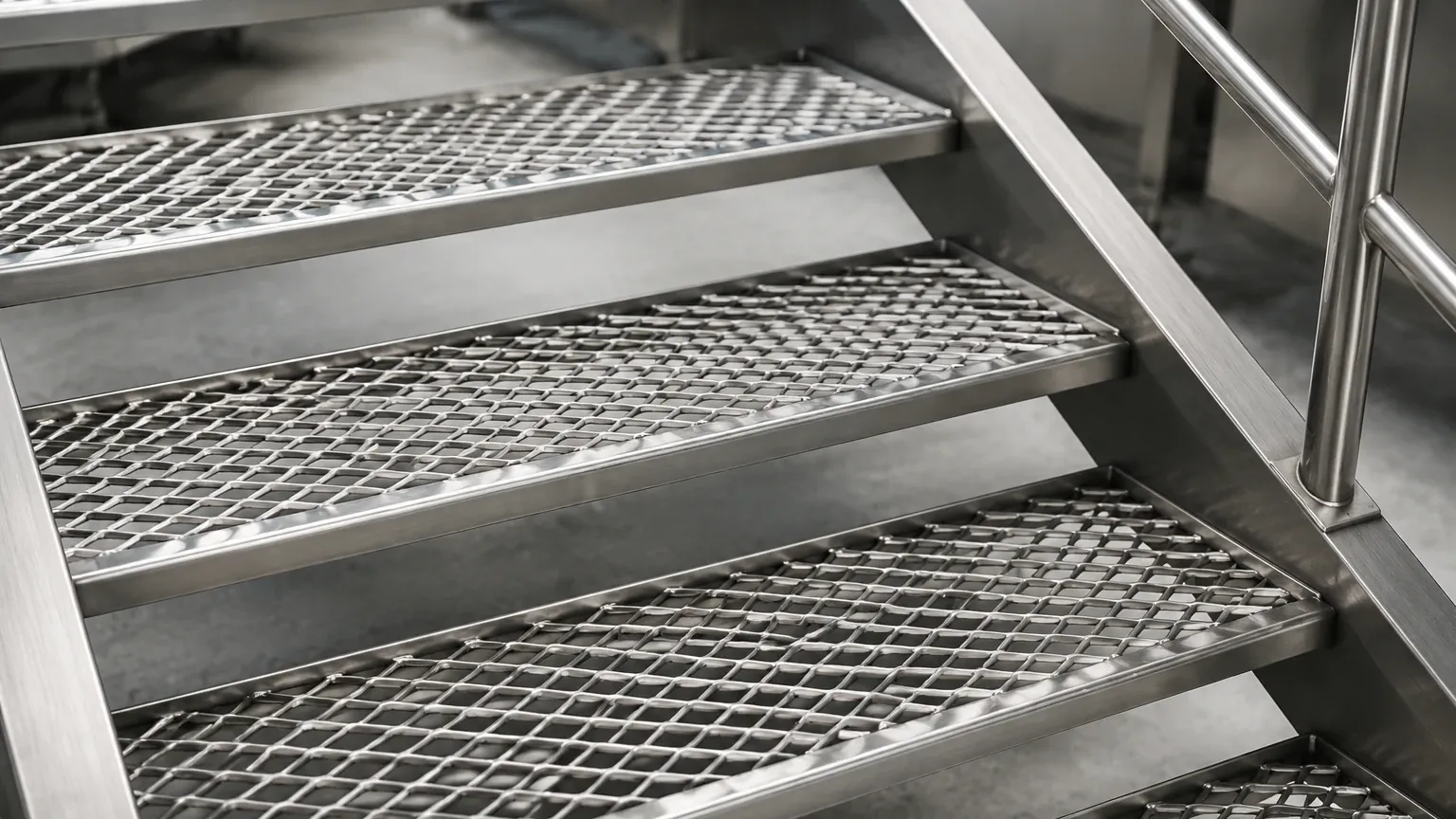
For the purpose of expanded metal steps, this geometry is particularly advantageous. Because the material is formed from a single piece of metal, there are no welds to fail under stress or joints to collect corrosive debris. The resulting structure is monolithic, providing excellent structural integrity. The raised edges of the strands provide inherent multi-directional traction, which is a primary requirement for any industrial stair tread.
When specifying expanded metal for steps, engineers must consider the orientation of the diamonds. Typically, the Long Way of Design (LWD) is positioned parallel to the width of the step to maximize structural rigidity and provide the most effective slip resistance for personnel moving vertically between levels.
Key Performance Indicators: Slip Resistance and Drainage
The primary function of expanded metal steps is to ensure the safety of personnel. In industrial settings, floors and stairs are frequently exposed to liquids, oils, or fine powders that can create hazardous walking conditions.
Multi-Directional Traction
One of the standout features of expanded metal is its raised surface profile. The angular strands act as hundreds of small cleats that grip footwear from multiple angles. This is particularly effective in environments where moisture is prevalent, such as in food processing wash-down areas or outdoor chemical storage platforms.
Self-Cleaning and Drainage
The open area of expanded metal steps allows for the immediate passage of fluids, snow, and debris. This "self-cleaning" property ensures that the walking surface remains clear even during active processing or in inclement weather. For engineers, the percentage of open area is a critical calculation; it must be high enough to allow drainage but optimized to ensure the surface does not cause discomfort or vertigo for workers at significant heights.
Material Selection and Corrosion Resistance
The choice of material for expanded metal steps is dictated by the specific chemical and physical stressors of the application environment. While carbon steel is common for general industrial use, specialized sectors require higher-performance alloys.
Stainless Steel (304 and 316)
For industries such as pharmaceutical manufacturing or chemical processing, stainless steel is the standard. Grade 304 offers excellent resistance to many atmospheric environments and corrosive media. However, in environments involving chlorides or high-salinity conditions, Grade 316 is preferred due to its molybdenum content, which provides superior pitting resistance. Kaifil specializes in these high-grade stainless steel solutions, ensuring that the filtration and structural components can withstand rigorous cleaning cycles and aggressive chemical exposure.
Aluminum and Galvanized Steel
Aluminum expanded metal steps are utilized where weight reduction is a priority, such as on mobile equipment or high-altitude platforms. Galvanized steel provides a cost-effective alternative for outdoor applications where basic rust protection is required, though it lacks the long-term durability of stainless steel in acidic or alkaline environments.
Design Considerations for Load-Bearing Capacity
Designing expanded metal steps requires a thorough understanding of load-bearing requirements. Unlike a solid plate, the strength of expanded metal depends on several variables:
1. Strand Thickness and Width: These dimensions determine the cross-sectional area of the metal and its ability to resist bending under load.
2. Short Way of Design (SWD): The distance between the centers of the bonds across the short dimension of the diamond. A smaller SWD generally results in a denser, stronger mesh.
3. Overall Thickness: The total height of the raised mesh, which contributes to the "grip" and the overall stiffness of the tread.
Engineers must consult load tables to ensure that the selected mesh can support the intended concentrated and uniform loads. In most industrial applications, a safety factor is applied to account for dynamic loads—such as a worker carrying heavy equipment or the impact of dropped tools.
Customization and Integration in Industrial Systems
Industrial filtration and processing systems often require bespoke access solutions. Expanded metal steps are rarely "one-size-fits-all." Customization options include:
* Nosing Options: To enhance safety, the leading edge of a step (the nosing) is often reinforced with a solid metal strip or a high-visibility, extra-grip material. This helps workers identify the edge of the step and provides additional structural support at the point of highest impact.
* Edge Finishing: Steps can be supplied with U-edging or flat bar frames to facilitate easy installation onto existing stair stringers. This also eliminates sharp edges, protecting personnel and equipment.
* Flattened vs. Raised: While raised expanded metal is the standard for steps due to its grip, flattened expanded metal may be used for platforms where a smoother surface is required for rolling carts, though it offers significantly less slip resistance.
Comparison with Other Industrial Flooring Solutions
When evaluating expanded metal steps, it is helpful to compare them against alternative materials like bar grating or perforated metal.
| Feature | Expanded Metal | Bar Grating | Perforated Metal |
| :— | :— | :— | :— |
| Weight | Lightest | Heaviest | Moderate |
| Slip Resistance | Excellent (Raised) | Good | Moderate |
| Drainage | High | Excellent | Variable |
| Cost | Cost-Effective | Higher | Moderate to High |
| Fabrication | Monolithic (No welds) | Welded/Locked | Punched |
Expanded metal often wins on the balance of weight and cost. Because the expansion process increases the surface area of the original sheet without adding weight, it provides a high strength-to-weight ratio that reduces the overall load on the building's structural frame.
Safety Standards and Compliance
In the United States, OSHA (Occupational Safety and Health Administration) provides specific guidelines for industrial stairs (Standard 1910.25). These guidelines mandate that stair treads must be reasonably slip-resistant and that the openings in the material must be small enough to prevent objects from falling through and injuring workers below.
When selecting expanded metal steps, engineers should ensure the diamond size is appropriate for the environment. For example, in a multi-level mezzanine where tools are used, a smaller diamond pattern may be required to meet "falling object" safety protocols. Kaifil’s technical team assists in selecting the appropriate mesh specifications to meet these safety and engineering requirements.
Maintenance and Longevity in Demanding Environments
One of the primary benefits of stainless steel expanded metal steps is their low maintenance requirement. However, in high-stakes industrial environments, a regular inspection and cleaning protocol is necessary to ensure long-term performance.
* Cleaning: In food processing or pharmaceutical plants, the open mesh must be cleaned to prevent the buildup of organic matter. The lack of welds in expanded metal makes it easier to sanitize, as there are fewer crevices where bacteria can thrive.
* Inspection for Wear: Over years of heavy use, the raised edges of the strands may begin to wear down, reducing slip resistance. Regular inspections should check for strand thinning or signs of mechanical deformation.
* Corrosion Monitoring: Even stainless steel can suffer from localized corrosion if exposed to stagnant chemicals. Periodic wash-downs with fresh water can help maintain the protective oxide layer of the steel.
Procurement Checklist for Engineers
Before finalizing a purchase order for expanded metal steps, technical teams should confirm the following data points to ensure the product meets application needs:
1. Material Grade: Is 304 sufficient, or is 316 required for chemical compatibility?
2. Load Requirements: What is the maximum anticipated weight per step, including a safety margin?
3. Dimensions: Confirm the exact width, depth, and height of the treads required for the stringer assembly.
4. Surface Type: Specify "Raised" for maximum traction.
5. Finishing: Do the steps require pre-drilled mounting holes or specific edge treatments for installation?
By addressing these technical details early in the design phase, purchasing teams can avoid costly retrofits and ensure that the facility remains compliant with safety regulations.
Conclusion
Expanded metal steps are more than just a structural component; they are a vital safety feature in the industrial landscape. By leveraging the unique geometric and material properties of expanded metal, facilities can achieve a balance of durability, safety, and cost-efficiency. Whether for a chemical processing plant or a high-purity pharmaceutical environment, the selection of the right metal grade and mesh configuration is paramount.
Kaifil continues to support global industrial sectors by providing high-performance filtration and metal solutions. For technical consultation on material selection or to explore our range of custom metal components, engineers are encouraged to review product options and application support to optimize their filtration and structural systems.
