


Expanded Metal Thickness
In the realm of industrial filtration and structural engineering, expanded metal is a critical component used for everything from support cores in high-pressure filter cartridges to protective screens in chemical processing plants. One of the most vital technical specifications for this material is expanded metal thickness. Understanding the nuances of how thickness is measured, specified, and how it influences performance is essential for engineers and procurement professionals looking to optimize filtration efficiency and structural longevity.
At Kaifil, we specialize in the manufacturing of high-quality Perforated & Expanded Metal solutions tailored for demanding industrial environments. This guide examines the technical aspects of expanded metal thickness, the differences between standard and flattened varieties, and the engineering considerations necessary for selecting the right material for your application.
The Fundamentals of Expanded Metal Thickness
When discussing expanded metal, "thickness" is not a singular measurement. It is often categorized into two distinct dimensions: the thickness of the original base material (often referred to as the strand thickness) and the overall thickness of the finished product.
Base Metal Thickness (Gauge)
Expanded metal is produced by simultaneously slitting and stretching a solid sheet of metal. The original gauge of this sheet determines the initial thickness of the strands. In B2B procurement, this is typically specified using standard gauge sizes or decimal inches/millimeters. For industrial filtration, stainless steel is the preferred medium due to its corrosion resistance, and the base thickness directly impacts the mechanical strength of the filter mesh.
Overall Thickness
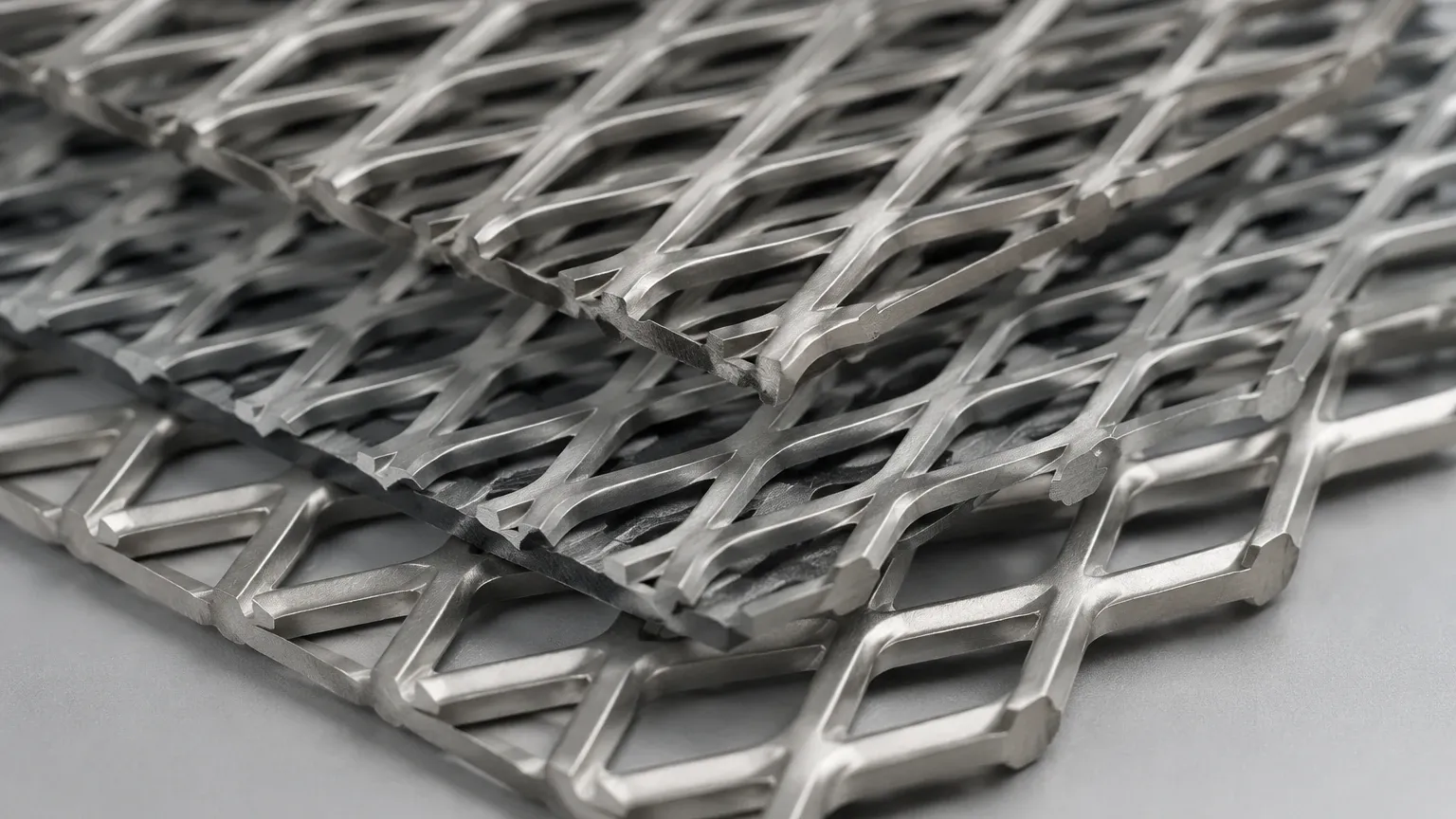
Because the expansion process involves twisting and bending the metal strands, the resulting mesh has a three-dimensional profile. The overall thickness refers to the total height of the mesh from the top of the highest point to the bottom of the lowest point. This dimension is critical when the expanded metal must fit into a specific housing, frame, or slot within a filtration system.
Standard vs. Flattened Expanded Metal
The choice between standard and flattened expanded metal significantly alters the final expanded metal thickness and the mechanical properties of the component.
Standard (Raised) Expanded Metal
Standard expanded metal comes off the machine with the strands set at a sharp angle to the plane of the sheet. This creates a textured, rigid surface that provides excellent grip and structural reinforcement. In filtration, the raised profile can help create turbulence in fluid flow, which may be desirable in certain mixing or pre-filtration applications. However, the overall thickness of standard expanded metal is significantly greater than the base material thickness.
Flattened Expanded Metal
Flattened expanded metal is produced by passing standard expanded metal through a cold-roll reducing mill. This process flattens the strands and bonds them back into a single plane. The result is a smoother surface and a more consistent overall thickness that is roughly equivalent to the original base metal thickness. Flattened metal is often preferred for filter pleat supports or internal cores where a slim profile is required to maximize the surface area of the primary filter media.
Impact on Filtration Efficiency and Structural Support
In industrial filtration, expanded metal thickness is a primary factor in determining the structural integrity of the filter element.
Pressure Differential and Collapse Strength
Filter cartridges, especially those used in hydraulic or high-viscosity chemical processing, are subject to significant pressure differentials. If the expanded metal thickness is insufficient, the internal support core may collapse under the pressure of the fluid. Engineers must calculate the required strand thickness and width to ensure the core can withstand the maximum operating pressure (plus a safety factor) without deforming.
Open Area and Flow Rates
Thickness and strand width together define the "open area" percentage of the mesh. A thicker strand might provide more strength, but if it reduces the open area too much, it will increase the pressure drop across the filter, leading to higher energy consumption and more frequent cleaning cycles. Finding the balance between expanded metal thickness and the required flow rate is a central challenge in filter design.
Media Protection
In multi-layered filtration systems, expanded metal often acts as a protective outer wrap or an inner support for delicate wire mesh or fiberglass media. The thickness of the expanded metal ensures that the finer media remains in place and is protected from mechanical damage during installation, operation, or backwashing.
Material Selection and Corrosion Resistance
While thickness provides mechanical strength, the material composition provides chemical durability. Kaifil primarily works with stainless steel (304, 316, and 316L) to ensure that the expanded metal can withstand harsh industrial environments.
1. Stainless Steel 304: Suitable for general industrial applications where moderate corrosion resistance is required.
2. Stainless Steel 316/316L: The industry standard for pharmaceutical, food and beverage, and marine applications. The addition of molybdenum provides superior resistance to chlorides and acidic environments.
3. Specialty Alloys: For extreme temperatures or highly corrosive chemical processing, materials like Monel or Inconel may be specified, where thickness must be carefully calibrated to account for the material's specific yield strength.
When specifying expanded metal thickness, engineers must also consider the "corrosion allowance." In environments where some surface oxidation is expected over time, selecting a slightly thicker gauge can extend the service life of the component.
Technical Specifications and Tolerances
To ensure a successful B2B procurement process, it is essential to provide precise technical specifications. Relying on generic terms like "heavy-duty" or "thin" can lead to performance failures. When ordering Perforated & Expanded Metal, the following parameters should be confirmed:
* Strand Thickness: The thickness of the base metal.
* Strand Width: The amount of metal between the slits.
* Overall Thickness: The total height of the mesh (crucial for standard/raised metal).
* SWD (Short Way of Design): The distance from the center of one bond to the center of the next bond across the short axis.
* LWD (Long Way of Design): The distance across the long axis.
* Tolerance Levels: Industrial manufacturing always involves slight variations. Standard industry tolerances for expanded metal thickness are typically +/- 10% of the specified gauge, but tighter tolerances can be achieved through precision manufacturing and flattening processes.
Common Risks and Failure Modes
Underspecifying expanded metal thickness is a common cause of premature failure in industrial filtration systems. Key risks include:
* Vibration Fatigue: In high-flow systems, thin expanded metal strands can vibrate, leading to work hardening and eventual snapping of the bonds. This can release metal fragments into the downstream fluid, contaminating the process.
* Erosion: In applications involving abrasive slurries, thin strands will erode much faster than thicker ones. Once the strands thin out, the structural integrity of the filter is compromised.
* Bypass Issues: If the overall thickness of the expanded metal is inconsistent, it may not seal properly against the filter housing gaskets, allowing unfiltered fluid to bypass the system.
Customization and OEM Capabilities
At Kaifil, we understand that off-the-shelf solutions rarely meet the exacting needs of specialized industrial processes. Our manufacturing capabilities allow for deep customization of expanded metal thickness to meet specific engineering requirements. Whether you need a micro-mesh with a base thickness of 0.05mm for precision pharmaceutical filtration or a heavy-duty support core for industrial water treatment, our team provides the technical expertise to ensure the material performs as expected.
Our OEM services include material selection guidance, precision slitting, and custom flattening to ensure that the final product integrates seamlessly into your existing equipment. By controlling every step of the production process, we maintain strict quality standards that ensure durability and consistent filtration performance.
Critical Questions for Procurement and Engineering
Before finalizing a purchase order for expanded metal components, engineering and purchasing teams should confirm the following:
1. What is the maximum pressure differential the component will face? This dictates the minimum required strand thickness.
2. Is the application sensitive to surface texture? If a smooth surface is required to prevent damage to primary filter media, flattened expanded metal is necessary.
3. What are the dimensional constraints of the housing? Ensure the overall thickness of the expanded metal does not exceed the available space.
4. How will the metal be joined? Thickness affects weldability; very thin materials may require specialized laser welding or resistance welding techniques.
5. What is the expected replacement cycle? Thicker materials may have a higher upfront cost but can offer a lower total cost of ownership by extending the time between replacements.
By focusing on the technical details of expanded metal thickness and its relationship to the broader filtration system, organizations can achieve more reliable, efficient, and cost-effective industrial operations.
