


Expanded Metal Tractor Supply
In the realm of agricultural maintenance, heavy equipment manufacturing, and industrial filtration, the term "expanded metal tractor supply" often serves as a starting point for engineers and procurement specialists seeking robust materials for equipment protection and structural integrity. Whether the application involves shielding a radiator from debris, creating non-slip surfaces for machinery platforms, or providing a rigid support structure for industrial filters, understanding the technical nuances of expanded metal is essential for ensuring long-term performance and safety.
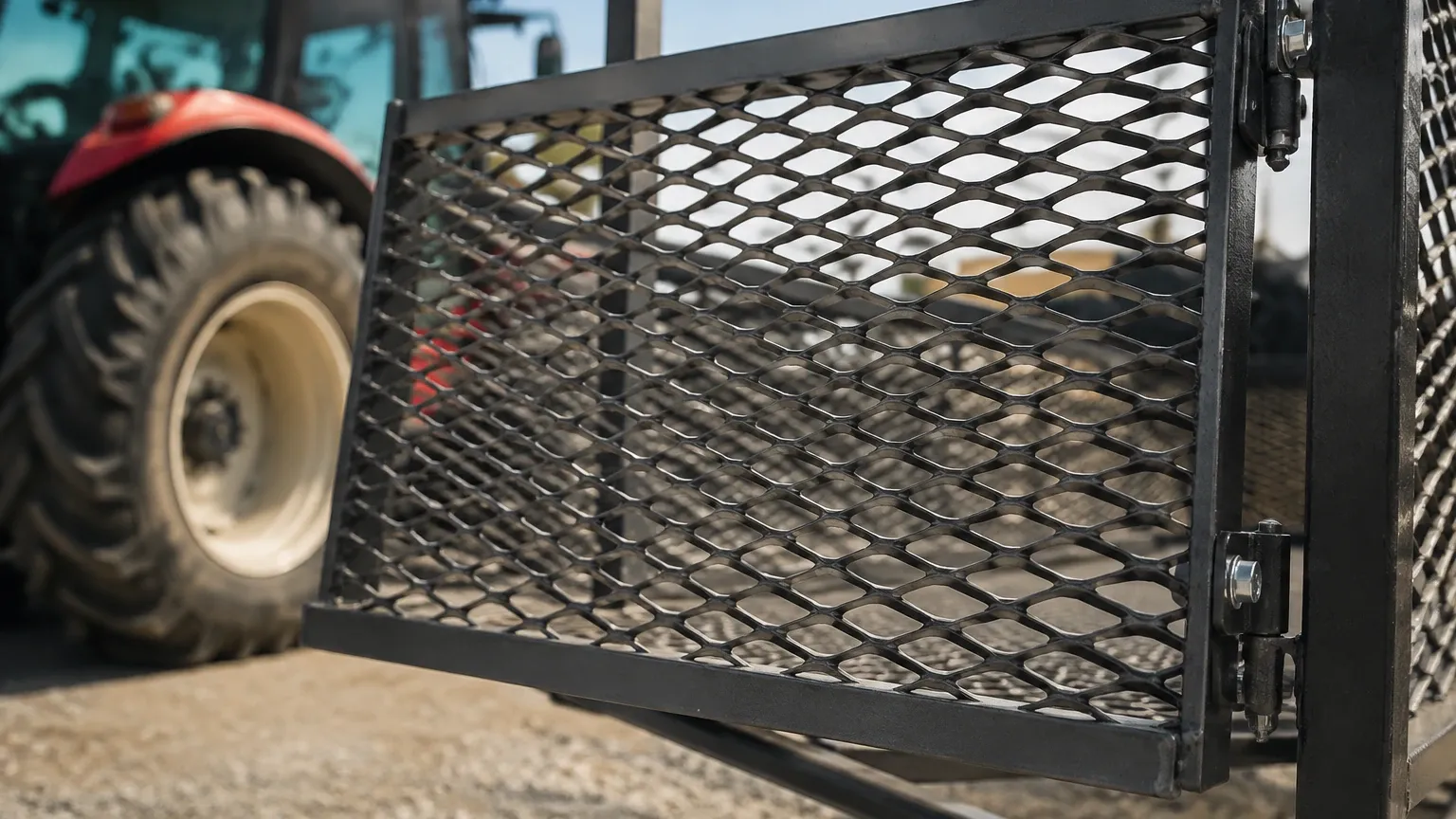
Expanded metal is a versatile material produced by simultaneously slitting and stretching a single sheet of metal. This process creates a diamond-shaped pattern of openings, resulting in a product that is significantly lighter than the original sheet while maintaining a high strength-to-weight ratio. For industrial and agricultural sectors, this material provides a unique combination of ventilation, visibility, and structural rigidity that is difficult to replicate with other mesh types.
The Role of Expanded Metal in Agricultural and Industrial Maintenance
When sourcing expanded metal for tractor-related applications or heavy industrial equipment, the primary focus is usually on durability and environmental resistance. In agricultural settings, machinery is frequently exposed to moisture, corrosive fertilizers, and mechanical impact. Therefore, the "expanded metal tractor supply" search often leads professionals to evaluate how different metal grades and patterns perform under stress.
One of the most significant advantages of expanded metal is its one-piece construction. Unlike woven wire mesh, which can unravel if a single wire is cut, expanded metal is a continuous sheet. This makes it an ideal choice for safety guards on tractors, where the mesh must withstand impact from rocks or branches without compromising the integrity of the entire panel. Furthermore, the raised edges of standard expanded metal provide inherent slip resistance, which is critical for tractor steps, walkways, and maintenance platforms.
In industrial contexts, expanded metal serves as more than just a protective barrier. It is frequently utilized in the fabrication of heavy-duty storage bins, machine guards, and as a reinforcement layer for composite materials. Its ability to allow air, light, and sound to pass through while maintaining a physical barrier makes it indispensable for cooling systems and ventilation housings on large-scale agricultural machinery.
Technical Parameters: SWD, LWD, and Material Selection
To move beyond generic retail options and into professional engineering specifications, it is necessary to understand the geometry of expanded metal. Procurement for industrial projects requires precise measurements to ensure compatibility with existing frames and performance requirements.
Key Geometric Terms
1. SWD (Short Way of Design): The distance from the center of one bond to the center of the next bond across the short axis of the diamond.
2. LWD (Long Way of Design): The distance across the long axis of the diamond.
3. Strand Width: The amount of metal fed into the expanding machine to create one strand.
4. Strand Thickness: The thickness of the original base metal sheet.
5. Open Area: The percentage of the total area that is open space, which is a critical calculation for airflow and filtration applications.
Material Grades
Selecting the right material is the most influential factor in the lifespan of the component. While carbon steel is common for general structural use, it requires galvanizing or painting to prevent rust. In contrast, stainless steel (typically Grade 304 or 316) is the preferred choice for industrial filtration and high-moisture agricultural environments. Stainless steel expanded metal offers superior resistance to chemical corrosion and does not require additional coatings, making it a lower-maintenance solution over the equipment's lifecycle.
Comparing Expanded Metal with Perforated Metal for Equipment Guards
Engineers often weigh the pros and cons of Perforated & Expanded Metal when designing guards for tractors and industrial machinery. While both serve similar functions, their manufacturing processes and physical properties differ significantly.
Perforated metal is created by punching holes into a sheet, which results in material waste (the "slugs"). However, it offers a wider variety of hole shapes—such as round, square, or slotted—and can be produced with precise margins and unperforated areas. This makes perforated metal highly suitable for applications requiring specific aesthetic finishes or very high precision in hole placement.
Expanded metal, on the other hand, is a more cost-effective and sustainable option because the process involves no waste. The expanding process increases the overall area of the sheet, meaning a single ton of steel produces more square footage of expanded metal than it would for perforated metal. For tractor grilles and radiator screens, expanded metal’s angled strands provide a unique "louvered" effect, which can be oriented to deflect debris while still allowing maximum airflow.
Industrial Applications: From Tractor Grilles to Filtration Support
While "expanded metal tractor supply" might suggest simple hardware applications, the industrial reality involves complex engineering. Beyond the visible exterior of a tractor, expanded metal plays a vital role in the internal systems of heavy machinery and the processing plants that support the agricultural industry.
Radiator and Engine Guards
The primary function of expanded metal on a tractor is often the protection of the radiator. The diamond mesh prevents large debris from puncturing the cooling fins while the open area ensures the engine does not overheat. In these applications, the orientation of the diamonds can be used to direct airflow or block direct lines of sight to internal components.
Filtration Support Cores
In the world of industrial filtration, expanded metal is a critical component for high-pressure applications. It is often used as the inner or outer support core for stainless steel filter cartridges. In this role, the expanded metal provides the structural rigidity necessary to prevent the fine wire mesh or filter media from collapsing under the pressure of the fluid flow. Because it can be easily rolled into cylinders and welded, it is a staple in the manufacturing of custom filtration solutions for hydraulic systems, chemical processing, and water treatment.
Grain Handling and Drying
In the agricultural supply chain, expanded metal is used in grain drying floors and sieves. The specific diamond size must be chosen to support the weight of the grain while allowing heated air to circulate efficiently. Stainless steel is often mandated here to ensure food safety and prevent contamination from rust.
Why Material Grade Matters: Corrosion Resistance in Harsh Environments
One of the common pitfalls in sourcing expanded metal from general tractor supply outlets is the lack of specialized material grades. For B2B applications, the total cost of ownership is heavily influenced by how long a part lasts before needing replacement.
In environments where equipment is exposed to animal waste, fertilizers (which often contain corrosive nitrates and phosphates), or salt air in coastal regions, standard carbon steel will fail rapidly. Even galvanized steel has its limits, as the protective zinc layer can be scratched or chemically eroded.
For these demanding environments, 304-grade stainless steel provides excellent general-purpose corrosion resistance. For even more aggressive chemical environments, such as those found in chemical processing or specialized agricultural spraying equipment, 316-grade stainless steel is recommended due to its molybdenum content, which provides superior resistance to pitting and crevice corrosion. Investing in the correct material grade at the procurement stage significantly reduces downtime and replacement labor costs.
Sourcing High-Performance Perforated & Expanded Metal
For engineers and purchasing teams, the transition from a general search for "expanded metal tractor supply" to a specialized procurement strategy involves identifying partners who can provide custom specifications. Off-the-shelf solutions rarely meet the precise requirements of modern industrial equipment, especially when it comes to filtration accuracy and structural tolerances.
Customization options often include:
* Flattened vs. Raised: Standard expanded metal has raised edges that provide grip. Flattened expanded metal is passed through a cold-rolling mill to create a smooth, flat surface, which is often easier to clean and safer for manual handling.
* Custom Dimensions: Tailoring the LWD and SWD to match specific airflow or particle retention requirements.
* Secondary Processing: This includes precision cutting, forming into cylinders for filter cores, and specialized welding to ensure the component is ready for immediate installation.
When performance is non-negotiable, working with a manufacturer that understands the intersection of metal fabrication and filtration science is critical. High-quality metal components ensure that tractors and industrial systems operate at peak efficiency with minimal maintenance interference. For those looking to optimize their equipment with precision-engineered solutions, it is advisable to Review product options and application support to find the exact match for your technical requirements.
Conclusion
Expanded metal is a fundamental material that bridges the gap between simple agricultural utility and complex industrial engineering. By understanding the technical specifications—from material grades like stainless steel to geometric measurements like SWD and LWD—professionals can move beyond basic "tractor supply" concepts to implement high-performance solutions. Whether used for safety guards, structural reinforcement, or as a backbone for industrial filtration, the right expanded metal choice enhances the durability, safety, and efficiency of heavy machinery in the most demanding environments.
