


Expanded Metal Table
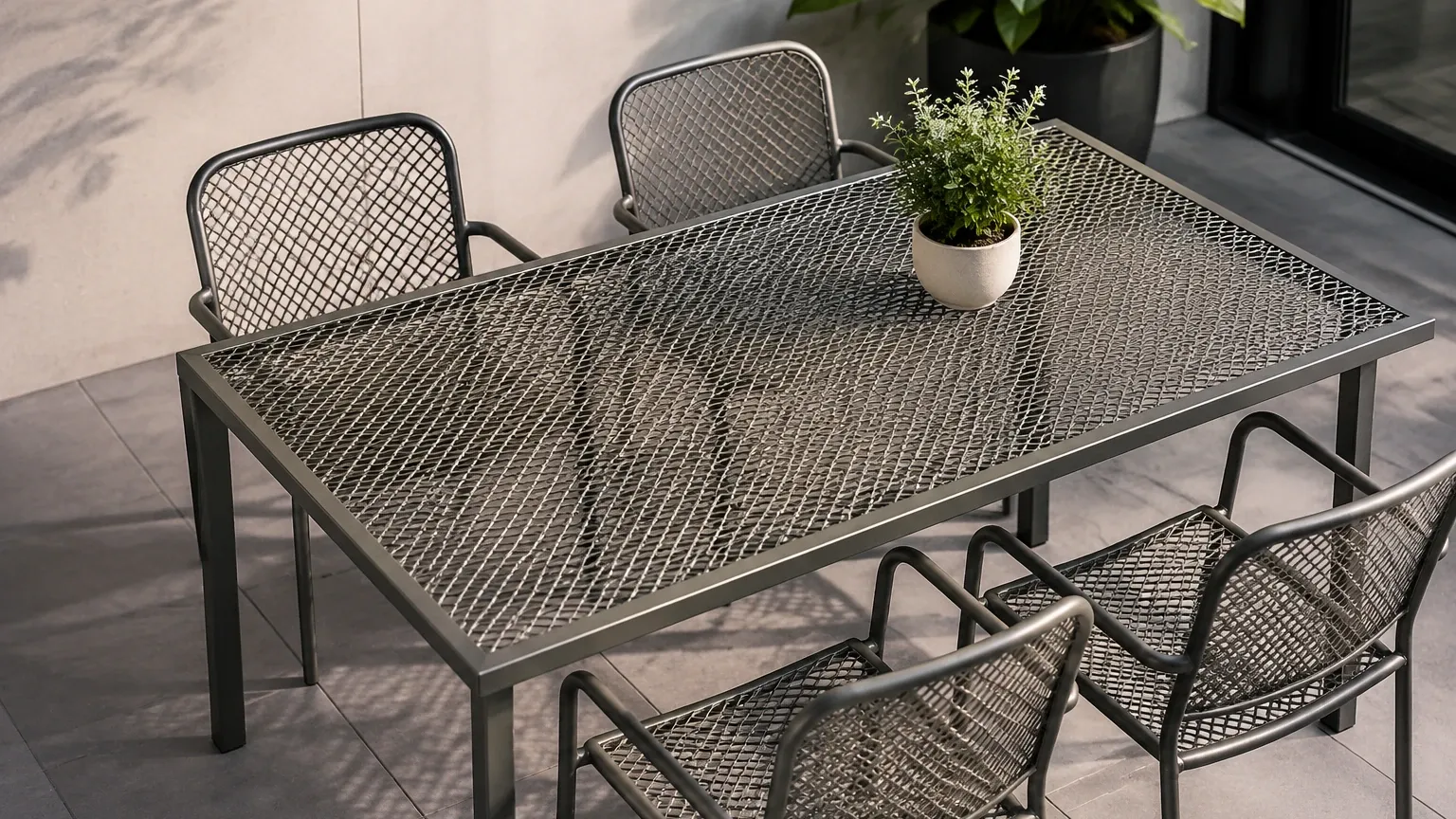
In industrial environments, the selection of work surfaces is rarely a matter of aesthetics; it is a critical engineering decision based on drainage, airflow, load-bearing capacity, and hygiene. An expanded metal table serves as a foundational piece of equipment in sectors ranging from chemical processing to food production. Unlike solid plate surfaces, expanded metal offers a unique combination of structural rigidity and open-area functionality that is essential for specialized industrial processes.
For engineers and procurement teams, understanding the technical nuances of Perforated & Expanded Metal is vital when specifying components for industrial tables. This guide examines the manufacturing principles, material selection, and performance criteria necessary to integrate expanded metal surfaces into demanding industrial workflows.
Understanding the Engineering Behind Expanded Metal Surfaces
Expanded metal is produced through a simultaneous slitting and stretching process. A single sheet of metal—typically stainless steel, carbon steel, or aluminum—is fed through a machine that cuts and expands the material into a diamond-shaped pattern. Because the process involves stretching rather than punching, there is zero material waste, making it a highly resource-efficient choice compared to perforated metal.
For an expanded metal table, the resulting mesh consists of "strands" and "bonds." The strands are the individual metal strips that form the sides of the diamond, while the bonds are the intersections where the strands meet. The angle of these strands provides inherent structural strength, allowing the material to support significant weight while maintaining a high percentage of open area.
Standard vs. Flattened Expanded Metal
When specifying a table surface, engineers must choose between two primary forms of expanded metal:
1. Standard (Raised) Expanded Metal: In its raw state, the strands are set at a sharp angle to the plane of the sheet. This creates a slip-resistant surface with high structural depth. While excellent for drainage and grip, the raised edges may be unsuitable for delicate handling or as a smooth writing/assembly surface.
2. Flattened Expanded Metal: This material undergoes an additional cold-rolling process after expansion. The rolling flattens the strands and bonds back into a single plane, resulting in a smooth, level surface. For an expanded metal table used in sorting, assembly, or laboratory work, flattened metal is generally the preferred specification to ensure stability for objects placed on the surface.
Key Material Considerations for Industrial Tables
Material selection is the most significant factor in determining the lifespan and maintenance requirements of an industrial table. At Kaifil, we emphasize the use of high-grade alloys to meet specific environmental challenges.
Stainless Steel (304 and 316L)
Stainless steel is the industry standard for expanded metal tables in pharmaceutical, food and beverage, and chemical applications.
* Grade 304: Offers excellent corrosion resistance and is suitable for most general industrial environments. It is the most cost-effective stainless option for wash-down areas.
* Grade 316L: Contains molybdenum, providing superior resistance to chlorides and pitting. This is the mandatory choice for tables exposed to harsh cleaning chemicals, saline environments, or high-acid food processing.
Carbon Steel and Galvanized Finishes
For heavy-duty manufacturing or warehousing where corrosion is less of a concern, carbon steel expanded metal provides high tensile strength at a lower price point. To prevent oxidation, these tables are often hot-dip galvanized or powder-coated. However, in high-moisture or sterile environments, stainless steel remains the superior long-term investment due to its resistance to surface degradation.
Load-Bearing Capacity and Structural Integrity
An expanded metal table must be engineered to handle both static and dynamic loads. The load-bearing capacity is determined by the gauge of the metal, the size of the diamond opening, and the orientation of the mesh.
Mesh Dimensions: LWD and SWD
In technical specifications, expanded metal is measured by the Long Way of the Diamond (LWD) and the Short Way of the Diamond (SWD). For table surfaces, a smaller SWD typically results in a denser mesh with higher weight-bearing capacity and less deflection. Engineers must calculate the maximum expected load per square foot to determine the appropriate thickness (gauge) of the material.
Support Structures
Because expanded metal is a mesh, it requires a robust perimeter frame and, depending on the span, intermediate support cross-members. For industrial workbenches, the expanded metal is usually welded to an angle-iron or square-tube frame. Proper welding technique is essential to prevent warping and to ensure that the mesh remains under tension, providing a flat and stable work area.
Applications in Chemical and Food Processing
The unique properties of an expanded metal table make it indispensable in specific industrial sectors where solid surfaces would fail.
Drainage and Wash-down Stations
In food processing plants, hygiene is maintained through frequent high-pressure wash-downs. A solid table surface allows water, organic matter, and cleaning agents to pool, creating a risk of bacterial growth. An expanded metal table allows fluids and debris to pass through immediately into floor drains, significantly reducing the time required for cleaning and drying.
Airflow for Cooling and Drying
In manufacturing processes involving heat—such as plastic extrusion or metal heat-treating—components often need to cool uniformly. The open diamonds of an expanded metal surface allow 360-degree airflow around the product. This prevents "heat spots" that can occur when a hot item is placed on a solid surface, ensuring product quality and dimensional stability.
Sorting and Filtration Pre-processing
In chemical and agricultural sectors, expanded metal tables act as primary sorting grates. By selecting a specific mesh size, engineers can design tables that allow undersized waste or dust to fall through while retaining the desired product on the surface. This integrates a layer of passive filtration directly into the workstation.
Comparing Perforated and Expanded Metal for Industrial Use
While both materials provide open areas, the choice between perforated and expanded metal for a table surface depends on specific performance requirements.
| Feature | Expanded Metal | Perforated Metal |
| :— | :— | :— |
| Material Efficiency | High (No waste) | Lower (Slug waste) |
| Strength-to-Weight | Superior due to interconnected strands | High, but limited by hole density |
| Surface Texture | Naturally slip-resistant (Raised) | Generally smooth |
| Cost | Typically lower for large areas | Higher due to manufacturing complexity |
| Customization | Standard diamond patterns | Highly customizable hole shapes/pitches |
For most heavy-duty industrial tables, expanded metal is the preferred choice due to its higher strength-to-weight ratio and cost-efficiency. However, if a specific hole geometry or a very high degree of precision in the open area is required, perforated metal may be considered.
Specification Checklist for Procurement Teams
When ordering components for an expanded metal table or a complete filtration-adjacent structure, procurement teams should confirm the following technical details with the manufacturer:
1. Material Grade: Specify 304 or 316L stainless steel for corrosive or sterile environments.
2. Style: Choose between "Standard" for grip or "Flattened" for a smooth work surface.
3. Mesh Size: Define the LWD and SWD based on the size of the objects handled on the table.
4. Gauge/Thickness: Ensure the metal thickness is sufficient for the intended load without excessive deflection.
5. Open Area Percentage: Calculate the required airflow or drainage rate to determine the diamond size.
6. Edge Treatment: Specify if the edges should be sheared, bonded, or framed to eliminate sharp protrusions.
Maintenance and Industrial Hygiene
To maximize the service life of an expanded metal table, a regular maintenance schedule is required. In the pharmaceutical and food sectors, this involves verifying that the bonds and strands are free of "pitting" where contaminants could lodge.
Stainless steel surfaces should be treated with passivating agents if they are exposed to harsh chemicals to restore the protective chromium oxide layer. For carbon steel tables, any chips in the galvanized or powder-coated finish should be repaired immediately to prevent sub-surface oxidation, which can weaken the mesh structure over time.
Conclusion
The expanded metal table is a versatile and durable solution for industrial environments that demand high performance in drainage, airflow, and structural strength. By selecting the correct material grade and mesh configuration, engineers can optimize their facility's efficiency and safety.
As a specialist in industrial filtration and metal components, Kaifil provides the technical expertise required to develop custom Perforated & Expanded Metal solutions. Whether you are designing a wash-down station for a food processing plant or a heavy-duty sorting table for a chemical facility, our engineering team ensures that every component meets the rigorous standards of modern industrial applications.
