


Expanded Metal Ukuran
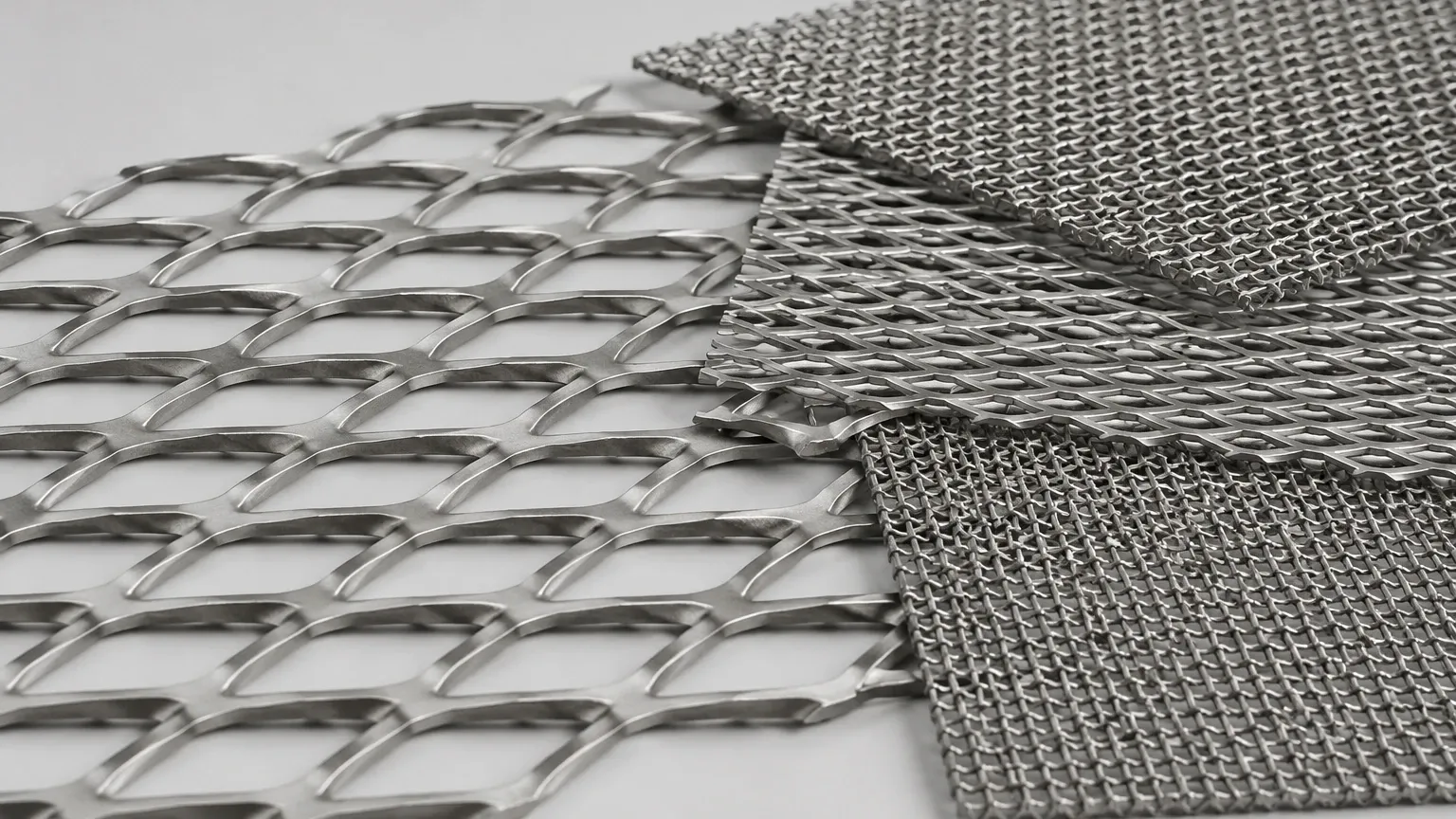
In industrial engineering and filtration design, the term "expanded metal ukuran"—referring to the precise dimensions and specifications of expanded metal mesh—represents a critical set of variables that determine the success of a mechanical system. Expanded metal is a versatile material produced by simultaneously slitting and stretching a solid metal sheet, creating a pattern of diamond-shaped openings. Unlike woven wire mesh, expanded metal is a single-piece construction without joins or welds, offering unique structural integrity and flow characteristics.
For engineers and procurement teams, understanding the technical nuances of expanded metal ukuran is essential for selecting the right component for filtration, reinforcement, or protective applications. This guide examines the engineering parameters, material considerations, and performance metrics associated with expanded metal, providing a technical foundation for informed decision-making.
Technical Parameters of Expanded Metal Ukuran
When specifying expanded metal, "ukuran" encompasses several distinct geometric measurements. These parameters define the mesh's physical footprint, its mechanical strength, and its suitability for specific industrial tasks. The standard terminology used by manufacturers like Kaifil ensures that engineering drawings translate accurately into finished products.
Long Way of Diamond (LWD) and Short Way of Diamond (SWD)
The most fundamental measurements in expanded metal are the LWD and SWD. These refer to the distance from the center of one joint to the center of the next joint across the diamond opening.
* LWD (Long Way of Diamond): This is the dimension across the long axis of the diamond. It is typically measured parallel to the width of the original sheet.
* SWD (Short Way of Diamond): This is the dimension across the short axis of the diamond. It is measured parallel to the length of the sheet expansion.
For filtration support structures, the LWD and SWD must be carefully balanced. A larger LWD/SWD ratio may offer higher transparency and lower weight, but it can reduce the material's ability to resist concentrated point loads. In high-pressure hydraulic applications, a smaller, tighter diamond pattern is often preferred to provide continuous support for delicate filter media.
Strand Width and Thickness
The "strand" is the single metal strip that forms the border of the diamond opening. Its dimensions are a primary factor in the material's overall weight and strength.
* Strand Width: The amount of metal fed into the machine between the slitting and stretching process. Increasing the strand width increases the amount of metal in the mesh, enhancing durability but reducing the open area.
* Thickness: This refers to the thickness of the base material (the original metal sheet). In industrial filtration, stainless steel thicknesses typically range from 0.5mm to 3.0mm, depending on the required rigidity.
Structural Variations: Raised vs. Flattened Mesh
The manufacturing process naturally results in "raised" expanded metal, where the strands are set at an angle to the plane of the sheet. However, many industrial applications require a secondary process called flattening.
Raised Expanded Metal
In its raised state, expanded metal provides a high degree of rigidity and a non-slip surface. The angled strands create a three-dimensional profile that can be advantageous for fluid turbulence or as a high-strength reinforcement layer in composite filters. However, the raised edges can be abrasive, which may be a concern if the mesh is in direct contact with soft synthetic filter membranes.
Flattened Expanded Metal
Flattened expanded metal is produced by passing the raised mesh through a cold-rolling reducing mill. This process levels the strands and bonds into a single plane, resulting in a smooth, flat surface. For B2B buyers in the filtration industry, flattened Perforated & Expanded Metal is often the preferred choice. It provides a stable, uniform support surface for filter cloth or paper, preventing the media from being punctured or unevenly stressed during high-pressure cycles.
Material Selection and Corrosion Resistance
The "ukuran" of expanded metal is only one part of the specification; the material chemistry is equally vital. Because expanded metal is often used in demanding environments—such as chemical processing, food and beverage production, and pharmaceutical manufacturing—material selection is a critical engineering decision.
Stainless Steel Grades
Kaifil specializes in stainless steel filtration solutions because of the material's inherent resistance to oxidation and chemical attack. The most common grades include:
* AISI 304: Suitable for general industrial use, providing good corrosion resistance and excellent formability. It is widely used in food processing where hygiene is paramount.
* AISI 316/316L: Contains molybdenum, which provides superior resistance to chlorides and pitting. This is the standard for marine environments, pharmaceutical applications, and aggressive chemical filtration.
* Specialty Alloys: For extreme temperatures or highly acidic environments, alloys like Monel or Inconel may be specified, though stainless steel remains the workhorse of the industry.
When calculating the expanded metal ukuran, engineers must account for the mechanical properties of these alloys. Stainless steel 316L, for instance, has excellent welding characteristics, which is essential when the expanded metal must be formed into a cylindrical filter cartridge and seam-welded.
Calculating Open Area and Filtration Efficiency
In filtration design, the "open area" is the percentage of the mesh that allows fluid or gas to pass through. This is a direct function of the expanded metal ukuran (LWD, SWD, and strand width).
The Relationship Between Dimensions and Flow
A higher percentage of open area results in a lower pressure drop (ΔP) across the filter. This is critical for maintaining system efficiency and reducing the energy consumption of pumps and compressors. However, increasing the open area usually requires reducing the strand width or increasing the diamond size, which can compromise the structural integrity of the filter element.
Engineers must use the following considerations when evaluating open area:
1. Particle Retention: If the expanded metal is acting as the primary filter, the SWD must be smaller than the minimum particle size to be captured.
2. Media Support: If the mesh is a support layer, the open area must be maximized to prevent flow restriction, while the strand density must be high enough to prevent the primary filter media from "bagging" or stretching into the diamond openings under pressure.
3. Turbulence Induction: In some specialized chemical reactors, the angled strands of raised expanded metal are used to induce controlled turbulence, enhancing mixing or heat transfer while providing structural support.
Engineering Considerations for Custom Ukuran
Standard expanded metal sizes are often available, but industrial applications frequently require custom configurations. When working with a manufacturer like Kaifil, providing precise specifications ensures the component integrates seamlessly into the final assembly.
Tolerances and Precision
In precision metal filtration, tolerances are tighter than in general architectural expanded metal. Engineers should confirm the allowable variance in LWD and SWD. Even a small deviation in the strand width can lead to significant changes in the total weight of a large-scale filtration system, which may affect the design of support housing and brackets.
Edge Finishing and Safety
Expanded metal naturally has "random" edges where the diamonds are cut. For many B2B applications, especially those involving manual handling or delicate internal components, "bond edges" or "closed diamonds" are preferred. This means the mesh is cut at the joints (bonds) to ensure a smoother perimeter. Alternatively, the mesh can be framed or U-edged to eliminate sharp protrusions.
Formability and Cylindrical Shaping
Many expanded metal components are used as inner or outer cores for filter cartridges. This requires the material to be rolled into a cylinder. The orientation of the diamonds (LWD vs. SWD) relative to the rolling direction significantly impacts the ease of forming and the final crush strength of the cylinder. Generally, rolling parallel to the LWD provides a more uniform curve and higher resistance to external pressure.
Maintenance, Durability, and Total Cost of Ownership
When evaluating expanded metal ukuran, the total cost of ownership (TCO) should be considered alongside the initial purchase price. A thinner mesh might be cheaper upfront, but if it fails under hydraulic shock or requires frequent replacement due to corrosion, the long-term costs will be much higher.
Cleaning and Reusability
One of the primary advantages of stainless steel expanded metal in filtration is its cleanability. Unlike synthetic meshes, stainless steel can be backwashed, ultrasonic cleaned, or chemically sanitized. The smooth surface of flattened expanded metal is particularly easy to clean, as it lacks the crevices where contaminants can become permanently lodged.
Longevity in Demanding Environments
By selecting the correct material grade and strand thickness, engineers can ensure that the expanded metal lasts for the entire service life of the industrial equipment. In high-vibration environments, such as vibrating screens or heavy-duty hydraulic systems, the single-piece construction of expanded metal prevents the "shirting" or strand displacement that can occur with woven wire mesh over time.
Procurement Checklist for Engineering Teams
Before finalizing an order for expanded metal components, technical professionals should confirm the following details with their supplier:
* Exact Dimensions: Confirm LWD, SWD, strand width, and base sheet thickness.
* Material Grade: Specify 304, 316, or 316L based on the chemical environment.
* Surface Finish: Determine if the application requires raised or flattened mesh.
* Open Area Percentage: Verify that the flow characteristics meet the system requirements.
* Secondary Processing: Specify if the material needs to be cut to size, rolled into cylinders, or welded into specific assemblies.
* Compliance: Ensure the material meets relevant industry standards (e.g., ASTM or ISO) for filtration and structural applications.
By focusing on the technical specifics of expanded metal ukuran, B2B buyers can procure components that offer the optimal balance of filtration efficiency, structural strength, and long-term durability. Whether used as a robust support core in a hydraulic filter or a precision screen in a chemical separator, the right expanded metal specification is fundamental to industrial performance.
