


Expanded Metal Untuk Pagar
In industrial architecture and perimeter security, the selection of materials for fencing—often referred to in Southeast Asian procurement contexts as expanded metal untuk pagar—requires a deep understanding of material science, structural integrity, and environmental resistance. Expanded metal is not merely a decorative choice; it is a high-performance engineering solution created by simultaneously slitting and stretching a solid metal sheet. This process creates a continuous, jointless mesh that offers unique mechanical properties compared to woven wire or welded mesh.
For engineers and facility managers, specifying the correct grade and geometry of Perforated & Expanded Metal is critical for ensuring long-term durability, especially in demanding environments such as chemical processing plants, water treatment facilities, and pharmaceutical laboratories. This guide examines the technical nuances of expanded metal for fencing, focusing on the engineering criteria that drive successful industrial implementation.
The Engineering Logic Behind Expanded Metal for Industrial Fencing
The manufacturing process of expanded metal distinguishes it from other mesh types. Unlike woven wire, which can unravel if a single strand is cut, or welded mesh, where welds can become points of failure due to vibration or corrosion, expanded metal is a single piece of material. This structural continuity is why "expanded metal untuk pagar" is highly regarded for high-security applications.
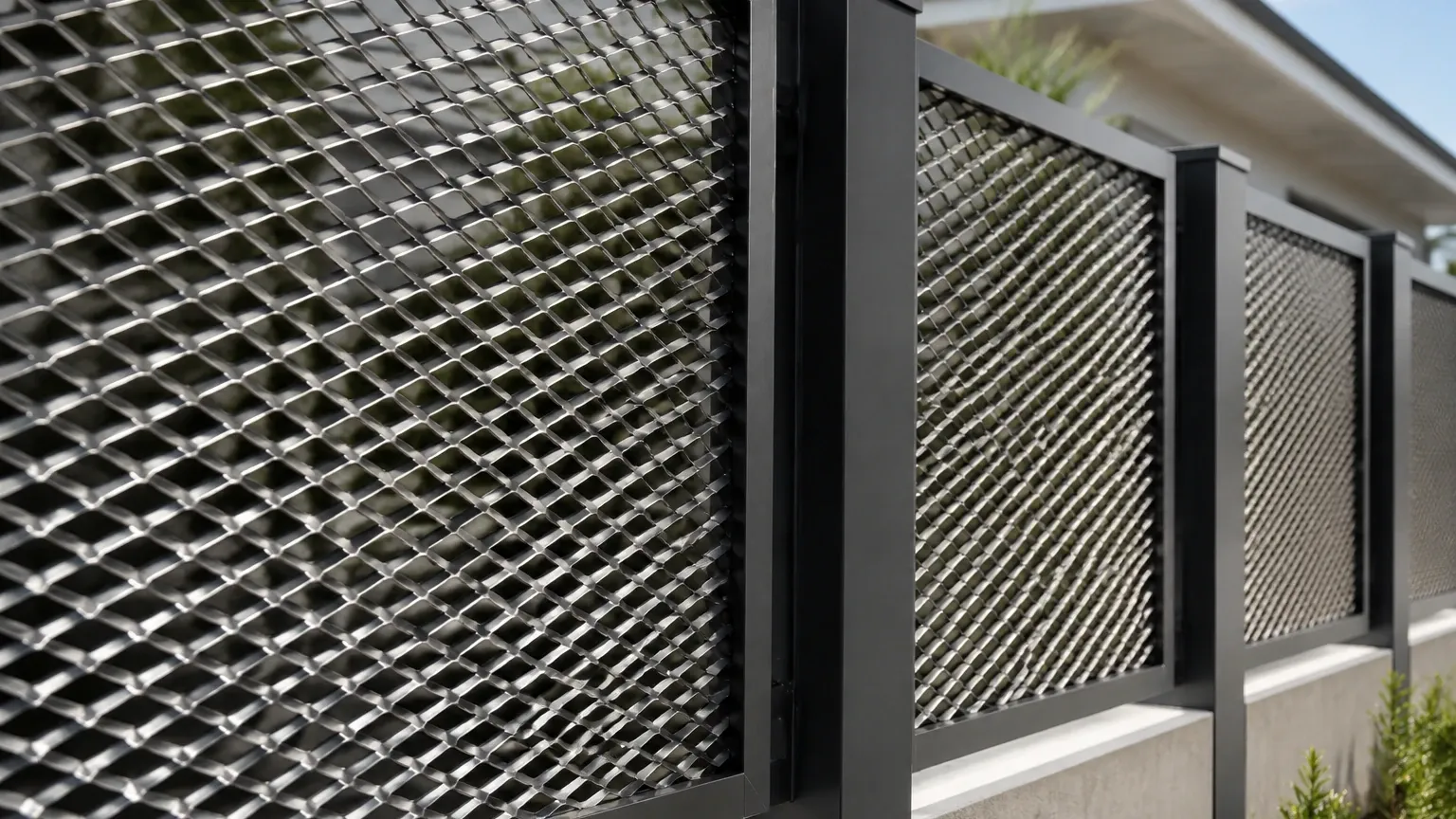
When a metal sheet is expanded, the resulting diamond-shaped openings are surrounded by "strands" and "bonds." The strands are the individual strips of metal that form the sides of the diamonds, while the bonds are the intersections where the strands meet. Because there are no welds or joints, the material distributes mechanical stress more efficiently across the entire panel. This makes it exceptionally difficult to breach using standard cutting tools, as the force required to compromise a single diamond does not weaken the surrounding structure.
Furthermore, the expansion process does not produce any scrap material. Every square inch of the original sheet is utilized, making it a cost-effective choice for large-scale industrial perimeters. For purchasing teams, this translates to a better strength-to-weight ratio, allowing for lighter support structures without sacrificing security.
Material Science: Why Stainless Steel is Essential for Expanded Metal Untuk Pagar
While expanded metal can be produced from carbon steel or aluminum, industrial applications frequently demand the use of stainless steel. In sectors like chemical processing or marine environments, the choice of material is the primary factor in determining the replacement cycle and total cost of ownership.
Corrosion Resistance and Longevity
Standard carbon steel fencing, even when galvanized, eventually succumbs to oxidation, particularly at the edges of the mesh where the zinc coating may be thinner. In contrast, stainless steel expanded metal (typically Grade 304 or 316) provides inherent corrosion resistance. Grade 316, containing molybdenum, is specifically recommended for facilities exposed to chlorides or acidic vapors. When specifying expanded metal untuk pagar for a facility near a coastline or within a chemical plant, the higher upfront cost of stainless steel is offset by the elimination of painting, coating maintenance, and premature failure.
Aesthetic and Functional Cleanliness
In the food and beverage and pharmaceutical industries, fencing is often used to partition clean zones or protect sensitive machinery. Stainless steel expanded metal is non-porous and easy to sanitize. Its smooth surface (when properly finished) prevents the accumulation of dust and microbial contaminants, meeting the stringent hygiene requirements of these sectors.
Technical Parameters: SWD, LWD, and Strand Geometry
To accurately specify Perforated & Expanded Metal for fencing, engineers must define several key dimensions. These parameters dictate the visibility, airflow, and physical security of the fence.
1. Short Way of Design (SWD): This is the distance from the center of one bond to the center of the next bond measured across the short diamond diagonal. A smaller SWD results in a denser mesh, which is harder to climb.
2. Long Way of Design (LWD): The distance measured across the long diamond diagonal. Together with SWD, this defines the aperture size.
3. Strand Width and Thickness: The width refers to the amount of metal fed into the machine for each expansion stroke, while thickness refers to the original gauge of the metal sheet. Increasing these dimensions significantly enhances the impact resistance of the fence.
4. Raised vs. Flattened: "Raised" expanded metal (also known as standard) features strands that are tilted at an angle to the plane of the sheet. This creates a 3D texture that provides excellent grip resistance (anti-climb) and can act as a louver to control visibility. "Flattened" expanded metal is passed through a cold-rolling mill to create a smooth, flat surface, which is often preferred for internal partitions where personnel might come into frequent physical contact with the mesh.
For an effective "expanded metal untuk pagar" installation, a raised mesh is typically preferred for external perimeters due to its inherent rigidity and the deterrent effect of its angled edges.
Comparing Perforated & Expanded Metal in Perimeter Security
When designing a barrier, engineers often weigh the benefits of perforated metal against expanded metal. Both have their place in industrial design, but their performance characteristics differ.
Perforated Metal is created by punching holes into a sheet. This allows for highly precise hole patterns and can include solid margins for easier mounting. However, the punching process creates waste (the "slugs"), which can increase the material cost. Perforated metal is often chosen when specific airflow percentages or acoustic dampening are required.
Expanded Metal, on the other hand, is generally stronger for the same weight of material because the strands are oriented at an angle, providing structural depth. For fencing (pagar), expanded metal is usually the superior choice because the angled strands provide a "one-way" visibility effect—depending on the angle of the sun and the observer, the mesh can appear opaque or transparent. This is a valuable feature for facilities that require privacy without sacrificing airflow.
Installation Considerations for Industrial Expanded Metal Fencing
The performance of expanded metal untuk pagar is heavily dependent on how it is integrated into the overall fencing system. Because expanded metal panels have a specific "directional" strength, the orientation of the diamonds matters.
Framing and Attachment
Expanded metal panels should always be framed. Common methods include welding the mesh into angle iron frames or using U-edging to cover the sharp edges of the cut mesh. In industrial settings, bolting the frames to heavy-duty posts is preferred over direct welding to the posts, as this allows for easier replacement of individual panels if they are damaged by vehicles or equipment.
Wind Loading and Open Area
Engineers must calculate the "open area" of the mesh to account for wind loading. A mesh with a low open area (small diamonds and wide strands) will act like a sail during high winds, putting immense pressure on the fence posts. Conversely, a high open area improves visibility and airflow but may reduce the security level. Finding the balance is key to a stable installation.
Procurement Checklist: Confirming Specifications with Manufacturers
When sourcing expanded metal untuk pagar, purchasing teams should provide manufacturers with a detailed specification sheet to avoid common pitfalls. Relying on generic descriptions can lead to the delivery of materials that do not meet the structural requirements of the site.
* Material Grade: Specify SS304, SS316, or carbon steel. If using carbon steel, clarify if it should be hot-dip galvanized after expansion.
* Diamond Orientation: Specify whether the LWD should run parallel to the height or the width of the panel. This affects both the look and the rigidity of the fence.
* Tolerance Levels: Industrial applications often require tight tolerances on panel dimensions to ensure they fit perfectly into pre-fabricated frames.
* Surface Finish: For stainless steel, specify if a 2B (mill finish), #4 (brushed), or electropolished finish is required. Electropolishing is particularly beneficial for expanded metal used in chemical or coastal environments, as it removes surface impurities and enhances the protective oxide layer.
* Edge Configuration: Confirm if the panels should be supplied with "random sheared" edges (where diamonds are cut mid-pattern) or "bond sheared" edges (where the cut follows the line of the bonds for a cleaner finish).
By focusing on these technical details, engineers can ensure that their choice of Perforated & Expanded Metal provides the necessary security and longevity. Whether the goal is to secure a power substation, partition a warehouse, or provide a safety barrier in a manufacturing plant, the unique properties of expanded metal make it an indispensable component of modern industrial infrastructure. Selecting a manufacturer with deep expertise in custom metal fabrication ensures that the final product meets the specific environmental and mechanical demands of the project.
