


Expanded Metal vs Serrated
In industrial engineering and facility management, selecting the correct material for walkways, filtration supports, and protective barriers is a decision that impacts safety, durability, and operational efficiency. Two common specifications encountered when sourcing metal components are expanded metal and serrated surfaces. Understanding the nuances of expanded metal vs serrated options is essential for engineers who must balance slip resistance with structural integrity and cost-effectiveness.
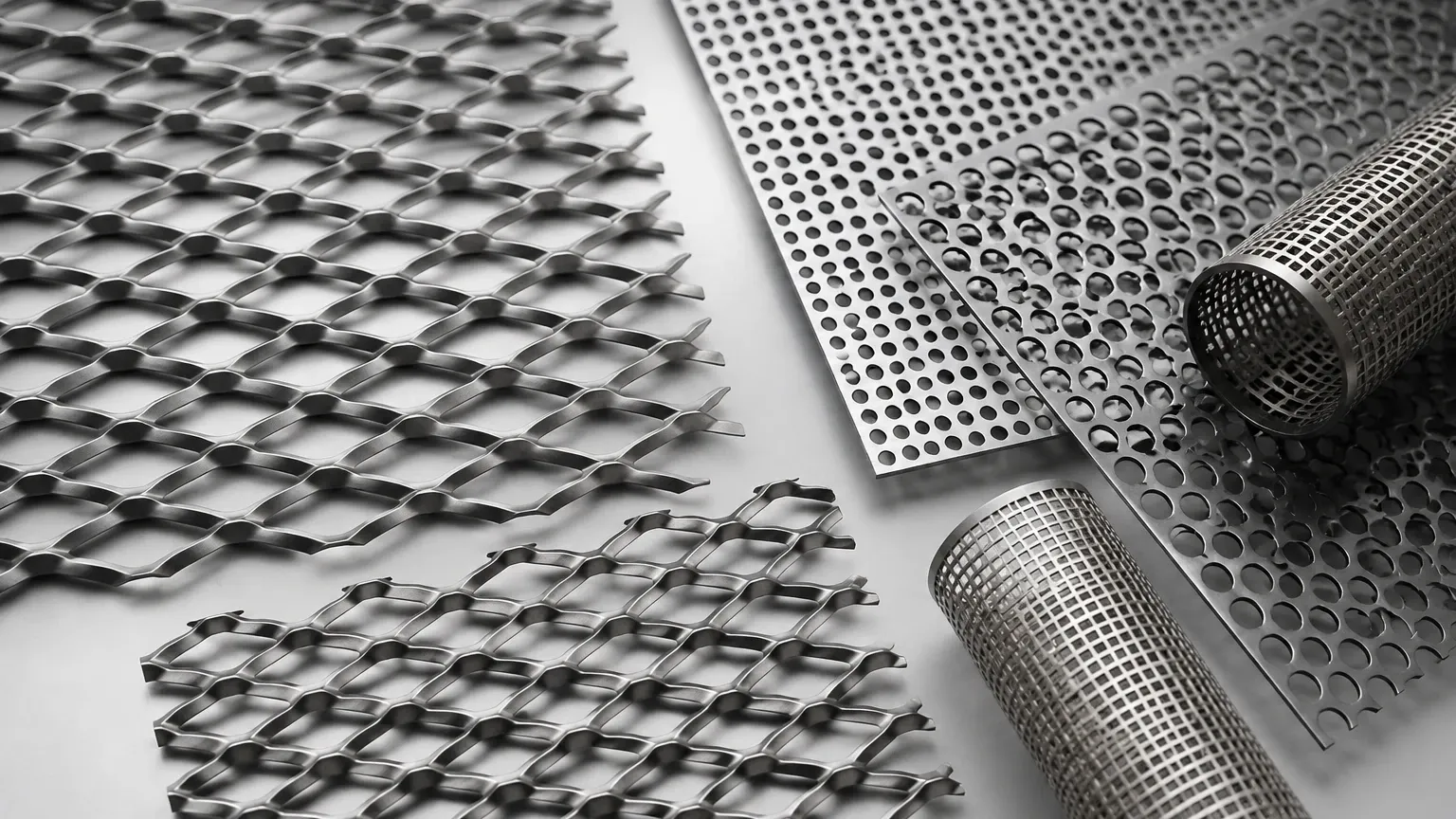
At its core, expanded metal is a versatile material produced by simultaneously slitting and stretching a solid metal sheet. This process creates a diamond-shaped pattern of openings, framed by interlinked strands. When discussing "serrated" options, the industry typically refers to the addition of notches or "teeth" to the edges of the metal strands to enhance traction. For professionals evaluating Perforated & Expanded Metal for industrial applications, the choice between standard expanded metal and serrated variants depends heavily on the environmental conditions and the specific mechanical requirements of the project.
The Engineering of Expanded Metal
Expanded metal is unique because it is manufactured from a single piece of material without any welds or joins. This monolithic structure provides an exceptional strength-to-weight ratio. During production, a metal plate is fed through a machine that performs a series of precise cuts while stretching the material. This results in two primary forms: raised (standard) expanded metal and flattened expanded metal.
Raised Expanded Metal
Raised expanded metal features strands that are turned at an angle to the plane of the sheet. This natural angularity provides a degree of inherent slip resistance and structural rigidity. In many filtration applications, raised expanded metal serves as a robust outer cage or support core, providing the necessary mechanical strength to withstand high-pressure differentials without significantly impeding flow.
Flattened Expanded Metal
Flattened expanded metal is produced by passing the standard raised sheet through a cold-roll reducing mill. This process flattens the strands and bonds back into a single plane. While this reduces the overall thickness and removes the natural grip of the raised strands, it provides a smooth surface that is often preferred for internal filter supports where contact with delicate filter media (such as fine wire mesh or synthetic fabrics) must not cause abrasion.
Defining Serrated Surfaces in Industrial Applications
Serration is a surface modification designed specifically to maximize friction. In the context of industrial gratings and heavy-duty expanded metal, serration involves the mechanical cutting of small notches into the load-bearing edges of the metal.
When comparing expanded metal vs serrated surfaces, it is important to note that "serrated" is often a feature applied to bar grating, but it can also be integrated into heavy-gauge expanded metal products designed for flooring. The primary objective of a serrated surface is to provide "bite" into footwear or tires, especially in environments where lubricants, moisture, or chemical spills are prevalent.
For engineers, the decision to specify a serrated surface usually stems from a Risk Assessment (RA) that identifies a high probability of slip-related accidents. While standard raised expanded metal offers some traction, it may not meet the safety requirements of offshore oil rigs, chemical processing plants, or food production facilities where grease and fluids are common on the floor.
Comparative Analysis: Expanded Metal vs Serrated
To make an informed selection, engineers must evaluate several performance metrics where these two options diverge.
1. Traction and Slip Resistance
Standard raised expanded metal provides multi-directional traction due to the diamond pattern and the angled strands. However, in extremely slick conditions, the smooth edges of the strands can still allow for slippage. Serrated surfaces offer superior grip because the notches create multiple sharp contact points that can penetrate through films of oil or water.
2. Load-Bearing Capacity
Expanded metal is highly efficient at distributing loads across its diamond network. However, the process of serration—removing small amounts of material to create notches—can slightly alter the section modulus of the individual strands. In heavy-duty structural applications, engineers must confirm that the serrated variant still meets the required deflection limits under the specified load.
3. Cleaning and Maintenance
In the food and beverage or pharmaceutical industries, "cleanability" is a critical factor. Standard expanded metal, particularly the flattened variety, is relatively easy to sanitize. Serrated surfaces, by design, contain numerous small crevices where debris, bacteria, or chemical residues can accumulate. Therefore, serrated metal is less common in direct contact filtration and more common in external structural supports or safety walkways where high-pressure hosing is used for maintenance.
4. Material Waste and Sustainability
The production of expanded metal is a zero-waste process; the original sheet is stretched to its final dimensions. Serration, however, involves a secondary process that may involve minimal material removal. For large-scale B2B procurement, the inherent sustainability of expanded metal makes it a preferred choice for green building certifications and resource-efficient manufacturing.
Applications in Industrial Filtration
In the realm of custom stainless steel filtration, the choice between expanded metal and serrated components is usually dictated by the position of the component within the filter assembly.
Support Cores and Outer Cages
For high-pressure hydraulic or chemical filters, expanded metal is the industry standard for support cores. It provides the necessary hoop strength to prevent the collapse of the filter media. In these instances, serration is almost never used because the sharp edges would damage the filter element. Instead, engineers often specify stainless steel expanded metal with a specific strand width and thickness to optimize the open area and flow rate.
Pre-Filtration and Debris Screens
In water treatment or coarse industrial filtration, heavy-gauge expanded metal acts as a primary screen to remove large particulates. If the screen also serves as a maintenance platform for technicians, a serrated expanded metal might be specified to ensure the safety of personnel during inspection cycles.
Engineering Considerations for Selection
When specifying Perforated & Expanded Metal for a project, several technical parameters must be confirmed with the manufacturer:
* Material Grade: For corrosive environments (chemical processing, marine), Stainless Steel 316L is typically required. For general industrial use, Stainless Steel 304 or galvanized carbon steel may suffice.
* SWD and LWD: The Short Way of Design (SWD) and Long Way of Design (LWD) define the dimensions of the diamond opening. These dimensions affect both the filtration accuracy (if used as a screen) and the structural rigidity.
* Strand Thickness and Width: These dimensions determine the overall strength and the percentage of open area. A higher open area reduces pressure drop but may decrease the load-bearing capacity.
* Surface Finish: Beyond serration, options include pickling, passivating, or electropolishing, which are vital for ensuring the longevity of stainless steel components in aggressive chemical environments.
Common Risks and Mitigation
One common risk when choosing between expanded metal vs serrated is the underestimation of the "clogging factor." In filtration, if the expanded metal openings are too small relative to the particulate size, the support structure itself can become a site for blinding.
Another risk involves the use of serrated metal in areas where manual handling is frequent. The sharp edges required for slip resistance can pose a laceration risk to workers if not handled with appropriate PPE. In such cases, designers might opt for a standard raised expanded metal which provides a balance of grip and safer handling characteristics.
Conclusion: Making the Right Choice
The choice between expanded metal and serrated surfaces is rarely about one being "better" than the other; rather, it is about matching the material's physical properties to the operational environment. Standard expanded metal remains the workhorse of the filtration industry, providing the structural backbone for countless filter cartridges and industrial screens. Serrated surfaces find their niche in high-risk safety environments where traction is the paramount concern.
For engineering teams, the next step involves a detailed review of the application's mechanical stresses and environmental exposures. Confirming the required alloy, the necessary open area, and the specific surface texture with a specialized manufacturer ensures that the final component delivers the durability and performance expected in demanding B2B industrial sectors.
