


Expanded Metal vs Wire Mesh
In industrial filtration and structural engineering, selecting the correct media is critical for ensuring system longevity, filtration efficiency, and cost-effectiveness. Two of the most common materials used for these purposes are expanded metal and wire mesh. While they may appear similar at a glance, their manufacturing processes, mechanical properties, and performance characteristics differ significantly.
For engineers and procurement professionals, the choice between expanded metal vs wire mesh often depends on specific application requirements such as mechanical load, the required micron rating, and the environmental conditions of the processing plant. This guide provides a technical comparison to assist in the selection process for industrial filtration and support components.
Understanding the Manufacturing Fundamentals
The fundamental difference between these two materials begins with how they are produced. This process dictates the material's structural integrity and its behavior under stress.
Expanded Metal Production
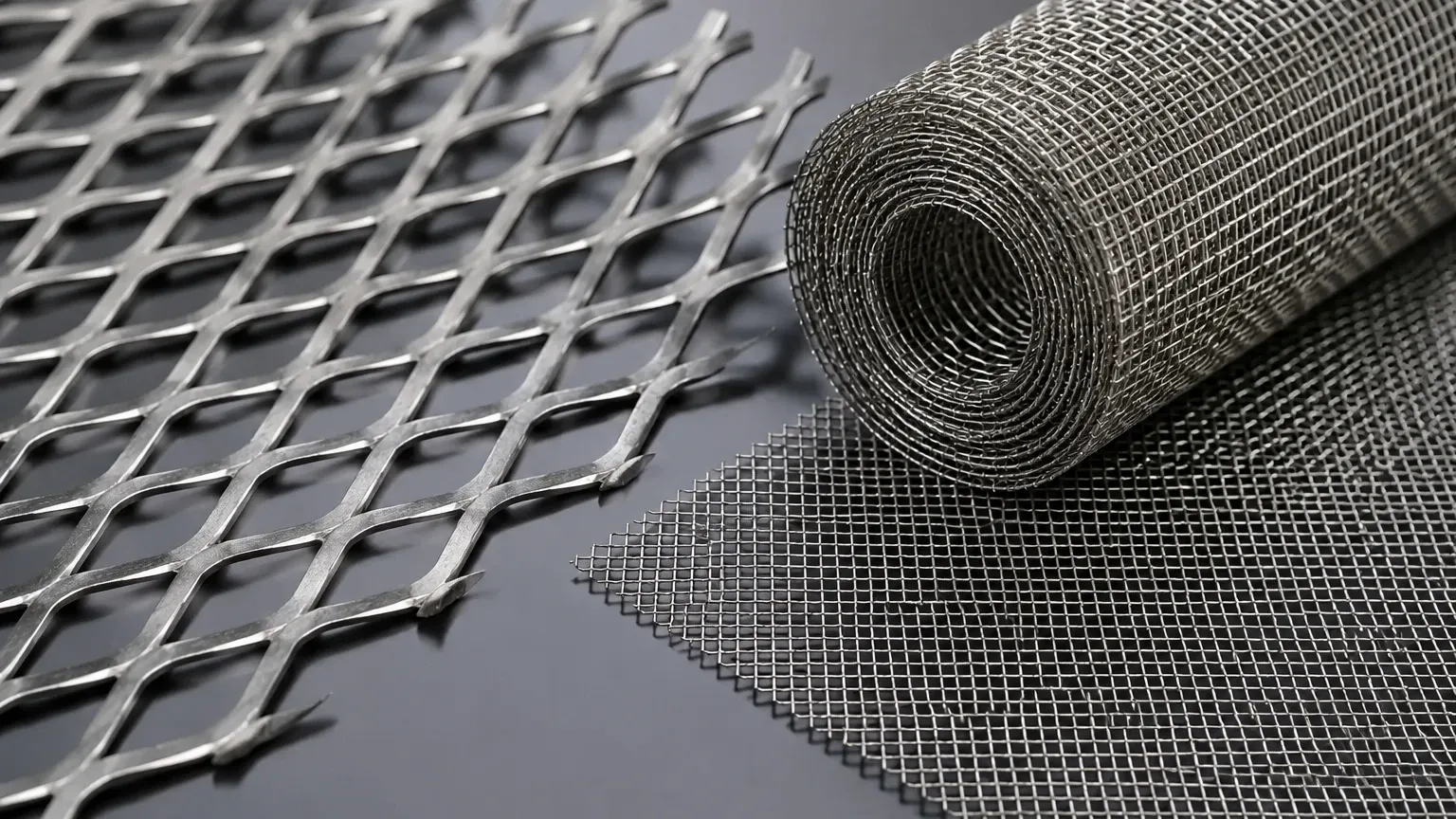
Expanded metal is manufactured through a process of simultaneous slitting and stretching. A solid sheet of metal—often stainless steel, carbon steel, or aluminum—is fed through a machine equipped with specialized knives. These knives create a series of slits while the machine pulls the sheet, expanding the slits into diamond-shaped openings. This process is unique because it produces no scrap material; the original sheet is simply transformed into a larger area of open mesh. The resulting product is a single, continuous piece of metal without joins or welds.
Wire Mesh Production
Wire mesh, also known as wire cloth or wire fabric, is produced by weaving individual metal wires together on a loom, much like textiles. The wires are interlaced in various patterns, such as plain weave, twill weave, or dutch weave, depending on the required filtration precision. Alternatively, wire mesh can be welded at the intersections (welded wire mesh), though woven varieties are more common in high-precision filtration. Because it is made of individual strands, the mesh relies on the tension of the weave or the strength of the welds for its stability.
For those evaluating these materials for specific industrial projects, understanding the nuances of Perforated & Expanded Metal and how they contrast with woven media is the first step in optimizing system design.
Structural Performance: Rigidity and Durability
When comparing expanded metal vs wire mesh, structural integrity is a primary engineering consideration. The monolithic nature of expanded metal offers distinct advantages in heavy-duty applications.
Rigidity and Weight-to-Strength Ratio
Expanded metal is inherently rigid because it is a single piece of material. The "strands" and "bonds" (the intersections where the strands meet) are part of the same original sheet. This makes expanded metal exceptionally strong relative to its weight. It does not unravel when cut, making it ideal for custom-shaped filters or protective screens where structural stability is paramount. In contrast, woven wire mesh can fray or unravel at the edges if not properly finished or framed.
Impact Resistance
In environments where the filtration media is subject to physical impact or high-pressure surges, expanded metal often performs better. The diamond-shaped trusses act as structural supports that distribute weight and stress evenly. While wire mesh is flexible—which is an advantage in certain pleated filter designs—it may deform under heavy mechanical loads unless supported by a rigid backup layer.
Edge Handling and Fabrication
Fabrication teams often prefer expanded metal for components that require frequent handling or complex cutting. Since there are no loose wires, the risk of injury from sharp, frayed ends is reduced, and the material maintains its shape during welding or forming. Wire mesh requires more careful edge treatment, such as hemmed edges or specialized welding techniques, to ensure the mesh remains intact during its service life.
Filtration Characteristics and Precision
While expanded metal excels in structural roles, wire mesh is often the preferred choice for high-precision filtration. The two materials serve different stages of the filtration process.
Pore Size and Micron Ratings
Woven wire mesh can be manufactured with extremely tight tolerances, allowing for filtration ratings down to the sub-micron level. By varying the wire diameter and the weave pattern, manufacturers can create precise openings that capture very fine particulates. This makes wire mesh indispensable in pharmaceutical, food and beverage, and fine chemical processing.
Expanded metal openings are typically larger, usually measured in millimeters rather than microns. While it can be flattened to create a smoother surface, the openings are generally too coarse for fine filtration. Instead, expanded metal is frequently used as a pre-filter to remove large debris or as a support structure (a "pleat support") for finer wire mesh or synthetic filter media.
Open Area and Flow Rates
The open area of a filter determines the flow rate and the pressure drop across the system. Expanded metal typically offers a high percentage of open area, which facilitates high flow rates with minimal resistance. Wire mesh also offers high open area, but as the filtration rating becomes finer, the wire diameter must decrease, which can impact the overall strength of the media. Engineers must balance the need for fine filtration with the mechanical strength required to withstand the differential pressure.
Economic Factors: Material Waste and Production Costs
Cost considerations in B2B procurement involve more than just the initial purchase price; they include material efficiency and fabrication complexity.
1. Material Efficiency: Expanded metal is one of the most sustainable metal products because the expansion process creates zero waste. Every ounce of the original metal sheet is utilized in the final product. Wire mesh production, while efficient, involves weaving processes that may result in more scrap during the setup and finishing stages.
2. Tooling and Customization: Expanded metal requires specific dies for different diamond sizes. While many standard sizes exist, custom opening shapes may require new tooling. Wire mesh is highly customizable in terms of weave and mesh count, but the cost of high-grade stainless steel wire can fluctuate, impacting the final price of the cloth.
3. Total Cost of Ownership: For coarse filtration or structural support, expanded metal is generally more cost-effective due to its lower production costs and high durability. However, for applications requiring precise particle retention, the higher investment in high-quality woven wire mesh is necessary to meet process specifications and prevent downstream contamination.
Engineering Selection Criteria: Which is Right for Your Application?
To decide between expanded metal vs wire mesh, engineers should evaluate their application against the following criteria:
* Required Filtration Grade: If the application requires capturing particles smaller than 100 microns, woven wire mesh is almost always the correct choice. If the goal is to stop large debris (e.g., in a pump intake) or provide a safety barrier, expanded metal is more efficient.
* Mechanical Stress: Will the media be subjected to high pressure, vibration, or physical weight? Expanded metal’s rigid, one-piece construction is better suited for high-stress environments. Wire mesh may require a perforated or expanded metal backing to prevent deformation.
* Environment and Corrosion: Both materials can be produced from stainless steel (304, 316L), duplex steels, or specialty alloys. However, the crevices in woven wire mesh can sometimes be more susceptible to crevice corrosion in aggressive chemical environments compared to the open, easily cleaned structure of expanded metal.
* Formability: If the filter needs to be pleated to increase surface area, flexible wire mesh is the standard. Expanded metal can be rolled into cylinders or formed into shapes, but it does not pleat with the same precision as wire cloth.
Common Risks and Maintenance Requirements
Maintenance cycles are a critical component of the total cost of ownership in industrial filtration. Both expanded metal and wire mesh have specific maintenance profiles.
Cleaning and Fouling
Expanded metal is relatively easy to clean via backwashing or manual pressure washing because its openings are tapered and the material is smooth. Woven wire mesh, particularly complex weaves like Dutch weave, can trap particles within the wire intersections (blinding). This may require ultrasonic cleaning or specialized chemical cleaning to restore the original flow rate.
Failure Modes
The primary failure mode for wire mesh is fatigue at the wire intersections or fraying at the edges, which can lead to "bypass"—where unfiltered fluid passes through a hole in the mesh. Expanded metal failure usually occurs through general corrosion or extreme mechanical overload that deforms the entire sheet. Because expanded metal is a single piece, it does not suffer from the "loose wire" issues that can plague woven media in high-vibration applications.
Conclusion
Choosing between expanded metal and wire mesh is not a matter of which material is superior, but which is better suited for the specific technical demands of the process. Expanded metal offers unmatched structural integrity, cost-efficiency, and durability for coarse filtration and support roles. Woven wire mesh provides the precision and flexibility required for high-performance separation and fine particulate removal.
In many advanced industrial filtration systems, the two materials are used together: an outer layer of expanded metal provides the necessary mechanical protection and support, while an inner layer of precision wire mesh performs the actual filtration. By understanding the strengths and limitations of each, engineering teams can design more reliable, efficient, and long-lasting filtration solutions for their specific industrial needs.
