


Expanded Metal Walkway Grating
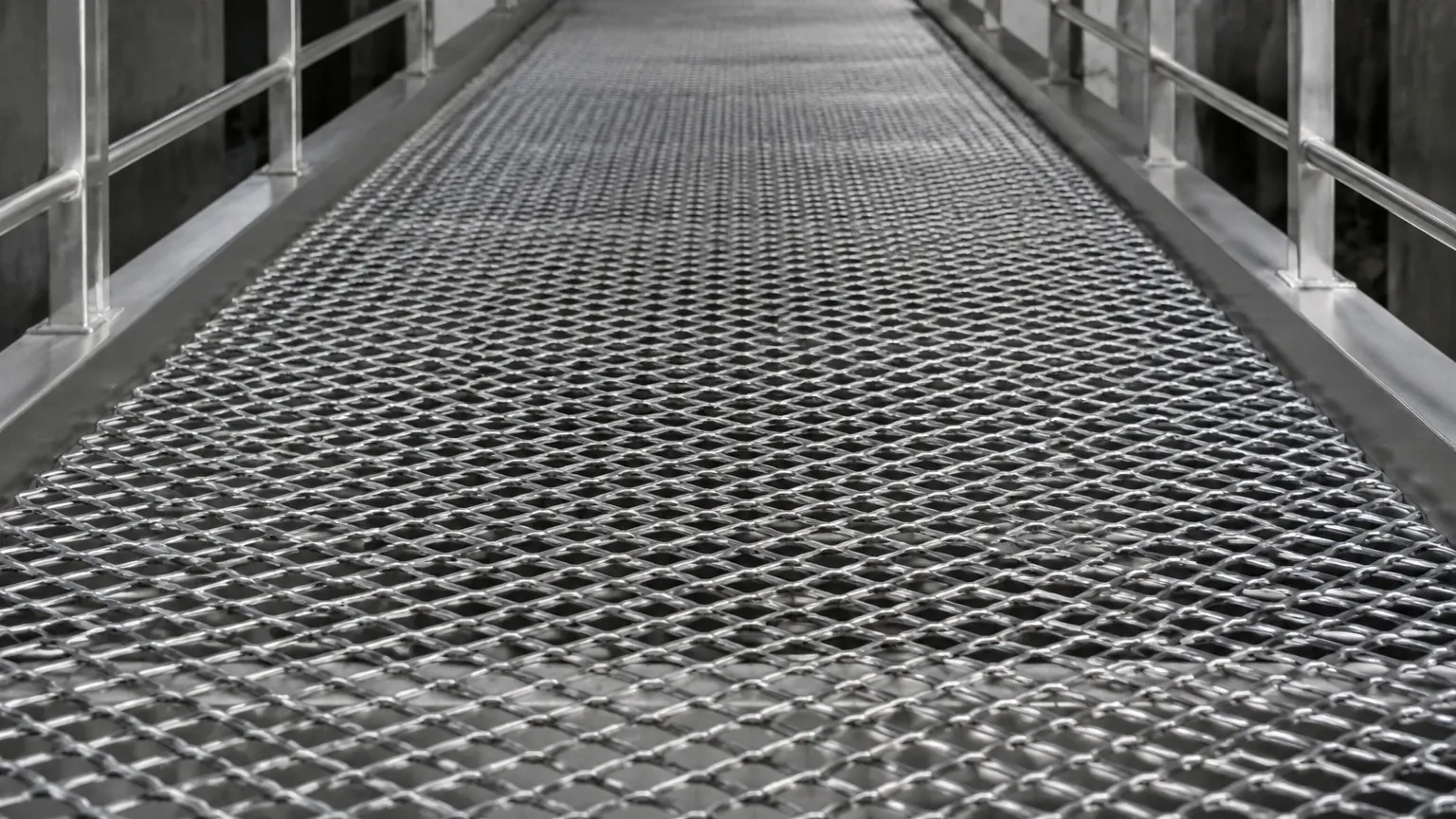
In industrial environments, the integrity of flooring and access platforms is a critical factor for both operational efficiency and personnel safety. Expanded metal walkway grating stands as a primary solution for these requirements, offering a unique combination of structural strength, slip resistance, and cost-effectiveness. Unlike traditional bar grating or solid plate, expanded metal is manufactured through a process of slitting and stretching a single sheet of metal, resulting in a continuous, jointless mesh that maintains its structural integrity even when cut into irregular shapes.
For engineers and procurement professionals, selecting the right grating involves understanding the mechanical properties of Perforated & Expanded Metal and how these materials perform under varying loads and environmental conditions. This guide examines the technical specifications, material considerations, and engineering criteria essential for implementing expanded metal walkway grating in industrial applications.
The Engineering Behind Expanded Metal Grating
The manufacturing process of expanded metal is fundamentally different from perforated metal. While perforated metal is created by punching holes and removing material, expanded metal is slit and pulled. This process creates diamond-shaped openings while ensuring that no material is lost, making it an exceptionally resource-efficient choice.
The resulting structure consists of "strands" and "bonds." The strands are the individual metal strips that form the sides of the diamond, and the bonds are the points where the strands intersect. Because the bonds are part of the original solid sheet, the grating distributes loads more evenly across the surface than welded or riveted alternatives.
In walkway applications, the "raised" or "standard" form of expanded metal is typically preferred. In this state, the strands are set at an angle to the plane of the sheet. This angularity provides inherent multi-directional slip resistance, which is vital in environments where oil, water, or chemical lubricants may be present on the walking surface.
Material Selection for Corrosive and Industrial Environments
Material choice is the most significant factor in determining the lifespan and maintenance requirements of expanded metal walkway grating. Kaifil specializes in high-performance alloys that cater to demanding industrial sectors, including chemical processing and pharmaceutical manufacturing.
Stainless Steel (304 and 316 Grades)
Stainless steel is the gold standard for walkway grating in environments where hygiene and corrosion resistance are paramount.
- Grade 304: Offers excellent resistance to atmospheric corrosion and is suitable for most food and beverage processing areas.
- Grade 316: Contains molybdenum, providing superior resistance to chlorides and acetic acids. This is the preferred choice for marine environments, chemical plants, and pharmaceutical facilities where aggressive cleaning agents are used.
Carbon Steel and Galvanized Options
For heavy-duty industrial applications where corrosion is less of a concern, carbon steel is often used. To prevent oxidation, these gratings are typically hot-dip galvanized. The galvanization process adds a protective zinc layer that can withstand outdoor exposure for decades, provided the environment is not highly acidic.
Aluminum
Aluminum expanded metal is selected for applications where weight reduction is a priority. While it lacks the ultimate load-bearing capacity of steel, its natural oxide layer provides good corrosion resistance, and its non-sparking properties make it suitable for certain volatile environments.
Technical Specifications: SWD, LWD, and Load-Bearing
When specifying expanded metal walkway grating, engineers must use standardized terminology to ensure the product meets the design requirements. The geometry of the mesh is defined by two primary measurements:
1. SWD (Short Way of Diamond): The distance from the center of one bond to the center of the next bond measured across the short axis of the diamond.
2. LWD (Long Way of Diamond): The distance from the center of one bond to the center of the next bond measured across the long axis of the diamond.
For walkways, a larger SWD/LWD ratio is often used to allow for better drainage and visibility through the floor, while a smaller ratio provides a more solid feel underfoot and prevents small tools or debris from falling through the mesh.
Load and Deflection Criteria
Unlike solid plates, the load-bearing capacity of expanded metal is highly directional. The grating is significantly stronger when the LWD spans across the support beams. Engineers must calculate the "clear span"—the distance between supports—and consult load tables to ensure the deflection does not exceed safety limits (typically 1/240th of the span for pedestrian comfort).
Comparison: Perforated & Expanded Metal in Walkways
While both Perforated & Expanded Metal are used in industrial fabrication, they serve different functional roles in flooring and filtration support.
* Traction: Expanded metal, in its raised form, offers superior grip due to the sharp edges of the strands. Perforated metal is generally flatter and may require additional anti-slip coatings or embossed patterns to achieve the same level of safety.
* Drainage: Expanded metal typically offers a higher percentage of open area (often 60% to 80%), allowing for the rapid passage of liquids and debris. Perforated metal is more customizable in terms of hole shape and size but often has less open area when high structural strength is required.
* Cost: Because expanded metal involves no material waste during production, it is often more cost-effective per square foot than perforated metal of a similar thickness and material grade.
In many complex filtration systems, these two materials work in tandem. Expanded metal may provide the heavy-duty structural walkway or outer support cage, while perforated metal or fine wire mesh acts as the primary filtration media inside the unit.
Safety Standards and Installation Best Practices
Implementing expanded metal walkway grating requires adherence to safety standards such as OSHA (Occupational Safety and Health Administration) in the US or ISO standards globally. These standards dictate the minimum load requirements for walkways and the maximum allowable opening sizes to prevent trip hazards.
Securement Methods
Proper installation is as important as material selection. Common fastening methods include:
* Saddle Clips: These bridge two strands and are bolted to the supporting structure. They allow for easy removal for maintenance.
* Weld Studs: Providing a permanent and high-strength connection, welding is preferred in high-vibration environments, such as near heavy industrial machinery or hydraulic systems.
* G-Clips: Friction-based fasteners that do not require drilling or welding into the support steel, preserving the integrity of protective coatings like galvanization.
Orientation Matters
As previously noted, the orientation of the diamonds is critical. For maximum strength, the Long Way of the Diamond (LWD) must run perpendicular to the support members. Installing the grating with the SWD spanning the supports can lead to premature failure and excessive deflection under load.
Applications Beyond Pedestrian Traffic
While the primary use is for walkways, expanded metal grating serves several other critical functions in industrial sectors:
1. Filtration Support: In large-scale water treatment or chemical processing tanks, heavy-duty expanded metal acts as a support bed for finer filtration media, preventing the media from collapsing under the pressure of the fluid flow.
2. Machine Guarding: The high visibility and airflow provided by the mesh make it ideal for guarding moving parts in manufacturing plants, ensuring personnel safety without obscuring the view of the equipment.
3. Drainage Covers: Its ability to handle high-volume fluid runoff makes it suitable for trench covers in food processing facilities where frequent wash-downs occur.
4. Security Fencing: The difficult-to-cut nature of heavy-gauge expanded metal makes it a preferred material for high-security perimeters around industrial infrastructure.
Maintenance and Long-Term Durability
One of the primary advantages of expanded metal walkway grating is its low maintenance requirement. The open design prevents the accumulation of dust, snow, or liquids, which are common causes of corrosion and slip hazards. However, regular inspections are necessary to ensure the continued safety of the installation.
Inspection Checklist:
* Fastener Integrity: Check for loose bolts or failing welds, especially in high-vibration areas.
* Corrosion Levels: In chemical environments, monitor for pitting or thinning of the strands, which can compromise load-bearing capacity.
* Surface Wear: In high-traffic areas, check if the raised edges of the strands have become rounded, which may reduce slip resistance.
Customization and OEM Solutions
Industrial projects often require non-standard dimensions or specific material properties that off-the-shelf products cannot provide. Kaifil provides comprehensive OEM capabilities, allowing for the customization of expanded metal products to meet specific engineering tolerances.
Whether the requirement is for a specific strand width to increase rigidity or a custom alloy to withstand a particular chemical byproduct, working with a manufacturer that understands the nuances of metal fabrication is essential. Customization extends to the finishing of the product, including pickling and passivation for stainless steel to ensure maximum corrosion resistance, or specialized powder coatings for color-coding safety zones.
Conclusion: Confirming Requirements for Procurement
Before finalizing a purchase or design for expanded metal walkway grating, engineering and purchasing teams should confirm several key data points to ensure the solution is fit for purpose:
* The specific environment: Will the grating be exposed to salt spray, caustic chemicals, or extreme temperatures?
* The maximum expected load: Does the design account for both static loads (equipment) and dynamic loads (personnel and carts)?
* Support spacing: Are the support beams positioned to optimize the LWD orientation of the grating?
* Compliance: Does the selected mesh size and slip resistance meet local safety regulations for the intended application?
By focusing on these technical parameters and leveraging the structural advantages of expanded metal, industrial facilities can ensure long-term safety and operational reliability. For more information on material options and technical specifications, professionals can explore the range of Perforated & Expanded Metal solutions available for custom industrial applications.
