


Expanded Metal Weight Calculator
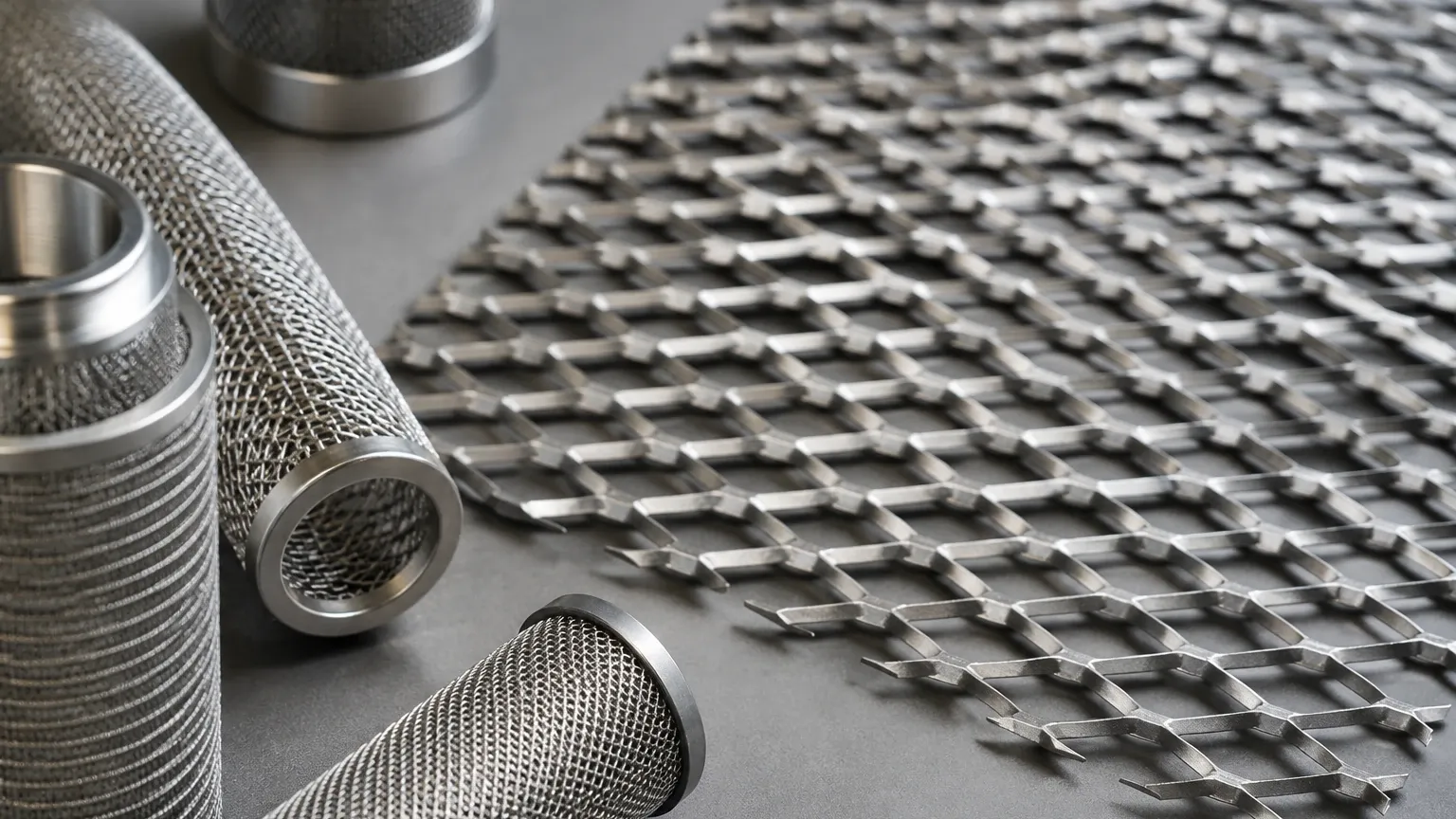
In industrial engineering and filtration design, the precise calculation of material mass is a fundamental requirement for structural integrity, cost estimation, and logistical planning. For professionals utilizing Perforated & Expanded Metal, understanding the mechanics behind an expanded metal weight calculator is essential. Unlike solid sheets, expanded metal involves a complex geometry of strands and bonds created by slitting and stretching the base material. This process increases the surface area while reducing the overall weight per square foot compared to the original plate.
This guide examines the technical variables that govern weight in expanded metal products, the mathematical formulas used in calculation, and the engineering considerations necessary for selecting the right filtration or structural components.
Understanding Expanded Metal Geometry and Terminology
To use an expanded metal weight calculator effectively, one must first master the specific terminology that defines the product’s physical properties. The weight of the final mesh is dictated by the relationship between the dimensions of the openings and the cross-section of the metal strands.
Key Dimensional Variables
1. SWD (Short Way of Design): The distance from the center of one bond to the center of the next bond measured across the short diamond diagonal.
2. LWD (Long Way of Design): The distance from the center of one bond to the center of the next bond measured across the long diamond diagonal.
3. SWO (Short Way of Opening): The actual width of the opening, excluding the strand width.
4. LWO (Long Way of Opening): The actual length of the opening, excluding the strand width.
5. Strand Thickness: The thickness of the base material used to produce the mesh.
6. Strand Width: The amount of metal fed into the precision dies between slits, which determines the width of the resulting "ribs" of the mesh.
In an expanded metal weight calculator, the ratio between the strand width and the SWD is the primary driver of the weight reduction. Because the material is stretched, a single inch of raw plate can result in several inches of finished mesh, depending on the expansion ratio.
The Principles of an Expanded Metal Weight Calculator
The weight of expanded metal is fundamentally derived from the weight of the original solid sheet, adjusted for the percentage of material retained after the expansion process. For engineers, calculating this manually or verifying the output of a digital calculator requires a clear understanding of the volume-to-mass relationship.
The Basic Formula
The most accurate way to determine the weight of expanded metal is to calculate the percentage of open area and subtract it from the solid sheet weight, or more directly, to calculate the volume of the strands. The general formula used by a technical expanded metal weight calculator is:
Weight = (Strand Width × 2 / SWD) × Thickness × Density × Area
Alternatively, many engineers use the "Expansion Factor" method. If you know the original thickness and the dimensions of the diamond, the weight per square foot (or square meter) can be estimated by comparing the cross-sectional area of the strands to the total area of the diamond.
It is important to note that "Raised" expanded metal and "Flattened" expanded metal will have the same theoretical weight if they are produced from the same base sheet with the same strand width. However, flattened expanded metal is passed through a cold-rolling mill, which reduces the thickness of the strands and increases their width slightly, maintaining the mass but changing the physical profile.
Material Selection and Its Impact on Weight
The density of the alloy used is a critical input for any expanded metal weight calculator. At Kaifil, we specialize in stainless steel filtration solutions, where material density varies slightly between grades, impacting the final weight of the filter cartridge or mesh screen.
Common Industrial Materials and Densities
* Stainless Steel 304/304L: Approximately 8,000 kg/m³ (0.289 lb/in³). This is the standard for most industrial filtration applications due to its balance of cost and corrosion resistance.
* Stainless Steel 316/316L: Approximately 8,020 kg/m³ (0.290 lb/in³). The addition of molybdenum slightly increases density and significantly improves resistance to chlorides.
* Carbon Steel: Approximately 7,850 kg/m³ (0.284 lb/in³). Often used in structural applications where corrosion is less of a concern or where coatings will be applied.
* Aluminum (3003-H14): Approximately 2,710 kg/m³ (0.098 lb/in³). Used when weight reduction is the primary engineering goal.
When inputting data into an expanded metal weight calculator, ensuring the correct density for the specific alloy is vital. A discrepancy of even 2-3% in density can lead to significant errors in large-scale procurement or when calculating the load-bearing capacity of a filtration housing.
Evaluating Engineering Trade-offs: Weight vs. Open Area
In the context of industrial filtration, the weight of the expanded metal is often a secondary concern to the "Percent Open Area." However, these two metrics are inversely proportional. As the open area increases to allow for higher flow rates and lower pressure drops, the weight of the material decreases, which can impact the structural rigidity of the filter element.
Structural Integrity Considerations
Engineers must balance the following when using an expanded metal weight calculator for filtration design:
* Burst Pressure: In hydraulic or high-pressure chemical processing, the expanded metal often acts as a support core for finer wire mesh. If the weight is too low (meaning the strands are too thin or the SWD is too large), the core may collapse under pressure.
* Flow Resistance: A heavier mesh typically means wider strands and a smaller open area. While this provides more strength, it increases the velocity of the fluid passing through the mesh, potentially leading to premature clogging or higher energy costs for pumping.
* Vibration Resistance: In industrial machinery, lightweight meshes may be susceptible to harmonic vibrations. A heavier gauge of expanded metal can provide the necessary damping to prevent mechanical failure.
Common Risks in Weight Estimation for Industrial Projects
Relying solely on a generic expanded metal weight calculator without considering manufacturing tolerances can lead to project delays or budget overruns. Several factors can cause the actual weight to deviate from the theoretical calculation.
Manufacturing Tolerances
Standard industrial tolerances for expanded metal often allow for a ±10% variation in weight. This is due to several factors:
1. Raw Material Gauge Variation: Sheet metal produced by mills has its own thickness tolerance. If the base sheet is on the thick side of the tolerance, the resulting expanded metal will be heavier.
2. Machine Calibration: The precision of the expanding machine’s feed mechanism determines the strand width. A variation of even 0.001 inches in strand width can change the total weight of a large production run significantly.
3. Flattening Process: If the material is flattened, the pressure of the rollers can slightly alter the overall dimensions, affecting the weight-to-area ratio.
Edge Configurations
The way the expanded metal is cut—either "Random Sheared" or "Bond Sheared"—affects the final weight of a specific panel. Bond shearing ensures that the edges are closed diamonds, which may require slightly more material than random shearing, where the diamonds are cut at any point.
Integrating Expanded Metal into Filtration Systems
For engineers designing filtration components, the expanded metal often serves as the "skeleton" of the filter. Whether it is a cylindrical cartridge or a flat panel, the weight of the support structure must be accounted for in the total system weight.
Customization and OEM Requirements
When working with a manufacturer like Kaifil, customization allows for the optimization of weight and performance. Instead of relying on standard "off-the-shelf" expanded metal sizes, engineers can specify exact strand widths and SWD/LWD combinations to achieve a specific weight target. This is particularly important in aerospace or mobile hydraulic applications where every gram of weight saved contributes to overall system efficiency.
Before finalizing a design, it is recommended that purchasing teams confirm the following with their supplier:
* Exact Alloy Grade: Ensure the density used in the expanded metal weight calculator matches the supplied material.
* Actual vs. Nominal Thickness: Confirm if the thickness refers to the base material or the finished raised profile.
* Sample Verification: For high-volume orders, weighing a physical sample is the only way to verify the accuracy of theoretical calculations.
Conclusion
An expanded metal weight calculator is a powerful tool for the initial stages of industrial design, providing the data necessary for structural and financial planning. However, the complexities of metal expansion—ranging from strand geometry to material density and manufacturing tolerances—require a technical approach to ensure accuracy. By understanding the relationship between the physical dimensions of the mesh and the properties of the base alloy, engineers can select Perforated & Expanded Metal solutions that meet the demanding requirements of chemical processing, food and beverage production, and hydraulic systems.
Precise weight calculation is not merely about logistics; it is about ensuring that every filtration component performs reliably under the specific pressures and environmental conditions of its intended application.
