


Expanded Metal Walkway
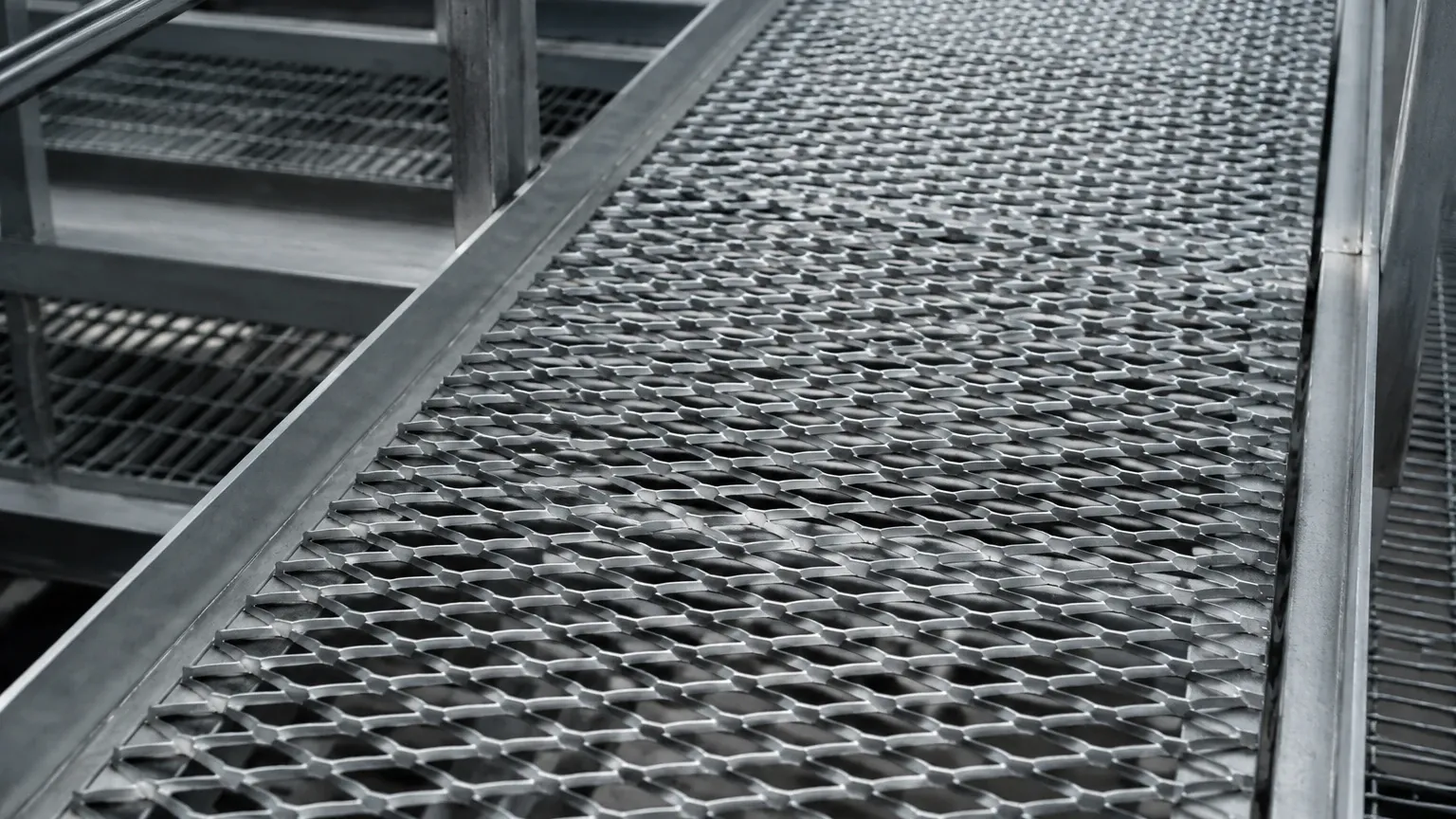
In industrial environments, the selection of flooring and access platforms is a critical engineering decision that impacts safety, structural integrity, and operational efficiency. An expanded metal walkway serves as a high-performance solution for mezzanine floors, catwalks, and maintenance platforms, particularly in sectors such as chemical processing, water treatment, and food production. Unlike solid plate flooring, expanded metal offers a unique combination of high strength-to-weight ratios and open-area functionality, making it an essential component in modern industrial design.
For engineering and procurement teams, understanding the technical nuances of Perforated & Expanded Metal is vital for ensuring that the chosen material meets the specific load-bearing and environmental requirements of the facility.
Engineering Fundamentals of Expanded Metal Walkways
Expanded metal is manufactured through a specialized process of simultaneously slitting and stretching a single sheet of metal. This process creates a diamond-shaped pattern of openings, where the metal strands are interconnected by "bonds." Because the material is stretched rather than punched, there is zero scrap or waste during production, making it a highly cost-effective and sustainable choice compared to perforated metal for large-scale walkway applications.
For walkway applications, the material is typically produced in two forms: standard (raised) and flattened.
1. Standard Expanded Metal: In this form, the strands are set at a sharp angle to the plane of the sheet. This creates a natural anti-slip surface with high grip, which is ideal for walkways where oil, water, or chemical spills are common.
2. Flattened Expanded Metal: This is standard expanded metal that has been cold-rolled to create a smooth, flat surface. While it offers less slip resistance, it is often preferred in environments where a level surface is required for rolling equipment or where direct contact with sensitive materials occurs.
Technical Parameters and Load-Bearing Capacity
When specifying an expanded metal walkway, engineers must evaluate several key geometric and mechanical parameters to ensure the structure can handle the intended live and dead loads. The performance of the walkway is largely determined by the orientation of the diamond pattern and the thickness of the strands.
* SWD (Short Way of Design): The distance from the center of one bond to the center of the next bond measured across the short diamond diagonal.
* LWD (Long Way of Design): The distance measured across the long diamond diagonal.
* Strand Thickness and Width: These dimensions dictate the overall rigidity of the panel. For walkways, thicker strands are required to minimize deflection under pedestrian or equipment weight.
In structural engineering, the orientation of the LWD is critical. To maximize the load-bearing capacity, the LWD should generally run perpendicular to the support beams (the span). If the LWD runs parallel to the supports, the material’s ability to resist bending is significantly reduced, which can lead to unsafe levels of deflection.
Material Selection for Industrial Environments
The choice of material for an expanded metal walkway depends heavily on the chemical and atmospheric conditions of the installation site. As a specialist in stainless steel filtration and metal components, Kaifil emphasizes the importance of matching alloy properties to the operational environment.
Stainless Steel (304 and 316 Grades)
Stainless steel is the gold standard for walkways in pharmaceutical, food processing, and chemical industries. Grade 304 offers excellent corrosion resistance for most general applications. However, in environments exposed to chlorides or high-salinity conditions, Grade 316 is preferred due to its added molybdenum content, which prevents pitting and crevice corrosion. Stainless steel walkways are also easier to sanitize, making them ideal for facilities with strict hygiene protocols.
Carbon Steel and Galvanized Finishes
Carbon steel is a robust and economical choice for indoor industrial settings. To prevent oxidation, carbon steel walkways are often hot-dip galvanized. This process provides a thick layer of zinc that protects the steel from moisture and atmospheric corrosion, making it suitable for outdoor access ramps and cooling tower platforms.
Aluminum
Aluminum expanded metal is utilized where weight reduction is a priority. It is naturally resistant to corrosion and is frequently used in marine environments or architectural applications where aesthetics and low maintenance are required.
Safety, Drainage, and Open Area Benefits
One of the primary reasons engineers specify an expanded metal walkway over solid steel plate is the management of debris and fluids. The open-area percentage of expanded metal allows for the immediate drainage of liquids, preventing the formation of puddles that could lead to hydroplaning or chemical hazards.
Furthermore, the open pattern allows for the passage of light and air. In multi-level industrial facilities, this is crucial for maintaining visibility and ensuring that HVAC systems can circulate air effectively between floors. From a safety perspective, the transparency of the walkway allows operators to monitor equipment or personnel on lower levels, enhancing overall site awareness.
In terms of slip resistance, the raised strands of standard expanded metal provide multi-directional grip. This is particularly effective in shedding mud, snow, or grease, ensuring that the walking surface remains safe even in demanding outdoor or heavy-industrial conditions.
Comparing Perforated & Expanded Metal for Platforms
While both perforated and expanded metals are used in industrial platforms, they serve different primary functions. Perforated metal is often selected for its aesthetic precision and specific filtration capabilities, whereas expanded metal is generally favored for structural walkways due to its inherent strength and cost efficiency.
* Structural Integrity: Expanded metal is often stronger than an equivalent weight of perforated metal because the strands are not cut but stretched, maintaining the continuity of the metal grain.
* Cost Efficiency: Because there is no material waste in the expanding process, expanded metal is typically more affordable per square foot than perforated metal, especially when using expensive alloys like stainless steel.
* Grip: The angular strands of expanded metal provide superior natural traction compared to the flat surface of standard perforated sheets.
However, in applications where precise hole sizes are required for secondary filtration or where a specific airflow rate must be strictly controlled, perforated metal may be the more appropriate choice. Engineers must weigh these factors against the primary requirement for pedestrian safety and load support.
Integration with Industrial Filtration Systems
In many chemical and water treatment plants, expanded metal walkways are not just standalone structures but are integrated parts of a larger filtration and processing infrastructure. These walkways often provide access to large-scale filter housings, pressure vessels, and sedimentation tanks.
Given Kaifil's expertise in custom stainless steel filtration solutions, we recognize that the materials used in the walkway must be compatible with the fluids being processed nearby. For instance, in a wastewater treatment plant, the walkway must withstand the same corrosive gases (such as hydrogen sulfide) that the filtration components encounter. Using consistent high-grade stainless steel across both the filtration hardware and the access platforms ensures a uniform maintenance cycle and prevents galvanic corrosion between dissimilar metals.
Maintenance and Inspection Protocols
To ensure the long-term safety of an expanded metal walkway, a regular inspection and maintenance schedule is required. Engineers should focus on the following areas:
1. Connection Points: Inspect the welds or mechanical fasteners that secure the expanded metal panels to the structural frame. Vibrations from industrial machinery can sometimes loosen these connections over time.
2. Corrosion Monitoring: In chemical environments, check for signs of thinning strands or localized pitting, particularly in areas where fluids might collect near the support bonds.
3. Deflection Testing: Periodically check for permanent deformation in the panels. If a walkway shows signs of "sagging," it may indicate that the original load-bearing calculations were exceeded or that the material has reached the end of its fatigue life.
4. Cleaning: While the open design is self-cleaning to an extent, a build-up of solidified chemicals or heavy grease can compromise slip resistance. High-pressure washing or steam cleaning is usually sufficient for stainless steel expanded metal.
Procurement Checklist for Engineers
Before ordering expanded metal for a walkway project, technical teams should confirm the following specifications to ensure the product is fit for purpose:
* Material Grade: Is 304 sufficient, or does the environment require 316 stainless steel?
* Style: Standard (raised) for grip or flattened for smooth transit?
* Diamond Size: What are the required SWD and LWD dimensions to meet the safety requirements (e.g., preventing small tools from falling through)?
* Load Requirements: What is the maximum concentrated load and uniform live load the walkway must support?
* Span Distance: What is the distance between the support beams, and is the LWD oriented correctly across that span?
* Finish: Does the application require passivation (for stainless steel), galvanization (for carbon steel), or a powder coating for visibility?
By addressing these technical details during the design phase, purchasing teams can avoid costly retrofits and ensure that the facility remains compliant with industrial safety standards. For specialized applications requiring custom dimensions or high-precision metal components, consulting with a manufacturer experienced in industrial filtration and metal fabrication is recommended to optimize both performance and cost-effectiveness.
