


Expanded Metal Window Well Covers
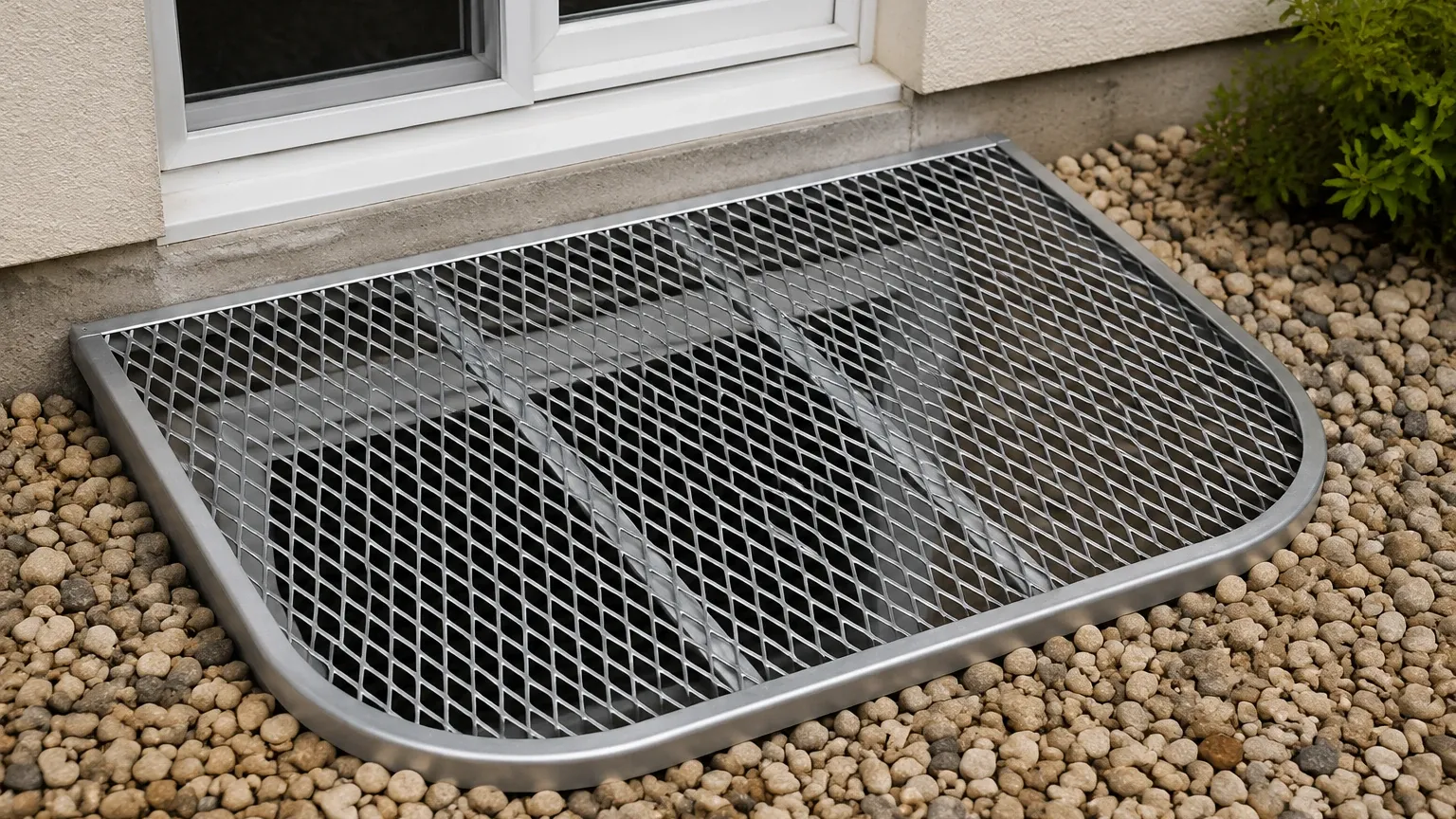
In industrial and commercial architecture, the management of subterranean or semi-subterranean spaces requires a strategic approach to safety, ventilation, and structural integrity. Window wells, while essential for providing natural light and emergency egress to lower-level facilities, present significant risks if left unprotected. Expanded metal window well covers serve as a critical engineering solution, bridging the gap between open-air requirements and the need for robust physical barriers. Unlike solid covers or plastic alternatives, these metal components provide the durability required for high-traffic or harsh industrial environments while maintaining the functional benefits of the window well itself.
Selecting the appropriate Perforated & Expanded Metal for these applications involves a deep understanding of material science, load-bearing requirements, and environmental resistance. For engineers and facility managers, the choice of a window well cover is not merely an aesthetic decision but a technical specification that impacts the long-term safety and maintenance of the building envelope.
The Industrial Utility of Expanded Metal Window Well Covers
Industrial facilities often utilize window wells for basement-level workshops, storage areas, or utility rooms. These areas require constant airflow to prevent the accumulation of moisture and gases, yet they must be shielded from debris, unauthorized entry, and accidental falls. Expanded metal is uniquely suited for this role due to its manufacturing process.
Unlike woven wire mesh, expanded metal is produced by simultaneously slitting and stretching a single sheet of metal. This process creates a continuous, jointless structure that possesses a high strength-to-weight ratio. In the context of window well covers, this means the grate can support significant weight—such as pedestrian traffic or heavy snow loads—without the risk of individual wires unraveling or welds failing. For B2B applications, this structural reliability is paramount for ensuring compliance with safety regulations and minimizing liability.
Material Selection for Harsh Environments
When specifying expanded metal window well covers, the choice of material is the primary determinant of the component's service life. Industrial environments often expose metal surfaces to corrosive agents, including de-icing salts, chemical runoff, and high humidity.
Stainless Steel (Grades 304 and 316)
Stainless steel is the gold standard for industrial filtration and structural components. Grade 304 offers excellent corrosion resistance for most standard applications. However, in coastal regions or facilities dealing with high chloride exposure, Grade 316 is preferred due to the addition of molybdenum, which enhances resistance to pitting. Kaifil’s expertise in stainless steel fabrication ensures that these covers maintain their structural integrity even in demanding chemical processing or pharmaceutical environments.
Carbon Steel and Galvanization
For projects where cost-efficiency is a primary driver, carbon steel with a hot-dip galvanized finish is a common alternative. The galvanization process provides a sacrificial zinc layer that protects the underlying steel from oxidation. While effective, it is important to note that any deep scratches or modifications made post-galvanization can expose the steel to rust, potentially shortening the replacement cycle compared to stainless steel options.
Aluminum
Aluminum expanded metal is utilized where weight reduction is critical. While it offers natural corrosion resistance through its oxide layer, it generally lacks the load-bearing capacity of steel unless specified in significantly thicker gauges. It is most often seen in light-duty commercial applications where ease of removal for maintenance is a priority.
Geometric Specifications: LWD, SWD, and Strand Geometry
To ensure the performance of expanded metal window well covers, engineers must define the mesh geometry. The terminology used in the production of Perforated & Expanded Metal is specific and dictates both the physical strength and the aperture size of the cover.
1. LWD (Long Way of Design): The distance from the center of one bond to the center of the next bond across the long axis of the diamond.
2. SWD (Short Way of Design): The distance across the short axis of the diamond.
3. Strand Width and Thickness: These dimensions determine the overall "heaviness" of the mesh. A wider strand increases the surface area of the metal, improving load-bearing capacity but reducing the open area percentage.
For window well covers, a balance must be struck. A smaller SWD prevents smaller debris (such as leaves or gravel) from entering the well, while a larger LWD/SWD combination is often preferred for maximizing light transmission. Engineering teams must evaluate the specific environmental hazards of their site—such as the proximity to deciduous trees or the likelihood of wind-blown trash—to determine the optimal mesh size.
Structural Integrity and Load-Bearing Capacity
One of the most common failures in commercial window well covers is the selection of a gauge that is too light for the intended environment. In a B2B context, window well covers may be located in areas where maintenance personnel walk or where equipment is moved.
Fall Protection Standards
In many jurisdictions, window well covers must meet specific fall protection standards. This requires the mesh to support a concentrated load without permanent deformation. Expanded metal inherently distributes weight across its interconnected strands, but the thickness of the base material remains the critical factor. For heavy-duty industrial use, a flattened expanded metal may be used to provide a smoother walking surface, whereas raised (standard) expanded metal offers superior slip resistance.
Support Frames and Anchoring
The mesh itself is only one part of the system. A professional-grade cover includes a perimeter frame, typically constructed from angle iron or U-edging. This frame ensures that the load is transferred effectively to the window well walls. Proper anchoring—using masonry bolts or specialized clips—is essential to prevent the cover from shifting under load or being removed by unauthorized personnel.
Airflow Dynamics and Light Permeability
Unlike solid covers (such as polycarbonate or sheet metal), expanded metal allows for nearly unobstructed airflow. This is vital for window wells that serve as air intakes for HVAC systems or those located in damp climates where stagnant air leads to mold growth and structural decay of the window frame.
Engineers can calculate the "Open Area Percentage" of the mesh to predict airflow performance. For example, a mesh with a 60% open area provides a significant barrier to entry while allowing enough light to meet egress lighting requirements in many building codes. The angular nature of the expanded metal strands can also be utilized to deflect rain or direct sunlight, depending on the orientation of the mesh during installation.
Customization and OEM Integration
Industrial projects rarely adhere to standard residential dimensions. Large-scale manufacturing facilities, hospitals, and data centers often feature oversized or uniquely shaped window wells to accommodate complex utility configurations. This is where custom manufacturing becomes essential.
Kaifil provides tailored solutions that include:
* Custom Sizing: Precision cutting to fit non-standard well geometries.
* Integrated Egress Hatches: For window wells designated as emergency exits, the cover must be easily openable from the inside without tools. We can integrate reinforced hinges and quick-release mechanisms that meet fire safety codes.
* Surface Finishes: Beyond material selection, finishes such as electropolishing for stainless steel or specialized powder coatings can be applied to meet specific aesthetic or chemical resistance requirements.
By working with a manufacturer that understands both filtration and structural metal fabrication, purchasing teams can ensure that their window well covers are integrated into the broader facility management strategy rather than being treated as an afterthought.
Total Cost of Ownership and Maintenance Cycles
When evaluating expanded metal window well covers, the initial purchase price is only one component of the total cost of ownership (TCO). Inexpensive, light-gauge covers often require replacement every 3-5 years due to corrosion or physical damage. In contrast, a high-quality stainless steel or heavy-duty galvanized cover can last 20 years or more with minimal maintenance.
Maintenance Recommendations
* Debris Removal: Periodically clearing the surface of the mesh ensures that airflow and light transmission remain optimal.
* Inspection of Anchors: In high-vibration industrial zones, anchoring hardware should be checked annually for tightness.
* Coating Integrity: For galvanized or coated covers, any signs of surface oxidation should be addressed immediately with cold-galvanizing sprays or touch-up paint to prevent deep structural corrosion.
Procurement Checkpoints for Engineering Teams
Before finalizing a purchase order for expanded metal window well covers, technical professionals should confirm the following data points:
1. Load Requirements: Will the cover be subjected to pedestrian traffic, or is it strictly for debris protection?
2. Environmental Classification: Is the site classified as C3 (medium), C4 (high), or C5 (very high) in terms of atmospheric corrosivity?
3. Dimensional Accuracy: Are the measurements taken from the inner or outer lip of the window well? Is the well perfectly rectangular, or is there a radius involved?
4. Compliance: Does the design meet local building codes for emergency egress and fall protection?
By addressing these factors during the design and procurement phase, facilities can avoid the costs associated with retrofitting and premature failure. For those seeking high-performance, precision-engineered solutions, exploring the technical options available in Perforated & Expanded Metal is the first step toward a secure and functional installation. Kaifil’s commitment to quality and customized engineering ensures that every filtration and structural component meets the rigorous demands of the modern industrial landscape.
