


Expanded Metal Xs-41
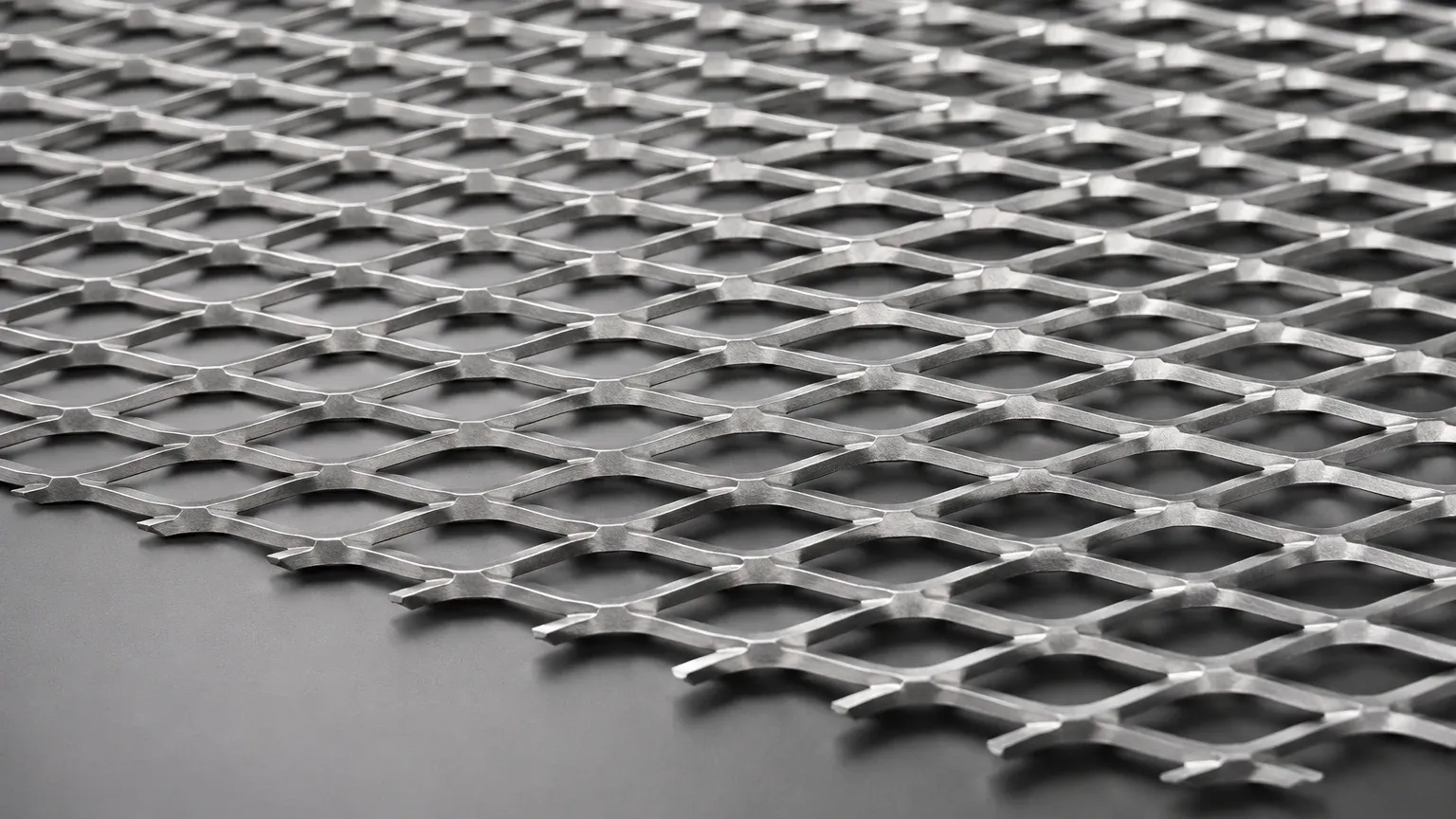
In the landscape of industrial materials, expanded metal stands out as a versatile and resource-efficient solution for structural, decorative, and filtration applications. Among the various specifications available to engineers and procurement specialists, expanded metal xs-41 represents a specific industrial standard known for its durability and balance of open area. Unlike perforated metal, which is created by punching holes and discarding the resulting slugs, expanded metal is produced by simultaneously slitting and stretching a solid metal sheet. This process creates a diamond-shaped pattern without any material waste, resulting in a product that is often stronger and lighter than the original sheet.
For technical professionals in sectors such as chemical processing, water treatment, and industrial manufacturing, selecting the right mesh style is critical for ensuring the longevity of equipment and the efficiency of filtration processes. This guide examines the technical properties, application environments, and selection criteria for expanded metal xs-41 within the broader context of Perforated & Expanded Metal solutions.
Technical Specifications and Geometry of XS-41
To effectively integrate expanded metal xs-41 into an industrial design, one must first understand the geometric parameters that define its performance. The "XS" designation typically refers to a specific style of heavy-duty or "extra-strong" mesh, while the numerical value "41" identifies the specific diamond dimensions and strand characteristics.
The geometry of expanded metal is defined by four primary measurements: the Long Way of the Diamond (LWD), the Short Way of the Diamond (SWD), the strand width, and the strand thickness. In the case of XS-41, the diamond pattern is engineered to provide a specific percentage of open area, which directly influences flow rates in filtration and air permeability in ventilation applications.
Standard vs. Flattened XS-41
Engineers must choose between "Standard" (also known as Raised) and "Flattened" variations.
1. Standard Expanded Metal: In its standard form, the strands and bonds (the intersections of the strands) are set at a uniform angle to the plane of the sheet. This creates a three-dimensional surface that offers excellent grip for walkways and high structural rigidity. In filtration, the raised profile can create turbulence, which may be desirable in certain fluid dynamics scenarios to prevent the rapid buildup of a filter cake.
2. Flattened Expanded Metal: This version is produced by passing the standard expanded metal through a cold-roll reducing mill. The process flattens the strands and bonds into a single plane, resulting in a smooth, flat surface. Flattened expanded metal xs-41 is often preferred when the mesh serves as a support layer for finer wire cloth or synthetic filter media, as the flat surface prevents the delicate secondary layers from being punctured or abraded under high pressure.
Material Selection for Corrosive Environments
While expanded metal xs-41 can be manufactured from various materials, including carbon steel and aluminum, industrial filtration applications often demand the use of stainless steel. Kaifil specializes in manufacturing these components from high-grade alloys to meet the rigorous demands of the pharmaceutical and chemical sectors.
Stainless Steel 304 and 316
For most general industrial applications, Type 304 stainless steel provides an excellent balance of cost and corrosion resistance. However, in environments involving high chloride concentrations or acidic solutions—common in marine and chemical processing—Type 316 stainless steel is the preferred choice. The addition of molybdenum in 316 stainless steel enhances its resistance to pitting and crevice corrosion, ensuring that the expanded metal xs-41 maintains its structural integrity over long service cycles.
Specialty Alloys
In extreme cases involving high temperatures or highly aggressive chemicals, engineers may specify nickel alloys or duplex stainless steels. The manufacturing process for expanded metal must be carefully controlled when working with these harder materials to ensure that the stretching process does not introduce micro-fractures in the strands, which could lead to premature failure under mechanical stress.
Applications in Industrial Filtration and Support
The primary role of expanded metal xs-41 in the filtration industry is often structural. While the mesh itself can act as a coarse filter for removing large debris from water intakes or industrial runoff, it is most frequently used as a "drainage layer" or a "support core" within a multi-stage filter cartridge.
Support for Pleated Media
In pleated filter designs, the filter media (such as fine wire mesh or fiberglass) requires a rigid backing to maintain the pleat geometry under the force of fluid flow. Expanded metal xs-41 provides the necessary stiffness to prevent pleat collapse. Because the expanded metal is a single piece of material without welds or weaves, it offers uniform strength across the entire surface, which is critical for maintaining consistent flow distribution.
Inner and Outer Cages
In heavy-duty hydraulic or oil filtration, expanded metal is often rolled into cylinders to form the inner core or the outer protective cage of a filter element. The XS-41 style is particularly suited for this because its strand thickness can withstand high differential pressures. An inner core made of expanded metal must resist the crushing force of the fluid passing from the outside in, while an outer cage protects the delicate filter media from mechanical damage during installation and maintenance.
Key Evaluation Criteria for Procurement
When sourcing expanded metal xs-41 for B2B applications, procurement teams must look beyond the basic style name and evaluate the product based on several performance-linked criteria.
Percentage of Open Area
The open area is perhaps the most critical factor for filtration and heat exchange applications. It determines the pressure drop across the mesh. If the open area is too low, the system will require more energy to pump fluid through the filter, increasing operational costs. Conversely, if the open area is too high, the structural integrity of the mesh may be compromised. Technical data sheets for XS-41 should clearly state the open area percentage to allow for accurate flow calculations.
Weight and Material Efficiency
One of the primary advantages of expanded metal is its weight-to-strength ratio. Because the metal is expanded rather than punched, a single ton of raw material produces significantly more square footage of expanded metal than perforated metal. For large-scale projects, such as industrial partitions or large filtration banks, this material efficiency can lead to substantial cost savings in both procurement and shipping.
Dimensional Tolerances
In precision engineering, the tolerances on the LWD and SWD are vital. If the expanded metal is being integrated into a CNC-machined housing or a custom filter cap, even minor deviations in the mesh dimensions can lead to assembly issues. Buyers should confirm that the manufacturer adheres to industry-standard tolerances, such as those established by the Expanded Metal Manufacturers Association (EMMA).
Manufacturing Considerations: Customization and OEM Support
Standard off-the-shelf expanded metal may not always meet the specific requirements of a specialized industrial application. This is where the capabilities of a custom manufacturer like Kaifil become essential. OEM filtration solutions often require expanded metal xs-41 to be tailored in several ways:
* Custom Sheet Sizes: To minimize waste during the fabrication of filter components, expanded metal can be produced in specific sheet sizes or continuous coils.
* Edge Treatments: Depending on the application, the edges of the mesh may need to be "bond sheared" (cut through the intersections to leave a smooth edge) or "random sheared" (cut through the diamonds, leaving sharp points). For filters that are handled frequently by maintenance staff, bond shearing or U-edging is often required for safety.
* Surface Finishing: Beyond flattening, expanded metal can undergo additional treatments such as electropolishing, degreasing, or pickling. For food and beverage or pharmaceutical applications, electropolishing is often necessary to create a burr-free, ultra-smooth surface that resists bacterial growth and is easy to clean.
Common Risks and Quality Assurance
Selecting a lower-quality expanded metal product can lead to several operational risks. It is important for engineers to be aware of these potential pitfalls during the inspection and testing phase.
1. Burrs and Sharp Edges: The slitting process naturally creates sharp edges. In filtration, a stray burr can break off and contaminate the downstream fluid, or it can puncture the primary filter media. High-quality expanded metal xs-41 should undergo a de-burring process, especially if it is intended for use in sensitive environments.
2. Camber and Flatness: Camber refers to the bow or curve in a sheet of expanded metal. If a sheet has excessive camber, it will not lie flat, making it difficult to weld or frame. Quality control processes must ensure that the material meets flatness specifications, particularly for flattened mesh styles.
3. Material Fatigue: If the expansion ratio is too aggressive for the material thickness, the strands may develop micro-cracks. Under the cyclic loading common in hydraulic systems, these cracks can propagate, leading to a catastrophic failure of the support structure.
Conclusion: Confirming Requirements for Next Steps
Before finalizing a purchase order for expanded metal xs-41, technical teams should confirm the specific environmental conditions and mechanical loads the material will face. Key questions to address include:
* What is the maximum differential pressure the mesh must support?
* Will the mesh be in contact with corrosive chemicals that necessitate 316L stainless steel?
* Is a flattened surface required to protect secondary filter layers?
* Are there specific weight constraints for the overall assembly?
By focusing on these factual engineering requirements, procurement professionals can ensure they select a mesh that optimizes both performance and total cost of ownership. For those seeking specialized guidance or custom-engineered components, reviewing the available Perforated & Expanded Metal options is the first step toward a reliable filtration solution. Whether used as a simple screen or a complex structural core, expanded metal xs-41 remains a cornerstone of modern industrial design, providing the strength and versatility required for the most demanding applications.
