


Expanded Metal X344
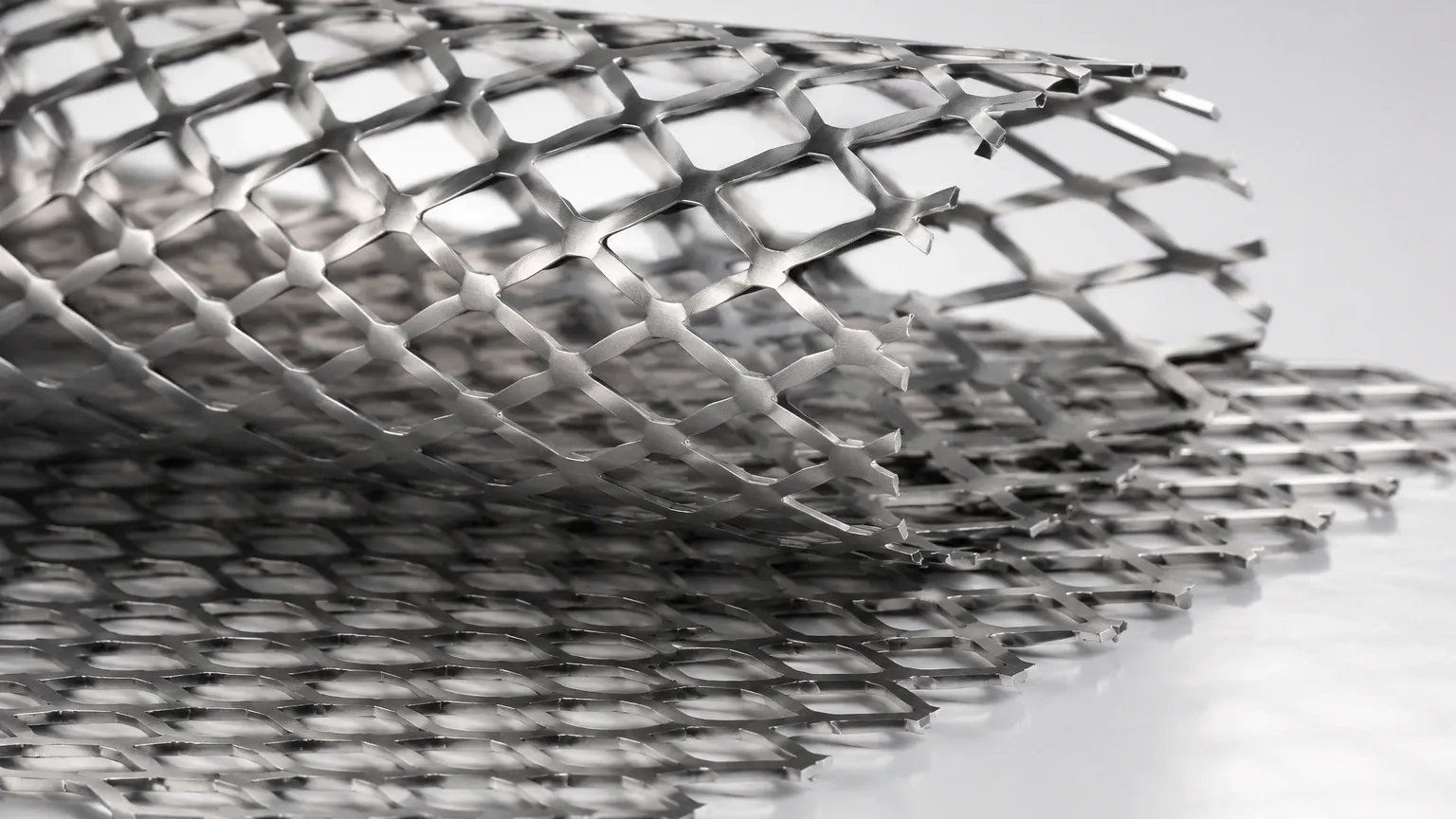
In industrial engineering and filtration design, the selection of structural support materials is as critical as the selection of the primary filter media itself. Expanded metal, specifically the X344 designation, represents a specialized configuration used across various sectors including chemical processing, water treatment, and industrial machinery. Unlike perforated metal, which is created by punching holes and removing material, expanded metal is produced by simultaneously slitting and stretching a solid sheet. This process creates a diamond-shaped pattern that maintains structural integrity while providing significant open area for fluid or gas passage.
For engineers and procurement teams, understanding the technical nuances of expanded metal x344 is essential for ensuring system longevity and filtration efficiency. This article examines the specifications, material considerations, and application-specific benefits of this particular mesh style within the broader context of industrial Perforated & Expanded Metal solutions.
Technical Specifications of Expanded Metal X344
The "X344" designation typically refers to a specific geometry within a manufacturer's catalog, often characterized by its diamond size and strand thickness. In the context of industrial filtration and structural support, the performance of expanded metal is defined by several key metrics:
* Long Way of Diamond (LWD): The distance from the center of one joint to the center of the next joint across the long axis of the diamond.
* Short Way of Diamond (SWD): The distance across the short axis of the diamond.
* Strand Width: The amount of metal fed into the expanding machine between the slits.
* Strand Thickness: The original thickness of the base metal sheet.
* Open Area Percentage: This is perhaps the most critical metric for filtration applications, as it determines the pressure drop across the component and the flow velocity of the medium.
Expanded metal x344 is often selected for its balance between rigidity and transparency. Because the strands are set at an angle to the plane of the sheet, the material possesses a three-dimensional quality that adds mechanical strength. This makes it an ideal candidate for high-pressure environments where a flat perforated sheet might deform or fail under stress.
Material Selection and Corrosion Resistance
While expanded metal can be produced from various alloys, stainless steel remains the gold standard for industrial filtration environments. When specifying expanded metal x344, engineers must consider the chemical compatibility of the material with the process fluid.
Stainless Steel 304 vs. 316L
For most general industrial applications, Grade 304 stainless steel provides sufficient corrosion resistance and structural durability. However, in chemical processing or marine environments, Grade 316L is preferred due to its molybdenum content, which offers superior resistance to pitting and crevice corrosion, particularly in the presence of chlorides.
Specialized Alloys
In high-temperature or highly acidic environments, exotic alloys like Monel, Inconel, or Hastelloy may be required. The expansion process for these materials requires specialized tooling and precise control over the stretching phase to prevent micro-fractures in the strands. For filtration systems handling caustic chemicals, the material choice directly impacts the total cost of ownership by extending the replacement cycle and reducing the risk of downstream contamination from corroded particles.
Integration into Industrial Filtration Systems
In the realm of filtration, expanded metal x344 rarely acts as the primary filtration layer for fine particles. Instead, it serves several critical secondary functions that enable the primary media to perform at its peak.
Support for Pleated Media
In stainless steel filter cartridges, pleated wire mesh often lacks the inherent stiffness to withstand high differential pressures. Expanded metal x344 is frequently used as an inner core or an outer cage. The diamond pattern provides a high ratio of open area, ensuring that the support structure does not impede the flow, while the rigid strands prevent the pleated media from collapsing or shifting during pressure surges.
Pre-Filtration and Debris Shielding
For water treatment and intake systems, expanded metal acts as a robust pre-filter. It captures large debris—such as stones, wood, or large organic matter—before they can reach and damage more sensitive fine-mesh filters or pump impellers. The angular nature of the expanded strands can also help in breaking up laminar flow, creating a degree of turbulence that can be beneficial in certain mixing or heat exchange applications.
Engineering Considerations for Customization
Standard off-the-shelf expanded metal often requires further processing to meet the stringent requirements of OEM industrial equipment. When evaluating Perforated & Expanded Metal for a specific project, several customization factors should be confirmed with the manufacturer:
1. Flattened vs. Raised: Standard expanded metal (raised) has strands that are tilted. Flattened expanded metal is passed through a cold-rolling mill, which levels the strands into a single plane. Flattened mesh is often easier to weld and provides a smoother surface, which is critical if the mesh is in direct contact with delicate filter cloth.
2. Dimensional Tolerances: For precision filter housings, the LWD and SWD must be consistent across the entire sheet. Variations in the expansion process can lead to "camber" or bowing, which complicates the assembly of cylindrical filter cartridges.
3. Edge Finishing: In many B2B applications, the edges of the expanded metal must be deburred or framed. Sharp edges can tear filter media or pose a safety risk during maintenance cycles.
Evaluating Quality and Avoiding Common Risks
Procuring expanded metal x344 involves more than just verifying the diamond dimensions. Low-quality expanded metal can introduce several risks into a production line. One common issue is the presence of "slivers" or burrs. These are small fragments of metal that remain attached to the strands after the slitting process. In a pharmaceutical or food-grade application, these slivers can break off and enter the process stream, leading to catastrophic quality failures.
Another risk is inconsistent strand width. If the feed mechanism on the expanding machine is not precisely calibrated, some diamonds may be larger than others. This inconsistency creates weak points in the mesh where the material is more likely to fatigue and fail under vibration or cyclic pressure loading. Engineers should request material certifications and, where necessary, ultrasonic cleaning or passivation to ensure the mesh is free of contaminants and ready for high-purity environments.
Maintenance and Total Cost of Ownership
From a procurement perspective, the initial cost of expanded metal x344 is only one part of the equation. The total cost of ownership is determined by how long the component remains in service without requiring maintenance or replacement.
Stainless steel expanded metal is inherently low-maintenance, but it is not "set and forget." In filtration systems, the mesh should be inspected during routine filter element changes for signs of erosion or scale buildup. Because of the diamond geometry, expanded metal can sometimes trap particles at the joints (the "bonds"). If the system uses backwashing for cleaning, the orientation of the expanded metal (the angle of the strands) can significantly affect the efficiency of the cleaning cycle. Designing the system with the correct mesh orientation can reduce the frequency of manual cleanings and extend the overall life of the filter assembly.
Conclusion: Choosing the Right Partner for X344 Solutions
Selecting expanded metal x344 requires a deep understanding of both the mechanical properties of the metal and the fluid dynamics of the application. Whether the goal is to provide a rigid backbone for a hydraulic filter or to create a durable protective screen for a chemical reactor, the precision of the manufacturing process is paramount.
By focusing on material purity, dimensional accuracy, and application-specific customization, engineers can ensure that their filtration systems operate at peak efficiency. When moving from the design phase to procurement, it is vital to work with manufacturers who provide transparent technical data and can support the specific tolerances required for high-performance industrial components. For those seeking detailed specifications or custom configurations, it is recommended to review product options and application support to align the material selection with the specific demands of the industrial environment.
