


Expanded Metal
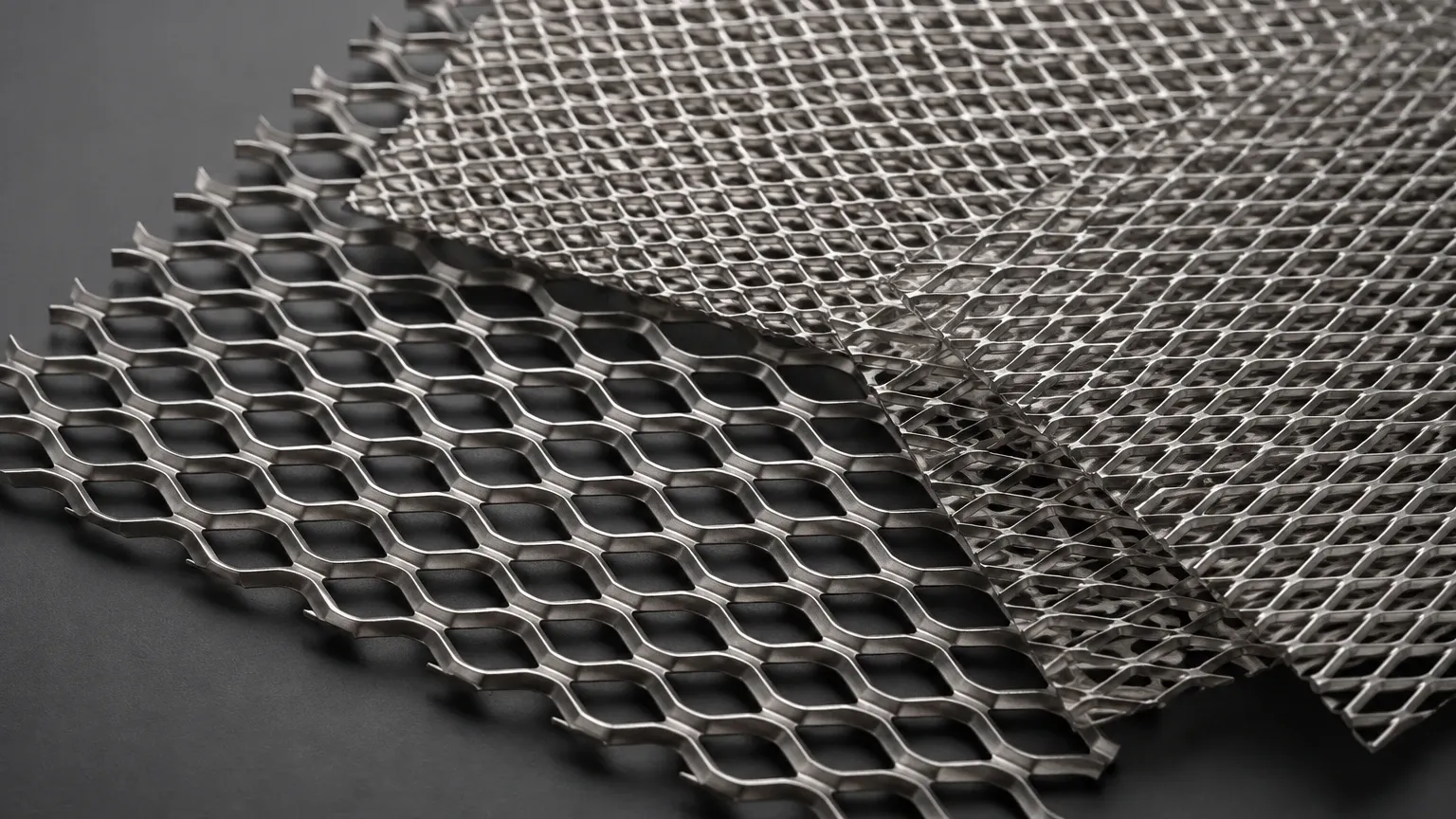
In industrial filtration and structural engineering, material selection is dictated by the balance between mechanical strength, open area, and cost-efficiency. Expanded metal represents a specialized category of fabricated metal that addresses these requirements through a unique manufacturing process. Unlike perforated metal, which is created by punching holes and removing material, expanded metal is produced by simultaneously slitting and stretching a solid sheet of metal. This process creates a continuous, diamond-shaped mesh that retains the structural integrity of the original sheet while providing significant weight reduction and permeability.
For engineers and procurement professionals at Kaifil, understanding the technical nuances of expanded metal is essential for designing effective filtration systems. Whether used as a support core for a pleated filter cartridge or as a protective outer guard for industrial machinery, expanded metal offers a high strength-to-weight ratio that is difficult to replicate with other mesh types.
The Manufacturing Process and Structural Variations
The production of expanded metal is a cold-forming process. A metal sheet or coil is fed through a machine equipped with a reciprocating knife. As the knife slits the metal, it also stretches it, expanding the slits into uniform diamond-shaped openings. Because no material is lost during this process, expanded metal is often more cost-effective than perforated metal, where the "slugs" or circular cutouts are discarded as scrap.
Standard vs. Flattened Expanded Metal
There are two primary forms of expanded metal used in industrial applications:
1. Standard (Raised) Expanded Metal: This is the product as it comes off the expanding machine. The strands and bonds are set at a uniform angle to the plane of the sheet. This creates a three-dimensional surface that provides excellent grip and high rigidity. In filtration, the raised profile can help create turbulence in fluid flow, which may be desirable in specific mixing or heat exchange applications.
2. Flattened Expanded Metal: To create a smooth, two-dimensional surface, standard expanded metal is passed through a cold-rolling reducing mill. This process flattens the strands and bonds, resulting in a sheet that is thinner, smoother, and slightly longer than the original raised sheet. Flattened expanded metal is preferred when the mesh must be in direct contact with delicate filter media, such as fine wire cloth or synthetic membranes, to prevent abrasion or puncturing.
Key Engineering Specifications for Expanded Metal
When specifying Perforated & Expanded Metal for industrial projects, engineers must define several critical dimensions that determine the performance of the mesh. These specifications directly impact the flow rate, pressure drop, and mechanical load-bearing capacity of the final component.
* SWD (Short Way of Design): The distance from the center of one bond to the center of the next bond measured across the short diamond diagonal.
* LWD (Long Way of Design): The distance from the center of one bond to the center of the next bond measured across the long diamond diagonal.
* SWO (Short Way of Opening): The actual width of the opening, measured from the inside of the bonds.
* LWO (Long Way of Opening): The actual length of the opening, measured from the inside of the bonds.
* Strand Width: The amount of metal fed under the knives to produce one strand.
* Strand Thickness: The thickness of the original base metal.
By adjusting these variables, manufacturers can customize the open area percentage. In filtration, a higher open area reduces the resistance to fluid flow (lower pressure drop), while a smaller open area or thicker strands increase the structural support for the filter media.
Applications in Industrial Filtration Systems
Expanded metal serves several vital functions in the design of industrial filters. Its primary role is often structural, providing a rigid framework that allows the filter to withstand high differential pressures without collapsing.
Internal Support Cores
In high-pressure hydraulic and chemical processing applications, filter cartridges are subjected to significant inward pressure. An internal core made of expanded metal provides the necessary hoop strength to prevent the media from imploding. The diamond pattern ensures that the support is distributed evenly across the surface of the filter media.
Outer Protective Guards
For filters used in harsh environments, such as water treatment or heavy machinery, an outer guard is necessary to protect the primary filtration layer from mechanical damage during installation or operation. Expanded metal guards are robust enough to deflect large debris while remaining light enough to keep the overall assembly manageable.
Pre-Filtration and Coarse Screening
In some instances, expanded metal acts as the primary filtration stage. In HVAC systems or grease filters for the food and beverage industry, multiple layers of expanded metal are stacked to trap large particulates. The staggered diamond patterns create a tortuous path for the air or fluid, increasing the surface area for particle impingement.
Material Selection and Chemical Compatibility
The performance of expanded metal is heavily dependent on the alloy used. Because Kaifil specializes in demanding industrial environments, stainless steel is the most common material choice due to its durability and resistance to environmental degradation.
* 304 Stainless Steel: The standard grade for general industrial use. it offers good corrosion resistance and is suitable for most water treatment and food processing applications.
* 316/316L Stainless Steel: Contains molybdenum, which provides superior resistance to chlorides and pitting. This is the preferred material for marine environments, pharmaceutical manufacturing, and aggressive chemical processing.
* Specialty Alloys: For high-temperature or highly corrosive environments, expanded metal can be produced from Monel, Inconel, or Titanium. These materials are used in specialized aerospace and petrochemical applications where standard stainless steels would fail.
Comparing Expanded Metal to Perforated Metal
Engineers often weigh the pros and cons of expanded metal versus perforated metal. While both fall under the broader category of Perforated & Expanded Metal, their mechanical properties differ significantly.
| Feature | Expanded Metal | Perforated Metal |
| :— | :— | :— |
| Material Waste | Minimal (No scrap) | High (Slugs are removed) |
| Weight | Lighter for the same strength | Heavier |
| Structural Integrity | One continuous piece; no welds | One continuous piece; no welds |
| Surface Profile | Raised or Flattened | Always Flat |
| Cost | Generally lower | Generally higher |
| Aesthetics | Industrial/Functional | Precise/Clean |
Expanded metal is typically chosen when cost-efficiency and weight are the primary concerns. Perforated metal is often selected when extremely precise hole sizes (such as sub-millimeter diameters) or specific hole shapes (like slots or squares) are required for fine particle separation.
Engineering Considerations for Customization
When partnering with a manufacturer like Kaifil for custom filtration components, several technical questions should be addressed during the design phase to ensure the expanded metal component meets the application's demands.
1. What is the expected differential pressure?
The thickness and strand width of the expanded metal must be calculated to withstand the maximum expected pressure drop across the filter. If the mesh is too light, it may deform, leading to bypass or catastrophic failure of the filter element.
2. Is the fluid corrosive or abrasive?
Material selection is paramount. In abrasive slurries, a harder alloy or a specific heat treatment may be required to prevent the strands of the expanded metal from thinning over time due to erosion.
3. What are the fabrication requirements?
Expanded metal can be rolled into cylinders, welded, or framed. However, the orientation of the diamonds (LWD vs. SWD) affects how the material bends. Generally, it is easier to roll expanded metal along the LWD. If the component requires precision welding, flattened expanded metal is usually recommended to provide a more consistent contact surface.
4. What is the required flow rate?
The open area percentage must be calculated to ensure that the expanded metal does not become the bottleneck in the system. While it provides support, it must not significantly increase the clean pressure drop of the filter assembly.
Maintenance and Total Cost of Ownership
From a purchasing perspective, the total cost of ownership (TCO) of expanded metal components is influenced by their durability and replacement cycles. Because expanded metal is a single-piece construction without joins or welds in the mesh itself, it is less prone to mechanical failure under vibration or thermal cycling compared to woven wire mesh.
In many industrial filtration systems, the expanded metal support structure is a permanent or long-term component, while the filter media (such as paper or synthetic felt) is the consumable. Ensuring that the expanded metal is made from a high-quality, corrosion-resistant alloy like 316L stainless steel can extend the life of the entire filter housing and reduce the frequency of structural replacements.
Conclusion
Expanded metal is a versatile and essential material in the realm of industrial filtration. Its unique manufacturing process provides a combination of strength, permeability, and cost-effectiveness that is ideal for support cores, protective guards, and coarse filtration stages. By carefully selecting the material grade, diamond dimensions, and surface finish, engineers can optimize their filtration systems for maximum durability and performance.
For technical teams seeking reliable, high-performance filtration components, evaluating the specific benefits of Perforated & Expanded Metal is a critical step in the design process. Whether the goal is to enhance the structural integrity of a hydraulic filter or to provide robust protection in a chemical reactor, expanded metal offers a proven engineering solution for the most demanding industrial environments.
