


Flatex Expanded Metal
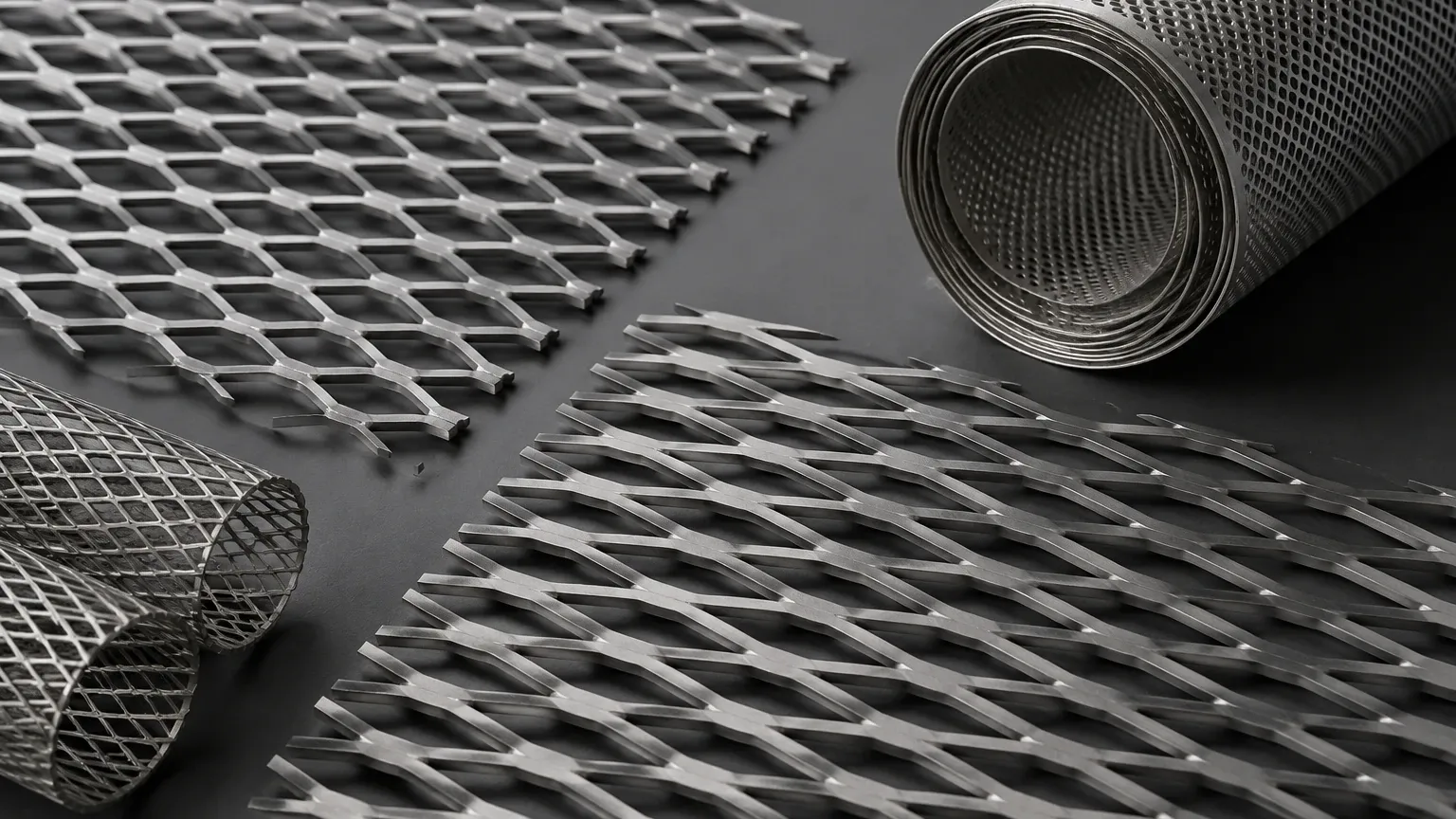
In the realm of industrial filtration and structural component design, material selection is dictated by the balance between mechanical strength, open area, and surface finish. Flatex expanded metal, a term frequently used to describe flattened expanded metal, represents a specialized category of processed mesh that addresses specific engineering requirements where a smooth, two-dimensional surface is paramount. Unlike standard or "raised" expanded metal, the flattening process modifies the physical characteristics of the mesh, making it an essential component in high-precision filtration assemblies and industrial enclosures.
For engineers and procurement professionals, understanding the nuances of flatex expanded metal is critical when specifying components for chemical processing, pharmaceutical manufacturing, or hydraulic systems. This guide examines the technical specifications, manufacturing processes, and application-specific advantages of flattened expanded metal within the broader context of Perforated & Expanded Metal solutions.
Understanding the Manufacturing Process: From Raised to Flattened
The production of flatex expanded metal begins with the standard expansion process. A solid sheet of metal—typically stainless steel for industrial filtration—is simultaneously slit and stretched by a reciprocating knife. This process creates a diamond-shaped pattern without any waste of material, as no metal is punched out. The resulting product is "raised" expanded metal, where the strands and bonds (the intersections of the strands) are set at a sharp angle to the original plane of the sheet.
To produce flatex expanded metal, the raised mesh is passed through a heavy-duty cold-rolling reducing mill. This secondary operation applies significant pressure to the mesh, flattening the strands and bonds back into a single plane.
Technical Implications of Flattening
Several key changes occur during this process that engineers must account for in their designs:
1. Thickness Reduction: The overall thickness of the finished flatex sheet is approximately the same as the original base metal thickness, or slightly less, whereas raised expanded metal can be two to three times thicker than the base material.
2. Elongation: The cold-rolling process slightly elongates the diamond patterns, typically in the Long Way of the Design (LWD). This must be factored into dimensional tolerances for custom filter cartridges.
3. Surface Smoothness: The primary benefit is the elimination of the sharp edges and protrusions found in raised mesh. This is vital for applications where the mesh comes into contact with delicate filter media or requires a flush fit within a housing.
Key Technical Specifications for Engineers
When specifying flatex expanded metal for industrial use, standard terminology ensures precision between the design phase and manufacturing. At Kaifil, we focus on several critical metrics to ensure the final component meets the rigorous demands of industrial environments.
Mesh Dimensions
* SWD (Short Way of Design): The distance from the center of one bond to the center of the next bond across the short axis of the diamond.
* LWD (Long Way of Design): The distance from the center of one bond to the center of the next bond across the long axis of the diamond.
* SWO (Short Way of Opening): The actual width of the opening measured from the inside edges.
* LWO (Long Way of Opening): The actual length of the opening measured from the inside edges.
Strand and Bond Characteristics
In flatex expanded metal, the strand width (the amount of metal between the openings) and the strand thickness (the gauge of the original sheet) are critical for determining the structural integrity of the part. Because the flattening process compresses the material, the strand width may increase slightly, and the bonds become flush with the strands. This creates a uniform surface that is ideal for supporting fine wire mesh in multi-layer filtration systems.
Open Area Percentage
The open area is a fundamental calculation for filtration efficiency and pressure drop. It is determined by the relationship between the strand width and the diamond dimensions. Engineers must balance a high open area (for lower pressure drop) with sufficient strand width (for structural rigidity against hydraulic pressure).
Material Selection: Why Stainless Steel Dominates Industrial Filtration
While expanded metal can be produced from aluminum, carbon steel, or copper, industrial filtration applications almost exclusively demand stainless steel. Flatex expanded metal produced from stainless steel offers the chemical compatibility and thermal stability required in harsh processing environments.
Grade 304 vs. Grade 316L
* Stainless Steel 304: The standard choice for general industrial applications. It provides excellent strength and good corrosion resistance for food and beverage processing or standard water treatment.
* Stainless Steel 316L: Specified for environments involving high chloride concentrations, acids, or pharmaceutical-grade purity. The "L" (low carbon) designation is particularly important if the expanded metal is to be welded into a filter cartridge frame, as it prevents carbide precipitation and maintains corrosion resistance at the weld sites.
Specialty Alloys
In extreme cases involving highly corrosive chemical vapors or high-temperature gas filtration, alloys such as Monel, Inconel, or Hastelloy may be used. The flattening process for these tougher alloys requires specialized equipment and precise control to avoid work-hardening the material to the point of brittleness.
Applications of Flatex Expanded Metal in Filtration Systems
In the context of Perforated & Expanded Metal, flatex products serve several distinct roles in industrial filtration architecture.
1. Support Cages and Cores
In stainless steel filter cartridges, flatex expanded metal is frequently used as the internal core or the external support cage. The flattened surface is essential here; if raised expanded metal were used, the sharp edges of the strands could abrade or puncture the primary filtration media (such as fine wire mesh or sintered felt) under the stress of flow fluctuations.
2. Pleat Support
For pleated filter elements, flattened expanded metal provides a rigid structure that maintains the spacing between pleats. This ensures that the maximum surface area of the filter media remains exposed to the fluid stream, preventing "pleat bunching" which can lead to premature clogging and high pressure drops.
3. Coarse Pre-Filtration
In high-flow water treatment or hydraulic systems, flatex expanded metal can serve as a primary coarse filter to remove large debris before the fluid reaches finer downstream components. The smooth surface of the flatex mesh makes it easier to clean via backwashing or manual scraping compared to raised mesh, which tends to trap particles in the recesses of the bonds.
4. Flame Arrestors and Breather Caps
The uniform diamond pattern and predictable open area of flatex expanded metal make it a reliable choice for flame arrestor elements in chemical storage tanks. It provides the necessary surface area for heat dissipation while allowing for the safe venting of gases.
Comparing Perforated & Expanded Metal: Which to Choose?
Engineers often face a choice between perforated metal and expanded metal. Both are viable for filtration, but they offer different advantages depending on the project goals.
| Feature | Flatex Expanded Metal | Perforated Metal |
| :— | :— | :— |
| Material Waste | Near zero; the metal is stretched. | Significant; the holes are punched out. |
| Cost-Efficiency | Higher, especially for expensive alloys. | Lower, due to scrap loss. |
| Hole Geometry | Primarily diamond-shaped. | Round, square, slotted, or custom. |
| Surface Profile | Flat (after rolling), but with slight texture. | Completely smooth and flat. |
| Strength-to-Weight | Exceptional due to the uncut bonds. | High, but dependent on hole pattern. |
For applications where cost is a primary driver—particularly when working with high-grade stainless steel—flatex expanded metal is often the preferred choice because the manufacturing process utilizes 100% of the raw material. However, if a specific round hole size is required for precise particle retention, perforated metal may be necessary.
Selection Criteria and Design Considerations for Purchasing Teams
When requesting a quote or designing a component using flatex expanded metal, confirming the following details will ensure the product performs as expected in the field:
1. Dimensional Tolerances
Because the flattening process involves cold-rolling, there is a degree of inherent variability in the final thickness and diamond shape. If the component must fit into a precision-machined housing, specify the maximum allowable thickness and the required tolerance for the LWD and SWD.
2. Flattening Quality
Not all "flattened" expanded metal is equal. For high-end filtration, the mesh must be "industrial grade" flattened, ensuring that the bonds are truly flush. Residual burrs or slightly raised edges can lead to bypass in a filter housing or damage to expensive synthetic membranes.
3. Edge Conditions
Expanded metal can be supplied with "random sheared" edges (where diamonds are cut through) or "bonded" edges (where the cut follows the line of the bonds). Bonded edges are generally safer to handle and easier to weld into circular cartridges, though they may require more precise sheet sizing during production.
4. Total Cost of Ownership (TCO)
While expanded metal is often cheaper upfront than perforated metal, consider the long-term durability. In high-vibration environments, the integrity of the bonds in expanded metal provides superior resistance to fatigue compared to some perforated patterns. Kaifil works with clients to evaluate the mechanical stresses of the application to determine the most cost-effective long-term solution.
Maintenance and Longevity in Demanding Environments
The durability of flatex expanded metal is one of its strongest selling points. In industrial filtration, the component's lifespan is often limited by corrosion or mechanical failure. By selecting the appropriate stainless steel grade and ensuring a high-quality flattening process, the service life of the filter support can be extended significantly.
Cleaning Protocols
In food, beverage, and pharmaceutical applications, the ability to sanitize equipment is paramount. The smooth surface of flatex expanded metal minimizes areas where bacteria or contaminants can lodge. It is compatible with Clean-in-Place (CIP) systems, provided the chemical cleaners are compatible with the stainless steel grade (e.g., using 316L for phosphoric acid cleaners).
Inspection for Fatigue
In hydraulic applications where pressure pulses are common, expanded metal should be inspected for "strand cracking." Because the metal is cold-worked during both the expansion and flattening phases, it has higher internal stress than a standard perforated sheet. High-quality annealing processes can mitigate this, but regular inspection remains a best practice for critical systems.
Conclusion
Flatex expanded metal is a versatile and efficient material that bridges the gap between raw structural mesh and precision filtration components. By providing a flat, smooth, and waste-free alternative to other metal forms, it allows engineers to design robust filtration systems that do not sacrifice performance for cost-effectiveness.
Whether used as a support core for a high-pressure hydraulic filter or as a protective screen in a chemical reactor, the technical characteristics of flattened expanded metal—specifically when manufactured from high-grade stainless steel—ensure reliability in the most demanding industrial environments. For those seeking customized solutions, exploring the full range of Perforated & Expanded Metal options is the first step toward optimizing filtration performance and achieving long-term operational efficiency.
