


Forever Piece of Perforated Metal
In industrial engineering and procurement, the concept of a "forever piece" refers to a component designed and manufactured with such precision and material integrity that its service life significantly exceeds standard operational cycles. When discussing Perforated & Expanded Metal, achieving this level of longevity requires a deep understanding of metallurgy, mechanical stress, and environmental compatibility. For engineers in chemical processing, pharmaceuticals, and water treatment, selecting a forever piece of perforated metal is not merely about finding a durable screen; it is about optimizing the total cost of ownership (TCO) by eliminating frequent replacements and maintenance-induced downtime.
Industrial filtration and separation systems rely on the structural stability of metal substrates. Whether used as a support core for fine wire mesh or as a primary filtration stage, the quality of the perforated or expanded metal determines the reliability of the entire system. This article explores the technical parameters, material science, and engineering considerations necessary to specify and procure high-performance metal components that stand the test of time.
Material Science: The Foundation of Longevity
The most critical factor in ensuring a forever piece of perforated metal is the selection of the base alloy. In demanding industrial environments, standard carbon steels often fail due to oxidation and chemical erosion. Therefore, stainless steel remains the industry standard for high-performance applications.
Grade 304 vs. 316L Stainless Steel
For most general industrial applications, Grade 304 stainless steel offers excellent corrosion resistance and formability. However, for environments involving chlorides, acids, or high-salinity water, Grade 316L is the preferred choice. The addition of molybdenum in 316L provides superior resistance to pitting and crevice corrosion, which are the primary causes of structural failure in perforated components.
Specialty Alloys for Extreme Conditions
In specialized sectors such as chemical processing or high-temperature filtration, even standard stainless steels may reach their limits. Alloys like Hastelloy, Monel, and Inconel are utilized when the metal must withstand extreme thermal cycling or highly aggressive chemical reagents. A forever piece of perforated metal in these contexts is defined by its ability to maintain mechanical properties at temperatures exceeding 1000°F or in the presence of concentrated sulfuric acid.
Engineering Design and Structural Integrity
The longevity of a perforated metal component is heavily influenced by its geometric design. Engineers must balance the requirement for high open area (for flow efficiency) with the need for structural rigidity.
Perforation Patterns and Stress Distribution
The arrangement of holes—whether staggered or straight—affects the load-bearing capacity of the sheet. A 60-degree staggered pattern is the most popular choice because it offers the highest degree of structural uniformity and strength in all directions. When designing a forever piece of perforated metal, the "bridge" (the distance between holes) must be calculated to ensure the material can withstand the pressure differentials inherent in hydraulic or pneumatic systems without deforming.
The Role of Margins and Unperforated Areas
Margins are the blank areas along the edges of the sheet. For components that will be welded into filter cartridges or bolted into housings, specified margins are essential. Proper margin design prevents edge cracking and provides a solid foundation for secondary fabrication processes. Without adequate margins, the stresses of installation and operation can lead to premature mechanical failure at the attachment points.
Perforated vs. Expanded Metal: Choosing the Right Structure
While often grouped together, perforated and expanded metals serve different mechanical roles. Understanding these differences is key to selecting a component that will last for the duration of the equipment's lifecycle.
Perforated Metal Characteristics
Perforated metal is created by punching holes into a solid sheet. This process allows for extreme precision in hole size and placement. It is the ideal choice for applications requiring specific filtration ratings or exact flow control. Because the material remains flat and the thickness is consistent, it is easier to clean and maintain in sanitary applications like food and beverage processing.
Expanded Metal Advantages
Expanded metal is produced by simultaneously slitting and stretching the material, creating a diamond-shaped mesh. This process involves no waste, making it a cost-effective solution for heavy-duty support structures. The strands and bonds of expanded metal are set at a sharp angle, providing inherent structural rigidity and a high strength-to-weight ratio. In many industrial settings, expanded metal serves as the "forever" support cage for more delicate filter media, protecting it from high-pressure surges.
Precision Manufacturing and Quality Control
A forever piece of perforated metal is a product of rigorous manufacturing standards. Minor defects during the punching or expanding process can become focal points for stress corrosion cracking over time.
Burr Removal and Surface Finishing
During the perforation process, burrs (small protrusions of metal) are naturally formed. For high-purity industries like pharmaceuticals, these burrs must be meticulously removed through leveling and deburring processes. A smooth surface not only improves flow dynamics but also prevents the accumulation of contaminants, which can lead to localized corrosion or "tea staining."
Flatness and Dimensional Tolerances
In automated assembly lines or precision filter housings, the flatness of the metal sheet is paramount. Internal stresses introduced during the punching process can cause the metal to curl or bow. Advanced leveling techniques are required to ensure the piece remains perfectly flat, allowing for seamless integration into larger assemblies. Precision in dimensional tolerances—often measured in microns—ensures that there are no bypass gaps in filtration systems, maintaining the integrity of the process for years.
Environmental Factors and Surface Treatments
To truly achieve the status of a forever piece, the metal must be protected against the specific environmental stressors it will encounter. Surface treatments can significantly extend the life of Perforated & Expanded Metal components.
Passivation and Electropolishing
For stainless steel, passivation is a critical post-manufacturing step. It involves treating the metal with a mild oxidant to remove free iron from the surface, enhancing the protective chromium oxide layer. Electropolishing goes a step further by removing a thin layer of the metal itself, resulting in a mirror-like finish that is extremely resistant to bacterial growth and chemical attachment. This is a standard requirement for "forever" components in the food, beverage, and medical industries.
Coatings and Plating
In non-stainless applications, or where additional protection is needed, coatings such as powder coating, galvanizing, or PTFE lining can be applied. These coatings act as a sacrificial or barrier layer, preventing the environment from reaching the base metal. However, in high-precision filtration, the thickness of these coatings must be carefully managed to avoid altering the hole dimensions and flow characteristics.
Total Cost of Ownership: The Value of Durability
When purchasing industrial components, the initial price is often a misleading metric. A "forever piece of perforated metal" typically carries a higher upfront cost due to superior material grades and precision processing. However, the long-term economic benefits are substantial.
1. Reduced Downtime: Every time a filter or screen fails, the entire production line may need to be halted. The cost of lost production often dwarfs the cost of the component itself.
2. Lower Maintenance Costs: High-quality stainless steel components are easier to clean and less prone to fouling, reducing the labor and chemical costs associated with maintenance.
3. Sustainability: Using durable, long-lasting metal components reduces waste and the carbon footprint associated with the frequent manufacturing and shipping of replacement parts.
Engineers should evaluate the TCO by factoring in the expected lifespan, the frequency of cleaning, and the potential risks of component failure to the overall process.
Technical Considerations for Procurement
Before finalizing a specification for a perforated or expanded metal component, technical teams should confirm several key variables with the manufacturer:
* Hole Size and Shape: Round holes are the most common and easiest to manufacture, but square or slotted holes may be necessary for specific particle shapes or flow requirements.
* Open Area Percentage: This determines the flow rate and pressure drop. It must be balanced against the required mechanical strength.
* Material Certification: Ensure the manufacturer provides Mill Test Reports (MTRs) to verify the chemical composition and physical properties of the alloy.
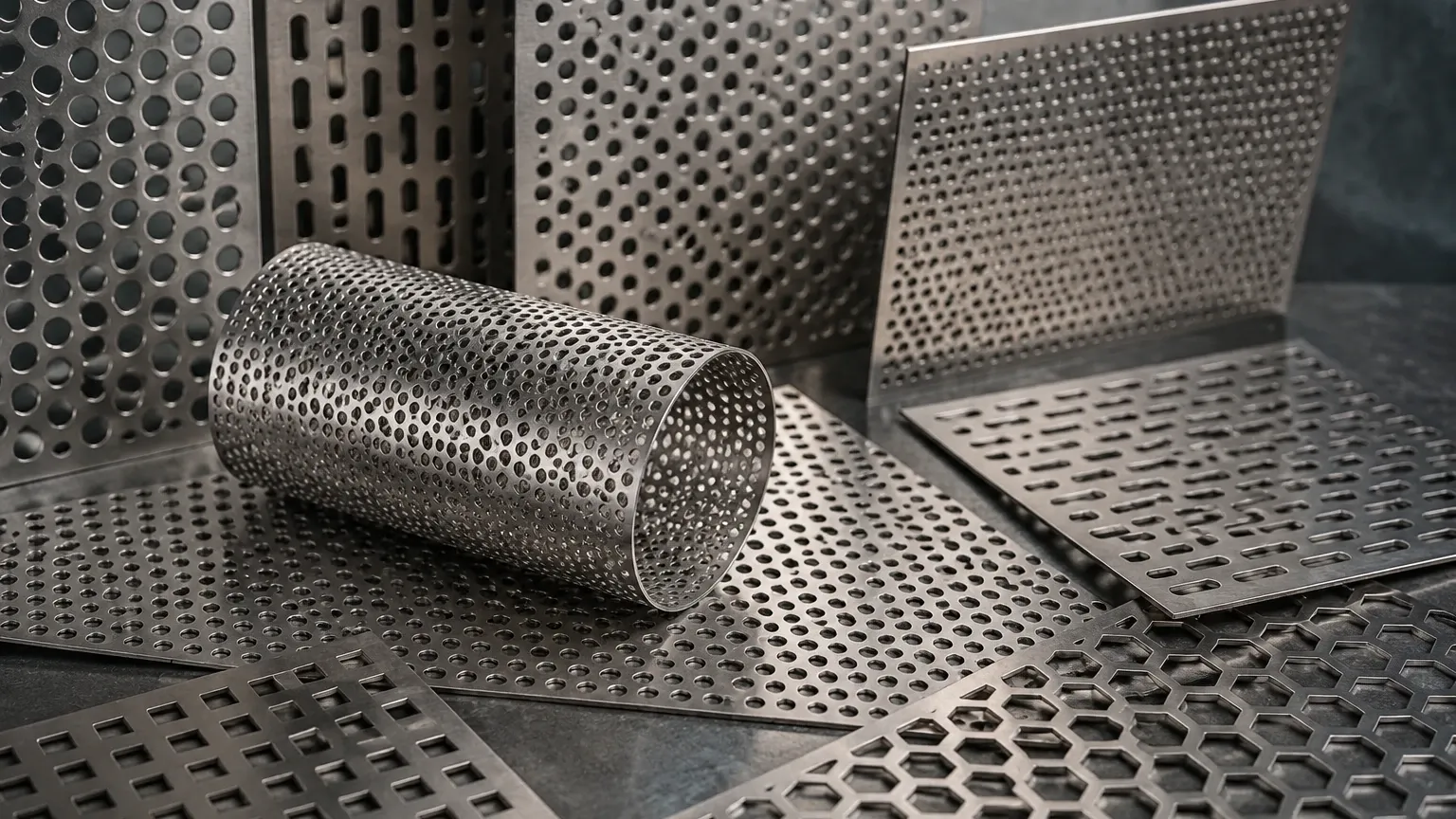
* Customization Options: Does the application require unique shapes, bolt holes, or specialized forming (such as rolling into a cylinder)?
Kaifil specializes in providing these high-performance, customized solutions. By working closely with global customers, Kaifil ensures that every piece of perforated or expanded metal is engineered to meet the exact demands of the application, focusing on durability, precision, and long-term reliability.
Conclusion
Specifying a forever piece of perforated metal requires a shift from a commodity-based purchasing mindset to an engineering-focused approach. By prioritizing high-grade materials like 316L stainless steel, optimizing geometric design for stress distribution, and insisting on precision manufacturing and surface treatments, industrial operators can secure components that offer unparalleled service life. In the demanding worlds of chemical processing, water treatment, and pharmaceutical manufacturing, these durable metal solutions are the backbone of efficient and cost-effective operations. Investing in quality today ensures that the filtration and separation systems of tomorrow remain robust, reliable, and maintenance-free.
